Je viens de faire mon #eXit! L’exode de X est massif. Ne perdez pas un seul de vos abonnés. Grâce à #HelloQuitX j’ai inscrit 153 nouveaux passagers pour partir vers #BlueSky & #Mastodon. Retrouvez automatiquement vos communautés le #20Janvier via https://t.co/gzXbmCCdYP !
Un intervenant avait répandu sur le plateau de CNews la fausse information selon laquelle la municipalité de Lyon aurait donné accès à sa vidéosurveillance au mouvement antifasciste dissous de la Jeune Garde.
➡️ https://t.co/IE3OX7wq3Q
Non à la Loi Duplomb — Pour la santé, la sécurité, l’intelligence collective. - Non à la Loi Duplomb — Pour la santé, la sécurité, l’intelligence collective. https://t.co/hRjBmdDa7W
L’offensive actuelle contre le modèle français d’archéologie préventive est à total contretemps quand on pense simplement aux découvertes de ces deux derniers décennies et aux champs nouveaux de connaissance qui ont été ouverts grâce à l’Inrap notamment. @JPDemoule@GarciaDInrap
Je viens de faire mon #eXit! L’exode de X est massif. Ne perdez pas un seul de vos abonnés. Grâce à #OpenPortability j’ai inscrit 153 nouveaux passagers pour partir vers #BlueSky & #Mastodon. Retrouvez automatiquement vos communautés le #20Janvier via https://t.co/sADMpQ0FWo !
Je viens de faire mon #eXit! L’exode de X est massif. Ne perdez pas un seul de vos abonnés. Grâce à #OpenPortability j’ai inscrit 153 nouveaux passagers pour partir vers #BlueSky & #Mastodon. Retrouvez automatiquement vos communautés le #20Janvier via https://t.co/sADMpQ0FWo !
Connaissez-vous Limédia ?
Nous vous proposons de découvrir cette bibliothèque numérique du @Sillon_Lorrain à l'occasion de notre dossier du jour. Des milliers d'oeuvres sont disponibles gratuitement sur @LimediaGalerie
https://t.co/EsuOjBaXio
The Hierapolis Amphitheater, located in Pamukkale, Turkey, is an awe-inspiring relic of ancient engineering and artistry. Built during the 2nd century CE under Emperor Hadrian on the ruins of an earlier structure devastated by a 60 CE earthquake, it was later restored and adorned by Septimius Severus (193–211 CE). With a capacity of 15,000 seats, this amphitheater remains one of the most well-preserved in the world.
Known for its ornate statues, mythological friezes, and exceptional acoustics, it hosted theatrical performances, musical events, and public gatherings, embodying the cultural vitality of the Greco-Roman world. Part of the UNESCO World Heritage Site of Hierapolis-Pamukkale, it is both a historical marvel and a must-visit for those exploring ancient wonders.
#archaeohistories
ARDENNAIS – NOT AN ORDINARY DRAFT HORSE
This breed belongs to draft horses that originate from Ardennes – currently France, Belgium and Luxembourg. Nice temperament, efficient and elastic gaits, as well as resilience and resistance to harsh conditions – this extensive yet not completed list includes the most important traits of Ardennes horses.
Ardennes are draft horses with a massive, muscular, and compact body. These horses have convex or straight heads with disproportionately small, upstanding ears. The breed is also characterised by its distinctly wide, massive body with short yet strong neck, as well as short, and thick legs with lush feathering and big, and hard hooves. Ardennes have extremely muscular and sloping croups, just as in other draft breeds. Additionally, shoulders are long and sloping, which increases the horse’s pulling strength. Most common coats are bay, chestnut, roan and grey. They are 155-162cm in height and weight around 1500-2200 pounds.
This is one of the oldest draft breeds of horses that is speculated to descend from ancient horses from Solutré that roamed the area during the Palaeolithic era (around 50,000 years ago) The difficult terrain and harsh conditions created an extremely strong, resilient, and undemanding horse.
Ardennes are known for their resilience, low maintenance and most importantly their immense pulling strength. Thanks to these traits, this breed had been used in agriculture and transportation for a very long time. The brave and massive Ardennes was also frequently used as war horses - used both as cavalry mounts and as draft horses for pulling wagons and artillery.
Ardennes horses became famous for their bravery during wars – Julius Caesar is supposedly the first general who used this breed for military purposes. These horses were used by Roman legions, medieval knights, as well as Napoleonic soldiers; this was a popular military breed up until WWII.
At the end of 19th Century and the beginning of 20th Century, Napoleon gave an order to crossbreed Ardennes horses with Arabians to raise their resilience. Soon after, Ardennes mares were bred with Boulonnais, Percheron, and Thoroughbred stallions. At first, these horses were not that big; this was a medium-height breed. However, in 20th Century, the needs of people changed – heavy, massive, and muscular working breeds were in demand. That is why during the refinement process of the breed, people mixed Ardennes with Belgian horses to create a very heavy animal. These days, Ardennes most frequently come in this massive type.
Ardennes were imported from France to crossbreed with other horses. What’s interesting, these days the old type of Ardennes horses is considered to be very valuable. The first official registry of breed was created in 1929. Today, there are three separate stud books in France, Belgium, and Luxembourg. At the end of 20th Century, people founded Ardennes Horse Society of Great Britain to promote and popularize the breed in the UK. Ardennes are also bred in Sweden and slowly gaining popularity in USA as well as Australia. Many of these horses are owned by private breeders. Interestingly, these days there are many different regional breed types for example Trait du Nord, Jutland, Auxois, Swedish Ardennes or Baltic Ardennes.
Ardennes is one of the most popular draft breeds that influenced many other existing breeds. In the past, Ardennes horses were exported frequently, which made all the crossbreeding possible. In Poland, local mares were bred with Ardennes stallions which is why breeds such as Sokolski horses have some of Ardennes’ DNA in them.
Over time, their calm temperament and amazing gait – fluid, draft movements. These days, horses are used in carriage driving, recreational riding, as well as hippotherapy. Unfortunately, due to their anatomy and weight, these horses are also used as slaughter animals.
#archaeohistories
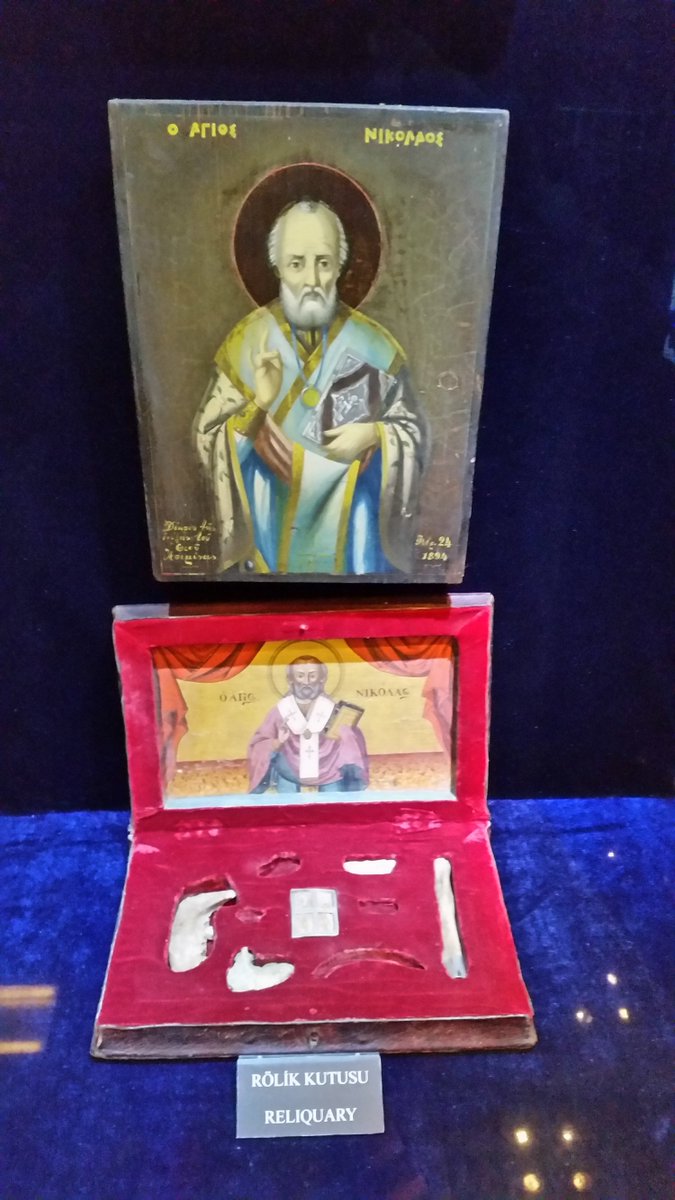
Les reliques ont été "volées" par des marchands italiens de Bari. Un chevalier lorrain a ensuite amené (volé ?) une phalange, conservée à Saint-Nicolas-de-Port. En 2018, j'ai eu la surprise de voir ce reliquaire au musée archéologique d'Antalya. https://t.co/qVg6mNwQgD
@HistoireOdyssee Il semble que les marchands de Bari qui ont volé les ossements en aient oublié un peu : reliquaire exposé au musée archéologique d'Antalya (Turquie)
J'ai découvert ce roman d'Orwell via une adaptation au festival de 2013 à Charleville-Mézières. Pensées pour les Syriens, en leur souhaitant très fort de ne pas connaître le même https://t.co/DxqPOWhIWM Ferme des a https://t.co/wW10OeImY5
Avec une meilleure résolution, et c'est magnifique !!La carte de Cassini ou carte de l'Académie est la première carte topographique et géométrique établie à l'échelle du royaume de France dans son ensemble. Il serait plus approprié de parler ... https://t.co/YeCRzNTILt
Découverte en Arizona d’un canon en bronze lié à l'expédition Vázquez de Coronado (1539-1542), ce qui en fait la plus ancienne arme à feu jamais trouvée aux États-Unis https://t.co/oKq3ll4d16