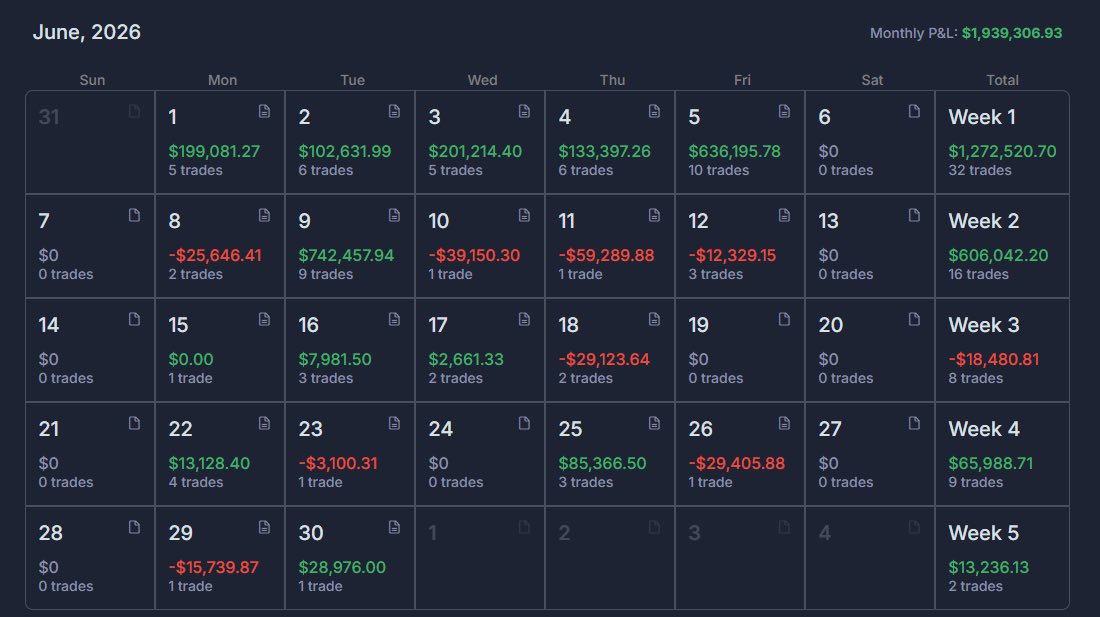
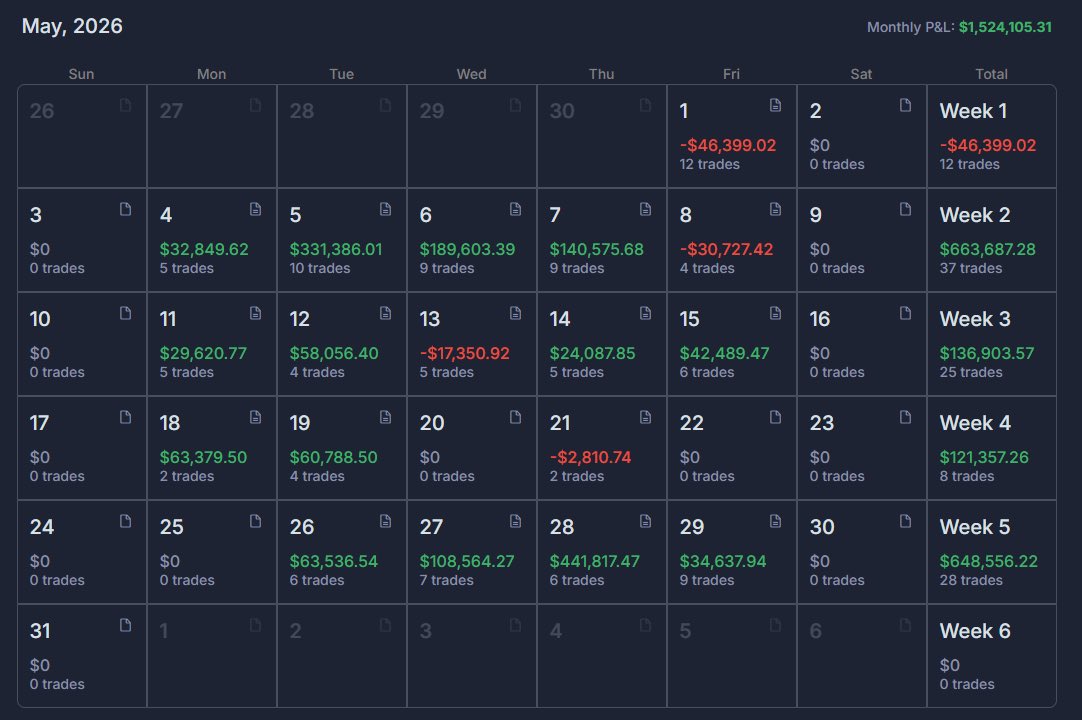
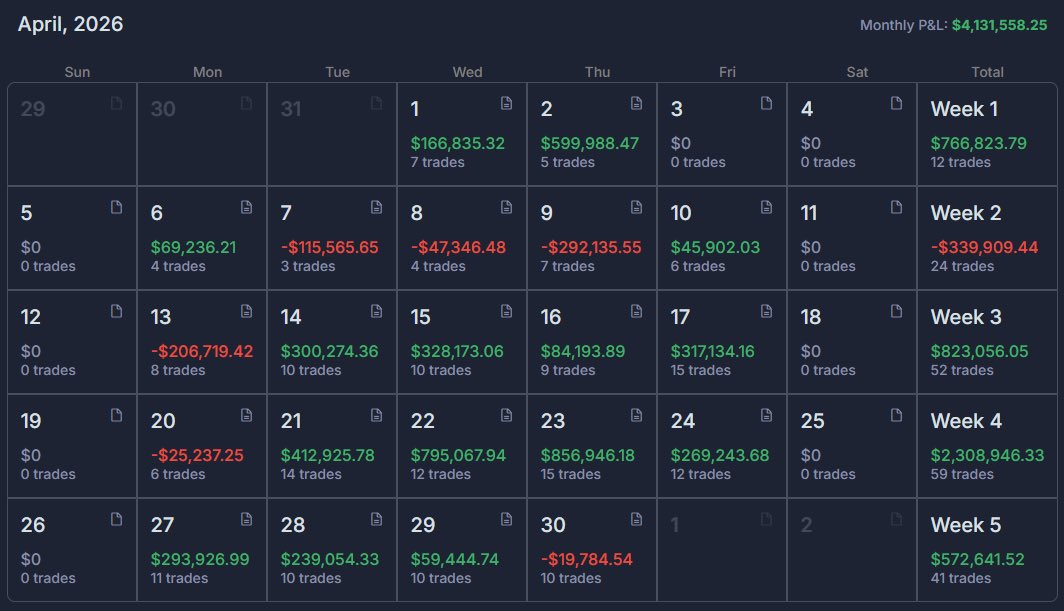
Like everyone else, Q2 was nothing short of incredible thanks to the historic trend that began in April.
June, however, was a much slower month. My best trade, $AXTI on the short side, is still open, but most of the month was spent taking profits on some incredible winners like $MU, $NBIS, $DELL, $DOCN, and $ARM.
The extended, choppy nature of the market has made it difficult to get re-engaged with the prior leaders. A day like today is a great reminder of why progressive exposure is such an important part of my process.
I’m not in the business of giving back gains after what was arguably the greatest two-month stretch most of us have ever experienced.
I’ll put together a full Q2 recap this weekend.
Focus on First or Second Consolidation After the Base
If you miss the base breakout, focus on the first or second consolidation after it.These are often the best opportunities because the stock has already shown strength but is still early in its move.
Your risk is usually small, while the upside can be much bigger if the trend continues.
I've realized the majority of my profits have never come from buying the breakout itself.
It's come from buying the pullback after the breakout.
Almost every trade I take starts with a stock coming out of a large base. I'm talking about names that have spent months, and sometimes years, moving sideways while institutions accumulate.
Then eventually something changes... maybe it's earnings, or it's a new product cycle. Maybe it's a theme gaining momentum? Whatever the catalyst is, price finally starts leaving the range.
And funny enough, that's where the 99% get excited.
Ironically, that's where I usually become patient.
The breakout gets my attention, but the pullback is often where I get involved.
1 of my favorite setups is the first pullback after a major base breakout. If I miss that one, I'll usually focus on the second consolidation. In my experience, these are often the "highest quality" opportunities because the stock has already proven it can break out, institutions have already shown their hand, and now I'm simply waiting for the market to give me a lower-risk entry.
I like to think about it this way:
- A breakout is the market making a statement.
- The pullback is the market asking a question.
"Are buyers actually willing to defend this area?"
That's what I'm trying to figure out.
When a stock pulls back after breaking out of a large range, I'm paying very close attention to how it behaves. Does it immediately fall apart? Or does it hold key levels and refuse to give back much ground?
When it comes to behavior, I look for TIGHTNESS.
If a stock breaks out 20%, then spends the next two weeks trading in a very tight range while volume dries up, that's constructive behavior to me. Sellers are becoming exhausted while buyers continue absorbing supply. The tighter the action becomes, the more interested I become!
Volume is another huge clue.
During the breakout, I want to see volume expand. That's evidence that institutions are participating. Then during the pullback or consolidation, I want volume to contract. If volume is exploding on every red day, that's usually not what I want to see. But if volume starts drying up while price remains near highs, that's often a sign that selling pressure is becoming limited.
1) Price tells me what happened.
2) Volume tells me how much conviction was behind it.
I also spend a lot of time studying the personality of a chart.
Some stocks are constructive, and some stocks are sloppy.
Some names respect the 9EMA for weeks + months. Others constantly undercut and reclaim support before moving higher. Some stocks have violent shakeouts. Others grind methodically higher.
This is why I constantly study prior winners.
I'm trying to understand how a stock behaves when it's healthy.
> Does it respect moving averages?
> Does it recover quickly after pullbacks?
> Does it close near highs?
> Does it show relative strength on market weakness?
> Does it stay tight?
Those are the little nuances that I look for from a potential leader.
A simple list I look for:
1) Find a stock breaking out of a large base.
2) Confirm relative strength v.s. the market + sector.
3) Wait for the first or second pullback.
4) Watch volume dry up.
5) Look for tightness near major support.
6) Execute on 15 or 30min pivot reclaim.
7) Risk against the low.
Most people think the money is made by finding the perfect breakout... but I've found the money is usually made by finding the strongest stocks and then having the patience to wait for the first real opportunity to join the trend.
If the stock is truly a leader, the breakout is often just the beginning.
The first pullback is where the real asymmetric opportunity tends to show up. That's where I want to be positioned. That's where risk is usually the smallest.
And if the trend continues, that's often where the biggest winners begin!
Chart: $AMKR.
It doesn’t matter how long the journey takes.
Stop measuring your progress against strangers on the internet.
Most of them are performing, not trading.
Every skill worth having takes years to build.
Trading is no different.
Stay in your lane.
The timeline doesn't matter.
Quitting does.
Hindsight is a hell of a drug in trading.
After a trade is over, everything looks obvious.
You look back and say:
"How did I not hold that?"
"I should have bought more."
"The breakout was so clear."
"The pullback was the easiest entry ever."
But that's not what the chart looked like in real time.
In real time:
-The breakout could have failed
-The news could have changed
-The market could have reversed
-Your setup could have stopped out
The problem with hindsight is that it removes uncertainty from the equation.
Trading decisions are made under uncertainty.
Trade reviews are done with certainty.
That's why it's dangerous to judge your decisions solely based on the outcome.
A good trade can lose money.
A bad trade can make money.
The goal isn't to make perfect predictions.
The goal is to consistently follow a process that gives you an edge over hundreds of trades.
This is why rules matter.
Rules keep you grounded in reality when your emotions start rewriting history.
When a trade works, your rules prevent greed.
When a trade fails, your rules prevent revenge.
When you review your trading, don't ask:
"Did I make money?"
Ask:
"Did I follow my process?"
Because in the long run, process is what creates profits.
Hindsight just creates what if's...
I watched the markets for 16 years. They hid THIS from you:
1. The market doesn't move randomly. It moves to levels where the most money is trapped. Once you see it, you can't unsee it.
2. Your stop location isn't a secret. Institutions know exactly where retail places stops. They run them before the real move starts. That's not manipulation. That's just how liquidity works.
3. The best setups feel boring. If you're excited about a trade, your size is probably wrong.
4. Retail flow is now a real market force. When 10,000 traders are watching the same level on the same ticker, they move the market before they even enter. The crowded trade is the predictable trade. Predictable liquidity gets taken.
5. By the time you read a headline, an algorithm already traded it. You're never trading the news. You're trading the aftermath. And the aftermath is a completely different setup.
6. Support becomes resistance and resistance becomes support. The level that held price up last month is the same level that'll push it down this month. Most traders never use this.
7. The strongest levels on your chart aren't the ones you drew. They're the ones that caused the biggest reactions years ago and never got forgotten.
8. Withdrawing every week is a trading strategy. Seeing too much in your account changes how you size. It makes you feel invincible. The market will remind you that you're not.
9. Paper trading builds false confidence. The moment real money is involved, emotions change everything. Go real, go small, but go real.
10. The market rewards the trader who can do nothing better than the one who always has to do something.
11. Round numbers matter more than most traders think. $5,000. $6,000. $7,000. Institutions think in round numbers. So should you.
The more buttons you insist on clicking, the less money you’re likely to make.
More trades doesn’t = more money.
I’d argue the opposite is true.
Get into a leader and sit. Don’t be a micromanager.
This market has been awesome don't get me wrong.
And I have seen great success in this bull market.
I have learned a ton from people like @RealSimpleAriel and @RichardMoglen and the deepvue team. Trader Lion, etc. I even am reading William O'neills book.
I have come a long way in just 3 months!
But I will say I keep kicking myself that I am not risking enough. I keep saying to myself
"I feel like for my execution I should be up more %, or $"
You get the idea.
But then I also realize that I started risking 100 bucks. And now I risk 200 bucks.
But when I see massive moves in my positions it seems like I'm not making a lot of money.
I guess the thing to remember, is this is a LONG game. And the goal is survival and forming good habits.
Risking what I am comfortable with. And that is where I am at right now.
I think comparison isn't the best thing. I keep seeing people up 6 figures and I am sitting here wondering if that should be me. But sticking to the plan, and I know this will work.
10 Years Ago I Needed to Hear This
On Risk & Survival
→ The market doesn't reward bravery. It rewards survival.
→ Size kills more accounts than bad entries ever will.
→ If you're calculating how much you could make, you've already lost.
→ The best trade is often the one you didn't take.
→ Never add to a loser. You're not "averaging down." You're compounding a mistake.
→ Risk 1% and you can be wrong 50 times in a row. Risk 10% and you're done in a month.
On Losses
→ A small loss is a victory. It means your rules worked.
→ The stock doesn't know you own it. It doesn't owe you a bounce.
→ Cut your losses fast. Not because you're scared-because you're disciplined.
→ Every blown account started with "I'll just wait for it to come back."
→ Your ego wants to be right. Your P&L wants you to be flexible.
→ The loss you avoid is worth more than the gain you chase.
On Winners
→ Sell your losers and your winners ride themselves.
→ The hardest skill isn't finding winners. It's holding them.
→ Nobody went broke taking profits-but plenty stayed poor doing it too early.
→ A stock up 10% can go up 100%. Let the trend do the work.
→ You don't need to catch the bottom or the top. The middle 60% is where the money is.
On Patience & Timing
→ Cash is a position. Sometimes the best one.
→ The setup comes to you. You don't go hunting for it.
→ Boredom is profitable. Excitement usually isn't.
→ The best swing traders I know spend 90% of their time waiting.
→ "I need to be in something" is the most expensive sentence in trading.
→ When nothing looks good, nothing is good. That's information.
→ The market will be there tomorrow. Your capital might not.
On Psychology
→ You're not trading the market. You're trading your beliefs about the market.
→ Revenge trading is just paying tuition twice for the same lesson.
→ Your worst trades will come after your best trades. Stay humble or get humbled.
→ Confidence after a win streak is the most dangerous feeling in trading.
→ The moment you think you've "figured it out," the market will remind you.
→ Trading well and making money aren't always the same thing. Focus on the process.
→ Journaling feels pointless until you catch the same mistake for the fifth time.
On Simplicity
→ One pattern mastered beats ten patterns understood.
→ The best systems fit on an index card.
→ If you can't explain your edge in two sentences, you don't have one.
→ Complexity is where traders hide from accountability.
→ More screens ≠ more profits. Usually the opposite.
On Reality
→ Social media shows entries. It never shows the exits, the drawdowns, the doubt.
→ The traders who make it aren't smarter. They just survived long enough to get consistent.
→ Markets change. Your principles shouldn't.
→ You will miss 100x runners. Doesn't mean your process is broken.
→ Being early is the same as being wrong-until it isn't. Manage accordingly.
Took me many trades, and days away from the screen to finally internalize these.
The market taught me everything. I just had to stop fighting the lesson.
#Trading
One of my students asked: "How do I know when I'm ready to quit my job and trade full-time?"
Here's the answer:
When you STOP asking that question.
Because by the time you're actually ready, the answer is so obvious you don't need to ask.
You've been profitable for 18+ months straight.
You're making 2x your salary consistently.
You have 12 months of living expenses saved.
Your family knows and supports it.
If you're asking the question, you're not ready.
And that's okay. Most people never get there.
But the ones who do? They didn't jump hoping for a net.
They built the net first. Then stepped off.
#Trading
You don't need to spend hours in front of your charts to make big returns swing trading stocks.
I do all my trading in the last 20-30 minutes of my trading day.
Here is my daily process:
- Show up 30 min before the NYSE close
- Open up TC2000 with all my pre-defined scans
- Look at my breadth indicators and indexes in 30 seconds (know the cycle)
- Get scanning for 10 minutes,
- Select stocks that meet my system rules
- If there are trades I enter just before the close,
- Put my stop loss,
- and close my computer...
Next day I came back to do the same.
A simple process I've done daily for years now.
It's effective, repeatable, and got me triple-digit % returns on avg for the past 6 years...
You don't even need to be the first hours of the market open to enter breakouts.
You can swing trade, kill it, and still have a life to do other things.
That's what trading should be all about anyway.
This one concept took me 3+ years to accept, and I still have to remind myself of it constantly.
If you have a real edge and a defined playbook, every valid signal must be taken.
Not some of them, but all of them.
...because the moment you start picking and choosing which signals to execute, you’re no longer trading a system, you’re trading your emotions.
the truth is that we have no idea which trade will be the winner and which one will be the loser.
None.
Not you.
Not me, not even the "best" trader you follow.
The only thing you control is whether you execute when your criteria are met. And the moment you hesitate because of recency bias, fear, or discomfort, you break the math that your edge depends on.
The analogy I always come back to is this:
Imagine a casino that decides not to let people play blackjack on certain hands because the last few players won or lost too much.
Sounds ridiculous, right?
The casino doesn’t care about individual outcomes.
They care about volume over time because they know the edge only plays out when every hand is dealt.
...and trading is no different.
If you skip hands, you distort the distribution.
You might miss the one trade that pays for the next ten losses.
I’ve skipped trades because I was coming off a small drawdown and didn’t “feel confident.” I’ve skipped trades because the last setup failed and I didn’t want to take another loss.
and I’ve skipped trades that went on to be some of the biggest winners of the week.
The worst part?
The pain of missing a winner is worse than taking a loser for me... and it usually leads to revenge trades, chasing, or breaking rules later in the day. That’s why trading your plan is everything, because a real plan removes discretion at the moment of execution.
If my criteria are met (compression against EMAs, higher timeframe alignment, structure intact, good theme, risk clearly defined), I take the trade.
absolutely no and if or buts, people!
My job isn’t to predict outcomes... my job is to execute signals I did the homework on.
Wins and losses are just feedback.
And when you don’t have a plan, boredom fills the gap. You start trading because you’re at your screen, you take random entries, size inconsistently, and justify it with narratives after the fact.
that’s how accounts slowly bleed, from a thousand unstructured decisions.
Lastly before I stop yapping... if you recognize this issue in yourself (skipping signals, hesitating, second-guessing, etc) that’s actually a good sign.
Awareness is the first step.
The goal is to be mechanical when it matters.
...because over time, from what I've seen, the traders who execute every valid signal are the ones whose edge actually compounds.
You don’t need to be right more often.
You need to be consistent when it’s uncomfortable.
That’s the difference between having a strategy and actually trading one!
The key to great trading: stop judging yourself and stop forecasting. When conditions are bullish, act bullish; when they’re bearish, adjust. Trust your process. You’ll buy stocks that go to zero and sell some that go to infinity—the key is what you do in between. You will make many mistakes; you’ll never trade perfectly. You can only learn to perfectly trade your plan. Making mistakes is trading. Mitigating them is professional trading.
Entries don’t matter.
Your entry gets you in the game.
But your exit determines profit or a loss.
I've made money on terrible entries with great exits.
I've lost money on great entries with terrible exits.
The exit is everything.