What happens when the company that monetized attention proposes to monetize attachment?
My buddy @cosgrovet explores what happens now that Meta is looking to be your own, personal AI Jesus.
https://t.co/yECnmzzaJL
In 1943, the Gestapo finally caught Raymond Aubrac — one of France's most wanted Resistance leaders. He was sentenced to death. His execution was days away.
His wife Lucie was six months pregnant.
Most people would have hidden. Would have grieved quietly and prayed for a miracle. Lucie Aubrac did something else entirely. She obtained forged identity papers, constructed a cover story, and walked straight into the office of Klaus Barbie — the man history would remember as the Butcher of Lyon — and convinced him to grant her a visit with the condemned man.
She wasn't there to say goodbye.
She was memorizing guard positions. Counting minutes. Mapping the route the prison truck would take.
On October 21, 1943, that truck rolled through the streets of Lyon carrying Raymond and other prisoners toward what should have been the end. Lucie had spent weeks quietly assembling a team of Resistance fighters, planning an ambush with the precision of a military operation. When the truck reached the ambush point, the team struck — fast, coordinated, and without hesitation.
In the chaos of gunfire and confusion, Raymond Aubrac was pulled free.
Lucie — visibly, unmistakably pregnant — had organized every detail of his liberation.
They went into hiding. Weeks later, Lucie gave birth to their daughter in a safe house while German forces searched for them across France. When liberation finally came, the Aubracs didn't merely survive — they rebuilt.
Raymond became a celebrated engineer and entered public life. Lucie became a historian, pouring decades into ensuring that the women of the French Resistance — so often unnamed, so easily forgotten — were written permanently into the record. They raised three children. They traveled the world. They argued and laughed and grew old together.
When journalists asked Lucie, years later, what had compelled her to risk everything that October day, she didn't hesitate.
"He was my husband. What else would I do?"
Lucie Aubrac passed away in 2007 at the age of 94. Raymond — who had once needed a commando team to be freed from a German prison — lived on until 2012, reaching 97 years old. In his final years, he continued speaking publicly about the Resistance, about memory, about the obligation to tell the truth.
They had been married for 64 years.
Not a love story built on grand gestures or perfect circumstances. A love story built in occupied France, in safe houses and forged documents and a prison truck ambush on a Lyon street — forged in fire, and never broken.
True love doesn't wait for rescue. Sometimes, it does the rescuing
Hurt in an accident. Betrayed by their lawyer.
Our latest documentary shares the true stories of people victimized twice — first by an accident, then by unethical personal injury lawyers who put profit over people. Watch:
Hey @Schwarzenegger, what is best in life?
1. To see Conan in the theater.
2. To crush your enemies, see them driven before you and to hear the lamentations of their women.
3. To be part of the Pump Club, the positive corner of the internet.
9 December 1938 | A French Jewish boy, Simon Boruchowicz, was born in Paris.
He arrived at #Auschwitz on 19 August 1942 in a transport of 998 Jews deported from #Drancy. He was among 897 of them murdered in gas chambers after the selection.
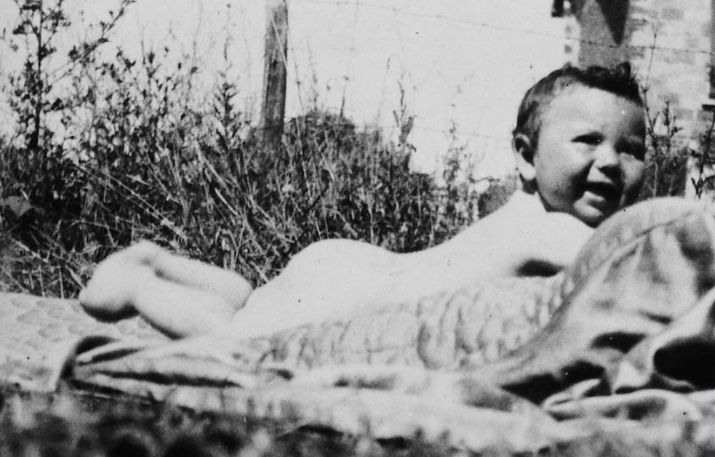
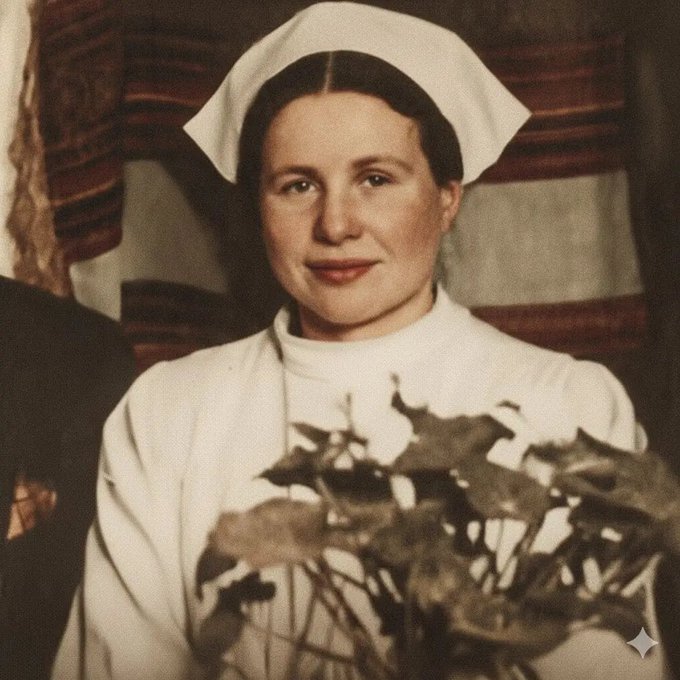
In the autumn of 1942, a slight, 32-year-old Polish social worker named Irena Sendler passed through the gates of the Warsaw Ghetto with a carpenter’s toolbox in her arms. Beneath the hammers and nails lay a drugged six-month-old infant, breathing softly, utterly silent. One cry would have meant instant death for both of them. Irena smiled at the guards; they waved her through. They never suspected that this quiet woman would repeat the journey 2,499 more times.
The ghetto was a slow-motion extermination. Starvation, disease, and random murder stalked every street. Jewish parents faced a choice no human being should ever have to make: keep their child and watch them waste away, or hand them to a stranger who promised a chance—however thin—at life.
Irena came officially to inspect for typhus. In reality, she came to steal children from death.
Babies left in toolboxes or ambulances under false bottoms. Toddlers sedated and tucked into potato sacks. Older children led by the hand through the stinking, lightless sewers while German boots marched overhead. “Not a sound,” she whispered as rats scurried past their feet.
She knew that the rescued children would be given new names, new religions, new families. Their pasts would vanish unless someone remembered. So, on fragile scraps of tissue paper, Irena wrote each child’s real name, their parents’ names, and their new hiding place. She rolled the papers tight, slipped them into glass jars, and buried them beneath an apple tree in a neighbor’s garden. If she were caught and killed, the truth might still survive.
She was caught.
On October 20, 1943, the Gestapo kicked in her door. They took her to Pawiak Prison and demanded the list. When she refused, they smashed both her legs with iron bars. Then her feet. Then her arms. For weeks the beatings continued. She never spoke. They scheduled her execution. On the appointed morning, guards dragged the broken woman from her cell.
Instead of a firing squad, she found herself outside the prison walls—alive. The Polish underground council Żegota had bribed a guard to mark her file “shot while trying to escape.” Officially dead, Irena Sendler limped back into the shadows to keep working.When the war finally ended, the first thing she did was dig up the jars under the apple tree. She spent years trying to return the children—now scattered across convents, farms, and foster homes—to whatever family might remain.
Almost no parents had survived. But the children had. Because of her, 2,500 Jewish boys and girls lived to grow up, to marry, to have children and grandchildren of their own—an entire secret branch of the human family tree that the Nazis never managed to cut down.For decades her story stayed buried deeper than the jars themselves. Then, in 1999, four high-school girls in rural Kansas stumbled across a brief mention of her name. They found the old woman still living quietly in Warsaw and brought her courage back into the light.
Journalists called her the greatest rescuer of the Holocaust. Irena only shook her head.“I could have saved more,” she said. “That regret follows me to the grave.”Irena Sendler—armed with nothing but a ghetto work permit, a toolbox, and a refusal to look away—proved that even in the heart of the worst evil humanity has ever devised, one determined person can still keep the darkness from winning completely.
NEW: 80-year-old Natalie Grabow of Mountain Lakes, New Jersey, becomes the oldest woman to finish the Ironman World Championship.
The American was the first female in the 80-84 category to complete the race. The race took place in Kailua-Kona, Hawaii.
Grabow finished in 16 hours, 45 minutes, and 26 seconds.
The race included a 2.4-mile swim, a 112-mile bike race, and a 26.2-mile run, for a total of 140.6 miles.
Impressive and inspiring.
Cities in history to have their NHL team lose, NFL team lose & MLB team lose in the playoffs & be eliminated all on the same day:
Philadelphia - Today
Philadelphia - 10/16/1983
That’s it.
Freddie is looking down and giving y'all a standing ovation. That's spectacular!😍💗
The most INSANE Bohemian Rhapsody Flashmob you will ever see!!
With 30 musicians and singers in the STREET of Paris 😍
Cre : Julien Cohen Pianist
A final piece of advice from Holly Butcher - written the day before she passed away from cancer at just 27:
“It’s a strange thing knowing you’re going to die young.
At 26, I thought I had time…
To fall in love.
Start a family.
Grow old.
But cancer doesn’t care about plans.
Now, I understand how fragile life really is. Every single day is a gift, not a guarantee.
I’m not writing this to scare you. I’m writing to remind you: really live.
Stop stressing over little things. Be kind to your body- move it, nourish it, stop criticizing it. One day you’ll wish you had appreciated it.
Go outside.
Look at the sky.
Feel the sun.
Just be.
Spend less time chasing “stuff” - more time making memories. Don’t skip moments with people you love.
Laugh more.
Write a note.
Tell someone you love them.
Complain less.
Give more.
Helping others brings more joy than anything you can buy.
Be present.
Put your phone down.
Show up - really show up.
You don’t need to have it all figured out. You don’t need a perfect body, or a perfect life.
Just follow what makes your heart light up. Say no to what drains you. Make changes when you need to.
And please - donate blood. I wouldn’t have had that extra year without it. And that year gave me memories I’ll hold close… forever.
Thank you for reading this.
Live your life well.
And maybe… we’ll meet again someday.”
Holly 🩷
Repost & share Holly’s important advice. ❤️