Thread 1/5
Goldman Sachs vient de sortir la carte la plus précise des 7,6 trillions $ qui vont affluer dans l’IA d’ici 2031 :
• 5,1 T$ Compute
• 2,1 T$ Data Centers
• 0,36 T$ Power
Voici comment mon portefeuille UCITS se positionne pile dans ces 3 couches.
Inspiration pour ceux qui construisent leur exposition IA infra 👇
THIS IS HOW YOU MAKE MULTI-MILLIONS OVER THE NEXT 10 YEARS
This is how I and many will RETIRE early.
The biggest opportunities come from understanding where capital flows NEXT.
Here’s how I believe the AI Supercycle evolves:
1. AI INFRASTRUCTURE
Capital flows into the companies building the foundation.
• Compute: $NVDA $AMD $AVGO $ARM
• Memory: $MU $SNDK $WDC $STX
• Networking: $ANET $MRVL $CRDO
• Photonics: $COHR $LITE $AAOI
• Data Centers: $VRT $IREN $NBIS
• Software: $PLTR $NOW $ORCL
2. POWER + ENERGY
As AI scales, electricity becomes the next major bottleneck.
• Power: $ETN $PWR $HUBB $GEV
• Nuclear: $CEG $CCJ $OKLO $SMR
• Copper: $FCX $SCCO $TECK
• Critical Materials: $MP $ALB $SQM
3. PHYSICAL AI
Then intelligence moves into the real world.
• Robotics: $TSLA $SYM $ISRG
• Autonomy: $ACHR $JOBY $MBLY
• Defense: $KTOS $AVAV $RTX $NOC
• Space: $RKLB $ASTS $LUNR
4. NEXT GEN COMPUTE
• Quantum: $IONQ $RGTI $QBTS
You don’t need to own everything.
Find where capital is flowing → identify the leaders → rotate as leadership changes.
We will all get rich together .
Before 2008, the world satisfying pitied China.
After August 8th, 2008, at exactly 8:08 PM, the world satisfying feared it.
WHY?
This one ceremony satisfyingly changed everything.
The 2008 Beijing Olympics Opening Ceremony wasn't actually about the Olympics.
It was a masterclass in a country announcing itself to the world in a way that couldn't be ignored, misunderstood, or forgotten. Every element served a single purpose: to convince 4 billion people watching that China had arrived not as a developing nation seeking permission, but as a civilization reclaiming its place.
Most Western observers watched it as spectacle. They counted the performers. They marveled at the coordination. They noted the absurdity of 2,008 drummers doing precisely the same thing, or 897 actors forming perfect geometric shapes without a single body out of place. It felt inhuman. It felt controlled. It felt dystopian to audiences raised on the myth that freedom means chaos and individuality means imperfection.
That was the entire point.
The ceremony wasn't designed for Western sensibilities. It was designed for a Chinese audience, for Asian audiences, for developing nations watching, and for the message underneath all the spectacle. That message was simple and devastating: we can coordinate at a scale you cannot. We can move bodies through space with precision you cannot achieve. We can plan something this complex and execute it without deviation. We do not ask permission. We do not wait for international approval. We simply do.
Zhang Yimou, the director, wasn't trying to make Cirque du Soleil in a stadium. He was orchestrating a four hour argument that began when the first drum hit and didn't end until the cauldron lit.
Consider the opening segment. Thousands of people moving in synchronized formations, each person occupying a specific position, each gesture timed to the microsecond. In the West, we saw this as oppressive. In China, in much of Asia, audiences saw something different: proof of capability. Proof that a system could move millions of people with intention. That efficiency and scale weren't just economic concepts but cultural values made visible.
The technological innovations hidden inside the ceremony operated at levels most viewers never consciously registered. The moving LED floor alone required coordination between dancers, light operators, and computer systems that had never been attempted at that scale before. One mistake, one miscalibration, one person three inches to the left, and the entire visual effect collapsed. They rehearsed for months. They trained thousands of performers to execute movements with Olympic athlete precision, except they were artists and soldiers and students, not just elite specialists.
What China was saying without words: we can train anyone to do anything. We can take ordinary people and turn them into perfect components. That's not dystopian if you believe the collective good matters more than individual expression. That's simply efficiency. That's power.
The narrative arc was equally deliberate. It didn't begin with modern China. It began with ancient China, with calligraphy and silk and the inventions that shaped human civilization centuries ago. Confucius appeared. Traditional instruments filled the stadium. The ceremony was saying: you think we're new? You think this is an aberration? We invented civilization. We invented printing. We invented gunpowder. We invented paper. We were doing this when your ancestors were figuring out agriculture.
Then it pivoted. The ancient merged into the industrial. Performers became machines. The visual language shifted from organic to geometric. The message became clear: we have transcended tradition. We are modern now. We are not choosing between old and new. We are synthesizing both.
The economics underlying the entire production went largely unremarked. China spent an estimated $44 million on the ceremony. That was roughly the entire Olympic budget for many countries. They were literally spending money at a different scale, on something that had zero direct economic return, just to make a statement. That capability, that willingness to deploy resources for symbolic power, said something crucial about where China existed in the global hierarchy.
Western media coverage focused on the human rights angle, and that criticism was legitimate. But it also missed something crucial: the ceremony worked. It fundamentally shifted how the world perceived China in a single evening. Before 2008, China was the factory of the world, cheap labor, pollution, human rights abuses. After 2008, China was a civilization that could coordinate at continental scale, that could produce spectacle and technological innovation simultaneously, that could make its citizens move in perfect unison and call it beauty.
That reframing didn't happen by accident.
The ceremony revealed something about power that we still don't fully process. Soft power, cultural influence, the ability to shape perception without military force, requires resources and will and vision. It requires understanding that sometimes you spend enormous amounts on something that produces no widget, no product, no measurable economic output. You do it because the image, the memory, the shift in how people perceive you, is worth more than the money.
The United States understood this in 1984 when Los Angeles hosted the Olympics. The opening ceremony was a statement of American technological confidence and cultural exuberance. It worked. It changed how the world saw American innovation and optimism.
Beijing learned that lesson and executed it larger.
Seventeen years later, we're still living in a world partially reshaped by four hours in August 2008. China's confidence in its own system increased. Investment in the country accelerated. Western corporations decided this was a market worth entering seriously. The psychological permission structure shifted. A country that could pull off that ceremony could pull off anything.
We forget that ceremonies, symbols, and collective performances aren't just cultural artifacts. They're instruments of statecraft. They move capital. They shift allegiances. They change which countries investors bet on and which ones they avoid. They make populations believe things about themselves that they then make true through effort and confidence.
Zhang Yimou understood that when he choreographed 15,000 people to move as a single organism. He was writing a chapter of history in real time. The chapter was about a country that had learned the language of power and decided to speak it fluently, perfectly, and loudly enough that no one could pretend not to hear.
That's why it can't be forgotten.
How safe if your Bitcoin seed phrase?
The difference between 40 bits and 256 bits is not a small upgrade.
It is the difference between minutes and longer than the age of the universe.
LONG EQUITY portfolio - July 2026
--
July = -6.9%
YTD = 29.7%
Cash return on capital = 40%
FCF/share growth rate = 24%
Only 3 positions have been held for less than 2 years: $ICE $FIX $LRCX
Mais que se passe t-il ?
@elonmusk énormément de comptes catholiques français sont suspendus en quelques jours, comment expliquer cela ?
@XFrance que faites vous !!
🇯🇵 Voila ce que Charles Gave écrivait dans la conclusion d'un article il y a 20 jours.
"Je maintiens donc que si certains marchés boursiers et obligataires hors du Japon venaient à baisser pour des raisons purement internes, une vague de ventes japonaises pourrait entraîner ces marchés à des niveaux bien plus bas que ne l’exigeraient les forces normales du marché. Il en ressort clairement que le marché obligataire le moins dangereux au monde (le plus antifragile) est le marché obligataire japonais, et je conseille aux lecteurs d’y prendre position pour couvrir leurs positions en actions, que ce soit à l’étranger ou au Japon, le véritable risque sur les marchés étant que les institutions japonaises décident de se retirer toutes en même temps.
Je conseillerais aux lecteurs de ne pas attendre que la Banque du Japon donne le signal de vente. Elle ne dira pas un mot en raison de l’impact qu’une telle déclaration aurait sur les marchés obligataires les plus fragiles du monde.
Mais c’est ce que semble indiquer le ratio entre les obligations japonaises à long terme (30 ans) et l’or, qui a atteint son plus bas niveau fin février et affiche déjà une hausse de 14 %.
En termes plus simples, je m’attends à ce que l’investisseur qui constituera au Japon le portefeuille classique ajusté au risque (60 % en actions, 40 % en obligations à long terme) obtienne une performance très solide au fil des ans, quelle que soit la devise,
Il est temps de passer, au Japon, d’un portefeuille « à la turque » (50 % en actions, 50 % en or) à un portefeuille ajusté au risque. C’est la première fois depuis longtemps que je recommande un portefeuille classique ajusté au risque dans un pays quel qu’il soit.
Les valorisations relatives semblent justifier ce changement"
Holy shit, Japan spent $53 billion on Thursday. This is probably the largest single day intervention in history.
It gets better... The US Treasury has reportedly told a number of banks through the NY Fed to stand by for future actions in the yen market.
Ask yourself why Washington would spend its own money intervening somebody else's currency. Well, Japan owns $1.1 trillion of US Treasuries. A yen in free fall forces Japanese institutions to fund hedges and repatriate.
What do you think the asset they would sell is? USDTs obviously.
The US 30 year is at a 19 year high with $8 trillion of paper maturing inside a year. Washington can't afford its biggest foreign creditor to become a seller, so it's cheaper to buy yen than to buy back its own bonds.
Super hypocritical. Treasury selling dollars eases inancial conditions two days after the Fed refused to, with 3 voters dissenting for a hike. The BoJ losing money on its own bonds at a 1% yield is where this chains begins.
Stay safe out there.
🚨 Washington has ultimately SEIZED control of the Bank of Japan.
US Treasury’s Scott Bessent just casually posts about “close coordination” with BoJ Governor Ueda, this is the smoking gun that America is dictating Japan’s rates.
Japan today has decided to not to hike interest rates.
They FORCED Japan to freeze hikes and keep the yen carry trade ATM wide open so Wall Street can keep siphoning free money.
The longer Japan delays the inevitable rate spike, the more catastrophic the unwind will be… markets will bleed, savings will evaporate, and the pain will be biblical.
BoJ insider @yutokanzakireal warned us months ago. Every single prediction is now unfolding in real time.
Japan’s only escape hatch? They’re integrating digital assets into their economy and allowed treating Bitcoin and XRP as Corporate Treasury assets. The ultimate off-ramp from this dollar-dominated trap.
The global financial system is on the brink.
Brace yourselves.
📈 Point marché
🌞 J'espère que vous passez un bel été
🇮🇷 La tension est intervenue comme convenu
🇺🇸 Puis apaisement ce weekend (?)
📐 SPX dans un triangle
📉 NDX a cassé le sien, vers 28k
🎯 SPX cible toujours 7765, NDX 31800, SMH 729
🐻 Si SPX perd 7250, correction à venir (D1)
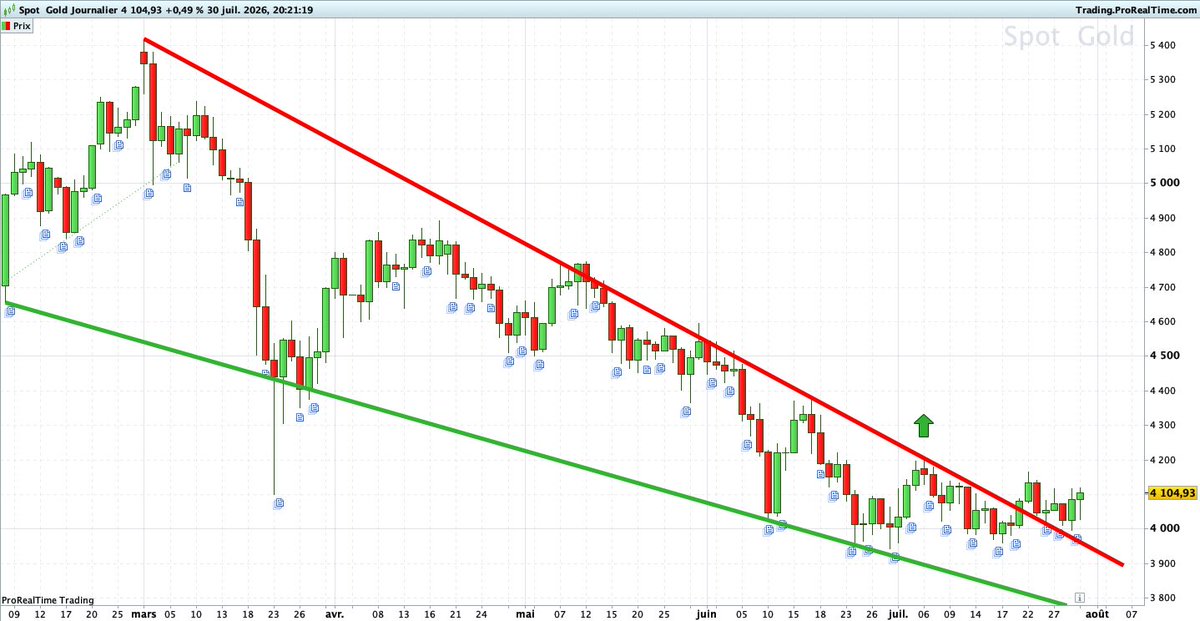
🥇 L'or reteste sa résistance géométrique clé
⛳️ Toujours dans son biseau baissier, vers 3840
🪙 BTC à sa GZ opposée (H1)
🛢️ Le WTI séché à 93$
#investir #bourse #trading #analyse #elliottwave #fibonacci #investissement $SPX $NDX #Nasdaq #Nasdaq100 #indices #actions #Bitcoin $BTC #crypto #or #gold $xau $GLD #cryptomonnaie
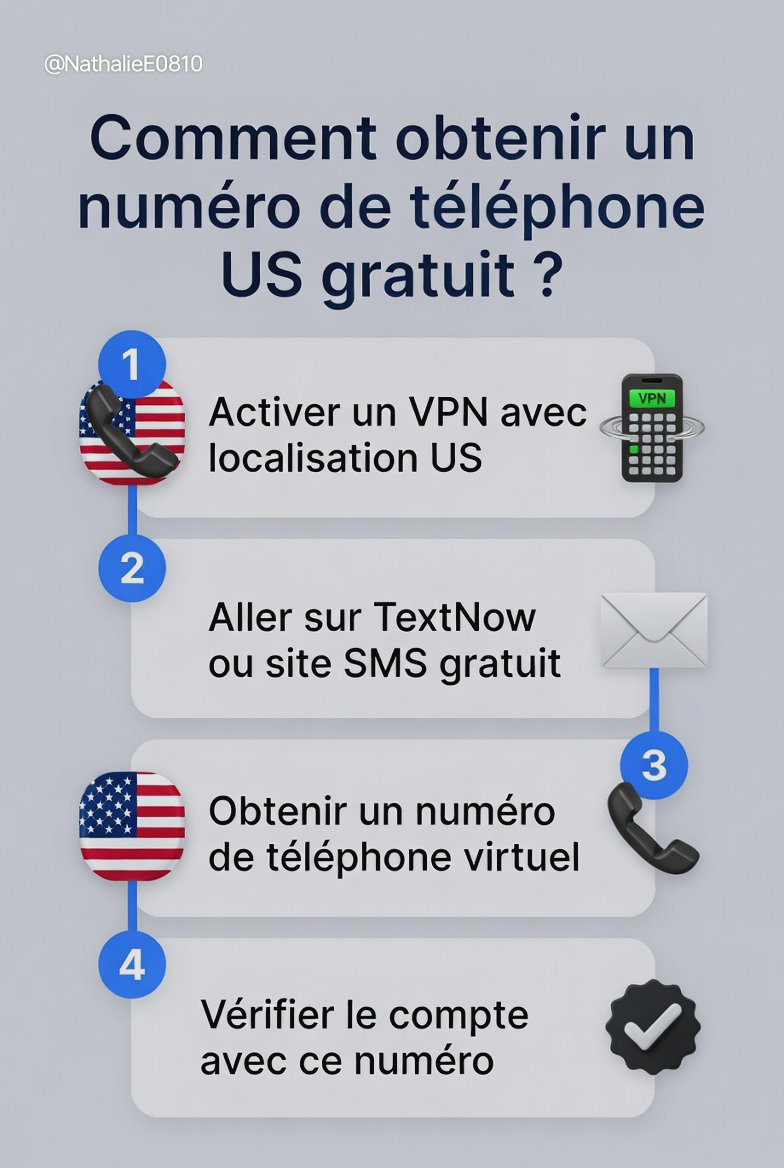
Comment créer un compte de secours sur X (Twitter) avec un VPN US et un numéro virtuel gratuit 🇺🇸
1/ Activez un VPN sur un serveur américain stable.
2/ Utilisez TextNow (application gratuite) pour obtenir un numéro US permanent (appels & SMS illimités).
Alternative rapide : sites comme https://t.co/eu5JwSWV56 ou https://t.co/rdmj2XdplC pour un numéro temporaire.
3/ Créez le compte X avec le VPN activé et utilisez le numéro virtuel pour la vérification SMS.
Conseils pour X :
Restez cohérent (même VPN + numéro US).
Évitez les créations multiples rapides pour limiter les risques de suspension.
TextNow fonctionne souvent mieux que les numéros temporaires publics.
Idéal pour les backups. #VPN #XTwitter #Confidentialité
Regardez ce tableau. 🚨⚠️
Si TOUT LE MONDE participait à l’impôt dès le premier euro (revenus, aides, TOUT), un taux unique de 6% suffirait pour dépasser les recettes actuelles. ⚠️🚨
Pourquoi accepter de porter seuls ce fardeau ? C'est ça, la vraie solidarité ? 🫵🏻🪓🤑
BITCOIN , je ne change pas de veste toutes les 5 minutes.
Ni d'avis, ni de positionnement.
Pendant que certains passaient de « to the moon » à « c'est fini » au gré de chaque bougie, moi je regardais une seule chose : la grande oblique haussière qui tient depuis 2018.
Aujourd'hui, après une correction de ~50 % depuis les sommets, le prix revient la toucher. Et il ne revient pas tout seul : il retrouve aussi la zone des tops 2021 (~66k), ce vieux plafond devenu plancher.
Ce sont aussi les plus bas de fin 2024... bref, une belle zone long terme.
A chaque fois que le BTC a retrouvé cette oblique : 2018, 2019, le krach Covid 2020, le creux 2022 ... il a rebondi. Ce n'est pas une prédiction, c'est un fait de marché.
Tant que cette structure tient, mon scénario ne bouge pas. Le jour où elle casse en clôture hebdo, je le dirai aussi clairement.
La cohérence, ça ne se négocie pas.
Force et Honneur 💪
I can’t wait for the day that this replaces my monthly income.
Calculation for £2,600/month
Using the trailing annual dividend of $6.26/share:
• Annual USD needed: ~$41,964
• Shares required: ~$6,705 shares (41,964 ÷ 6.26)
• Total investment needed: ~$392,000 USD (or roughly £292,000 at current rates)
Monthly view (using ~$0.52/share):
~$3,497 ÷ 0.52 ≈ 6,725 shares.
Will this be possible for me in 15-20 years time.
DO NOT MISS THIS. This will help you Profit through EVERY AI cycle
This cycle has played out PERFECT and will continue to do so
If you understand where we are in the AI buildout, you’ll know where to buy and sell BEFORE Wall Street
Every phase has new leaders
Every phase has its own bull market
Every phase has its own correction
Save this. Study it. Use it.
Millions will be made.