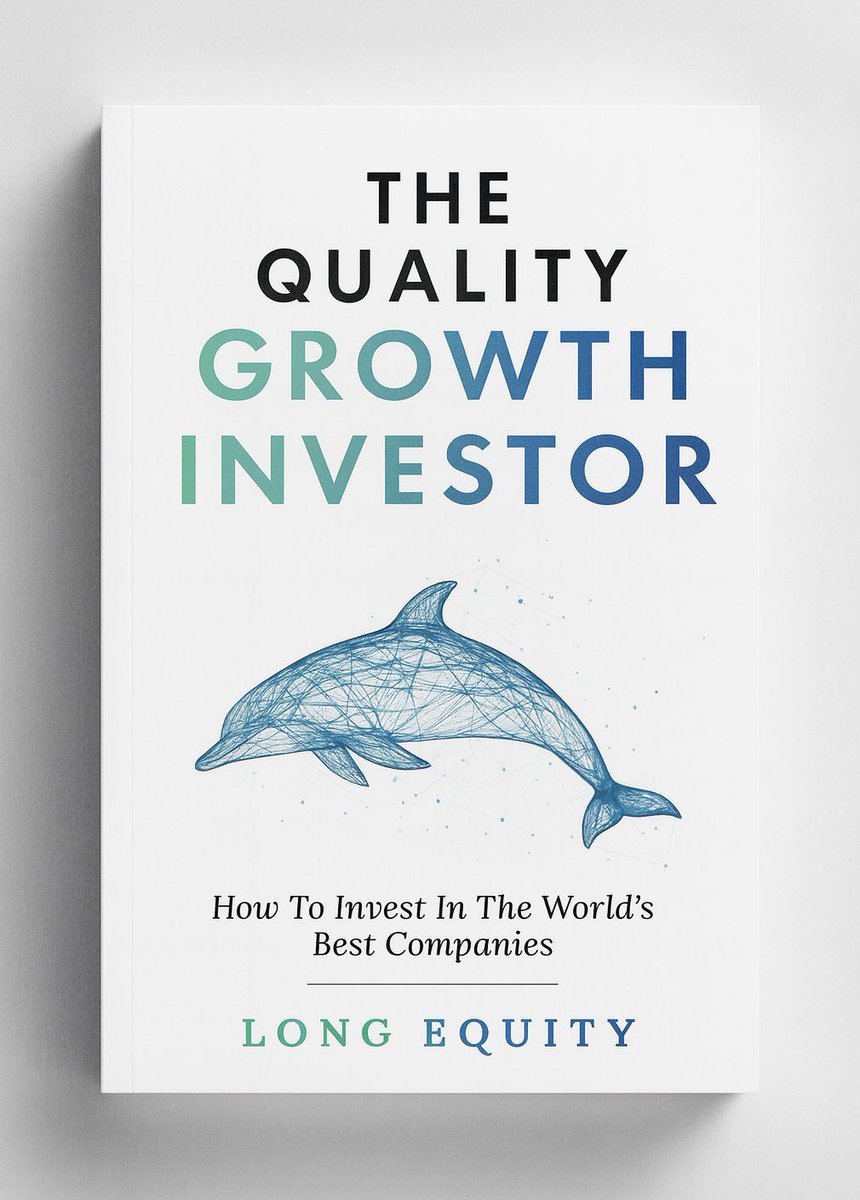
If you're looking to grow as an investor, then I have written a book and have created a spreadsheet of quality growth companies that features quality, linearity and valuation metrics.
I like companies that can turn revenue growth into higher FCF growth, and can turn FCF growth into higher FCF/share growth. That's the beauty of boosts from pricing power, operating efficiency, cash conversion and share repurchase.
Here's a list of companies that are doing just that.
How should investors weather a storm, like a market downturn?
Here are my personal 7.
1. Only invest what you're willing to lose. A -50% draw down will probably happen at some point during your investment history. Prepare accordingly.
2. Diversify. Not all risk can be diversified away, but any risk that can be diversified away, should be.
3. Understand the cause of the downturn. It's nearly always driven by uncertainty. But where is the uncertainty coming from? Public health, war, high inflation?
4. Keep an eye on quality. A severe drop in share price does not always imply a severe deterioration in company quality.
5. Keep an eye on valuation. Not just a company's individual valuation (i.e. its cash flow relative to its market price), but also the equity market relative to the bond market (e.g. the S&P 500 earnings yield relative to the 10yr Treasury yield).
6. Remember, historically equities have been the best investment (relative to land, bonds, cash, gold). But that doesn't mean they're immune to volatility. Inflation also compounds by removing your spending power, you just can't see it.
7. Learn the right lessons. If you lost money during the dot-com bubble, GFC or Covid, then the wrong lesson to learn would be to not invest in equities. The right lesson would be to manage risk according to your own risk appetite.
What's one piece of advice that keeps you grounded during a downturn?
Companies that are rarely discussed, but that I find interesting:
Parker-Hannifin
Wise
Badger Meter
McKesson
Amphenol
Nemetschek
ATOSS Software
Traveller’s Company
Chubb
What would you add?
@pmul1234 Referring to the market as a whole. Doesn't happen every decade. But history suggests it's likely to happen at least once in your investment career.
How should investors weather a storm, like a market downturn?
Here are my personal 7.
1. Only invest what you're willing to lose. A -50% draw down will probably happen at some point during your investment history. Prepare accordingly.
2. Diversify. Not all risk can be diversified away, but any risk that can be diversified away, should be.
3. Understand the cause of the downturn. It's nearly always driven by uncertainty. But where is the uncertainty coming from? Public health, war, high inflation?
4. Keep an eye on quality. A severe drop in share price does not always imply a severe deterioration in company quality.
5. Keep an eye on valuation. Not just a company's individual valuation (i.e. its cash flow relative to its market price), but also the equity market relative to the bond market (e.g. the S&P 500 earnings yield relative to the 10yr Treasury yield).
6. Remember, historically equities have been the best investment (relative to land, bonds, cash, gold). But that doesn't mean they're immune to volatility. Inflation also compounds by removing your spending power, you just can't see it.
7. Learn the right lessons. If you lost money during the dot-com bubble, GFC or Covid, then the wrong lesson to learn would be to not invest in equities. The right lesson would be to manage risk according to your own risk appetite.
What's one piece of advice that keeps you grounded during a downturn?
In the battle between Visa and Mastercard, who wins? Many quality investors, including myself, invest in both.
I put their financials side by side.
- Growth: $MA is seeing slightly higher revenue and FCF growth than $V
- Margins: Historically $V had higher margins, but the gap has narrowed.
- ROC: $MA is the clear winner here.
- Debt: Nothing really in it. Both have strong balance sheets.
Share count: Both are heavily buying back stock.
SBC: Nothing in it, levels are low for both.
CAPEX: Nothing in it, both are very capital light businesses.
Dividends: Both are growing their dividends at the same rate, but Mastercard pays out less FCF to do so.
Valuation: Mastercard is slightly cheaper with a 2.7% FCF yield.