A massive thank you to @SchmidtFellows. I would not have been capable of putting this project together without the opportunity they gave me to shift research focus post-PhD and their continuing support ever since.
We are proud to celebrate our 2018 Fellow Fred Richards @imperialcollege who has been awarded a prestigious €1.5M @ERC_Research grant to expand his vital interdisciplinary research to improve the accuracy and reliability of sea-level forecasts https://t.co/6l0ion6uHD
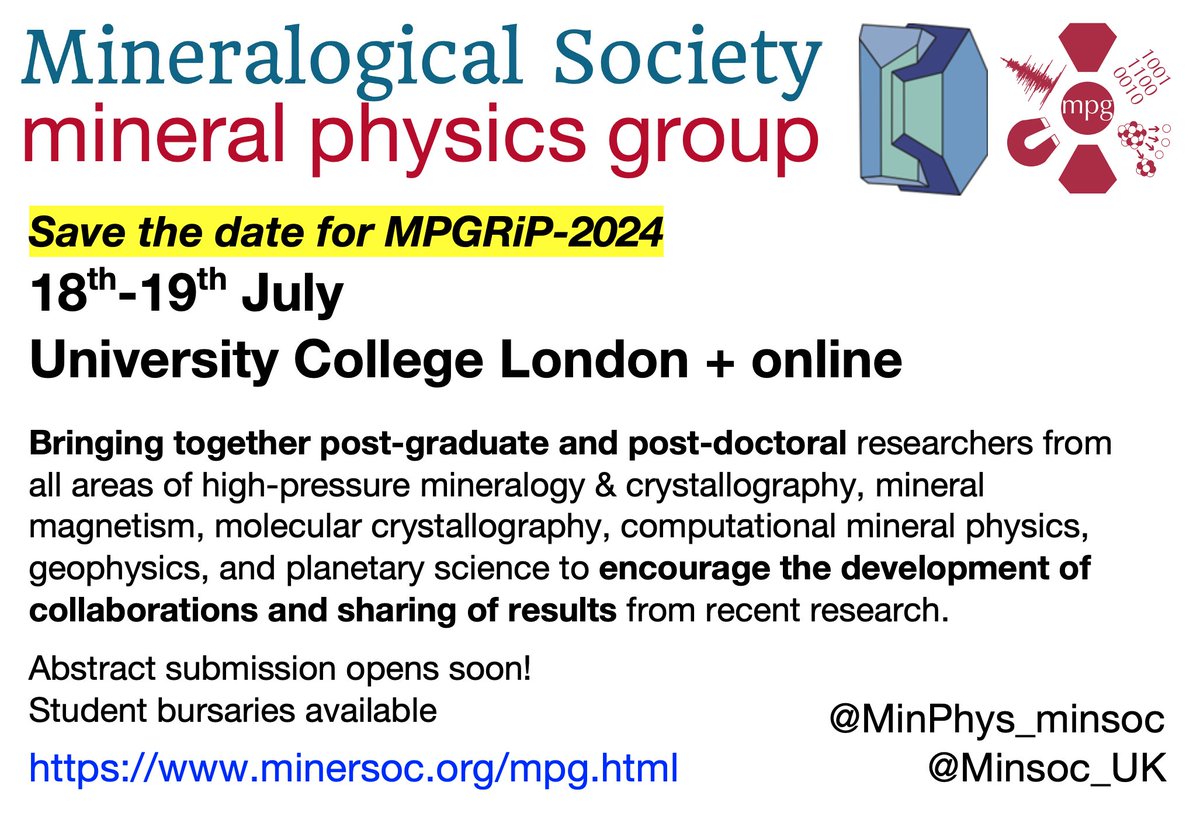
⚠️SAVE THE DATE⚠️
If you are a member of the #Mineral#Physics community or related fields, then please attend our 2024 #Research in Progress meeting @ES_UCL on the 18th+19th of JULY. Abstract submission opens soon, and student bursaries are available! Please RT @MinSoc_UK@ehprg
Great new work by James on the thorny problem of estimating Antarctic geothermal heat flow! Our approach seems to compare favourably with previous attempts and may help to refine future ice sheet models.
🚨Geothermal heat flow beneath the Antarctic Ice Sheet: difficult to infer, but important to know. Check out our new method and model, just published in GRL! #OpenAccess
https://t.co/diLWP06b8s
My grandpa who is 85 started making this rock map of Scotland in 1992.He collected rocks during amateur geology trips over 30 years. He says it had to be geologically correct and also aesthetically pleasing.He asked if I could share online as He wants to go viral so please share
Today at #AGU2023: @freddrichards from @ESEImperial will present (DI53A-04, 14:46 in room 151, see https://t.co/r7GnODsLLy) about our paper on the density of the Earth’s lower mantle from seismic, geodynamic and geodetic data (https://t.co/ZBAY5tY0nI)
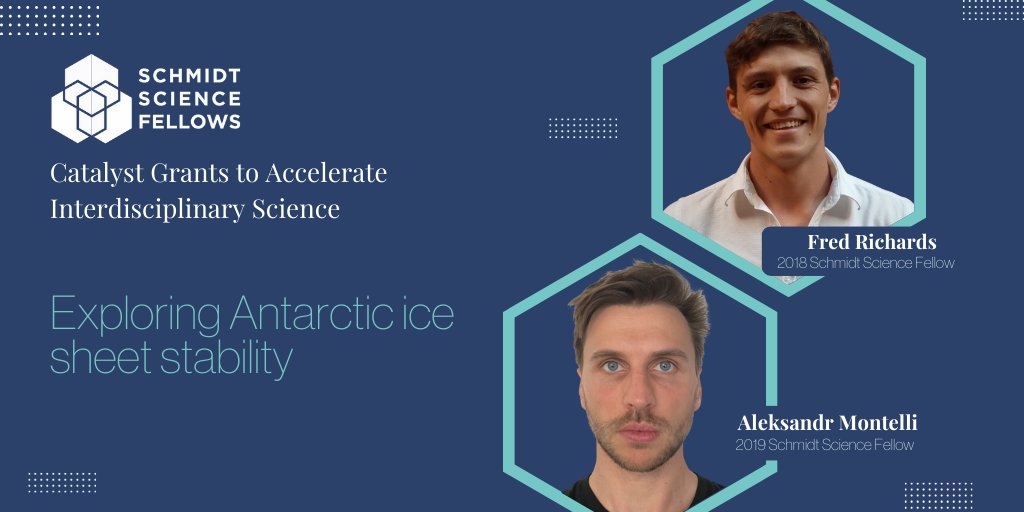
An early stage collaboration by @sasha_montelli@freddrichards exploring future Antarctic ice sheet stability is one of five new Catalyst Grants supporting our senior fellows. Discover more about this and all our ‘23 Catalyst Grants: https://t.co/dIY4eOLxUL
🚨NEW EPISODE‼️🚨
Dr Fred Richards: the mantle, sea levels and roman fishtanks.
How does the crust respond to melting icecaps? How are our days getting longer?
Listen now! Link in bio
Insta @coepod
#geology#mantle#planetearth@freddrichards
https://t.co/RHqAjBimqs
📰New piece in the @ConversationEDU by @vandeflierdt, Head of ESE, and the @SWAIS2C team👇
‘We can still prevent the collapse of the West Antarctic ice sheet – if we act fast to keep future warming in check’
https://t.co/VuImrCM5o1
Excited to share our new @ScienceAdvances paper on Mid-Pliocene sea level. By correcting ancient shoreline elevations across Australia for mantle-flow-driven vertical motions, we obtain a sea-level estimate that is consistent with mid-range projections:
https://t.co/xBTD9LhYQe.
“If we want to know what is going to happen in the next 100 years, we need to have an accurate model for how ice sheets respond to climate change,” Dr Mark Hoggard from @anuearthscience said.
Read more about this new study on Antarctic ice sheet melt:
https://t.co/ZKTJbIryAr
Numerical models of dynamic topography, glacial isostatic adjustment & reef isostasy help reconcile the discrepancy between onshore & offshore sea-level indicators of the Last Interglacial in Queensland, Australia.
@alessio_r_@j_austermann@freddrichards
https://t.co/N0uWmaOBaf
🚨 New #preprint! Excited to share a new model of heat flow into Antarctica's ice, incorporating variations in crustal composition: https://t.co/WWYsbzLcok.
A new study in @ScienceAdvances by researchers @oxuniearthsci along with @ESEImperial and @ColoradoStateU reveals how damaged tectonic plates can heal themselves after large magmatic events if given enough time.
https://t.co/VFDihoNIi3
@PlanetaryAnna I guess I was pointing to the solutions offered in part 5 of the original thread and the emergence of AI tools for better translation. However, I don’t have any good answers the on-the-spot oral communication; that’s hard even for a mother-tongue English speaker!
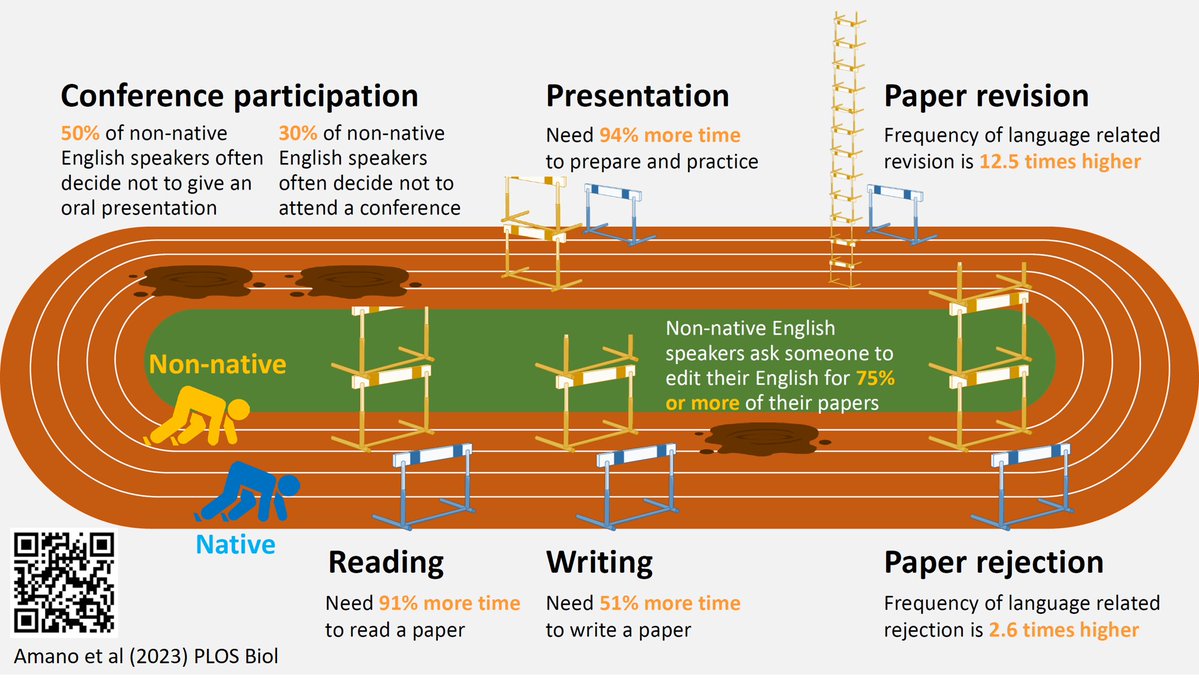
This is super interesting and makes me feel very lucky. I’ve always been aware that non-native English speakers have to work so much harder when communicating their science, but these numbers are truly humbling. Encouraging that some new solutions are emerging though.
How hard is it to do science in a language that’s not your first language? We quantified the severity of #languagebarriers for non-native English speakers when reading/publishing papers and attending/presenting at international conferences.
https://t.co/Z6za22rMgg
1/9