I recently visited Hiroshima, and stood at the epicenter of a city scarred by the unimaginable horror caused by a single nuclear bomb dropped in 1945. What I saw, the stories I heard, and the haunting sadness that remains, will stay with me forever.
Five steps to help solve tough problems:
1) Set aside preconceptions
2) Analyze the cause
3) Consider your stakeholders
4) Think about the broader implications
5) Start framing the solution https://t.co/54Ati4eX8v
[👨💼 Slide Deep Dive] Framework for Integrated Strategy Development
The slide presents a framework for strategy development, emphasizing the importance of interconnected strategy elements. It outlines a structured approach to creating a comprehensive strategy model, which is crucial for organizations aiming to align their long-term vision with actionable plans.
At the top, the Vision Statement serves as the foundation, articulating the organization’s perspective on future industry dynamics and its overarching goals. This element answers the question of what success looks like in the long run. Below this, Corporate Strategy acts as a bridge, detailing the major steps necessary to achieve the vision. It highlights the need for careful consideration of investments and resource allocation, while also addressing potential strategic risks.
The slide further breaks down the strategy into BU & Functional Strategic Plans, which define medium-term objectives and key initiatives. This section emphasizes accountability and the necessity of outlining expected financial outcomes. Following this, BU & Functional Operational Plans delve into the specifics of planned actions, providing a rationale and detailed financial projections.
➡️ Download the full deck >> https://t.co/9StlSzJWhK
Explore more slides from this deck:
➡️ Framework for Assessing Cost and Asset Drivers - https://t.co/8uBpyH175R
➡️ Strategic Prioritization Framework - https://t.co/a6pby67jnS
➡️ Stakeholder Engagement and Communication Strategy - https://t.co/VtCOHYmWz0
➡️ Strategies for Enhancing Market Position - https://t.co/fQ9c17F76j
➡️ Assessing Segment Profitability and Competitive Position - https://t.co/dCLuQmi9Nl
Growth mindset vs. fixed mindset—how do you apply it?
A fixed mindset makes us quit too soon. A growth mindset lets us improve over time.
The key? Your worth isn’t tied to your performance.
What’s something you once struggled with but got better at?
@Gustavoleitepy Hay tantas necesidades y el objetivo que más resaltas de tu viaje es “defender la vida y la familia integrada por el hombre y la mujer” ¿?
¿Es tan grande la necesidad porque la familia ya no está siendo integrada por un hombre y una mujer? Es absurdo.
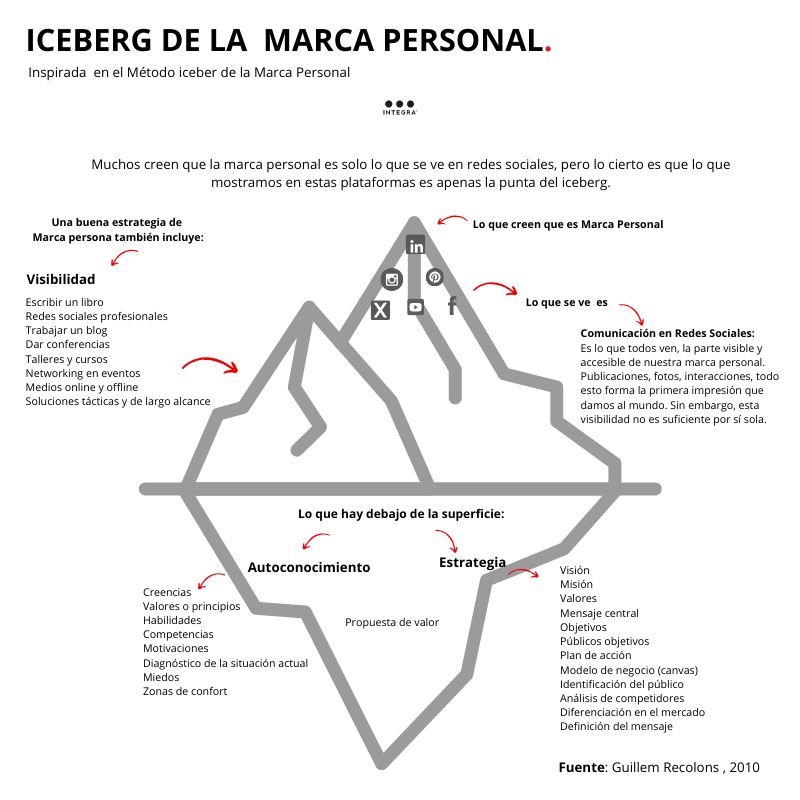
Marca personal
La esencia, lo que no se ve, el trabajo que se realiza de forma silenciosa, es lo hace que lo que se muestra en redes sea coherente, auténtico y efectivo
El iceberg de la Marca Personal
😈🇵🇾El consumidor paraguayo es infiel: clientes vistan tres tiendas diferentes cada mes
📍Para los paraguayos, las promociones son más importantes que las marcas
https://t.co/6wAVTOY2Hl
On the last day of every quarter, I do a self-check-in.
I answer 10 questions—it's a 30-minute exercise that helps me stay on course and achieve my goals.
I call it my Personal Quarterly Review.
Here's how it works (and why everyone should do this):
Step 1: Reflect
I ask myself two simple questions to REFLECT on the prior quarter:
1. What created energy this quarter?
Review your calendars from the quarter. What activities, people, or projects consistently CREATED energy in my life? Write them down. Did I spend ample time on the energy creators or did they get neglected?
Goal: Spend more time on these in the quarter ahead.
2. What drained energy this quarter?
Review your calendars from the quarter. What activities, people, or projects consistently DRAINED energy from my life? Write them down. Did I allow energy drainers to persist or did I cut them in real-time?
Goal: Less time on these in the quarter ahead.
Step 2: Assess
Next, I ask three core questions to ASSESS my current heading:
1. What is my most important thing right now?
The "most important thing" is the big, long-term goal you are focused on. Am I dedicating the necessary energy to it?
When you're in the trenches, it's easy to lose sight of the important (and focus on the urgent) —this question forces you to cut through the noise.
2. Are my current systems and habits aligned with my most important thing?
Review the quality of your daily systems and whether they are creating the appropriate momentum toward your medium and long-term goals. If you didn't change anything, where would you end up?
If you don't like the answer, your systems need a revamp.
3. What is creating a drag on my progress right now?
Review the quality of your attitude, environment, behaviors, and relationships. Are there elements that are creating unnecessary drag in your life?
Step 3: Adjust
Finally, I conclude with five questions to ADJUST my course:
1. What are the energy-creating activities I need to spend more time on? How can I carve out more time for these activities?
2. What are the energy-draining activities I need to delegate, delete, or minimize? How can I execute against that?
3. Am I dedicating the necessary energy to my most important thing? If not, what needs to change?
4. What changes need to be made to my current systems or habits to more appropriately align with my medium and long-term goals?
5. What do I need to eliminate from my life in order to reduce drag and accelerate my progress?
The Quarterly Review is a powerful tool enabling you to reflect on your personal progress and growth.
Through this simple process, you'll begin to make real-time course corrections that will compound over time, leading to greater success and achievement in all areas of your life.
Spend a few minutes this week walking through the process with a notebook or blank sheet of paper.
You can download a free PDF template of this process here: https://t.co/NGhmClWAGl





![flevydocs's tweet photo. [👨💼 Slide Deep Dive] Framework for Integrated Strategy Development
The slide presents a framework for strategy development, emphasizing the importance of interconnected strategy elements. It outlines a structured approach to creating a comprehensive strategy model, which is crucial for organizations aiming to align their long-term vision with actionable plans.
At the top, the Vision Statement serves as the foundation, articulating the organization’s perspective on future industry dynamics and its overarching goals. This element answers the question of what success looks like in the long run. Below this, Corporate Strategy acts as a bridge, detailing the major steps necessary to achieve the vision. It highlights the need for careful consideration of investments and resource allocation, while also addressing potential strategic risks.
The slide further breaks down the strategy into BU & Functional Strategic Plans, which define medium-term objectives and key initiatives. This section emphasizes accountability and the necessity of outlining expected financial outcomes. Following this, BU & Functional Operational Plans delve into the specifics of planned actions, providing a rationale and detailed financial projections.
➡️ Download the full deck >> https://t.co/9StlSzJWhK
Explore more slides from this deck:
➡️ Framework for Assessing Cost and Asset Drivers - https://t.co/8uBpyH175R
➡️ Strategic Prioritization Framework - https://t.co/a6pby67jnS
➡️ Stakeholder Engagement and Communication Strategy - https://t.co/VtCOHYmWz0
➡️ Strategies for Enhancing Market Position - https://t.co/fQ9c17F76j
➡️ Assessing Segment Profitability and Competitive Position - https://t.co/dCLuQmi9Nl](https://pbs.twimg.com/media/GmkhD8qaEAMummE.jpg)