right now i have fable still in the subscription with limits just reset; i have gpt 5.6 just added to the mix; and i have grok 4.5 also working super well
after using all of these for a while, i suspect something really interesting is about to happen
tl;dr - i think anthropic is in serious trouble
1. portfolio competitiveness
opus and sonnet (who still remembers they have haiku?) are basically not even worth using any more. both gpt 5.6 and grok 4.5 are just outright better
fable is the only real competitive option from anthropic now, but it's not even going to stay in the subscription for a while. it's also super slow and expensive
not having enough focus on efficiency and being obsessed with intelligence upper bound might have just led anthropic down a bad road
2. compute constraint
an interesting side effect of grok becoming so good is that its demand might explode, especially with cursor now heavily doubling down on grok
if grok suddenly gets a lot of usage, it will need compute. and xAI may not want to rent compute to anthropic any more
if anthropic can't secure more compute, they will be in trouble because there's just no way to grow the business
3. modalities
both openai and xAI started investing in multi-modality since the beginning, while anthropic tunnel-visioned into text and code
now i find myself increasingly rely on openai's image generation and grok's video generation. if i can only keep one subscription i would have no choice but to drop anthropic because i do need the other modalities
overall at this rate, what's going to happen is that the vast majority of agentic work will be done by non-anthropic models, and only very occasionally other models will escalate hard problems to fable as an advisor
my advice for consumers remains the same as what I've been saying for a while - get ready for a multi-agent, multi-vendor world. use tools that allow you to freely switch between models, and build a setup where you can use the right model for the right task
i had a different experience.
fable is a f1 car, 5.6 sol @ ultra is a tesla model x plaid.
does it find things that fable misses during planning and coding? yes, most of the time.
but - for the hardest of problems, does fable routinely find things that 5.6 doesn't? also yes, some of the time.
is 5.6 way faster and affordable? yes.
with an unlimited token budget, what am i currently using 95+% of the time?
gpt 5.6
I was an early tester of GPT-5.6 Sol. I was asked to not share demos until after launch but it is a very good model.
It is of similar ability, but quite different feel, than Fable. Fable wants to go off and do work on its own pace, Sol is faster but works with you in steps more.
I had early access to 5.6/Sol for ~month. Sol is my default. It is faster, plans/judges just as good as Fable, and I think produces better overall work. I’ll reach for Fable still for highly targeted debug or performance work with clear reward functions.
A cheeky way I describe Sol vs Fable to my friends is that Sol is a charismatic, efficient, talented coworker you’re jealous of. Fable is a genius recluse that is brilliant at its fixations but doesn’t go out, doesn’t date, and you don’t want to hang out with them much lol.
Fable is undefeated at highly targeted debug/security/performance goals. It’s a sight to behold and I was never able to get Sol to push as hard in this category. I’ll keep using it for this.
Sol is better or comparable at everything else, in my experience. Give it a shot, it’s hard to describe but it’s just more enjoyable to work with.
(Disclaimer I have no financial ties to either lab, wasn’t paid for any of this.)
@davepl1968@Scobleizer after we cut the cord to siphoners, what would you say might be principal key steps in provisioning/configuring a text or multimodal like gpt-oss or even basics like gemma4 to run as quick as possible? what is the key research intersection? say im on non deb rhel alma or fedora.
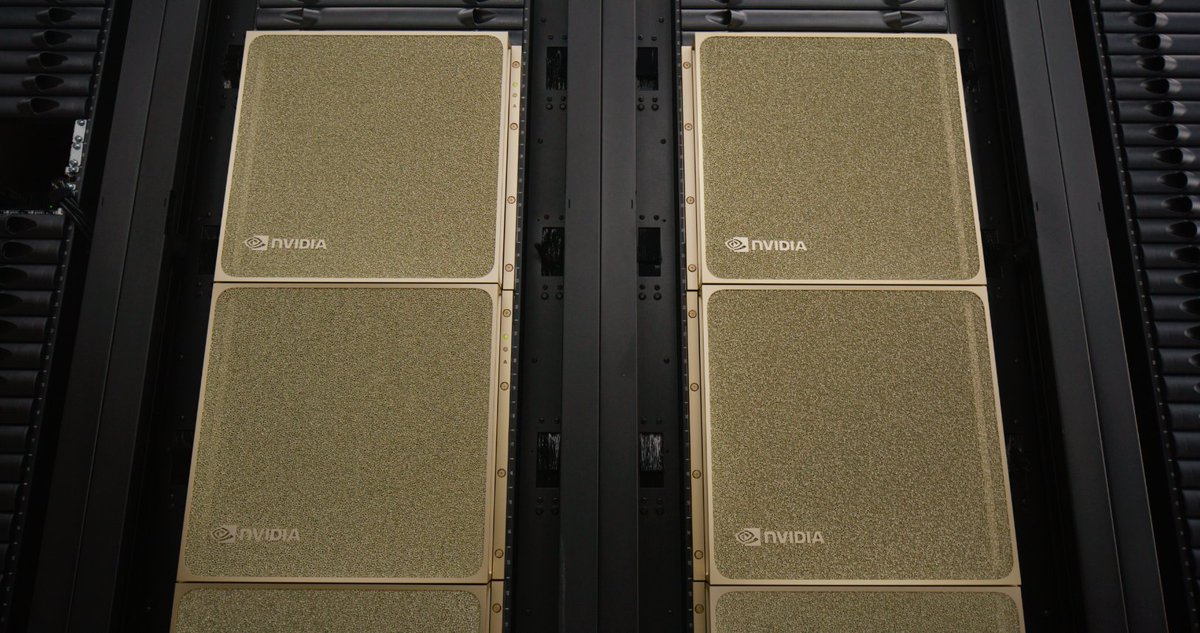
Powered by NVIDIA Blackwell GPUs, #NVIDIADGX B200 is the foundation for your AI factory — delivering 3x the training performance and 15x the inference performance of previous-generation systems.
Specs include:
✅ 8x Blackwell GPUs
✅ 1,440 GB of GPU memory
✅ NVLink bandwidth: 14.4 TB/s
✅ 2 TB of system memory
Dive into the features and learn how DGX B200 enables enterprises to accelerate any AI workload ➡️ https://t.co/G6OiECBJ5f
Better insights ➡️ better indexing ➡️ faster, higher-quality answers.
We're teaming up with @OpenAI to launch a first-of-its-kind research pilot! By combining our global network signals with OpenAI’s frontier search capabilities, we’re exploring ways to make web indexing more effective, timely, and accurate. https://t.co/uUocLcDjMc
Cloudflare Access now adds file transfer controls for browser-based RDP in beta. Lock down uploads and downloads to prevent sensitive data from leaking on BYOD devices.
https://t.co/jvQmrWEbSi
New Anthropic research: A global workspace in language models.
Of everything happening in your brain right now, only a tiny fraction is consciously accessible—thoughts you can describe, hold in mind, and reason with.
We found a strikingly similar divide inside Claude.
The solution to American open-source lagging behind Chinese open-source: @elonmusk & @cursor_ai releasing their model tomorrow in open-source! It's that simple and that would be a massive contribution to the field and to the US!!
We've created a comprehensive Retrieval Harness for modern agentic retrieval in 2026.
The harness provides a persistent data pipeline that can connect to a data source, index and update a large knowledge base, and expose a broad set of tools akin to filesystem operations (semantic/keyword search, regex grep, file search, read).
You can plug this into any of your agents to let them autonomously crawl an arbitrary knowledge base to solve a task with any complexity.
Check out our reference implementation: https://t.co/ddLYChhfOq
LlamaParse: https://t.co/XYZmx5T7JA