The Banks Are Preparing for Something Big
How?
They’re quietly doing the same thing they did before every major deflationary shock of the last 2 years.
Here’s what they’re not telling you, and why it matters now more than ever:
In the last month, primary dealers (the banks that trade with the Fed) have loaded up on one thing:
Short-term Treasury bills.
Not notes. Not bonds. Bills.
They’re giving up better returns elsewhere to get their hands on these. Why?
Collateral.
This exact pattern has happened before every recent blow-up:
→ Silicon Valley Bank (Feb ‘23)
→ The carry trade crisis (Aug ‘23)
→ The mini global dollar shock (Dec ‘23)
Each time, primary dealers stacked bills right before things started breaking.
Right now, the 4-week Treasury yield is collapsing, well below repo rates.
That means:
Traders are so desperate for safety, they’re willing to take a worse return to hold these short-term bills.
And it’s not just the bill market.
Swap spreads, the key interest rate signal for future expectations, are flashing red too.
The 10- and 30-year swap spreads are stuck near record lows.
Historically, that means one thing:
Rates are headed lower, and fast.
But here’s what most people don’t realize:
The swap market isn’t guessing.
It’s leading everything else.
It told you inflation wasn’t real in 2021.
It signaled collapse before the Fed hiked.
It’s been right for decades.
And now, it’s screaming again.
So what’s the takeaway?
Banks are loading up on collateral.
The swap curve says rates are going down.
The consumer economy is weakening.
And the monetary plumbing is creaking again.
In short:
Deflation risk is back on the table.
The media is watching stocks.
But the real players are watching collateral.
Want to know what comes next?
Join our free macro deep-dive this week:
Thursday, July 10
https://t.co/fbjrT2ZvZN
We’ll walk through:
— What swap spreads are signaling
— Why dealers are buying bills like mad
— What this means for YOU and your money
You can’t afford to miss this.
The next big shift is already underway.
The future expands the variance of human condition a lot more than it drags its mean. This is an empirical observation with interesting extrapolations.
The past is well-approximated as a population of farmers, living similar lives w.r.t. upbringing, knowledge, activities, ideals, aspirations, etc.
The future trends to include all of:
- the transhumanists who "ascend" with neuralinks etc., and the Amish living ~19th century life.
- those who "worship" ideals of religion, technology, knowledge, wealth, fitness, community, nature, art, ...
- those exploring externally into the stars, those exploring internally into minds (drugs++), or those who disappear into digital VR worlds
- those who date a different partner every day and those who are monogamous for life
- those who travel broadly and those who stay in one location their entire life
- those in megacities and those off-the-grid
For almost any question about a dimension of human condition, the answer trends not to any specific thing but to "all of the above". And to an extreme diversity of memetics. At least, this feels like the outcome in free societies that trend to abundance. I don't know what it feels like to live in such a society but it's interesting to think about.
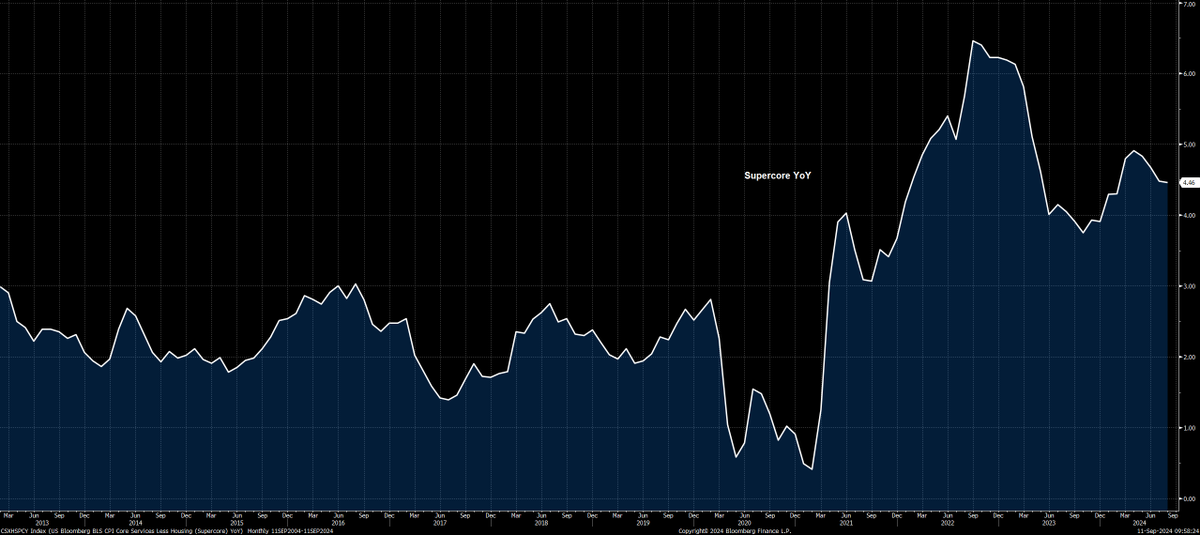
J Powell called supercore CPI "the most important category for understanding the future evolution of core inflation." Yet, he's going ahead with cuts with supercore CPI at over 4.5%. Bottom line in soft-landing there's no reason to own bonds.
Lets be clear that a rising #MOVE ie bond vol (black line inverted) is not positive for #liquidity over coming 12m because of lower collateral multiplier. Not a problem yet... but well worth watching @TheBitcoinLayer
14) Comparisons to the large bear market rallies in 2001 and 2008 are irrelevant because they occurred during a secular bear market.
This secular bull cycle is still just two-thirds of the way done.
When #bitcoin peaks ('24-'25) for this 4Yr cycle, I'm a believer that we will go into a very long winter. Probably 8 years (2033) between ATH's again.
Especially likely if this cycle forms as a broad blow-off.
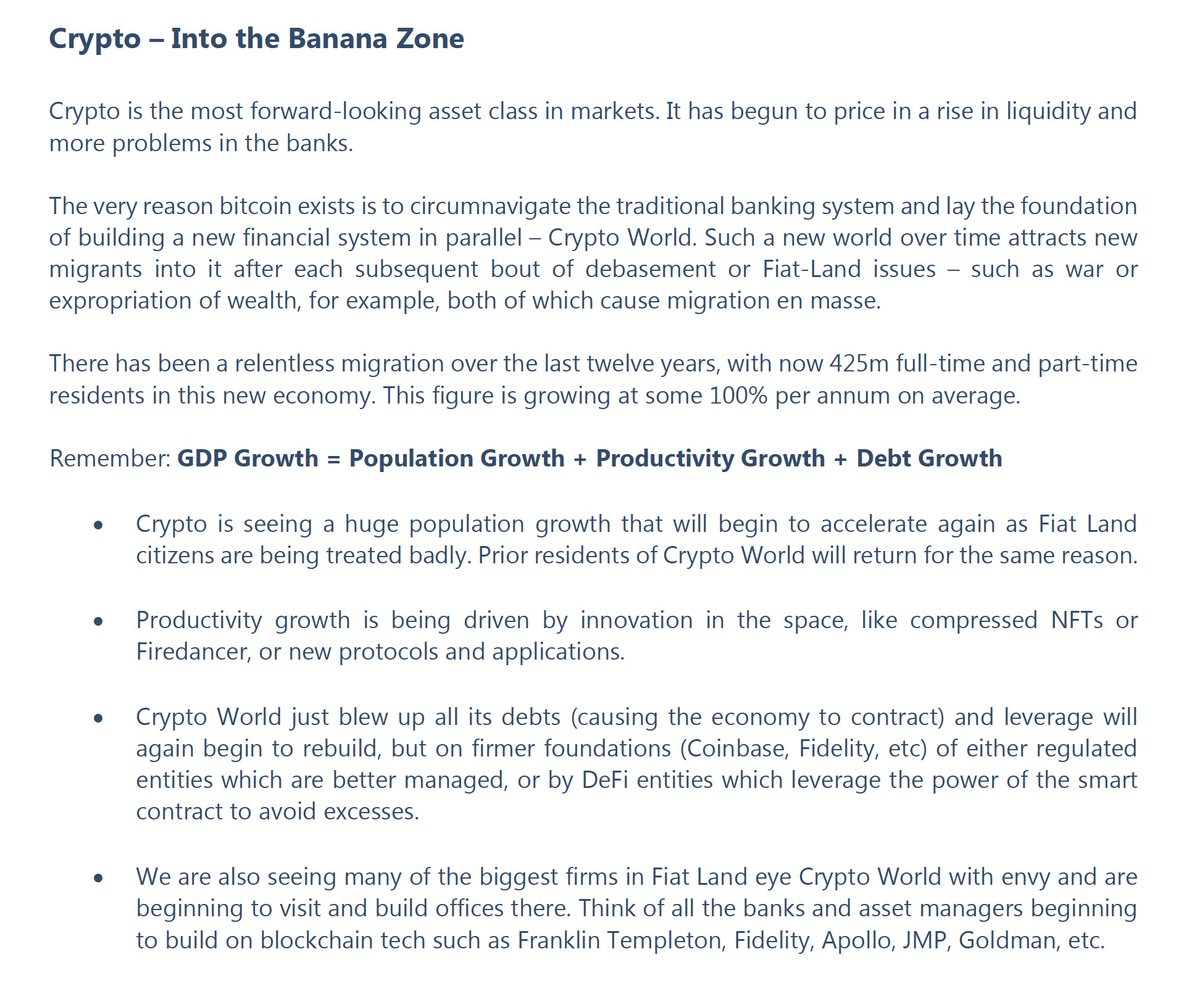
I thought I'd share a new way of thinking about crypto that might help make sense of it all for you.
This first appeared in my November Global Macro Investor (GMI) monthly. I don't normally share direct work from GMI bit I think its worth it.
Enjoy.
1/
This is a Wonderful Market for Dollar Cost Averaging
"Small-cap and mid-cap stocks are nearly as cheap as they were on a forward P/E basis as they were during the Covid crash. They’re cheaper now than they were during the 2010s."
https://t.co/QIdIU99tQJ
by @awealthofcs
So, no one pays in cash or uses it but you think you can protect privacy??! You sold your info to the Government, Police, security agency years ago via Google, Apple, banks, credit cards, phones, global entry, etc. Its over before it even started. You sold your soul. We all did
With virtually most negative term premia ever; #Fitch downgrade; #Japan#YCC change; #BRICS currency threat and signs #US tax revs falling....should be over 4.5% already! Watch for Janet-style YCC
Look here’s the problem with the recession crew owning long-dated USTs and duration (these include several i know and respect). 🧵
You can’t have it both ways. US is running 6-8% deficits *right now* into a slowdown. This blows out to over 10% in recession even with…
1/17
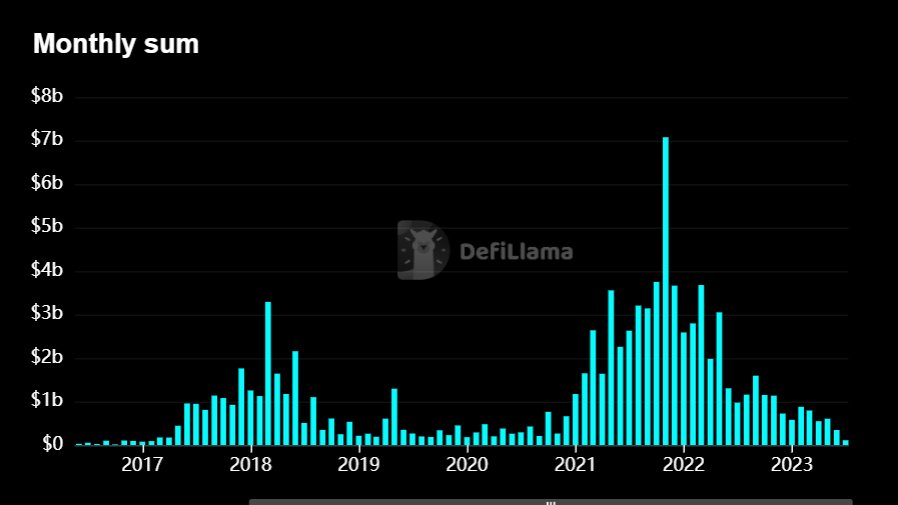
Last month, only $109mm of VC funding entered crypto in June according to DeFiLlama, which is lower than any month during the absolute depths of the 2018 bear market.
Funding for crypto projects has almost entirely dried up -- down 98% from its peak in 2021
One of the most interesting thing is that the Jurozek works like a massive put here.
The stock basically only have upside from here as i suppose they will keep buying the stock when down and after STS have unlimited funds to do so. With seperation in Q1 2024 as upside catalyst
What drives #stockmarkets are lower #inflation and rising #liquidity....we have both in our view Forget the economic cycle...markets are forward discounting mechanisms they look thru #recession