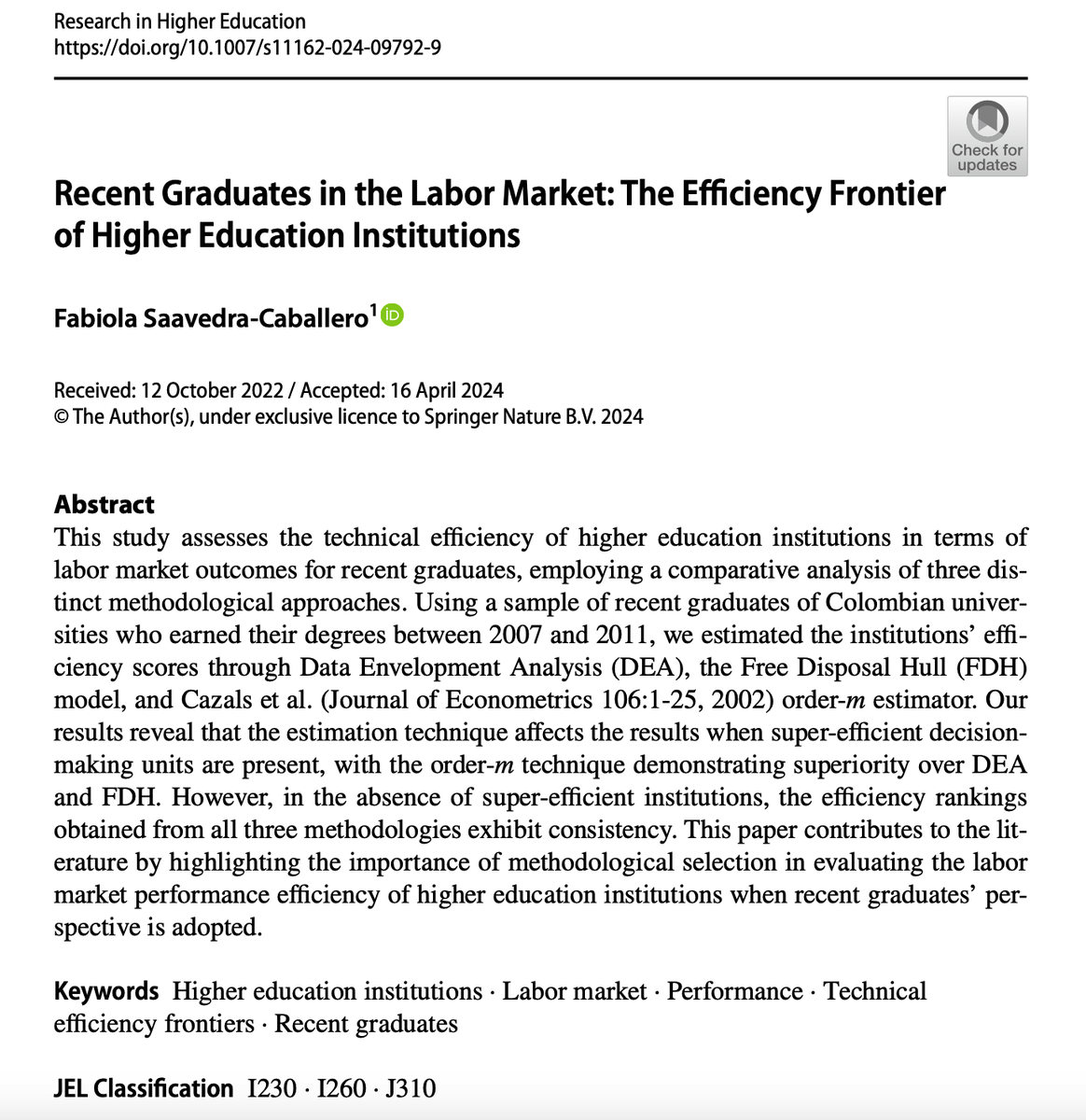
I am happy to share my latest solo paper published in Research in Higher Education. By comparing three non-parametric methodologies, I assess the #efficiency of #highereducation institutions in labor market outcomes for recent graduates. Available here: https://t.co/aS9A5D1ydl
🌟 ¡No te pierdas la sesión especial de BOWEN en la 16th BCDE 2025! 🌟
📅 ¡Solo faltan días! Únete en Santa Cruz para escuchar a Conchita D'Ambrosio y Gabriela Inchauste en "Mujeres en Economía: Liderazgo, Investigación e Inspiración."
💡 ¡Participa y aprende!
@toddpugatch I consider it important to understand how education affects labor market outcomes.
In this paper, I look at the efficiency of higher education institutions from the student’s perspective: https://t.co/CwuxeqDDEi
I hope it helps! :)
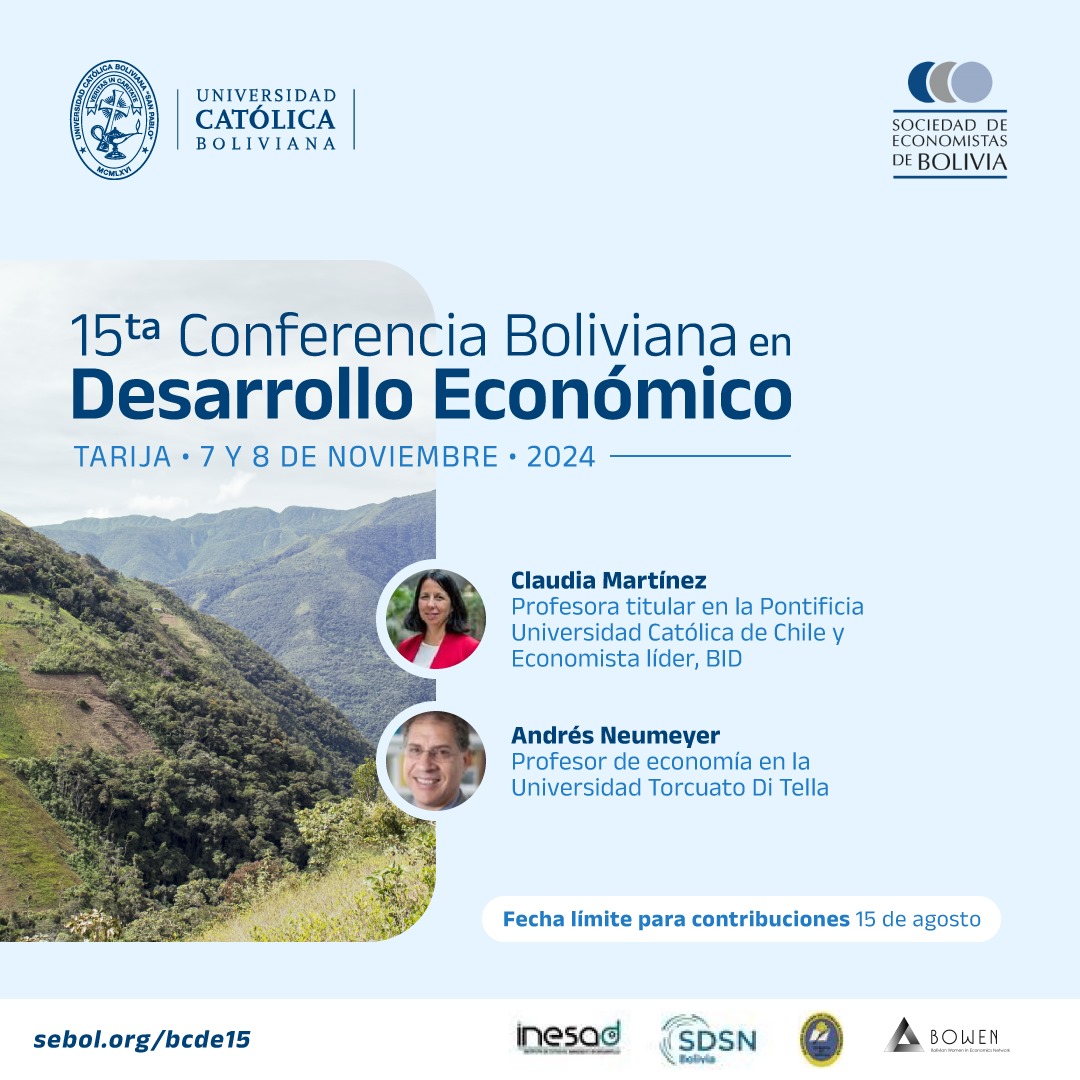
Call for papers!
The 15th edition of the Bolivian Conference on Development Economics (#BCDE2024) will take place from 7-8 November at Universidad Católica Boliviana in Tarija, Bolivia.
For more details: https://t.co/HHSdOQGD8S
#EconTwitter#CallForPapers
The paper shows that the choice of estimation technique impacts the results when a student perspective is adopted, particularly in the presence of super-efficient decision units, when “order-m” outperforms DEA and FDH.
I am happy to share my latest solo paper published in Research in Higher Education. By comparing three non-parametric methodologies, I assess the #efficiency of #highereducation institutions in labor market outcomes for recent graduates. Available here: https://t.co/aS9A5D1ydl
Hoy se conmemora el Día Internacional de la Mujer #8M, proclamado en la Asamblea de la ONU en 1977. Su origen se basa en la búsqueda del derecho al voto, mejores condiciones de trabajo y la igualdad de género.
#BOWEN se suma a la conmemoración de este día
#InternationalWomensDay
New paper (or christmas present)! Check our paper accepted at the Journal of Economic Inequality to learn a strategy for handling bracketed income data (or other variable) inspired by our work in Grenada at the @WBG_Poverty.
Skills for work are crucial, especially since 70% of people in Latin America & the Caribbean rely exclusively on their jobs for income.
Dive into our blog with @mapiti & @gra_rucci for insights on how #TVET is shaping a brighter future!🚀
🔗https://t.co/VfyTkk8ujB
Con el apoyo del GDLab y el Comité de Inclusión Etnica de LACEA, este sábado se llevará a cabo la 1ra sesión invitada sobre etnicidad y raza en una Reunión de LACEA. Será de 1:15 pm a 2:45 pm (hora local) en el Auditorio Marino Troncoso.
Aquí un blog:
https://t.co/qvB9vo1Sn8
Piensa en 5 académic@s destacad@s en el ámbito de la economía en Bolivia. ¿Cuántas son mujeres? Prepárate para la sesión especial de #BOWEN en el #BCDE14.
Te esperamos!
#NoSoyMatilda
A todas las mujeres bolivianas, desde BOWEN les deseamos un futuro más inclusivo, equitativo y justo. Sigamos apoyándonos y construyendo juntas!
#DiaDeLaMujerBoliviana
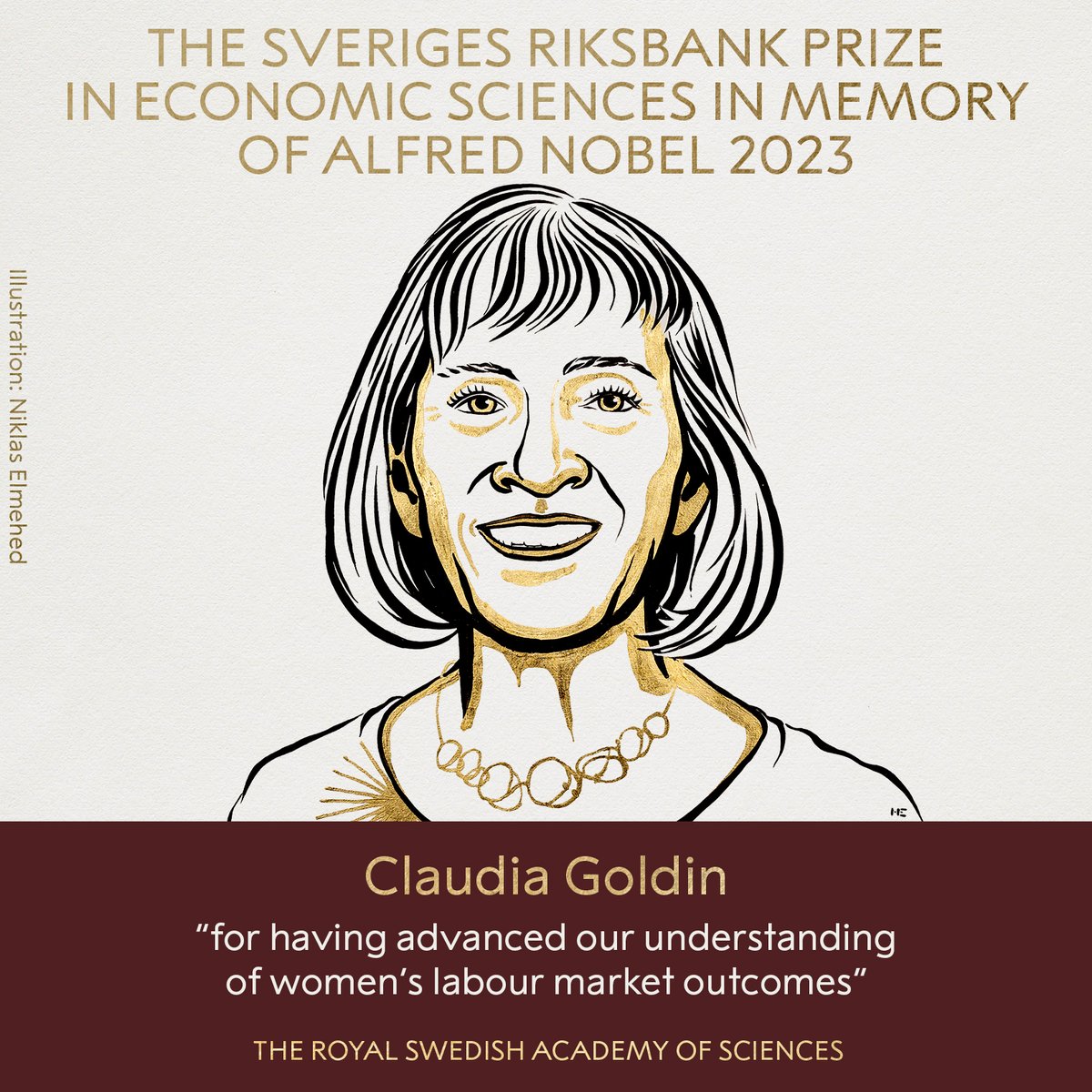
BREAKING NEWS
The Royal Swedish Academy of Sciences has decided to award the 2023 Sveriges Riksbank Prize in Economic Sciences in Memory of Alfred Nobel to Claudia Goldin “for having advanced our understanding of women’s labour market outcomes.”
#NobelPrize
An important new paper in the Proceeding of the National Academy of Sciences. https://t.co/A82jRFPinn
This calculates the impact of WFH frequency from 0 to 5 days a week on carbon emissions. It combines commuting, non-commuting travel (e.g. driving to buy lunch if you WFH), office energy, home energy and ICT energy.
It finds moving to 2 days a week reduces carbon use by 11%, 4 days by 29% and 5 days a week by a staggering 58%. This mainly from by less commuting and closing offices. We know commuting is energy intensive, but only after reading this did I realize offices are also huge energy users.
For firms this highlights how a supportive WFH policy can deliver progress on climate objectives. Indeed, these effects are so large that WFH policies are likely to be one of the most powerful tools for companies trying to reduce their carbon footprint.