We have a new paper out in @PflugersArchiv! We show that acute activation of ENaC by SGK1 critically depends on cleavage of the γ-subunit, indicating an interaction between kinase and protease pathways. https://t.co/Eu0ivbmyd9 #ENaC#SGK1#Physiology#IonChannels#KidneyResearch
The epithelial sodium channel (#ENaC) plays a central role in regulating sodium balance, blood pressure, and pulmonary fluid clearance. Despite its clinical relevance, progress in discovering new ENaC-targeting drugs has been limited by the lack of efficient, scalable functional assays.
In a recent study, researchers developed and validated an automated #patchclamp (#APC) approach using the SyncroPatch 384 platform to detect ENaC-mediated currents in a high-throughput format.
Using a HEK293 cell line stably expressing human αβγ-ENaC, the team demonstrated that the system reliably captures both inhibitory and stimulatory effects of known ENaC modulators, including the activator S3969 and the inhibitors γ-11 peptide and amiloride.
The study also addressed a key technical challenge: enzymatic cell detachment caused partial proteolytic activation of ENaC, reducing assay sensitivity. The authors established a recovery protocol that restores channel responsiveness to proteases like chymotrypsin, enabling better detection of activators that mimic physiological ENaC regulation.
Altogether, this work provides a robust and scalable method for screening ENaC modulators, supporting the development of new therapeutic strategies targeting ENaC-related diseases such as hypertension, cystic fibrosis, and pulmonary edema.
--
Find the full article here: https://t.co/2TBWWtMuD8
Working on ENaC and interested in high-throughput functional screening?
Learn more about our automated patch-clamp platforms: https://t.co/wVyaL50FmM
#ionchannels #enac #cysticfibrosis #patchclamp #apc #screening
Happy to share our recent research @UniFAU on how to measure ENaC using automated patch clamp technique on a platform developed by @NanionTech 🎉 https://t.co/PYV1X6aw12 #research#ENaC#APC#Science
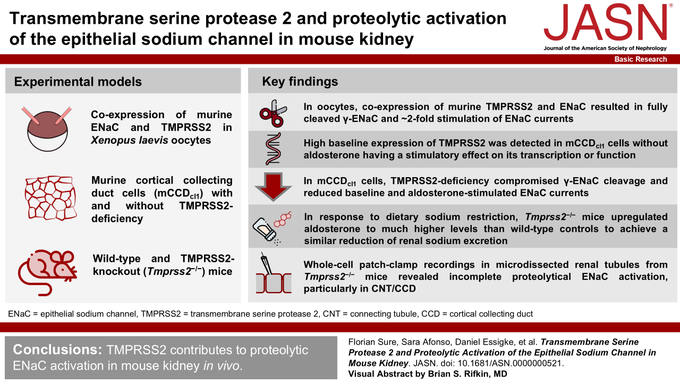
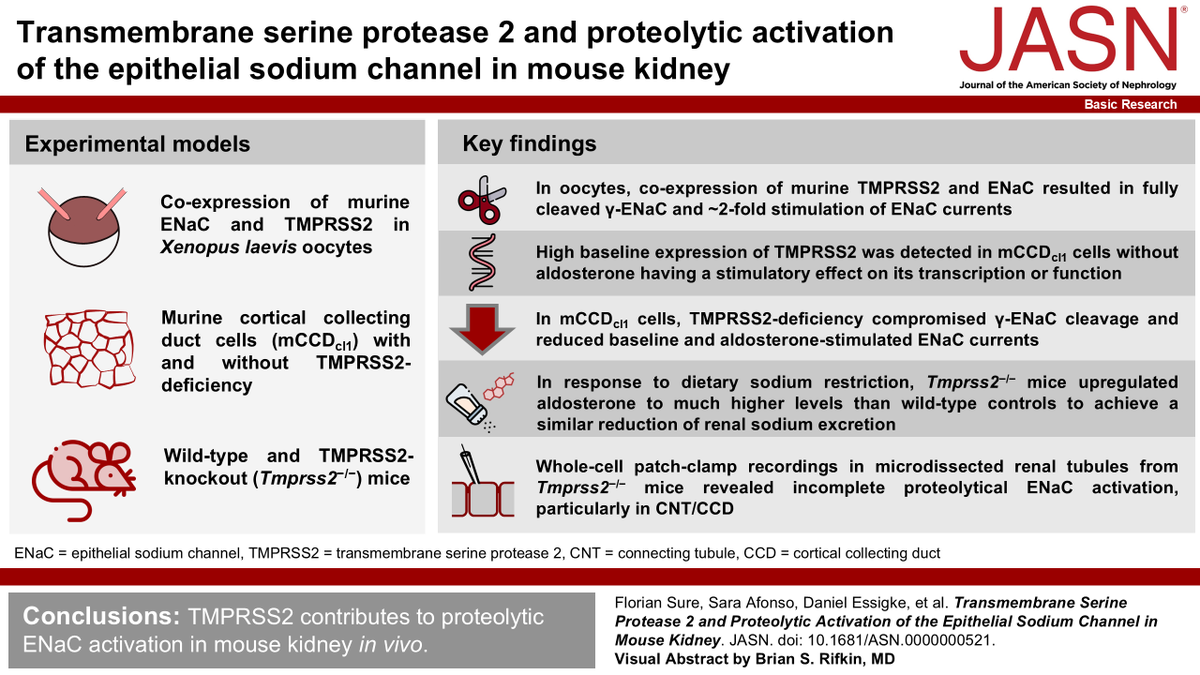
The renal epithelial sodium channel (ENaC) is essential for sodium balance and blood pressure control. This study found that TMPRSS2 contributes to proteolytic ENaC activation in mouse kidney in vivo. https://t.co/yGhuSQAFM2
@TheArtuncLab
The renal epithelial sodium channel (ENaC) is essential for sodium balance and blood pressure control. This study found that TMPRSS2 contributes to proteolytic ENaC activation in mouse kidney in vivo. https://t.co/yGhuSQAFM2
@TheArtuncLab
Our study on the role of Transmembrane Serine Protease 2 (TMPRSS2) in proteolytic activation of the Epithelial Sodium Channel (ENaC) in mouse kidney was recently accepted at @JASN_News 🥳Happy to share this work to which many groups have contributed! https://t.co/eyVNi9oyeP
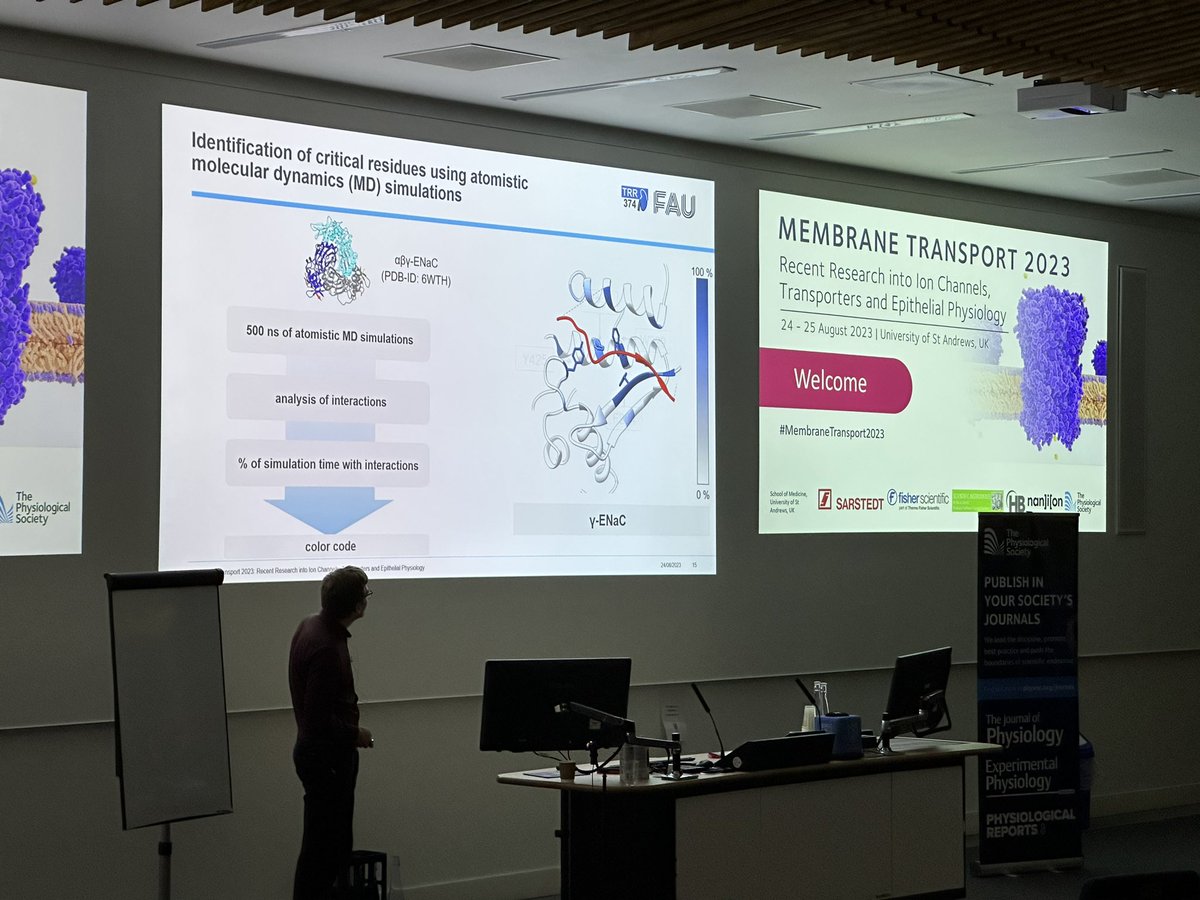
Dr Florian Sure of University of Erlangen-Nuremberg, Germany @UniFAU on conserved hydrophobic interactions playing a critical role in inhibiting the epithelial sodium channel (ENaC) by α- and γ-inhibitory peptides. #MembraneTransport2023
New study identifies a novel small molecule ENaC activator, S3969. Read below for details on the mechanism of activation and the potential implications for ENaC-related diseases.
https://t.co/kgmQkDumbe
@APS_ETG The compound was found previously by Lu et al. (https://t.co/2JFfX0TNb6)! This study adds the identification of the binding site of S3969 in beta-EnaC and a possible molecular mechanism involved in S3969-mediated ENaC stimulation.
New in JBC: "Scientists' new findings may lead to novel (patho-)physiological and therapeutic concepts for disorders associated with altered epithelial sodium channel (ENaC) function."
Learn more:
https://t.co/N6mPpWRfWL