Docente universitario en la ESPOL ᴇᴄ
MESAP • BI & Data Science • Matemáticas • Estadística
Los datos, así como la tecnología per se, no resuelven problemas.
Hoy la presentación "A third-order positivity-preserving Modified Patankar Runge-Kutta-Oliver schemes of nonautonomous Production-Destruction Systems" con Javier González de la UCE
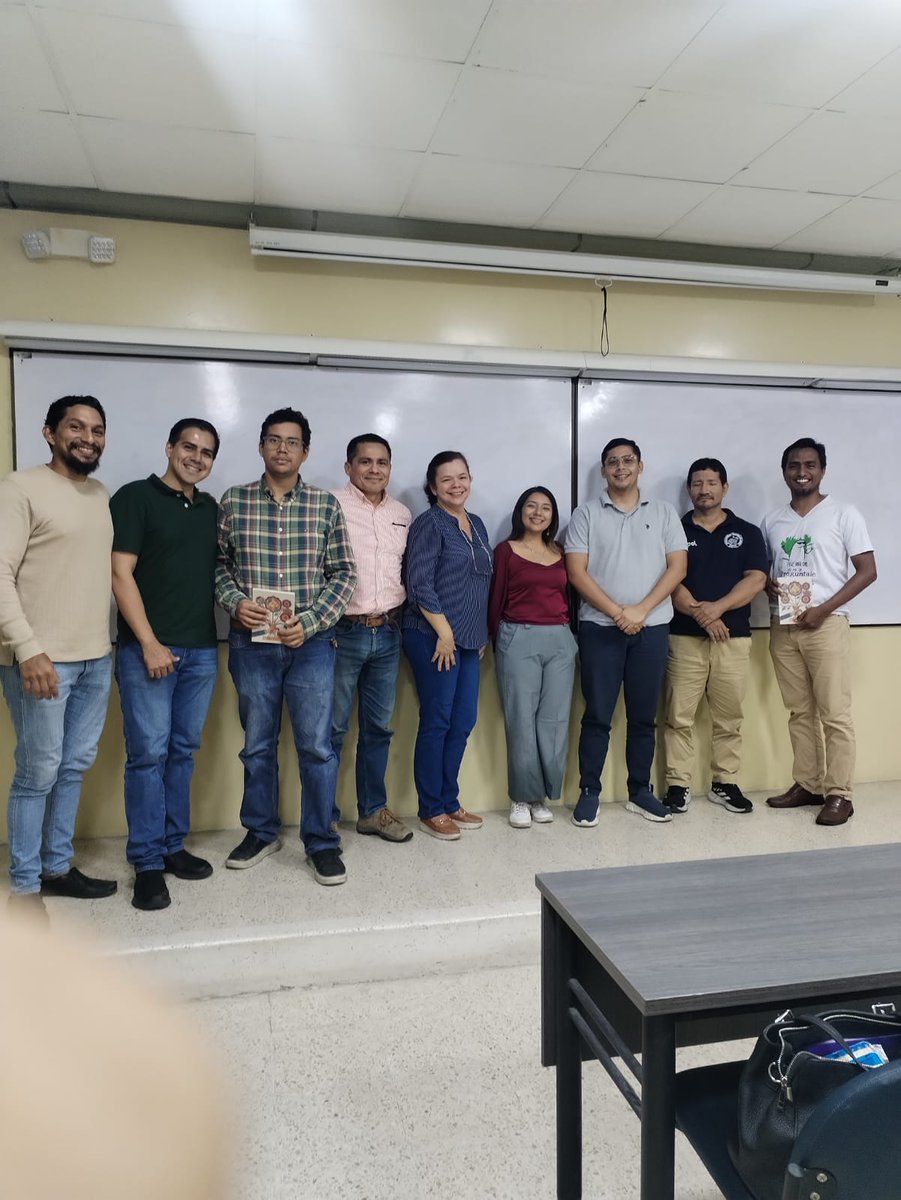
¡Las Jornadas Ecuatorianas de Matemática llegan a ESPOL!
Del 14 al 18 de diciembre, académicos, profesionales y estudiantes se reunirán junto a EVEMAT para compartir conocimientos y explorar nuevas perspectivas en matemática.
Inscripciones: https://t.co/tAJ6RIdw8c
La capacidad #coactiva de instituciones del estado es un instrumento válido para cobrar a deudores por servicios impagos, pero de esta atribucion está abusando EMETEL, la #telefónicadelestado, q por error o deshonestidad inventan deudas a sus usuarios e inmovilizan sus cuentas.
La inteligencia artificial está cambiando las reglas de la comunicación. La investigación académica también tiene mucho que aportar a esta transformación.
Conoce lo que dejó el CIICATI 2026: https://t.co/mSvgMqgKgu
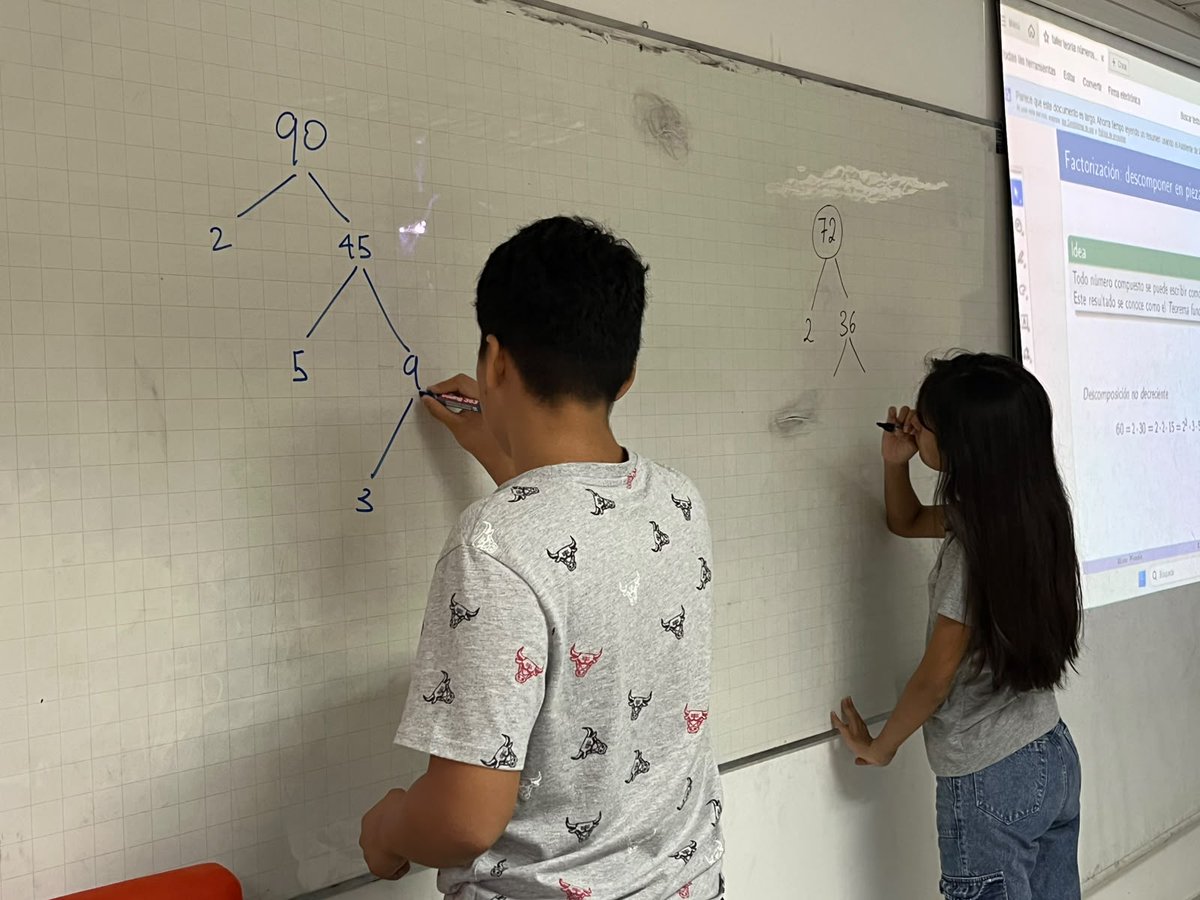
🧠 ¡Estalmat sigue creando espacios para explorar las matemáticas! La 4.ª y 5.ª cohorte participaron en talleres de teoría de números y matemática en lo cotidiano, con retos y experimentación.
Agradecemos a @espol y @CEDIAec por el apoyo a esta iniciativa.
A.I. is solving problems that stumped the field of math for decades. Mathematicians look to Terence Tao for guidance on their altered world. https://t.co/7xtNSrKug1
La historia de la #ESPOL se escribe con las vidas que hemos transformado durante estos 68 años. Somos el espacio donde generaciones de politécnicos imaginan nuevos caminos, convierten el conocimiento en soluciones y contribuyen al desarrollo del Ecuador🇪🇨.
Hoy, nuestro legado sigue creciendo con quienes se atreven a transformar el futuro. Celebramos lo que hemos logrado y, sobre todo, lo que aún podemos imaginar y crear. Porque la ESPOL construye futuro: ¡sigamos haciendo historia!
#ESPOL68
El director del #INAMHI luce novato para explicar e impreciso en sus conceptualizaciones. Dice que las predicciones fallan por que no es una ciencia #exacta. No es por eso, es porque la #aleatoriedad está presente en las medidas y en los modelos.
NVIDIA RTX Spark is here.
Build AI locally, bring your creative ideas to life, and take your favorite games along.
A new beginning for @Windows PCs starts today.
#ElNiño continúa su desarrollo. Toca preparar la respuesta y planes de recuperación post-desastre. La ‘hornilla’ que calienta el Pacífico ecuatorial se mantiene activa: Ondas Kelvin con anomalías de hasta 9°C en la columna de agua!!!! @ginopw_airsea@CIP_RRD_ESPOL@EspolDivulga
El 28 de septiembre de 2026 iniciamos la maestría en Matemática de la FCNM-ESPOL. Hoy celebramos el inicio de un camino que no será fácil, pero sí profundamente transformador. Porque las matemáticas no solo se estudian: se sienten, se disfrutan y se viven. ¡Bienvenidos!
Recognized in the World's Top 2% Scientists List 2026 (Stanford University / Elsevier)
With gratitude and humility, I am pleased to share that I have been included in the World's Top 2% Scientists 2026 list, produced by Stanford University https://t.co/4LXvD7FBTC...
Fortalecer la educación empieza por fortalecer la profesión docente.
Sin embargo, nuevos datos de la UNESCO muestran que, en 2 de cada 5 países analizados, los docentes ganan menos que otros profesionales con cualificaciones comparables, lo que dificulta atraer y retener talento.
En este #DíaMundialDeLosDocentes, la UNESCO hace un llamamiento para reforzar el reconocimiento y el apoyo a los 107 millones de docentes que hay en todo el mundo.
🔗 https://t.co/P65EXLdorH #ParaLasPersonas
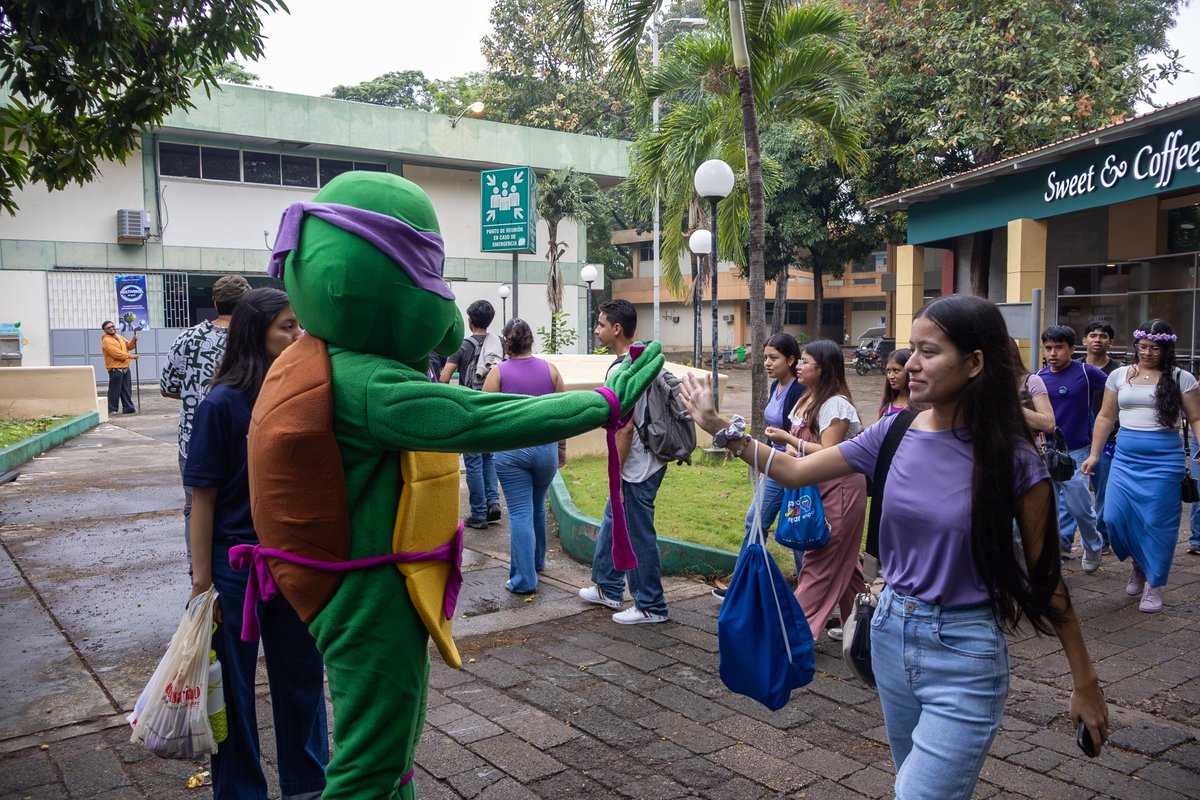
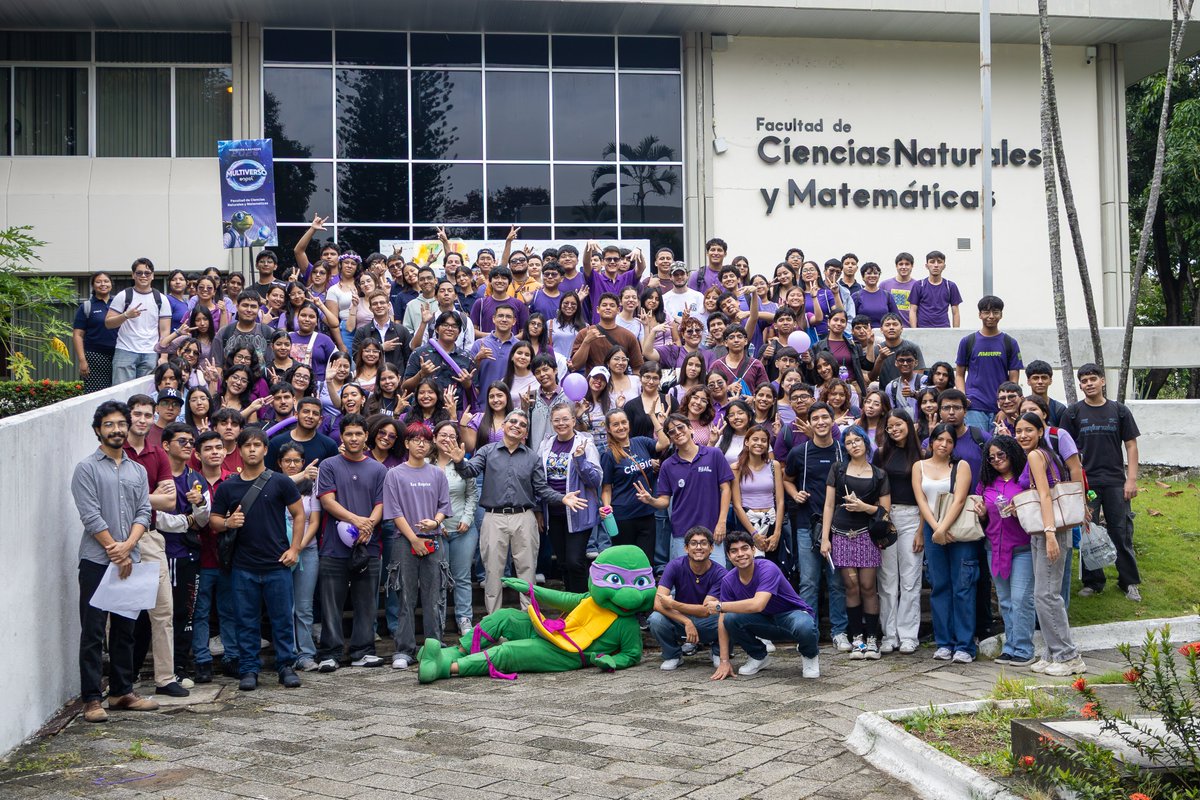
¡Aquí comienza una nueva etapa! 🐢💜 Nuestros nuevos estudiantes recorrieron el campus, conocieron a sus coordinadores y compartieron con sus compañeros. Desde la #FCNM, ¡bienvenidos a ESPOL!
A = UΣVᵀ
Every real matrix (square or rectangular, full-rank or singular) factors into a pair of orthogonal matrices flanking a rectangular diagonal of nonnegative singular values. The left and right singular vectors rotate the domain and codomain so that the linear map becomes a pure stretch along aligned axes; the singular values themselves are those stretches.
When the values decay rapidly the map is essentially low-dimensional, and the partial sum formed by the first k terms is the nearest rank-k matrix in every unitarily invariant norm. Beltrami obtained the square case in 1873, Jordan independently a year later.
One factorization therefore exposes geometry, numerical rank, and the most economical compressions of the data the matrix represents.
Terry Tao nos dice que ahora hay que valorar más otras cosas en las matemáticas, debido a que la IA también puede hacer pruebas
Propone este esquema. Entendimiento, comprensión por encima de la prueba
Researchers at Oxford argue that LLMs can't invent anything.
It's impossible mathematically.
The paper is called "Theory Is All You Need."
Teppo Felin and Matthias Holweg take the famous "Attention Is All You Need" title and flip it. Their argument is that AI predicts from the past, while humans reason forward into the future, and those are two different kinds of thinking.
Start with the numbers. The authors estimate a large language model trains on roughly 13 trillion tokens. A human reading at 150 words a minute would need about 164,000 years to get through that. A child hears around 20,000 words a day and roughly 36.5 million words in their first five years. It's the same task with wildly different data, and the child still ends up with language that goes far beyond anything they heard.
Their point is that the model learns which words tend to follow other words. It becomes a mirror of what people have already written. It doesn't build a theory of how the world works, so it can't step outside its training data.
The paper's sharpest thought experiment makes this painful. Imagine an LLM trained in 1633 on every scientific text ever written up to that point. Ask it about Galileo and heliocentrism. Thousands of years of geocentric texts would swamp Galileo's ideas, so the model would tell you he's wrong. It would also rate Tycho Brahe's astrology as more credible than the idea that the Earth moves, because more people had written about astrology.
Then there's flight. In 1888 the scientist Joseph LeConte looked at bird data, noted that no bird above 50 pounds could fly, and concluded humans couldn't either. Lord Kelvin, then president of the Royal Society, said he had not the smallest molecule of faith in aerial navigation.
The New York Times estimated in 1903 that flight was one to ten million years away.
Nine weeks later the Wright brothers flew.
The Wrights didn't have better data. They had a theory. They broke flight into three problems, lift, propulsion, and steering, built their own wind tunnels, and generated the data that didn't exist yet.
Wilbur wrote in 1900 that he had been "afflicted with the belief that flight is possible to man."
Every prediction machine on Earth would have told him no.
The authors call this the data belief asymmetry. Every real breakthrough starts with someone believing something the existing data says is wrong. A system trained to minimize surprise can't do that by design.
They're not anti AI. They say AI will win at routine, repetitive decisions that extrapolate from the past, which is most decisions. They're just pushing back on the idea that you should replace humans with algorithms whenever possible, which is a direct quote from Kahneman.
I use these models every day and this matches what I see. The new stuff comes from the human at the keyboard who decides the data is wrong.
LLMs don't think, you do!
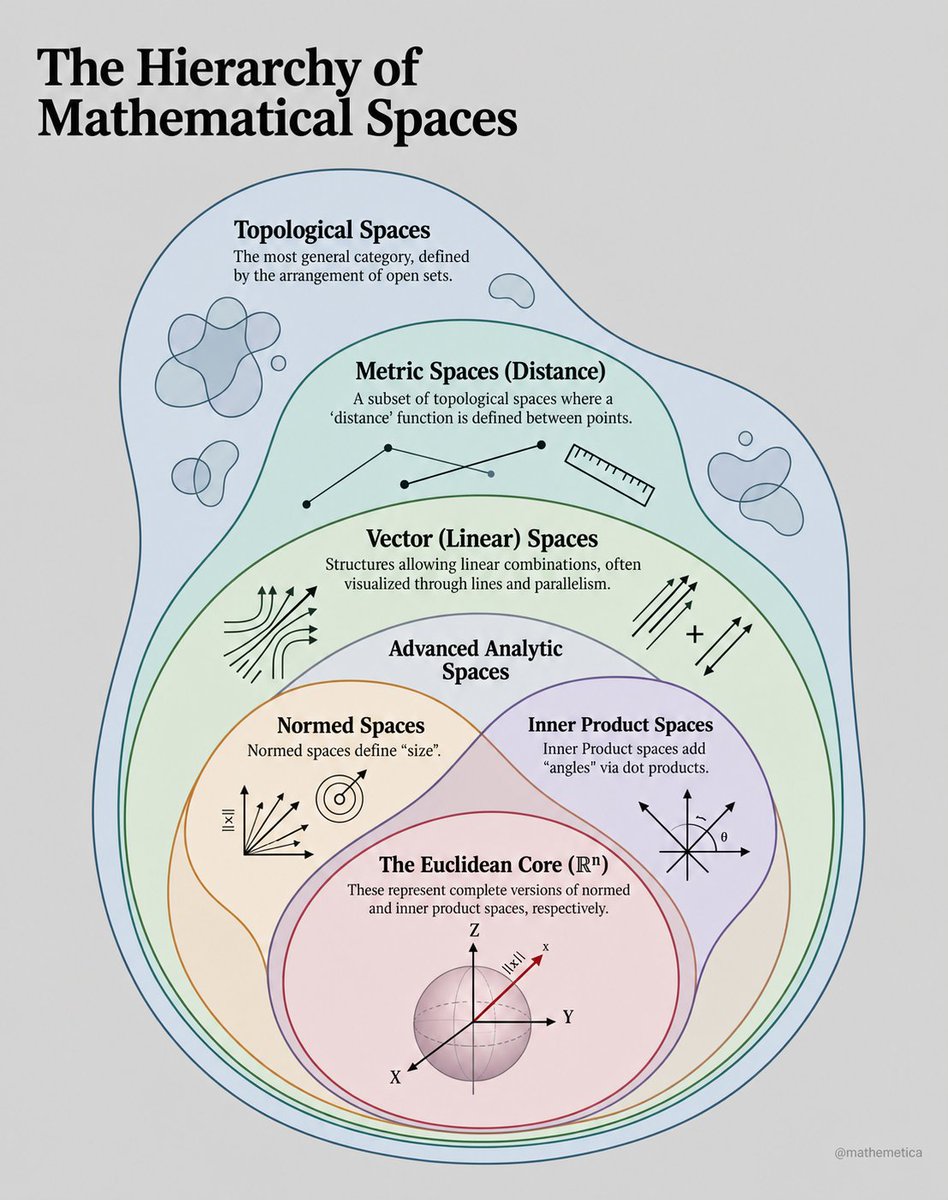
Ever get lost in all those mathematical “spaces”?
This beautiful diagram maps the full hierarchy from the wildest to the most familiar. Topological spaces are defined only by open sets. Metric spaces add distance. Vector spaces allow linear combinations. Normed spaces measure size while inner product spaces add angles.
At the core sits Euclidean R^n, the complete geometry of our everyday world.
Terence Tao: The math behind today’s LLMs is actually simple.
Training and running them mostly uses linear algebra, matrix multiplication, and a bit of calculus, material an undergraduate can handle. We understand how to build and operate these models.
The real mystery is why they work so well on some tasks and fail on others, and why we cannot predict that in advance. We lack good rules for forecasting performance across tasks, so progress is largely empirical.
A key reason is the nature of real-world data. Pure noise is well understood, perfectly structured data is well understood, but natural text sits in between, partly structured and partly random. Mathematics for that middle regime is thin, similar to how physics struggles at meso-scales between atoms and continua.
Because of this gap, we can describe the mechanisms but cannot yet explain capability jumps or give reliable task-level predictions. That mismatch, simple machinery versus hard-to-predict behavior, is the core puzzle.
----
Video from Prof @Briankeating YT Channel (Link in comment)