@jv_finance this assumes fitting for an extended time window (several years, looking at your chart). the coefficients are not constant. we saw it in the past. all I'm saying is the FV could be much lower than you think (but still higher than the current price)
I don't know how you calculate the GLI but most of the data is on monthly basis, and you have weekly ticks. I took G7-RRR-TGA and found a cubic transformation that has R²=.9622.
I also took BTC market cap instead of BTCUSD as there's increasing amount of BTC in circulation
According to my model we're at z-score: -1.01σ
Why cubic transformation makes sense?
The cubic coefficients are NOT chosen by me, they are DISCOVERED by the optimization algorithm by finding the values that best fit the data.
I applied ORDINARY LEAST SQUARES (OLS) OPTIMIZATION and solved CONVEX optimization problem
The algorithm 'learned' that BTC's sensitivity to liquidity decreases over time, purely from the data, without me telling it to! This is why R² = .9622 is so impressive - it's a data-driven discovery, not a hand-tuned model
@jv_finance Have u considered that GLI should take into account different factors for different countries? Like for whatever reason might be china has only 80% sensitivity while US has 100 and Europe 90 and there could be even better shape of that time series?
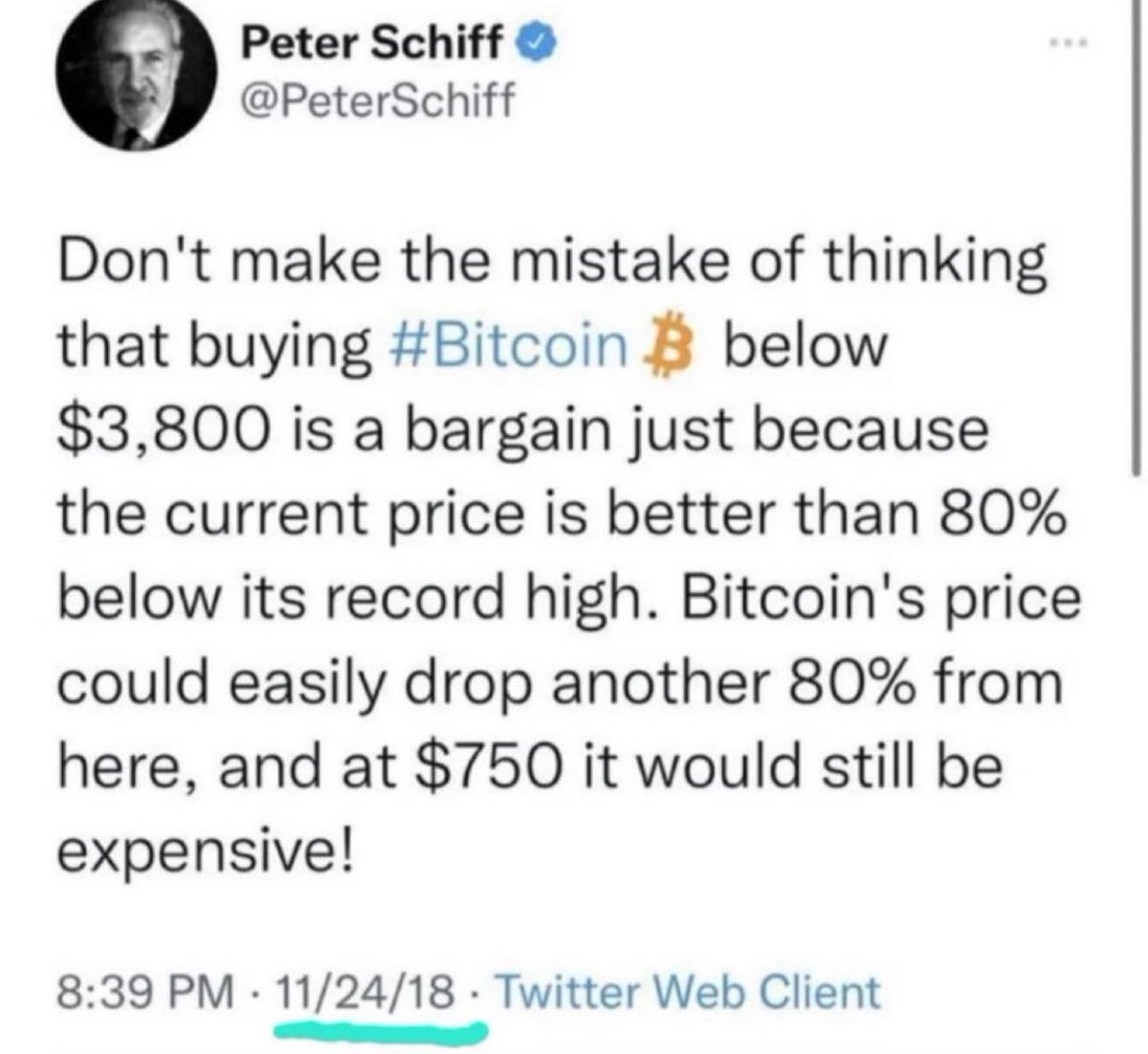
@PeterSchiff I wonder if he really believes what he posts or it it’s a denial, he can’t stand the fact he missed it when it was early or it’s just his way to get some attention
I’ve been trying to build such indicator for a long time but have not enough skills in that area. Main problem is that GLI correlates very well with BTC but only locally, let’s say few months. One can adjust the scales locally so it matches but then it’s completely wrong in another place. I tried applying some “adoption factor” which changes logarithmically over time, applied some exp factor to GLI but I gave up eventually. If you could share the code what you have so far that would be amazing!!!
No niestety, nie doceniłem trudności tego ćwiczenia. Okazuje się że zbudowanie fajnej technologii i dodzwonienie się do dużej grupy ludzi to nie wszystko. Nie pomogła mi ostrożność i staranność z danymi i obliczeniami. Wniosek jest taki że prawdopodobnie korelacja wykształcenia i wielkości miejscowości z preferencjami wyborczymi to jest to co totalnie zaburzyło badanie. Ale się nie poddaje! mam jeszcze drugą turę na poprawki
Czy AI może wreszcie zrobić porządny sondaż wyborczy?
A gdyby tak wykorzystać niesamowitą technologię od ElevenLabs i przeprowadzić sondaż przed wyborami na dużą skalę, tak aby wielkość próby była znacznie wyższa niż w tradycyjnych sondażach?
Conversational AI od ElevenLabs działa jak magia ✨
Dostałem grant od ElevenLabs na stworzenie czegoś fajnego i pożytecznego dla świata
Agent AI nie tylko się skaluje i pozwala zdobyć więcej danych. On jest zawsze neutralny. Każdą rozmowę przeprowadza według tego samego scenariusza. Jest zaangażowany! Pozbywamy się biasów i efektu znużenia.
Gdy połączymy to z rzetelnym modelem statystycznym to jest szansa na zbudowanie czegoś, czego jeszcze nigdy nie było!
Zegar tyka ⏳, do wyborów już niewiele czasu, ale myślę, że uda się dowieźć coś wartościowego w ciągu kilku dni. Pozostaje politycznie neutralny, zajmuje się technologią i danymi, czymś na czym się trochę znam
Posłuchajcie sami jak to brzmi, co sądzicie? 🚀
@GiertychRoman Ciekawie, bo w mojej ankiecie AI (N = 2000, 12-13 V) Trzaskowski wyszedł 42,4 %. To o 10 pp więcej niż w Twojej prognozie – aż tak duży efekt końcówki kampanii? 🤔