His name was V Rajaraman.
Born in 1933 in Erode, Tamil Nadu. Most Indians have never heard his name. Every Indian IT professional owes their career to him.
He studied physics at St Stephens College Delhi, then engineering at IISc Bangalore. Won a government scholarship to MIT. Got his PhD in 1961.
The world wanted him. He came back.
In 1963, a massive IBM 1620 computer arrived at IIT Kanpur. It was so large they had to break down a wall to bring it inside. It came on a bullock cart.
Rajaraman stood next to it and asked one question nobody else was asking.
What if India taught this as a subject.
In 1965, he launched India’s first Computer Science academic programme at IIT Kanpur. His first batch had 20 students. One of them was Narayana Murthy, who went on to build Infosys.
He designed the MCA programme that opened IT careers to an entire generation of Indian graduates. He chaired the committee that created C DAC to build India’s first indigenous supercomputers.
He authored 23 textbooks. Guided 30 PhD students. Won the Padma Bhushan in 1998.
He passed away on November 8, 2025. Aged 92.
India’s IT industry is worth 250 billion dollars today. He built the classroom it started in.
Follow for real stories India never makes headlines about.
Bond is an orphan. Skyfall is the story of him losing his second mother. And Sam Mendes shot Dench's death scene on her actual last day after 17 years as M. So part of the grief on screen is real.
His parents died when he was a small boy. He hid for two days in a secret passage at his childhood home. That home is called Skyfall. M says it out loud at one point in the film: "orphans always make the best recruits."
So when Mendes set out to give Dench her goodbye, he picked Skyfall as the title. And the location. The same house where Bond lost his first mother is where he loses his second one. He's a grown man, and he's going home to bury a parent again.
The villain, Silva, calls M "Mommy" and "Mother" through the whole movie. He's the son she rejected. Bond is the son she chose. Her dying words to Bond, in his arms in the chapel on his family estate, are "Well, I did get one thing right." She means him.
The poem M reads earlier in the film, in front of a bunch of British politicians who are about to fire her, is an old British poem called Ulysses. The poet wrote it after losing his closest friend. The lines she picks are about old soldiers who aren't as strong as they used to be, but won't quit. "To strive, to seek, to find, and not to yield." She's reading her own eulogy out loud while Silva is shooting his way into the room. Mendes cuts back and forth between the two.
Daniel Craig once said Dench could speak a hundred words and make them sound wonderful, but a single look from her could break your heart.
That same year, 2012, Dench was diagnosed with an eye disease that's been slowly taking her sight. She's 91 now. She can't recognize faces anymore. She's stopped acting.
Watch the chapel scene again knowing all that. Bond cries. He kisses her forehead. The boy who hid in that secret passage at Skyfall is back in the same house, holding the woman who became the closest thing he had to a mother.
She leaves him a small bulldog statue from her desk. And for the first time in the entire franchise, the audience learns her real name. Olivia.
🚨 20,000 years ago, sea levels were 125 metres lower than today. This is what the world looked like.
🔹The Persian Gulf was dry land
🔹Sundaland was a subcontinent
🔹Entire coastlines now underwater
🔹Beringia linked Asia to the Americas
🔹Land bridges connecting continents
Humans have always settled near coastlines and rivers.
If any societies existed before the melt, the land they lived on is now beneath the ocean.
We keep finding submerged ruins by accident. How much is sitting on the seafloor that nobody has thought to look for?
Every country in Asia is running the same clock right now.
They just have very different numbers.
Japan: 254 days. The most prepared nation on earth. Built those reserves after being embargoed in 1973, a humiliation so severe they spent the next 50 years ensuring it could never happen again. Refiners are asking to open them. The government said not yet.
China: approximately 10 days before domestic operations face real constraints. Already halted diesel exports to protect what it has.
India: Gas cuts to industry of 10 to 30% already implemented. Not projected. Implemented. Today.
South Korea: 1.6 million barrels per day through Hormuz. That pipeline is now air.
Japan has three weeks of LNG inventories.
Pakistan: no strategic reserve.
Bangladesh: no strategic reserve.
No buffer. No option. No plan B.
This is the thing the aggregate numbers obscure. When analysts say Asia faces disruption, they are averaging 254 days of Japanese preparedness with zero days of Pakistani preparedness and calling it a regional crisis of moderate concern.
That is not one crisis. That is twelve different crises at twelve different velocities hitting simultaneously.
The countries with reserves will deploy them in sequence, each release sending a price signal that accelerates the clock for the countries beneath them on the buffer ladder. Japan releases. Prices drop temporarily. Then the release ends. Prices resume. South Korea releases. Same pattern. Then India. Then nobody is left with a buffer and the war is still running.
That is the cascade mechanism. And it has a name in energy economics.
It is called strategic reserve depletion under sustained supply shock. The last time it happened at this scale was 1973. That ended with the global recession of 1974 and a complete restructuring of Western energy policy.
Japan built 254 days of reserves because of what happened in 1973.
On day seven of this war, they are already being asked to open them.
The number that should terrify every energy desk in the world is not 254.
It is seven.
https://t.co/ULBgEzZ3A8
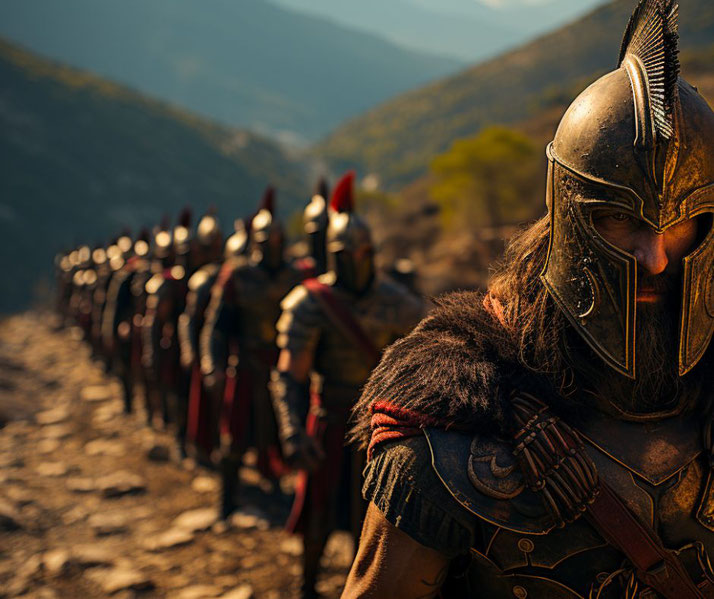
Xenophon’s Anabasis: The legend of the 10.000
Is the cure to male loneliness an expedition deep into Asia with your 10.000 merc buddies to kill some barbarians and get paid for it? You’re GODDAMNED RIGHT IT IS! This is the story of an army of Greek super-chads who F**ed around and found out that you must ALWAYS read the fine print in your contract, especially if it’s about going to war, in a foreign land, to fight for a foreign dude against his brother, with their foreign armies (you can replace the “foreign” part with “barbarian” if you wanna be 100% lore-accurate).
On a more serious note, I always found this story extremely moving, on a personal level, even though we are talking about an army of dogs of war; Jocko Willink, and I, agree on the fact that War is a catalyst: it brings out the very worst and the very best in people. And this story is a crazy saga of war, camaraderie, brotherhood, betrayal, broken dreams and lost lives; an army that won all its battles, lost the war but still won the ultimate victory: the one of getting home alive. As someone who has served in Special Forces, I’ve felt the strong bond created among soldiers going through extreme hardships and I can only imagine the pain, suffering and emotions of those fellow-soldiers, despite the thousands of years that separate us. Follow me on this journey, narrated by the very man who took command of that army and lived to tell us the story: Xenophon of Athens.
Xenophon wrote multiple books to narrate the events but I’ll separate the journey in just 5 parts, using the protagonists as the main point of reference for each phase. It’s a huge story and I suggest to secure some peace and quiet to enjoy it; you can even bookmark it and break it in pieces if you prefer it so. I’ll talk to you about some men who no one can deny they were extremely badass and the epitome of a Warrior: Cyrus the Younger (the Persian), Clearchus (the Spartan) and Xenophon (the Athenian).
@theliverdoc Dude, just chill...
What he meant is the gig economy doesn’t just provide jobs today, it creates long-term social change by enabling workers’ children to become better educated, more skilled, and more productive, which ultimately strengthens India’s economy and society.
If you are buying a car with above 100 Nm torque and basic features like:
✅ 6 airbags
✅ Hill Start Assist / Hold
✅ A basic screen for maps
✅ ABS, ESC, Traction Control, and Brake Assist
✅ Central locking
✅ Fog lamps and rear wiper (if possible)
✅ Spare wheel
✅ Service centre within 60 km
That’s pretty much all you need on a budget.
If the budget allows:
Then torque above 140 nm
✅ Automatic (TC, CVT/IVT, DCT/DSG)
✅ Paddle shifters
✅ Ventilated seats
✅ Wireless connectivity with the screen
✅ Four disc brakes
✅ Under-engine cover
✅ Front sensors and reverse camera / 360-degree camera
✅ Rear sensors on both sides
✅ Rear fog lamp and rear vents
✅ Blind spot alert
✅ Lighting in important areas (glovebox, footwell, and boot)
✅ Fully adjustable headrests
✅ Auto headlights, auto-dimming IRVM, and rain-sensing wipers
These are must-haves.
Fix the mechanicals first, then compare features. Mechanicals make cars more VFM, not features.
I studied in a Telugu-medium school till 6th. When I shifted to English-medium, people made fun of me
But I topped the school.
Scored District 10th, Town 1st in 7th class
A math teacher saw potential in me. With his help I scored:
100/100 in SSC Math
99/100 in Science
I then joined Sasi Jr. College (with a full fee waiver, else I couldn’t afford)
Scored 254 in EAMCET, AIR 1128 in AIEEE, did Computer Science. Quit coding, went into trading
Lost some in real estate.
Made some in stocks, mutual funds & real estate
After a huge career setback due to personal reasons, I went to a mid career MBA to restart my career
👉 One lesson I learnt:
When you do the right thing and start doing well, people will poke you, pull you down, criticize. Some will hate. Some will despise!
But if you keep going, your work will eventually be appreciated
To the young: Never give up. Keep giving your best.
@CuriousSwaroop That's not an obscene dressing & it is really disgusting that you took picture of women without their consent. Theater lo papers egareyatam, hero movies ki rally tiyatam, caste peru tho events cheskunapudu leni siggu bidiyam ipudu enduko? Stop this hypocritical internal racism!
Ok fuck it, I'll spill — All my friends still single in their 30s? They're hunting unicorns. Somewhere along the way, a man stopped being just a man. Now he's supposed to be your therapist, best friend, passionate lover, future father of the year, financial provider & probably a mind reader too. All wrapped up in one devastatingly handsome package.
We grew up on a steady diet of perfect men who could do it all, and now we're shocked—shocked!—to discover that actual humans come with flaws.
Men seem to get this. They prioritize & put up with a lot more shit overall. Meanwhile, women are out here with spreadsheets of required qualities, then wonder why they're perpetually disappointed.
Ordered cake from TrueCakes Bangalore through @zomato. Cake was stale and spoiled. Zomato offered no resolution, just passed on feedback to the bakery. TrueCakes blamed the delivery agent. ₹650 wasted and a celebration ruined. Extremely disappointed @zomatocare@deepigoyal
Dumb Down version for Non-Def folks
Imagine you have two magical toys that are super connected, even when they're far apart. If you change something on one toy, like making it spin, the other toy will instantly know and do the same thing, no matter how far away it is! This is called "quantum entanglement," and it's like a secret superpower in the tiny world of light particles called photons.
Now, the smart people at DRDO (a group that helps protect our country) and IIT Delhi made a cool discovery! They used this magical connection to send secret messages using light through the air, without wires or the internet, over a distance of more than 1 kilometer (that's like walking from your school to a park really far away!). They did this on the IIT Delhi campus with a special light beam.
Why is this awesome? Because these secret messages are super safe! If someone tries to peek at them, the magic connection breaks, and they can’t figure out the message. This could help soldiers, banks, or even future space missions talk to each other without anyone spying! It’s like having a secret clubhouse code that only you and your best friend can understand, even from super far away. Pretty cool, right?
Good morning 🙏
Go to the stopwatch on your smart phone.
Press start.
Wait for 32 seconds.
Press stop.
Now ask yourself:
What could you do in that time?
Brush your teeth?
Have a shower?
Wear your clothes?
Have a cup of coffee?
None of the above?
Then ask yourself:
Would you be able to make a life or death decision in that time?
Would you WANT to make a life or death decision in that time?
Well, that is apparently the amount of time that the pilots on the Air India Boeing 787-8 Dreamliner, Flight AI 171, from Ahmedabad to Gatwick, had.
From take-off to crash.
32 seconds.
If one has ever peeked into the cockpit of a modern aircraft, then I guess one would comprehend the difficulty even more.
Because people have been talking about and analyzing the videos of that horrible crash.
Expert airmen and air women.
Flyers with thousands of hours of experience.
And they are still unable to definitively state what might have gone wrong.
After more than 30 hours.
They can’t figure it out.
Bird strike?
Dual engine failure?
Incorrect take-off configuration?
Flaps not correctly deployed?
Landing gear not retracted in time?
Hydraulics?
Nah, they just can’t say.
Not yet, not with certainty.
Not without the flight data recorder and the voice recorder, they can’t.
And yet, those poor pilots in that fated cockpit didn’t have 30 hours.
They had the luxury of a full 32 seconds.
To decide.
With certainty.
What in their modern, highly complex airplane, with millions of little knobs and gizmos and gadgets and dials, had actually gone wrong.
What should they do?
Not what should they speculate, but what should they actually do?
Because once they had figured out what had gone wrong, they still had to fix it.
All in a grand total of 32 seconds.
And not 32 seconds of peaceful thinking.
But 32 seconds of horrible frantic thinking, scrambling for ideas, running through mental checklists in the blur of seconds, racking through their brains for everything they had learnt in flight school and thousands of hours of flying, checking, scanning, altimeter, airspeed, stick shaker, what’s going on, why, why, why, with sirens and warnings likely blaring in the background, knowing that what they decide could impact their lives as well as the lives of another 240 souls on board, shit, 240 souls, why, what, how, will I see my baby.
I pick up my own smart phone.
Flick on the stopwatch.
Start.
Let it run to 32 seconds.
What must it be like, then, to know, with utmost certainty, possibly around the 15 second mark, that this was it?
That these would be the last few precious seconds of my life?
To know that things were hopeless, beyond fixing, to press that button on the radio and say those last words:
Mayday, Mayday, Mayday.
Hopefully some day we will know.
Some of the answers at least, I hope.
Of what went on in that cockpit.
What went wrong with that aircraft.
Why did it fall slowly out of the sky?
And hopefully once we know, airlines around the world will scramble to fix things.
To fix airframes, or equipment, or crew, or ground staff or whatever went wrong.
So that these 32 seconds never happen again.
Tonight, before your head touches that soft comfortable pillow, close your eyes.
And say a little prayer.
For 32 seconds.
Better still, pick up that smartphone, yes, the one with the smartwatch, and call someone.
Someone you love.
And let them know.
You love them.
Because life is fragile.
And who knows.
One day, we may only have…
32 seconds.
-Written by a Pilot !