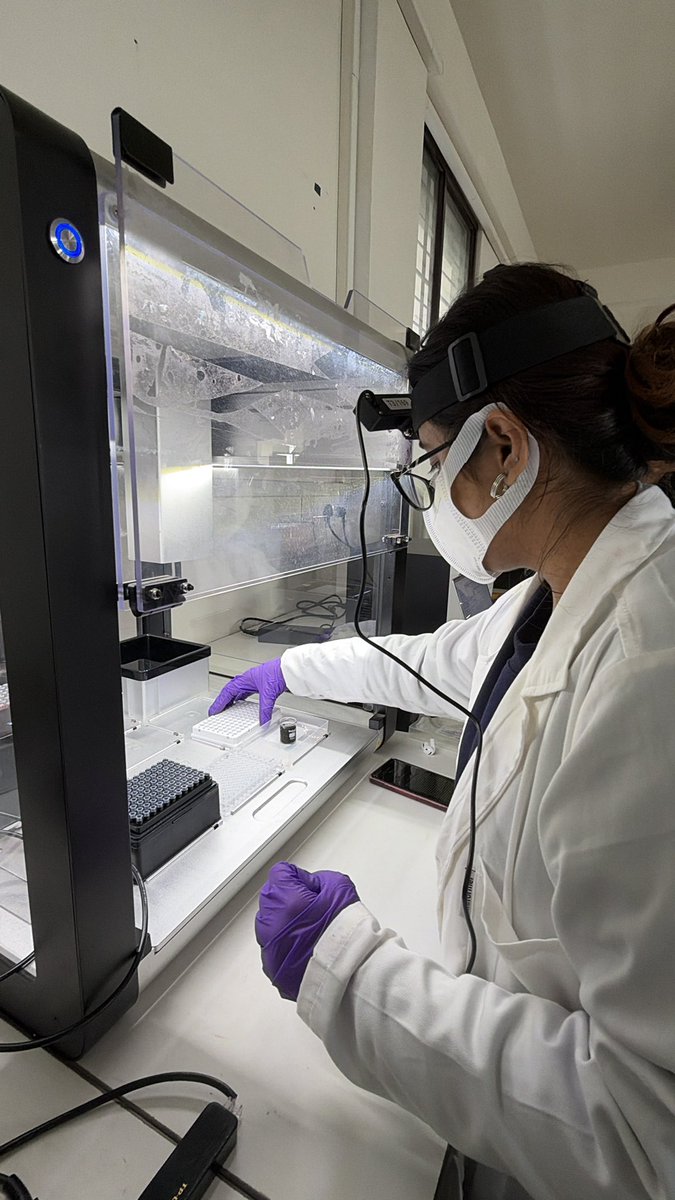
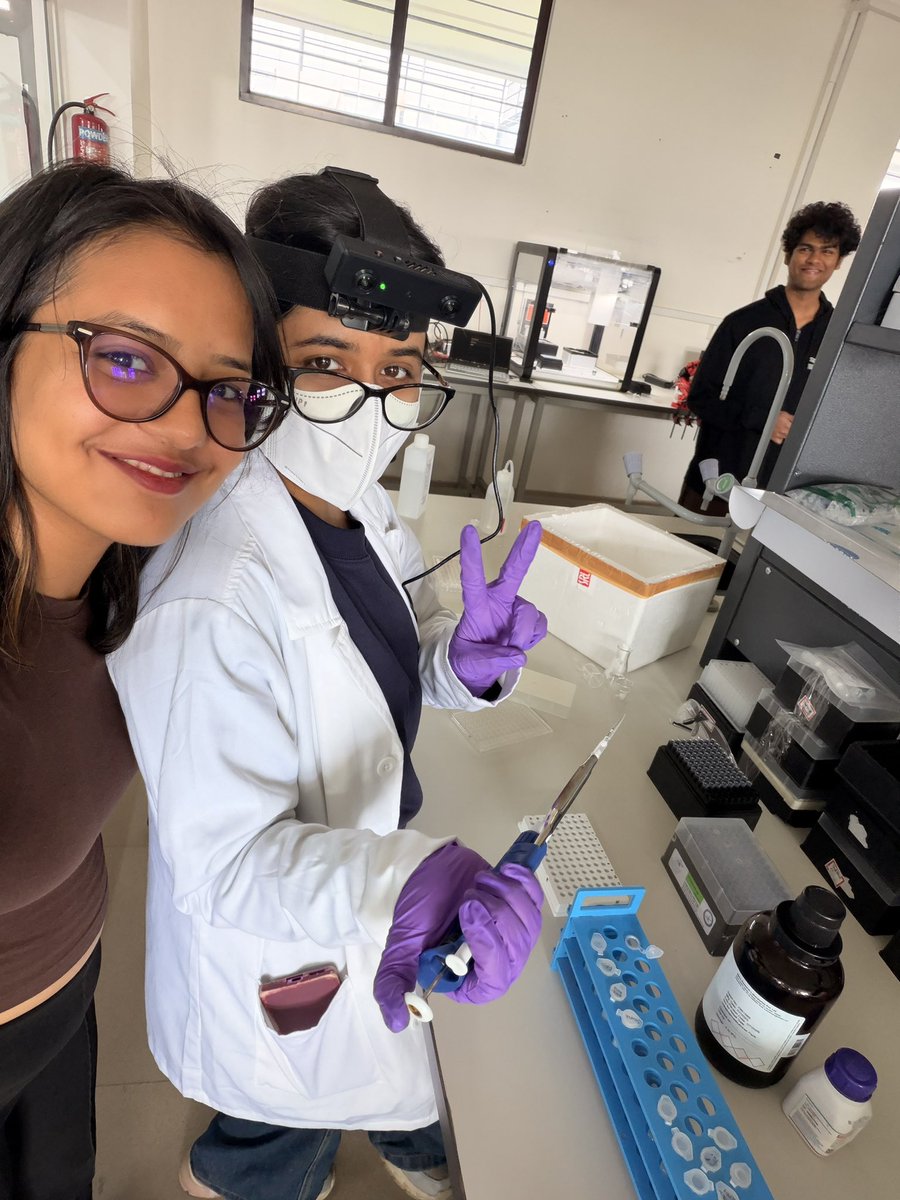
We just raised $400,000 in pre-seed funding from @joinef , Emergent Ventures along with angels and advisors including Jay Kim, @srajagopalan , @lmthang.
@b1shtream and I are building @cogworksai and our goal is to Accelerate Scientific Discovery using Autonomous labs.
We’re starting by building the integration layer between AI agents and laboratory equipment.
Today, the promises of transhumanism and posthumanism are multiplying. These are ideological currents according to which, sooner or later, technology will eliminate all disease and pain, as well as aging and even death itself. Precisely because scientific progress is a supreme achievement of human intelligence, it must not be confused with a privilege reserved for millionaires seeking immortality, while entire peoples suffer from poverty and oppression. In the face of this mirage, which promotes the illusion of human beings perfected by cybernetics and biotechnology, Christian anthropology reminds us that a limitation is not a manufacturing defect, but rather the very condition of human grandeur. #ApostolicJourney #Peru #MagnificaHumanitas https://t.co/wOXDtgnSi5
One of @dwarkesh_sp's core arguments is that efficiency in synthetic data generation would just scale up enough that you can maintain (or even accelerate) the rate of progress, even after exhausting all the real-world data.
But it's difficult to imagine how this would work for empirical sciences like bio and material sciences. Synthetic data is still basically sampling from an existing data distribution. I don't see how this would replace the need for real experiments in labs (which are slower)
Other than this one exception, the entire video was pretty much spot on. We have a crazy couple of years ahead of us. 😉
@biogerontology I'm actually coming to China the first week of December. Would love to visit your labs. It's my life's mission to accelerate drug discovery, and I love the work that you guys are doing at InSilico ^_^
Our physical infrastructure needs to catch up if we need to be competitive against bioterrorism.
With AI becoming so good at design, bad actors don't have to go through all the big regulatory process to put out a toxin on the population. They can just design pathogens and viruses and put them out in a matter of weeks. If our infrastructure doesn't catch up to responding fast, humanity will really suffer.
The cost in bioterrorism is much, much larger than cyberterrorism, but we don't see the proper amount of attention being given to bioterrorism. At @cogworksai, this is one of the things that we are trying to do: build autonomous labs fast enough that designing efficient defenses becomes possible in real time.
"We see opportunities to leverage AI for faster and better processes at each step of the discovery and development process from target identification to market launch. These may include reasoning across existing academic literature to help pick and assess drug targets, leveraging predictive in silico models to prioritize molecules more likely to succeed, designing study protocols for clinical trials, improving patient recruitment, and speeding up document drafting for FDA submissions. While some timelines are heavily regulated by the FDA (e.g., long-term chronic toxicology studies), we expect to see lots of time and cost saving opportunities around many of these steps."
We also need to put pressure on the FDA itself to speed up their process.
https://t.co/8ozIvXVt1o
Jensen deserves real justice not a knee jerk mob hanging without evidence. I read the details of this letter carefully and emphatically support it. https://t.co/cYJVlnhrix
@michellearning I never fully appreciated the difference between running a software company, and a hardware biotech company before actually getting into it