Find Your Future 🌌in One Click! Bridge Skill Gaps by Connecting Candidates to Careers👨🎓👩🎓 Companies🏭 & Courses💻📚-in our AI -Powered Community Network!
Orion's main parachute has deployed. The spacecraft has a system of 11 chutes that will slow it down from around 300 mph to 20 mph for splashdown.
Get more updates on the Artemis II blog: https://t.co/7gicm7DWBt
LIVE: Artemis leaders are discussing the successful launch of NASA's Artemis II mission and the next steps for the astronauts headed on their journey around the Moon. https://t.co/U1Bt9FPNc1
Liftoff.
The Artemis II mission launched from @NASAKennedy at 6:35pm ET (2235 UTC), propelling four astronauts on a journey around the Moon.
Artemis II will pave the way for future Moon landings, as well as the next giant leap — astronauts on Mars.
Many people expected Apple to fight back in AI with a frontier LLM. Instead, they may have done it with a box smaller than an iPad: the Mac mini. Which raises a bigger question: what if Apple’s best AI product was never meant to be a chatbot at all?
- A 32GB Mac mini can reportedly run a new Qwen 3.5 model requiring about 20GB of memory
- Apple’s unified memory architecture lets recent Macs host large models locally that would otherwise be difficult or expensive
- One workflow already uses 5 OpenClaws together, with MiniMax researching 24/7/365 and Qwen coding 24/7/365
The person who built Claude Code just mass-leaked the thinking behind it.
45 minutes of design decisions, mistakes, and where it's all going.
This is rare. Creators at this level don't usually talk this openly.
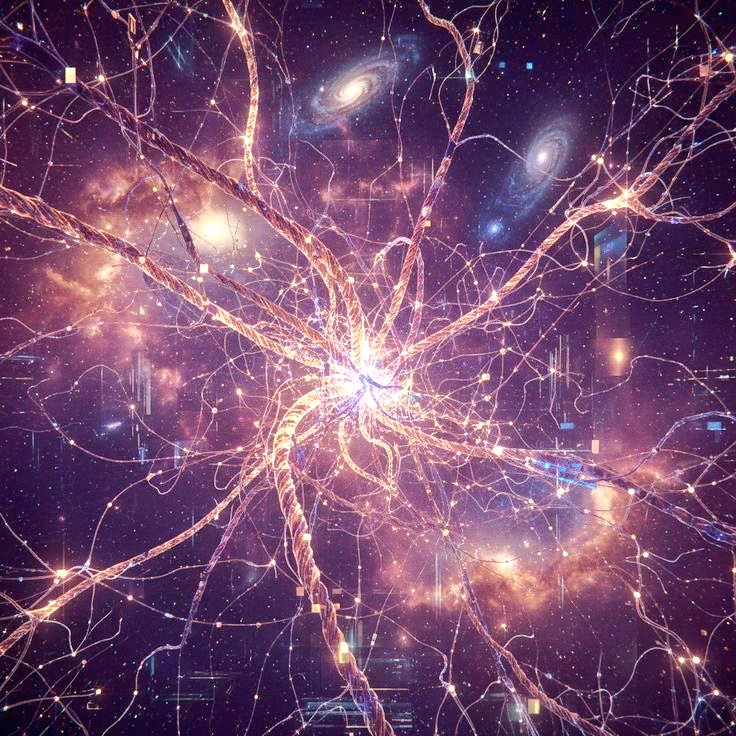
🧠 Scientists May Have Found the Strangest Clue Yet to Human Consciousness
What if your awareness—your thoughts, emotions, and sense of being—isn’t just biology… but something far deeper and stranger? New research is reviving a controversial idea that once sounded like science fiction: human consciousness may be rooted in quantum physics.
For decades, scientists believed the brain works purely through classical biology—neurons firing, chemicals flowing, signals passing. But in the 1990s, physicist Roger Penrose and anesthesiologist Stuart Hameroff proposed a radical theory. They suggested that tiny structures inside our brain cells, called microtubules, might operate at the quantum level. According to their idea, strange quantum events—where particles exist in multiple states at once—could suddenly collapse, giving rise to conscious experience. They called this theory Orchestrated Objective Reduction, or Orch OR.
Most scientists laughed it off. The brain, they said, is too warm and noisy for fragile quantum effects to survive. Case closed… or so it seemed.
Now, things are getting interesting.
A recent experiment led by researchers in Canada found something unexpected. They discovered that microtubules can trap light and release it after a mysterious delay. Even more surprising—anesthetic drugs dramatically shorten this delay.
Since anesthetics are known to “switch off” consciousness, this strange effect has raised eyebrows. Could this delay be linked to awareness itself?
No one is claiming victory yet. Even experts warn this connection is a long shot. Some say the effect could still be explained by normal physics. But others admit the findings are… unsettling in the best way.
Because if even a small part of consciousness depends on quantum effects, it could completely rewrite what we know about the brain, biology, and reality itself.
For now, the mystery remains unsolved. But one thing is clear: the question “What is consciousness?” just became far more intriguing—and far stranger—than we ever imagined. 👁️✨