Attacking SAM with 7z
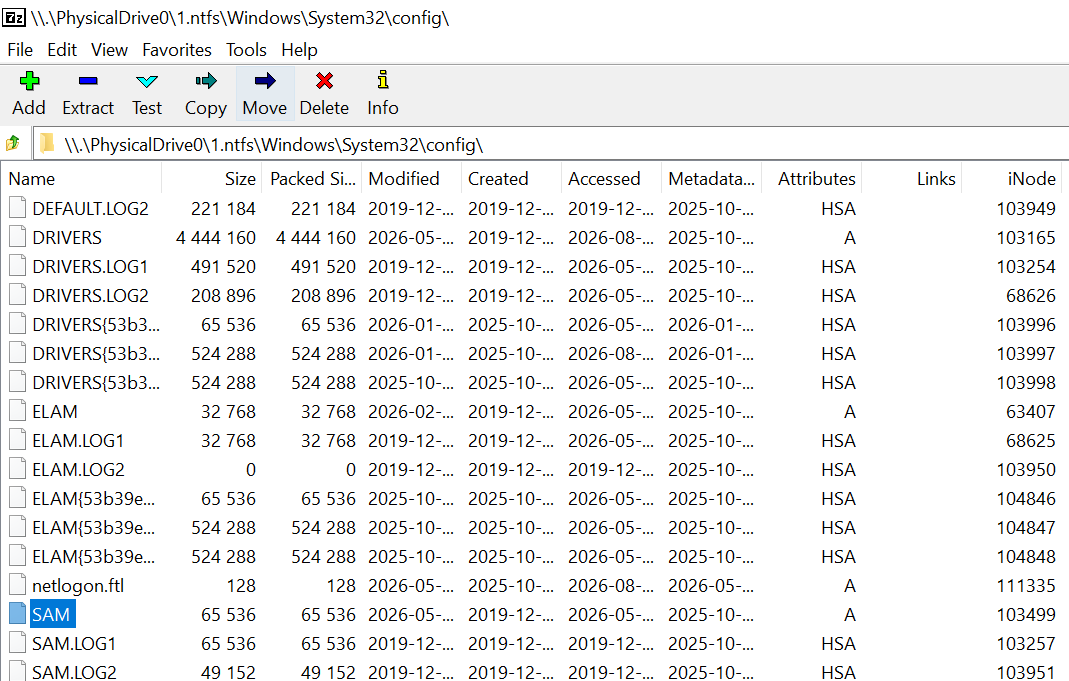
7z can be used to copy system hives bypassing EDR. We extracted NTLM hashes from the SAM hive.
Together with DeadMatter you can extract all user credentials
https://t.co/57Hs0qSAa6
@three_cube
If you're writing implants, doing C2 persistence, trying to bypass top tier EDR, or building detections for registry-based persistence techniques, read this.
Original research into mandatory profile behavior by @jonasLyk. @rad9800 brought it to Praetorian's red team. @BouncyHat operationalized it into Swarmer and used it on engagements for almost a year before disclosing. The blog credits all three and the attribution chain matters.
Tool is now open source.
https://t.co/gbZre5yK1k
#Infosec #RedTeam #DetectionEngineering
We're tracking a new EDR killer using a #BYOVD driver that isn't in Microsoft's block lists / #LOLDrivers and enumerates 140+ security products, including: Crowdstrike, SentinelOne, Microsoft Defender / Sentinel, Carbon Black, Cybereason, Cylance, Symantec, Sophos, FortiEDR, Elastic, Kaspersky, ESET, Avast / AVG, Bitdefender, McAfee / Trellix, Malwarebytes, Webroot, Trend Micro, Avira, Dr. Web, F-Protect / F-Secure, G-Data, Panda Security, and more.
All credits to @jgajek for finding it in the wild 🔥
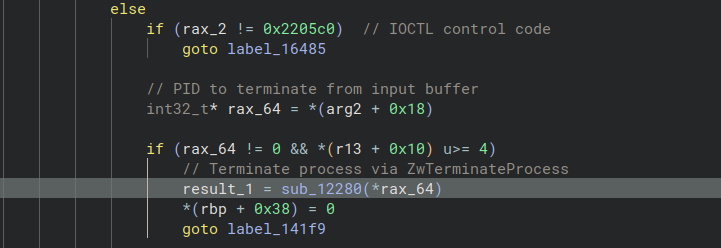
It only activates if the payload being loaded contains ScreenConnect-related strings, uses IOCTL control code 0x2205c0, and passes each security product PID to terminate via input buffer to the driver via DeviceIOControl, which terminates the specified PID via ZwTerminateProcess.
BYOVD: https://t.co/qqhDFhFKiq
Blog coming soon on the loader, after Defcon of course!
Onelogon: Taking over Active Directory Accounts via Netlogon🔑
We analyzed Netlogon, bypassed the Zerologon patch, resulting in a full auth bypass. An attacker can leverage this to compromise computer accounts, or even the entire AD. Non-standard config must be present tho 🧵
‼️🚨 The Mini Shai-Hulud npm worm has hit again. Hundreds of antv packages compromised (Alibaba's data visualization suite) along with echarts-for-react, timeago.js, size-sensor, and canvas-nest.js.
It all started today with the compromise of npm account atool ([email protected]). In a 22-minute window between 01:39 and 02:06 UTC, the attacker published 631 malicious versions across 314 packages, all carrying the same payload.
Top affected packages by monthly downloads:
- [email protected] - 4.2M dl/mo
- [email protected] - 3.8M dl/mo
- @antv/[email protected] - 2.2M dl/mo
- [email protected] - 1.15M dl/mo
- @antv/[email protected] - 1.0M dl/mo
- @antv/[email protected] - 1.1M dl/mo
- @antv/[email protected] - 975K dl/mo
- @antv/[email protected] - 883K dl/mo
- @antv/[email protected] - 751K dl/mo
What the payload does (498KB obfuscated Bun script, runs via preinstall hook):
- Harvests 20+ secret types: GitHub PATs, npm tokens, AWS keys, GCP service accounts, Azure creds, DB connection strings, Stripe keys, Slack tokens, SSH keys, Docker auth, Kubernetes configs, Vault tokens
- Attempts Docker container escape if the host socket is reachable, spinning up a Privileged container with host filesystem bind mounts
- Pulls a secondary payload via optional dependency antv/setup from antvis/G2 commit 1916faa, which was pushed 19 minutes before the npm publishes started
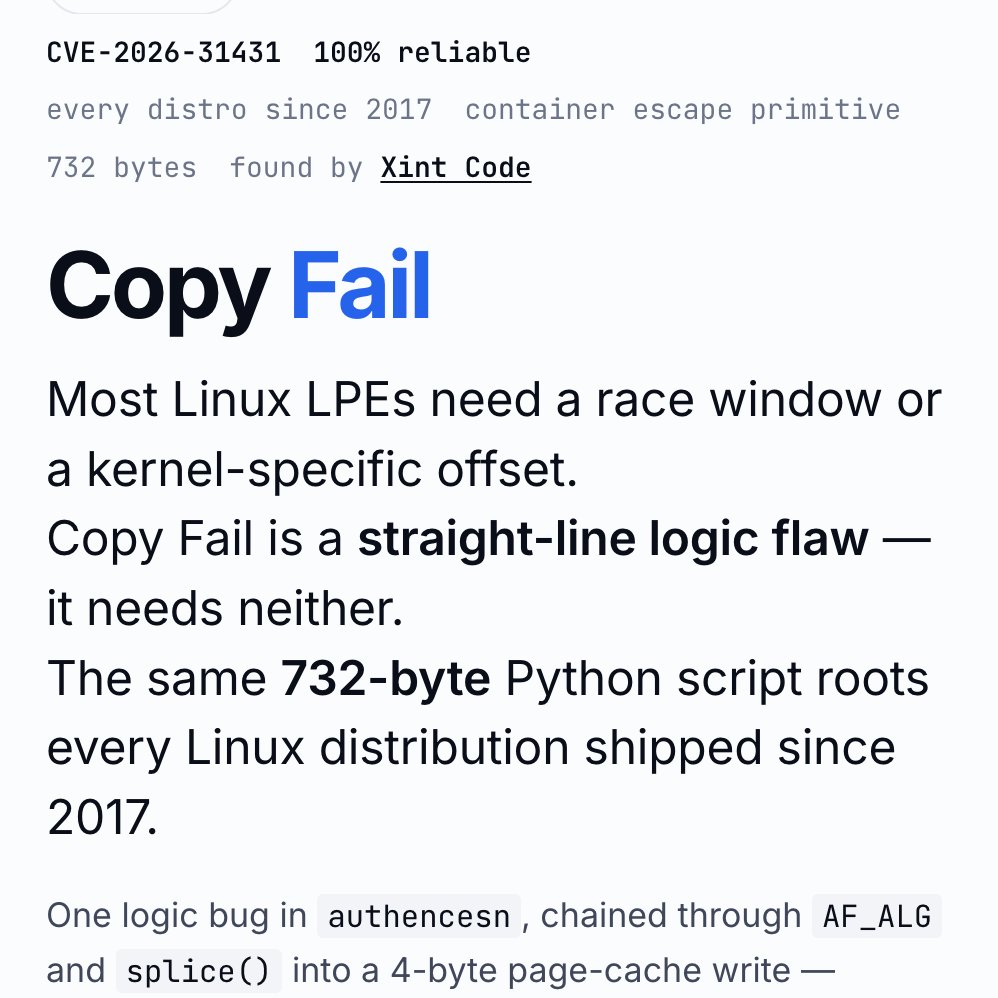
‼️🚨 BREAKING: An AI found a Linux kernel zero-day that roots every distribution since 2017. The exploit fits in 732 bytes of Python. Patch your kernel ASAP.
The vulnerability is CVE-2026-31431, nicknamed "Copy Fail," disclosed today by Theori. It has been sitting quietly in the Linux kernel for nine years.
Most Linux privilege-escalation bugs are picky. They need a precise timing window (a "race"), or specific kernel addresses leaked from somewhere, or careful tuning per distribution. Copy Fail needs none of that. It is a straight-line logic mistake that works on the first try, every time, on every mainstream Linux box.
The attacker just needs a normal user account on the machine. From there, the script asks the kernel to do some encryption work, abuses how that work is wired up, and ends up writing 4 bytes into a memory area called the "page cache" (Linux's high-speed copy of files in RAM). Those 4 bytes can be aimed at any program the system trusts, like /usr/bin/su, the shortcut to becoming root.
Result: the next time anyone runs that program, it lets the attacker in as root.
What should worry most: the corruption never touches the file on disk. It only exists in Linux's in-memory copy of that file. If you imaged the hard drive afterwards, the on-disk file would match the official package hash exactly. Reboot the machine, or just put it under memory pressure (any normal system load that needs the RAM), and the cached copy reloads fresh from disk.
Containers do not help either. The page cache is shared across the whole host, so a process inside a container can use this bug to compromise the underlying server and reach into other tenants.
The original sin was a 2017 "in-place optimization" in a kernel crypto module called algif_aead. It was meant to make encryption slightly faster. The change broke a critical safety assumption, and nobody noticed for nine years. That bug then rode every kernel update from 2017 to today.
This vulnerability affects the following:
🔴 Shared servers (dev boxes, jump hosts, build servers): any user becomes root
🔴 Kubernetes and container clusters: one compromised pod escapes to the host
🔴 CI runners (GitHub Actions, GitLab, Jenkins): a malicious pull request becomes root on the runner
🔴 Cloud platforms running user code (notebooks, agent sandboxes, serverless functions): a tenant becomes host root
Timeline:
🔴 March 23, 2026: reported to the Linux kernel security team
🔴 April 1: patch committed to mainline (commit a664bf3d603d)
🔴 April 22: CVE assigned
🔴 April 29: public disclosure
Mitigation: update your kernel to a build that includes mainline commit a664bf3d603d. If you cannot patch immediately, turn off the vulnerable module:
echo "install algif_aead /bin/false" > /etc/modprobe.d/disable-algif.conf
rmmod algif_aead 2>/dev/null || true
For environments that run untrusted code (containers, sandboxes, CI runners), block access to the kernel's AF_ALG crypto interface entirely, even after patching. Almost nothing legitimate needs it, and blocking it shuts the door on this whole class of bug...
If you like AD hacking and many others things explained in deep => go to my budy and coworker Charlie Bromberg aka @_nwodtuhs website: https://t.co/2DWnKly7w7
Consider supporting OverTheWire!
It's one of the important community oriented CTF/Wargame platforms.
Great to start learning linux, pwn and reverse engineering.
https://t.co/2srLSyLRZJ
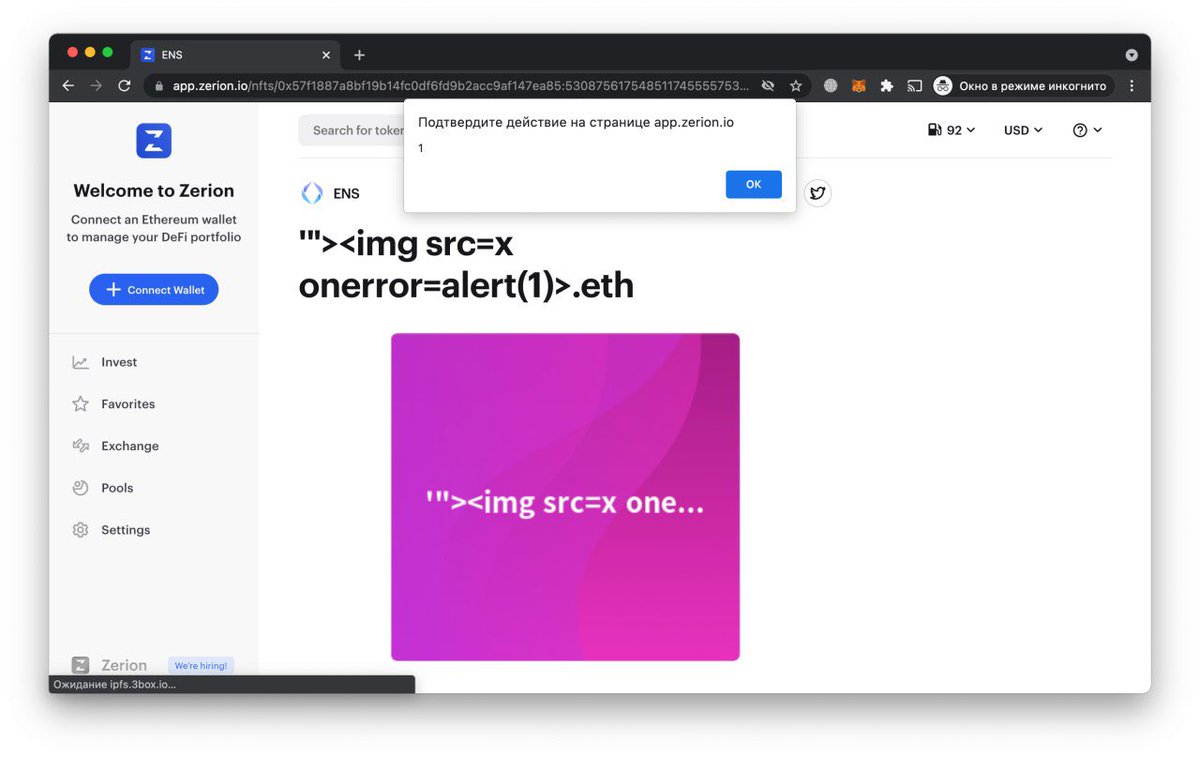
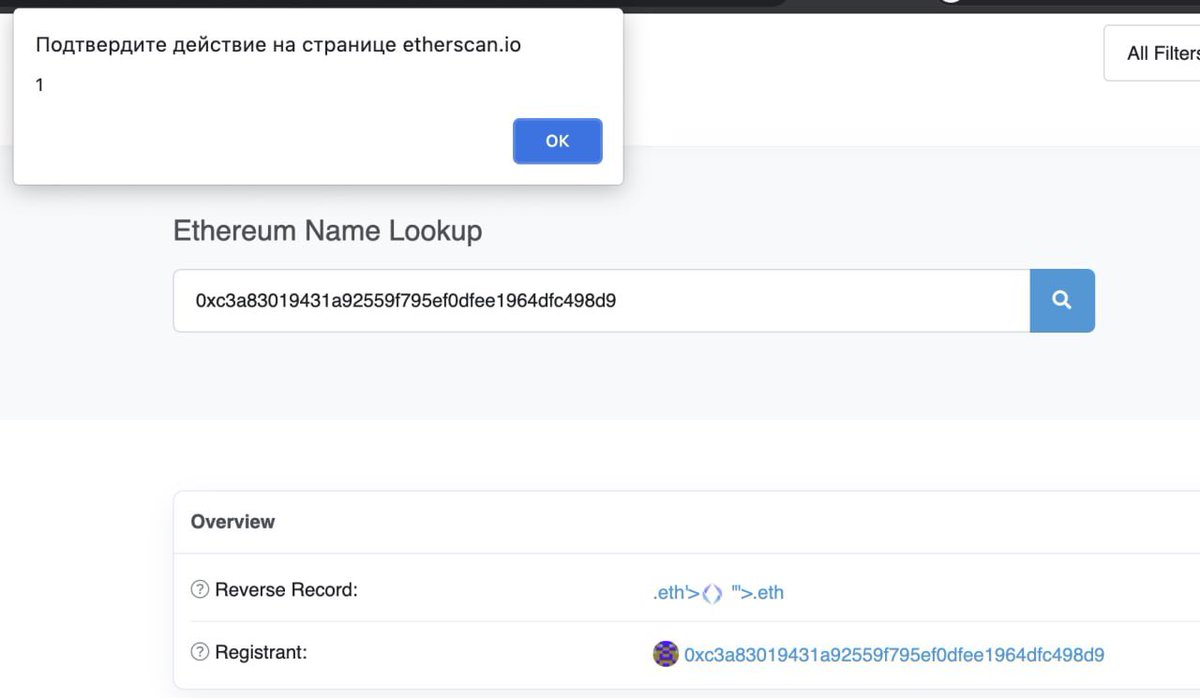
Did you know that you can register an ENS name with XSS? Although https://t.co/BzvJveRxIA will not let you register it because of frontend validation, it is possible to do so directly with a smart contract. Here is a tool: https://t.co/8Lfp5nR7Zu
Dropped a little blog post on a really common but not well know pass-back-attack. Its something to keep an eye out for during your next internal ❤
https://t.co/Q7gHvMVwnR
Stanislaw Lem is 100 today. This is from a 1961 story:
"Books are crystals with information stored on them. They were read via an opton -- a device that resembled a real book but with only a single page between the covers. A touch would cause it to display the next page of text."