@BasilTheGreat The "old Europeans" only need to have more kids. But they don't want to because they want their freedom, silence and don't want to commit for 20 years or more.
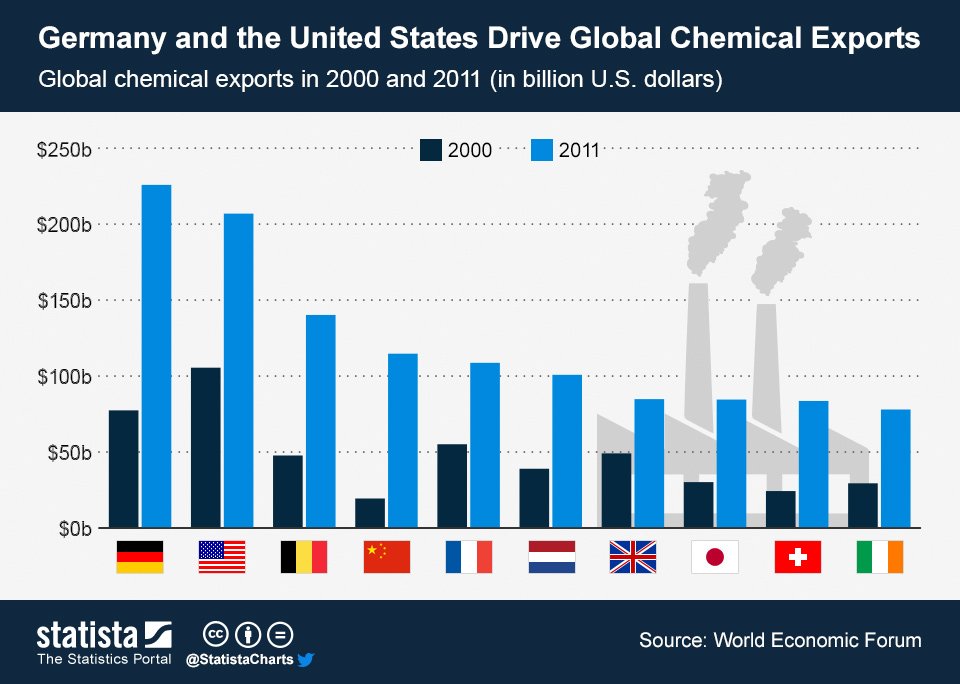
@Karl_Lauterbach Kann man die Graphen auch so lesen, dass die Amerikaner und wir einfach nur teuer sind und wir für die gleiche Leistung (Arbeit pro Zeit) einfach mehr bekommen?
@JulianRoepcke Addiere Linke und AFD und wir sind bei 50% im Osten, zum Glück ist noch niemand auf die Idee gekommen beides zu verbinden ... Gratulation an die Altparteien.
This is my flag.
It stands for unity, freedom, peace, democracy, equality, civilization, diversity, rule of law, science, beauty and strength.
There is nothing more important to fight for.
Den selbsternannten Demokratieverteidigern auf Gießens Straßen seien folgende Worte des Bundesverfassungsgerichts zum Nachdenken über die eigene Rolle in dieser Demokratie nahegelegt:
“Es ist für ein demokratisches Gemeinwesen von zentraler Bedeutung, dass das Recht, seine Meinung gemeinschaftlich mit anderen öffentlich kundzutun, nicht zum Mittel wird, um Menschen mit anderen Überzeugungen an der Wahrnehmung desselben Rechts zu hindern.” (BVerfG, Beschluss vom 1. Oktober 2025, 1 BvR 2428/20). WK
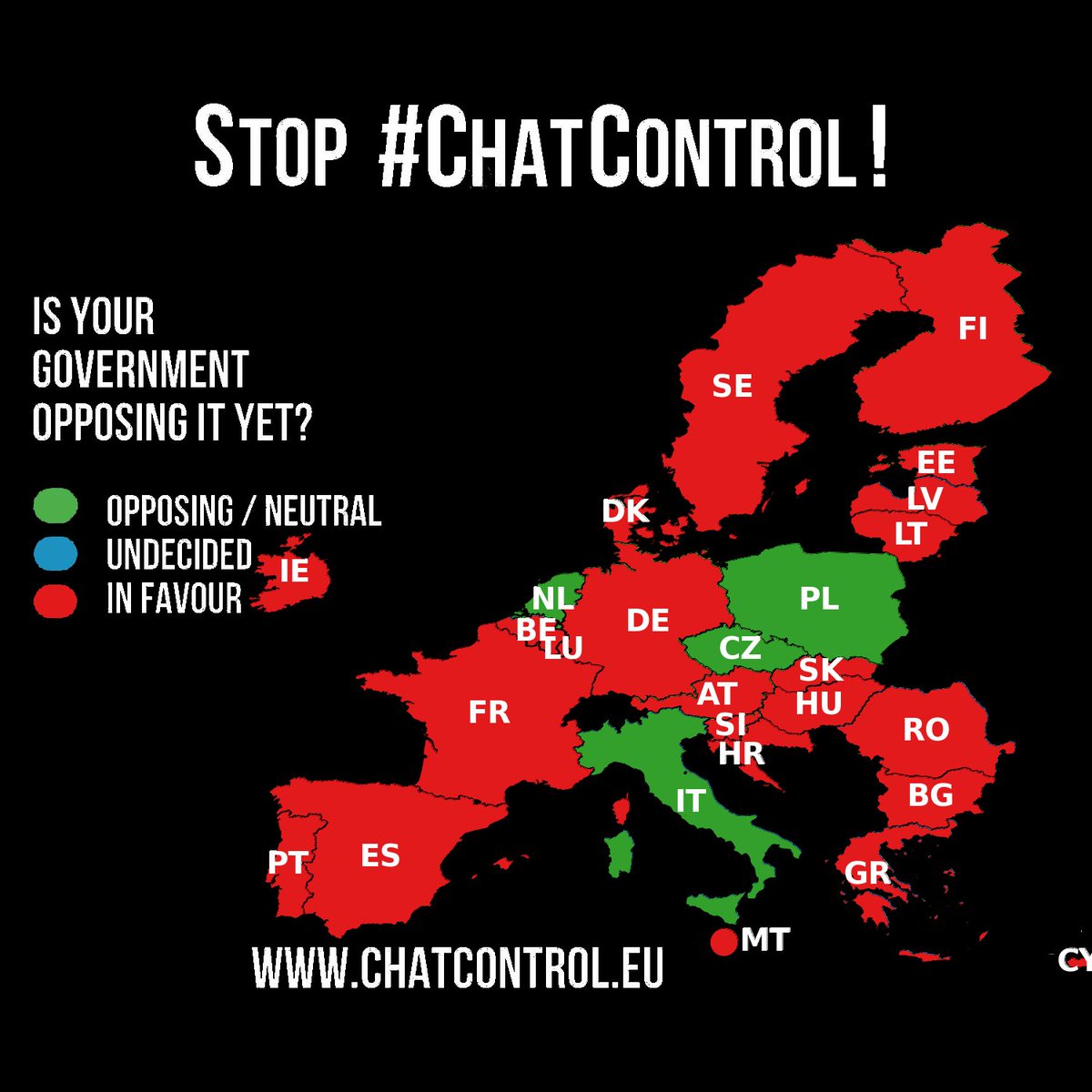
🇩🇪Irreführende Schlagzeilen: Die #Chatkontrolle ist nicht tot, sie wird privatisiert! 🚨
EU-Länder heute für:
🔍 Anlasslose Massenüberwachung
🆔 Ausweispflicht für alle (Ende der Anonymität)
🚫 Digitalen Hausarrest für Teens
Der Kampf geht weiter!
https://t.co/XLQnWN0eSn
Chatkontrolle durch die Hintertür verhindern!
Der neue Entwurf des Rates für ein Chatkontroll-Verordnung könnte laut Experten sogar noch schlimmer sein als der erste. Der Rat behauptet, die Kontrolle sei auf die freiwillige Kooperation mit Chatdiensten angewiesen. Dies ist jedoch irreführend. Richter und der Datenschutzbeauftragte des Bundes sind alarmiert.
Zwar wurde die Scan-Pflicht für private Textnachrichten und Fotos gestrichen, doch sind die Anbieter zu „allen angemessenen Risikominderungsmaßnahmen” verpflichtet. Die Politik scheint mit diesem Fach-Chinesisch die potentielle Massenüberwachung vernebeln zu wollen. Frei nach dem Prinzip des ehemaligen EU-Kommissionspräsidenten Jean-Claude Juncker, der einst ausführte:
'Wir beschließen etwas, stellen das dann in den Raum und warten einige Zeit ab, ob was passiert. Wenn es dann kein großes Geschrei gibt und keine Aufstände, weil die meisten gar nicht begreifen, was da beschlossen wurde, dann machen wir weiter.'
Selbstverständlich muss Kindesmissbrauch besser und umfassender bekämpft werden. Es fehlt jedoch nicht an Tatverdächtigen, sondern an Ressourcen in der Strafverfolgung. Die Chatkontrolle ist ein überschießendes Mittel. Wir würden schließlich auch nicht jeden Brief öffnen, um Straftäter zu ermitteln.
Die EU schafft mit der Aufhebung der Ende-zu-Ende-Verschlüsselung ein enormes Cyber-Sicherheitsrisiko. Es drängt sich daher der Verdacht auf, dass die Bekämpfung von Kindesmissbrauch nur angeführt wird, um ein trojanisches Pferd zur anlasslosen Massenüberwachung zu schaffen.
Die Bundesregierung muss eine Digital-Stasi verhindern und die Privatsphäre der EU-Bürger schützen. Die private Kommunikation von Bürgern darf nur durch richterlichen Beschluss und bei konkreten Verdachtsmomenten ausgeforscht werden.
Spiegelt es nicht einfach nur die Zielgruppe wieder, die zuviel Zeit hat sich solche Videos permanent reinzuziehen. Sozialisten und Nationalisten, die mit ihrer Zeit nix besseres anzufangen wissen? Der Anteil der Bürgergeld Empfänger, Teilzeitbeschäftigen und Menschen Mini Jobber, usw. wäre mal interessant
Der Landtag in BadenWürttemberg winkt das Palantir-Gesetz durch!
CDU, FDP, fast alle Grünen und auch Teile der AfD stimmen dafür!
Was heißt das konkret?
➟ Die Polizei darf künftig Daten von Bürgern an US-Konzerne weitergeben
➟ Diese Daten dürfen fürs KITraining genutzt werden
➟ Gotham verknüpft öffentliche und nicht-öffentliche Infos automatisiert
➟ Tür und Tor offen für massenhafte Überwachung
Wirklich irre: Dieselben Parteien, die sonst Datenschutz predigen, geben jetzt grünes Licht für ein System, das intransparent Daten analysiert und verknüpft; powered by einem der mächtigsten Überwachungs-Player der Welt
Für allem die das Unternehmen nicht kennen; Palantir ist ein US-Überwachungskonzern, der mit geheimdienstnaher Vergangenheit und undurchsichtiger Datenauswertung weltweit für seine enge Zusammenarbeit mit Behörden und Militärs kritisiert wird.
Immer mehr Überwachung! Der Landtag in Baden-Württemberg stimmt für Palantir-Gesetz.
Zugestimmt haben: CDU, FDP (!) und fast alle von den Grünen und der AfD (!).
"Das Gesetz erlaubt der Polizei, Daten von Bürgern an private Unternehmen weiterzugeben und diese Daten zu nutzen, um künstlich intelligente Programme damit zu trainieren.
Gotham ist auch deshalb so problematisch, weil es ermöglicht, automatisiert alle möglichen öffentlichen Daten mit nichtöffentlichen zusammenzuführen und gemeinsam auszuwerten. Das öffnet Türen für hochproblematische Überwachungsformen."
Genau deswegen braucht es eine Kraft, die sich wirklich und ehrlich für die Freiheit der Bürger einsetzt.
https://t.co/Q2zukJhRyk
Gerade auch in BaWü!
Wir machen mit Freiheit nicht nur Wahlkampf, wir stimmen auch so ab.
Germany's Decline and Economic Challenges in the Age of the AI Revolution. A brief analysis.
I enjoy exercising regularly. It's when I get my best ideas. Currently, German newspapers are full of complaints from the older generation about the younger generation, claiming that they don't work enough and that the changing mentality of young people is the reason for Germany's economic decline. I vehemently disagree and would like to outline the four main reasons why Germany is currently falling so far behind, by explaining historically how Germany's strength came about - and would also like to give an outlook on the future of Germany in the context of AI.
As most of you know, I'm German myself. But I'm increasingly annoyed by German journalism, which tends to lose its objectivity. Therefore, I try to write analyses without bias as much as possible. Let's go:
1. The Historical Founding Phase
The Marshall Plan laid the foundation for Germany's economic success. After the Second World War, Germany was divided into two nations; West Germany separated the West from the Eastern Bloc and the Soviet Union. The globalized West, led by the USA, had a strong interest in developing Germany as a border nation to the Soviet Union, as a free and prosperous counter-project, in order to show the people of East Germany in particular how capitalism creates wealth and prosperity. For the time, immense sums were invested in the reconstruction of Germany through the Marshall Plan, thus laying the foundation for the post-war destruction. Without this financing, today's Germany would be inconceivable.
2a. This was always linked to a deep connection with the USA, which Germany also exploited. Germany quickly became a NATO member. The Federal Republic joined the alliance as early as 1955, so that not only the Eastern Bloc but all non-NATO countries quickly realized that a military attack against Germany would trigger Article 5 and immediately draw the world's most powerful military, the USA, into a war. As a result, Germany gained military significance without developing its own military power.
2b. Consequently, Germany was able to save a considerable amount of money. In contrast to the USA, very little money was invested in the defense budget, following in its footsteps; incidentally, this is one of the reasons why Trump repeatedly demanded adherence to the 2% GDP investment target. Germany was thus able to invest significantly more of its export-oriented economy in subsidies for domestic businesses instead of financing a standing army. Considering that the defense budget is the largest expenditure item in the US budget, right after interest payments, one realizes how much Germany saved as a result.
Not least, the deployment of nuclear warheads in Ramstein caused Germany's military power to increase exponentially without requiring any military contribution from Germany itself.
3. Furthermore, Germany's primary objective was to quickly establish its own economic union, a goal they tackled immediately after World War II. Initially just Germany and France, and then gradually expanding to include other European nations, they created the world's largest single market; for Germany, as an export nation, the ability to buy and sell duty-free within Europe was a huge advantage. Decades later, they established their own currency, the Euro, which, thanks in particular to Germany's success, guaranteed currency stability. Germany's sound fiscal policy (for the reasons mentioned above) enabled cost-effective borrowing on the capital market, even though the euro is also burdened by economically weaker nations that have already pushed it to the brink of collapse (Greece, Portugal, Ireland). This greatly alarmed Germany, but it did not bring it down.
4. What few people know is that Germany's economic power is not necessarily located in the steel or automotive industries, but primarily in the chemical industry; it forms Germany's backbone: "The chemical industry in Germany is one of the largest in Europe and worldwide, with a turnover of around €314.1 billion in 2023. It is a key pillar of the German economy, strongly characterized by small and medium-sized enterprises (SMEs), but also by large corporations such as BASF and Bayer." Before the war in Ukraine, Germany particularly benefited from cheap energy from Russia, including inexpensive gas that was essential not only for energy production but also for chemical processes. The demolition of Nord Stream 1 and 2 literally broke Germany's backbone, resulting in the currently extremely expensive purchase of LNG to compensate for the gas shortage.
Because Germany always considered its cheap energy supply from Russia to be secure, it attempted to phase out nuclear power in the early 1990s. This was driven less by ideological motives than by the calculation of becoming a global market leader in renewable energies. Initially, the plan even worked, and Germany was the largest producer and exporter of solar panels and wind turbines. However, Germany miscalculated the demand. The world's nations simply didn't yet have the high demand that Germany had anticipated. But the decision to phase out nuclear power was already made.
So what does this mean for the present?
1. Germany's energy supply is not powerful enough for the present and future. Operating data centers, essentially the digital gold of the future, requires stable and reliable energy. Nuclear energy is currently the best energy source for this because it exhibits very little fluctuation (which is one of the reasons why Germany imports large quantities of nuclear power from France). As long as the necessary storage capacity and the required number of units for renewable energies are lacking, they are simply unsuitable for data centers.
2. Since Germany is now being forced by the US to establish a substantial and robust defense budget and expand its own military to be "defenseable" without relying on the US, it requires financial resources that are simply unavailable for subsidies in AI infrastructure. While the US is investing hundreds of billions, Germany's investments are practically peanuts. Added to this is excessive bureaucracy, which was previously "affordable" but now stifles any remaining growth, coupled with fear and anxiety about taking risks. Venture capital, which is crucial for the expansion of AI in the US, is virtually nonexistent in Germany. Germans are risk-averse, rarely buying stocks or investing in ETFs, private equity, etc. This further exacerbates the situation.
3. The geopolitical conflicts are causing Germany to be caught between China and the US. Any conflict between the two rivals hits Germany just as hard, even without being directly involved. Take Nexperia, for example. In the dispute over rare earths and chips between the US and China, China threatened to stop exporting Nexperia chips, which are particularly important for the automotive industry. Germany, with its automotive industry, was thus severely impacted. Moreover, the tables have turned. While Germany used to sell a lot to China and had a large trade surplus with China, developments have led to the exact opposite: China is now buying up massive amounts of infrastructure in Germany and selling it back to Germany.
4. Furthermore, Europe is increasingly becoming an obstacle to future technologies. While Europe used to be able to dictate European rules to the world because everyone wanted to sell to Europe, this arrogance is particularly evident in the fact that the EU celebrated the EU AI Act without having developed its own foundational models. The ironic consequence: Tech companies are now avoiding the European market, and it is paralyzed by shock.
(For example:
"Meta Platforms has announced that it will not sign the European Union’s new Code of Practice for General-Purpose AI, arguing that the framework overreaches and may hinder innovation. In a statement posted on LinkedIn, Meta’s global affairs chief Joel Kaplan stated that the EU’s approach introduces legal uncertainties for model developers and imposes obligations that go beyond the requirements set out in the AI Act, which was adopted by European lawmakers in 2024. Kaplan expressed concern that the guidelines could negatively impact companies developing or building upon AI models in Europe."
Nearly 30 countries in Europe, each with its own ideas about how Europe should be regulated, are leading to rampant bureaucracy that is increasingly paralyzing industry. Added to this is data protection, which is presumably intended to keep European technology, patents, and ideas within the European Union and to make foreign espionage and patent theft more difficult, but which simultaneously renders domestic industry virtually powerless because this very data protection is like lead weights, causing interminable delays.
All of this - Germany's history and the challenge of being future-proof - is coinciding. In a sense, it's the perfect storm. The war in Ukraine, the coronavirus pandemic, and the technological revolution: numerous crises and revolutions occurring simultaneously, for which Germany had and still has no solution, creating the perfect storm.
Currently, this storm is so severe that I don't see how Germany will be able to extricate itself from it. And when you see how clueless and almost paralyzed German politicians are as they search for solutions, yet find none, it becomes clear: the AI revolution will pass Europe by without Europe participating. Yes, dutch company ASML is essential for AI, and yes, french company Mistral is a valid player. But both are insufficient to demonstrate real success compared to such as NVIDIA, Microsoft, TSMC and what not.
All in all, this leads to the conclusion that things look very bleak for Germany.
(P.S.: This text was handwritten, without AI. I write in German and use Google Translate for translation. Therefore, there may be translation errors.)
(P.p.s. If you enjoyed this post and analysis, please give me feedback. I love writing analyses of geopolitical developments. If you'd like, I can write more often and more regularly.)
#Chatkontrolle ist nicht nur nicht vom Tisch, was da aktuell versucht wird durchzusetzen ist eine absolute Schweinerei.
Werdet laut! Sagt diesen Überwachungsfanatikern klar und deutlich, dass sie sich selbst in Knie überwachen sollen!
🇩🇪Gestern verweigerten EU-Regierungen Änderungen an Massen-#Chatkontrolle & anonymitätsvernichtenden Alterschecks. EU-Botschafter sollen in den nächsten Tagen entscheiden.
ℹ️https://t.co/ASpUPvON9O
Unser Protest ist zu leise. Hilf mit, das zu ändern: https://t.co/Axa6QXDTYA