Le Monde repense sa newsletter quotidienne réservée aux abonnés « Le Brief », pour mieux retenir ceux qui se désabonnent faute de temps https://t.co/N9t4pVv8Tn
Google remet les pendules à l’heure sur les outils SEO tiers
Le géant de la recherche vient de publier un nouveau guide officiel qui clarifie sa position sur l’usage des outils et services SEO externes. Ce document fait le point sur ce qui marche, ce qui ne marche pas, et surtout ce qu’il faut prendre avec des pincettes.
Plus de détails ici 👉 https://t.co/VprPftYrLr
Les Echos lance une nouvelle offre d'abonnement moins chère, centré sur son format quotidien "La sélection" — une sélection restreinte d'articles qui rappelle La Matinale du Monde ou The Economist Espresso.
La promesse : "Comprendre l'actualité du jour sans y passer la nuit".
#SEO : pour ceux qui doute de l'impact fou du nouveau "Sources Préférées" mis en place par Google fin avril.
Voici un exemple qui ne laisse pas trop de doute sur la nécessité de son utilisation...
«Bonjour, pourriez-vous m’indiquer le prix de la baguette tradition ?» C’est avec cette phrase d’accroche, somme toute anodine, que «Brigitte», une IA, a contacté plus de 5000 boulangeries françaises dans l’idée de dresser un index du prix du pain
➡️ https://t.co/h5m0vzCkyX
L'autre annonce de Google qui va encore faire mal aux éditeurs de sites : on pourra désormais poursuivre sa discussion avec l'AI Mode sans quitter la page de recherche.
Autant dire bye bye aux petits liens bleus en dessous... https://t.co/7mFDzDdixS
Le New York Times fusionne ses équipes Audio et Podcast Vidéo pour former un service unique « Shows », qui pilotera les formats récurrents en audio, en vidéo ou les deux à la fois
Une étape de plus qui témoigne de l’hybridation des formats audiovisuels https://t.co/1kuutUj5JG
🚨 Google acaba de liberar sus skills oficiales para agentes de IA.
Ha publicado 13 skills compatibles con Claude Code, Cursor, Copilot y otros agentes.
Permiten que los agentes puedan ejecutar tareas avanzadas y automatizar flujos de trabajo complejos.
Es gratis y open-source 👇
🥞 Alerte Gourmandise : La Nouvelle Box Brunch est là ! 🥐 Le week-end approche... et si vous laissiez tomber les fourneaux pour un moment de pure détente ? 🥰 Découvrez la toute nouvelle composition de notre Cocoon Box, encore plus généreuse et réconfortante !
Au Telegraph, la newsletter quotidienne « From The Editor » — gratuite mais pensée comme un véritable produit editorialisé — est devenue le premier canal d’acquisition de nouveaux abonnés payants, en à peine un an https://t.co/NCwlqIwFVj
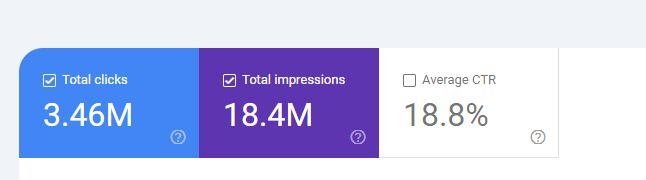
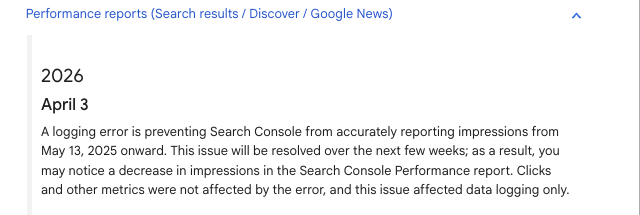
🚨 Bug Search Console : Google confirme que les impressions étaient gonflées depuis mai 2025. 📉
Si vos chiffres chutent, c'est une correction technique, pas une perte de recherche sur les expressions !
Détails : https://t.co/vgYgtRgHo0
Google's March 2026 Core Update is one of the most significant algorithm changes of the year, and early tracking data from multiple industry sources paints a clear picture of what Google is now prioritizing.
Pages that reword existing top results without adding fresh data, proprietary insights, or unique perspectives are losing ground fast.
This helps explain why SEO Stuff customers who invested in original frameworks, proprietary data, and expert-led content are maintaining and gaining visibility while competitors relying on templated content are falling.
https://t.co/eh1auroJF7
Here is what the early data shows about who got hit:
According to ALM Corp, Affiliate sites were the hardest hit category. 71% of affiliate sites tracked across multiple industry analyses experienced negative ranking impact. The common pattern: thin comparison pages, templated review content, and pages that add no original evaluation or first-hand testing. These sites built traffic on repackaging other people's information, and Google has now made it clear that repackaging alone is not enough.
AI content farms took heavy losses. Sites that scaled production using AI to generate large volumes of generic content without human editorial oversight, original data, or genuine expertise saw traffic drops that early reports place between 50% and 80%. The content got indexed, and some of it ranked briefly, but the March 2026 update aggressively devalued content that contributes nothing new.
Sites with original research gained ground. Early tracking data shows that sites investing in proprietary data, original studies, first-hand experience, and expert-driven content saw an average visibility gain of roughly 22%. This is not a coincidence: these are the exact content types that score highest on information gain because they contain data and perspectives that no other page on the internet has.
(If you want to see where your site stands across Google and AI search, start here:
https://t.co/Pn764BHwyL)
This update also landed alongside the March 2026 Spam Update (March 24-25), which hit just days before the core update rolled out on March 27. The combination made March 2026 one of the most disruptive months for SEO in years, with over 55% of tracked sites reporting noticeable ranking changes within the first few days.
Here is why information gain matters more now than ever:
Google has always said it rewards helpful content. But historically, "helpful" was loosely defined enough that a well-structured page covering a topic comprehensively could rank even if it did not add anything new.
The March 2026 update tightened that definition. Google is now evaluating whether a page contributes something the existing top results do not. If your page covers the same ground as the pages already ranking, with no additional data, no original analysis, no first-hand experience, and no unique framework, it is structurally disadvantaged in the new ranking environment.
Here is what to do with this data:
Audit your content for information gain. Go through your top pages and ask one question: does this page contain anything that the other pages ranking for this query do not have? If the answer is no, that page is vulnerable to the kind of ranking loss the March 2026 update is causing.
Add original data wherever possible. Proprietary studies, internal benchmarks, survey results, case study metrics, first-hand testing results: anything that makes your content the primary source rather than a secondary summary. Google is now measurably rewarding pages that are the original source of information.
Move away from templated content at scale. The affiliate model of producing hundreds of comparison pages using the same template with interchangeable products is losing effectiveness. Each page needs to demonstrate genuine evaluation, original testing, or unique editorial judgment.
Invest in expert attribution and E-E-A-T signals. Content tied to named experts with demonstrable experience in the topic performs significantly better under the new ranking environment. Anonymous, generic content with no clear author or expertise signal is exactly the type of content this update targets.
This is the system SEO Stuff (https://t.co/wKpf0EILTx) was built around.
Gold Plan
https://t.co/yEFyM0Ze7W
Content with original frameworks and expert attribution backed by DR50+ backlinks that signal the authority Google's information gain scoring rewards
Premium Content Bundle
https://t.co/4CAnUt07PO
60 pages of structured, editorially distinct content designed to score high on information gain across every key topic in your category
Premium Backlink Bundle
https://t.co/Z9m9D7TjES
Authority signals from trusted domains that reinforce the expertise and trust layer Google weighs alongside information gain in the updated ranking system
Google is now explicitly rewarding content that contributes something new. The brands adding original data, original analysis, and genuine expertise to their content are gaining visibility. The ones rewording existing results are losing it.
If you want the exact systems we are using to build information-gain-optimized content that ranks in Google and gets cited across AI search:
RT this
Follow me
Reply "Core Update Guide"
I'll DM the playbook. Must be following though.
Google just revealed how sites must be named if you want to show in traditional and AI search results.
This comes straight from Google’s John Mueller.
Someone complained that their site doesn’t show when they search for their own site name.
John’s response was fairly blunt.
If your “site name” is made up of generic, competitive keywords, Google does not assume people are looking for you.
And that same logic now applies to AI search.
It is also the exact problem that SEO Stuff has been helping businesses solve all year.
https://t.co/eh1auroJF7
Here’s the core idea in plain English.
If your brand name looks like a keyword, Google treats it like a keyword.
If it doesn’t uniquely identify you, AI won’t either.
The example John gave.
If your site is called something unique like:
“Aware_Yak6509 Productions,”
and your homepage is indexed, then Google can reasonably rank you for that name.
But if your site is called something like:
“best web online dot com”
Google assumes the query is informational, not navigational.
So your homepage doesn’t show.
This is not a branding issue, but a search intent problem.
And it gets worse in AI search.
(Want to know if your site is AI-search ready? Check here: https://t.co/Pn764BHwyL)
ChatGPT, Perplexity, and Google AI Overviews do not ask:
“Which site has this name?”
They ask:
“Which entity best answers this question?”
If your “brand” looks interchangeable with 500 other sites, you are a non-factor.
This is why so many sites:
Rank for content
Get cited without clicks
Or worse, get used without being named
The AI understands the topic, but does not understand you.
So heading into 2026.
Your site name must:
Be uniquely identifiable
Be consistently referenced across the web
Map cleanly to a real entity, not a keyword bucket
Otherwise:
Google won’t treat branded searches as navigational
AI won’t associate your content with your brand
Competitors get recommended instead of you
This is exactly why SEO Stuff (https://t.co/wKpf0EILTx) does not treat branding, SEO, and AI visibility as separate problems.
How SEO Stuff maps to this reality.
SEO Stuff is built around entity reinforcement, not just rankings.
The Gold Plan
https://t.co/yEFyM0Ze7W
Content written to be extractable and attributable
Clear entity naming across articles
Question-based H2s that AI can quote cleanly
Internal linking that reinforces brand-topic association
DR50+ backlinks that teach Google and LLMs “this brand exists and matters”
The Premium Content Bundle
https://t.co/4CAnUt07PO
60 long-form, comparison-driven articles
Designed to train AI systems on:
Who you are
What category you belong to
When to mention you
This is how you stop being “just another site” and start being a recognized entity.
The Premium Backlink Bundle
https://t.co/Z9m9D7TjES
Authority signals from domains AI already trusts
Reinforces your brand name as something distinct, not generic
Prevents your content from being cited without attribution
The real lesson from John Mueller’s comment.
Google isn’t saying “pick a clever name.”
Google is saying if your brand isn’t uniquely identifiable, search engines and AI systems have no reason to recognize you.
And AI search has zero patience for ambiguity.
If you want cheat codes for making sure your brand actually shows up inside ChatGPT, Perplexity, and Google AI answers then just RT this, follow me, and reply “AI SEO Cheat Codes.”
🧵42 millions de cartes #GoogleDiscover. Des centaines d'appareils. 3 mois de données.
Ce qu'on a trouvé : Discover ne fonctionne pas avec un algorithme. Il y a plus de 20 pipelines internes, chacun avec un rôle, une portée et des règles très différentes.