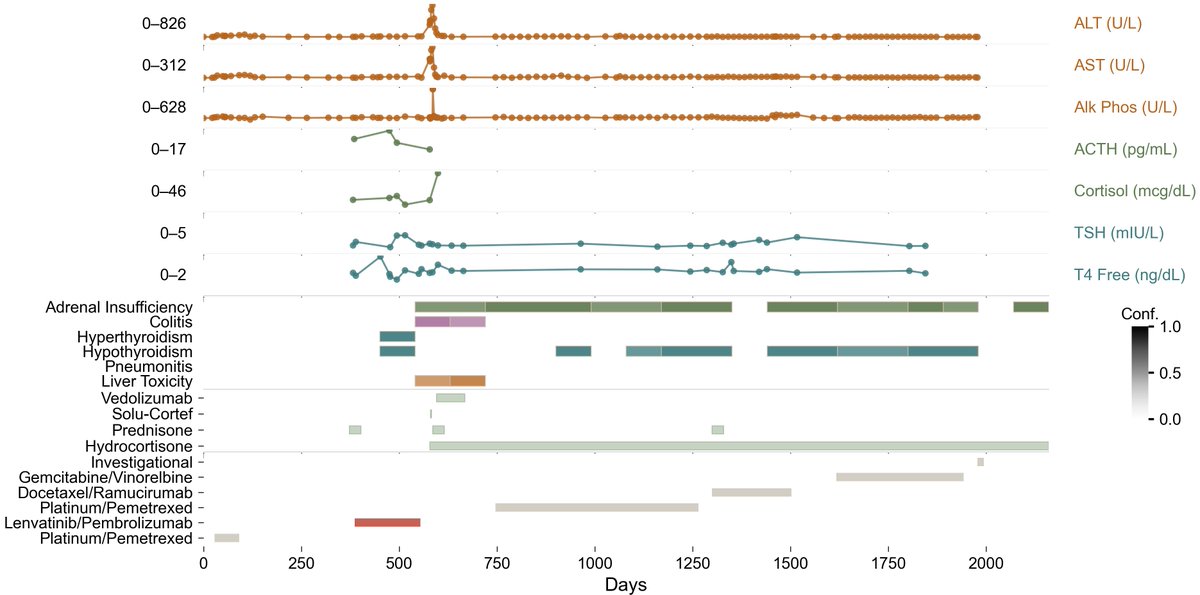
Some patients treated with cancer systemic therapy develop only minor side effects, others develop life-changing toxicities.
We have no tools to predict who will fall into which bucket.
Excited to share our ~3 years of work to try to figure this out:
https://t.co/vGZl8UQfeA
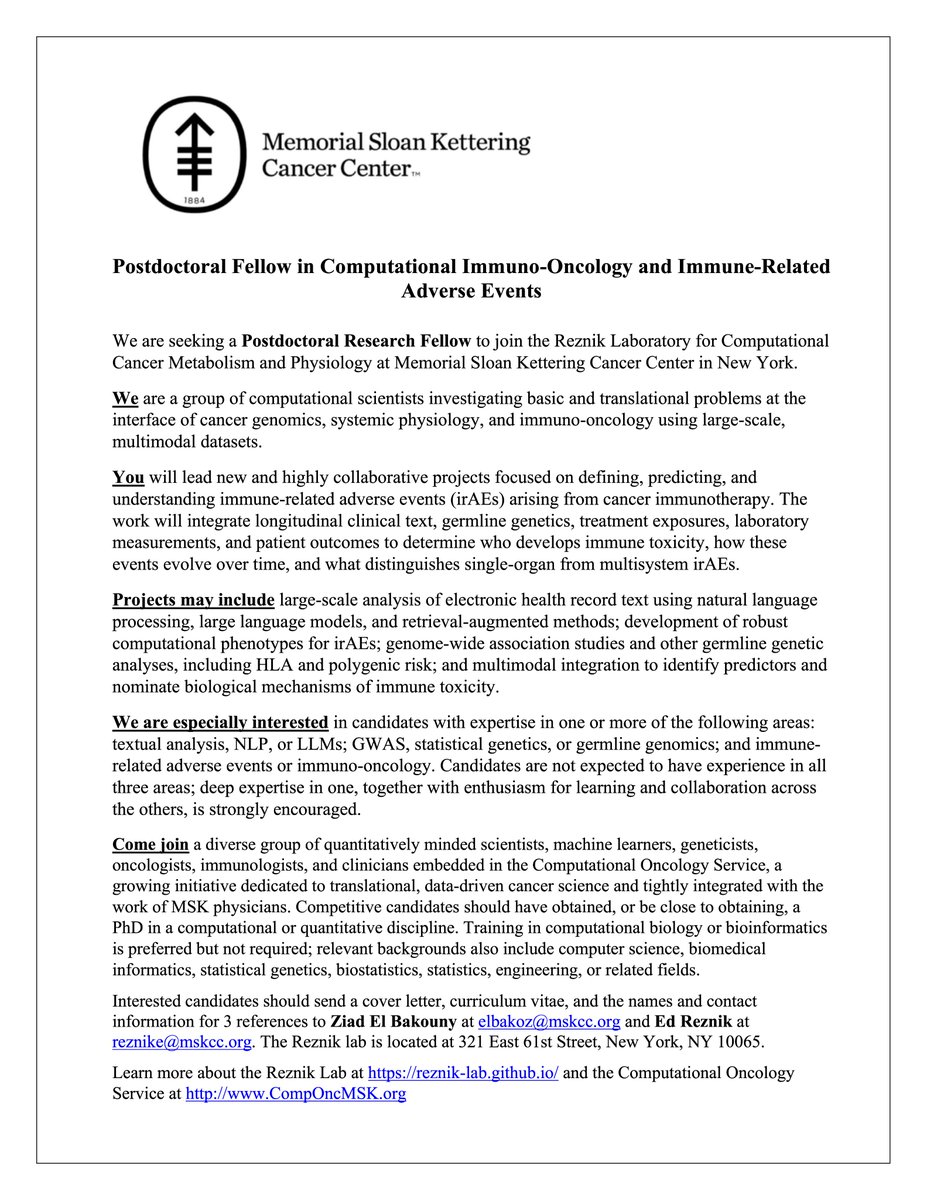
And if you're interesting in joining us in our adventure into toxicity, germline genetics, and precision safety, consider applying to this open postdoctoral position.
We often frame cancer treatment as an risk-benefit tradeoff. In reality, we characterize benefit far better than risk.
Why? because adverse event data, systematically collected across cancer types and treatments, did not exist until now.
The playbook:
Incredibly excited to report today on the determinants of toxicity to systemic therapy in cancer patients. Led by many including Alex Guo, Feiyang Huang, Saksham Mohan, River Walser, and the fearless @ZiadBakouny. Co-led by Wes Tansey and Jian Carrot-Zhang https://t.co/axflh9pMRS
So grateful to have worked alongside this brilliant cast that even Chris Nolan wouldn't have been able to assemble:
@ZiadBakouny our
Odysseus and clinical mind, Saksham our LLM whisperer, Alex and River whose talents spans modeling, genetics, and proteins
📣The Singh Lab opens at Fox Chase Cancer Center in Spring 2027, where I will be starting as an Assistant Professor! Excited to continue studying how biophysics shapes drug response.
I am hiring across all levels & fields! Apply on the "Join" page (& RT): https://t.co/WHgvdosChH
My favorite AI joke:
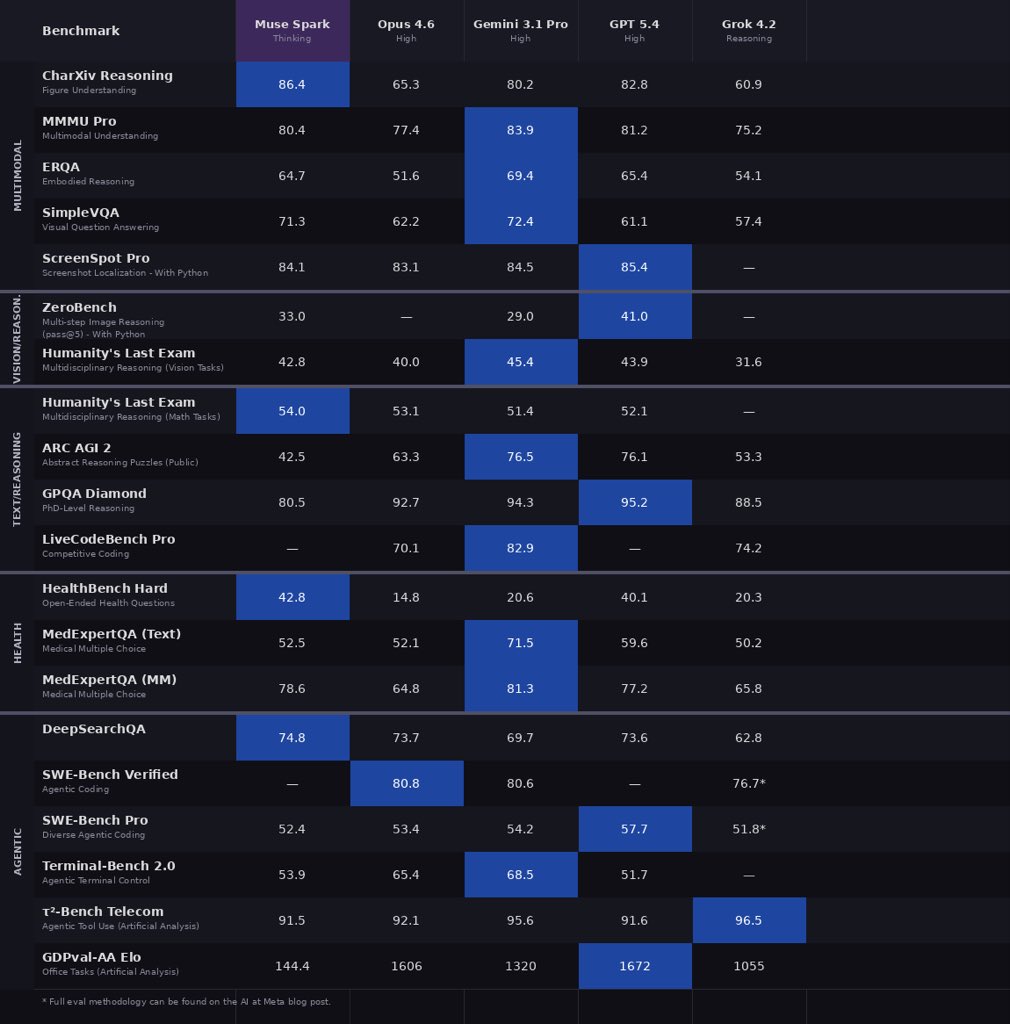
Current models are getting close to PhD-level intelligence. After that, they're expected to achieve the intelligence of someone who decided not to do a PhD.
I’ve made a disturbing realization. This single E. coli has been consistently doubling every 20 minutes. It took only 13 hours for it to fill a liter. At this rate, in a day and a half it’ll be the size of the whole earth, which would have an over 10% chance of killing everyone
Excited to share my first protein design story is now fully published at @natBME ! Very fortunate to have been able to work along the very talented @arthurwchow and Betty Li, who showed some the most jaw-dropping in vivo data I have ever seen! Come check out our paper!
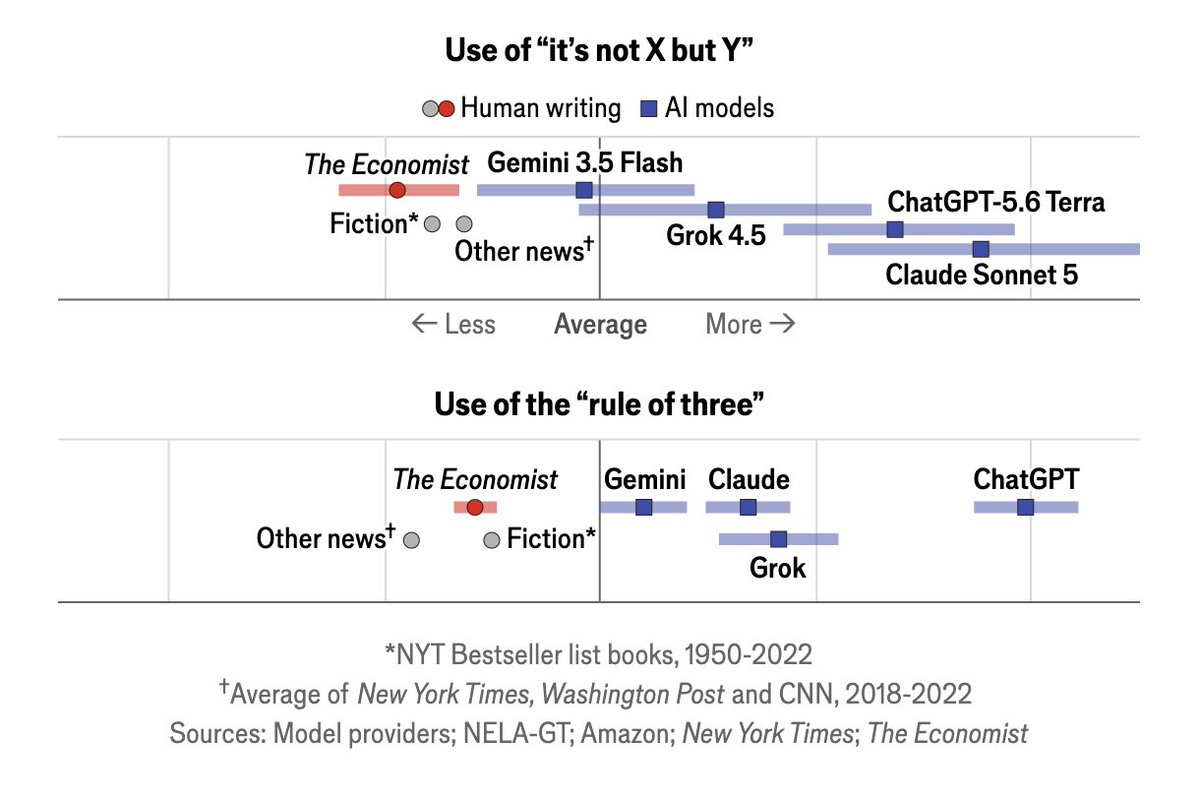
Marvelous examination of how to spot 2026-era AI writing, via the Economist
- AI likes long sentences with less punctuation; “and” is its most overused word
- relatedly, lists of three things, which drives up use of "and" as well
- polysyllabic adjectives: “significant”, “increasingly”
- scientific jargon ("rate-limiting," “parameter”)
- nominalizations (making nouns from verbs: eg, “expansion” from “expand”)
- ofc, everyone's favorite: "it's not X, it's Y"
Binder design has come of age thanks to generative models—but how can we access the wider array of dynamic, multistate protein functions, so elegantly employed by nature?
@mihirbafna14 and I are excited to share SwitchCraft, a framework for designing such functions. (1/7)
Very excited to report on our lab’s unexpected adventure into subtyping cancer cachexia by way of anatomy, where we study the evolution of the bodies (not the genomes!) of patients with cancer during profound weight loss. Led by Sonia Boscenco. https://t.co/QP2k3CrHl2
In our latest blog , we are taking a closer look at one of CAIA's AI innovation projects, featuring a team from @MSKCancerCenter!
The goal is to bring together the entire history of a patient to predict the next phase of their medical experience.
https://t.co/wQNnvQogdk