The year is 1873. Your wife tires easily and reads too much. The doctor prescribes the rest cure: six weeks flat in bed, no books, no visitors, fed on milk, forbidden to sit up without his permission. The man who devised it is the most famous nerve specialist in America, and the women come out of it quieter, which is taken as the cure.
The year is 1915. The hospital has a new way of delivering your child. Morphine, then scopolamine, and the mother wakes two days later with a baby she cannot remember having. They call it twilight sleep. The women are strapped into padded cots so they do not hurt themselves while they scream, and the straps are the modern part. The babies arrive blue and slow to breathe.
The year is 1945. The truck comes down your street fogging DDT, and the children run behind it in the white cloud because the man on the back says it is harmless. At the beach it is sprayed over the bathers on their towels. It goes on the cattle, over the barn, and across the kitchen table.
The year is 1948. Your son has trouble with his ears. The doctor slides a rod tipped with radium up each nostril and holds it there for the best part of ten minutes, and you bring him back three more times. Hundreds of thousands of American children get the same treatment. The cancers arrive in their fifties.
The year is 1962. The health visitor tells you breastfeeding is old-fashioned and the formula is scientific. By 1972 fewer than one American baby in four is breastfed at all. The formula is skimmed milk and sugar, with the milk fat taken out and vegetable oil put in.
The year is 1971. The family planning clinic fits a small plastic crab called the Dalkon Shield. Its tail is a bundle of fibres that wicks bacteria up into the womb. 2.8 million are fitted in America before it is withdrawn, and the company goes bankrupt under the claims. It had been sold as safe and superior.
The year is 1983. The doctor says your arteries are the butter's fault. The dripping tin goes in the bin, the yolks go to the dog, the margarine goes in the fridge, and you have the heart attack anyway, on skimmed milk, having done everything right.
The year is 2001. Your 15-year-old is low, and the doctor prescribes Paxil, because the trial in the journal says it is effective and well tolerated in adolescents. The raw data, reanalysed 14 years later, shows more suicidal thinking on the drug than on the sugar pill. The company pays $3 billion to settle. Nobody rings the house.
The year is 2009. The government has spent around £500 million stockpiling Tamiflu for the pandemic, on the strength of the manufacturer's trials. When the trials are finally prised loose five years later, the drug shortens flu by about half a day and nothing shows it keeps anyone out of hospital. The stockpile goes out of date in a warehouse.
The year is 2026. The doctor has ten minutes and a screen. The number is high, so the tablet is for life. The weight is high, so the injection is for life. The meat is bad for the planet and the oil is good for the heart, and the person in the chair is as certain as everyone who ever sat in it.
Every one of those was settled, by a committee, in a journal, with a doubter somewhere being laughed at. The rest cure, the straps, the fog, the rod, the formula, the crab, the margarine, the trial, the stockpile. All of it certain, all of it printed, all of it done to somebody who had asked for help.
You were never the one who was wrong. You were the one it was done to, and the only person in the story who did as they were told every single time.
The apology comes a generation late, in a footnote, addressed to nobody.
The next one is being drafted now.
A 10-year-old Japanese boy weighing just 30 kg decided to take on a 70 kg opponent and defeated him decisively, leaving everyone stunned… Even sumo legend Hakuho put down his phone and started watching the match!
Everything big starts small and focused.
1,000 true fans is step #1, whether you want a $100K per year business or the next Uber.
I’ve seen this with all of my fastest-growing and most successful startups. They start laser-focused on 100 to 1,000 people, niche-ing down as necessary with their messaging and targeting (demographically, geographically, etc.) to get to a manageable and cost-effectively reachable number.
So, you may ask yourself, “Why aim for a mere $100K when I can try to build a billion-dollar business?” Two reasons:
1) Aiming for the latter from the outset often leads to neglecting the high-touch 1,000 true fans who act as your most powerful unpaid marketing force for “crossing the chasm” into the mainstream.
If you don’t build that initial army, you’re likely to fail.
2) Do you really want to build and manage a big company? For most people, it’s not a fun experience; it’s an all-consuming taskmaster. There are certainly ace CEOs who thread the needle and enjoy this roller coaster, but they are outliers.
Read Small Giants by Bo Burlingham for some fantastic examples of companies that choose to be the best rather than the biggest.
“Don’t bend; don’t water it down; don’t try to make it logical; don’t edit your own soul according to the fashion. Rather, follow your most intense obsessions mercilessly.” — Franz Kafka
"If—" is a poem by English poet Rudyard Kipling
If you can keep your head when all about you
Are losing theirs and blaming it on you;
If you can trust yourself when all men doubt you,
But make allowance for their doubting too:
If you can wait and not be tired by waiting,
Or being lied about, don't deal in lies,
Or being hated don't give way to hating,
And yet don't look too good, nor talk too wise;
If you can dream—and not make dreams your master;
If you can think—and not make thoughts your aim,
If you can meet with Triumph and Disaster
And treat those two impostors just the same:
If you can bear to hear the truth you've spoken
Twisted by knaves to make a trap for fools,
Or watch the things you gave your life to, broken,
And stoop and build 'em up with worn-out tools;
If you can make one heap of all your winnings
And risk it on one turn of pitch-and-toss,
And lose, and start again at your beginnings
And never breathe a word about your loss:
If you can force your heart and nerve and sinew
To serve your turn long after they are gone,
And so hold on when there is nothing in you
Except the Will which says to them: 'Hold on!'
If you can talk with crowds and keep your virtue,
Or walk with Kings—nor lose the common touch,
If neither foes nor loving friends can hurt you,
If all men count with you, but none too much:
If you can fill the unforgiving minute
With sixty seconds' worth of distance run,
Yours is the Earth and everything that's in it,
And—which is more—you'll be a Man, my son!
On a hike in San Francisco several years ago, Matt Mullenweg (@photomatt) recommended I read “The Tail End” by Tim Urban (@waitbutwhy) on the Wait But Why blog—if you only read one article this month, make it that one. It uses diagrams to underscore how short life really is.
Here’s just one gem: “It turns out that when I graduated from high school, I had already used up 93% of my in-person parent time. I’m now enjoying the last 5% of that time. We’re in the tail end.”
Might be time for you (and me) to rethink our personal priorities.
https://t.co/LpMCDS2uwT
I have recommended Kevin Kelly’s “1,000 True Fans” to literally millions of people. “If you only read one article on marketing, make it this one” is my common wording.
Here’s a highly simplified synopsis: “Success” need not be complicated. Just start with making 1,000 people extremely, extremely happy.
Brian Armstrong tells the founding story of Coinbase: “Nothing was working”
After quitting his job in 2012 and joining Y Combinator to build Coinbase, Brian faced setback after setback:
“I was struggling to find anybody who would join my team and work with me... I almost cofounded it with one person and that all exploded in dramatic fashion… I finally found the right cofounder, Fred Erhsam, we got off to the races, and someone sued us three months later.”
But as Brian explains, this is the norm for startups:
“Startups are moving from one setback to the next with enthusiasm… nothing is working, and that’s kind of the default state… If it feels like that, just don’t give up. That’s the main thing. A lot of times I’ve seen people: they have an idea, they have a team that comes together, it doesn’t work, and four months they have a big cofounder fight, blow up, and they all go home… And it’s like, well, you didn’t really try it because there’s no idea that works on the first try.”
He continues:
“You have to put something out there, and then grind it out for two or three years. Talk to your customers, improve the product, talk to your customers, improve the product… If you look at almost every successful startup, it feels like it was an overnight success, but really that’s just how history gets written in hindsight. If you talk to most of those founders in the early days, there was a period where any reasonable person would have quit. Nothing was working… And all of them somehow persevered and pushed through and finally found something that started to work.”
This was especially true for Coinbase. There was no way to buy and sell crypto in the first version. A couple hundred people signed up after Brian posted it on Reddit, and they all left. After emailing five of the people who signed up and churned, he realized some people liked the app but couldn’t use it because they didn’t have Bitcoin:
“I remember this light bubble that went off in my head, and I was like, well if there was a simple way to buy [Bitcoin] in the app, would you have done it? He’s like, yeah, probably. And so I hung up and the next few months I had to start thinking about how do we build a simple buy button? And there were a million things that had to go into that: bank partners, legal, licensing, and all this kind of stuff. But that’s when we finally got product/market fit. And that was just one example of hundreds of times where I did that. And I was trying to find something that works… So talk to your customers, improve the product. That’s all we did. And that was one of the things I would recommend.”
Video source: @a16zcrypto (2023)
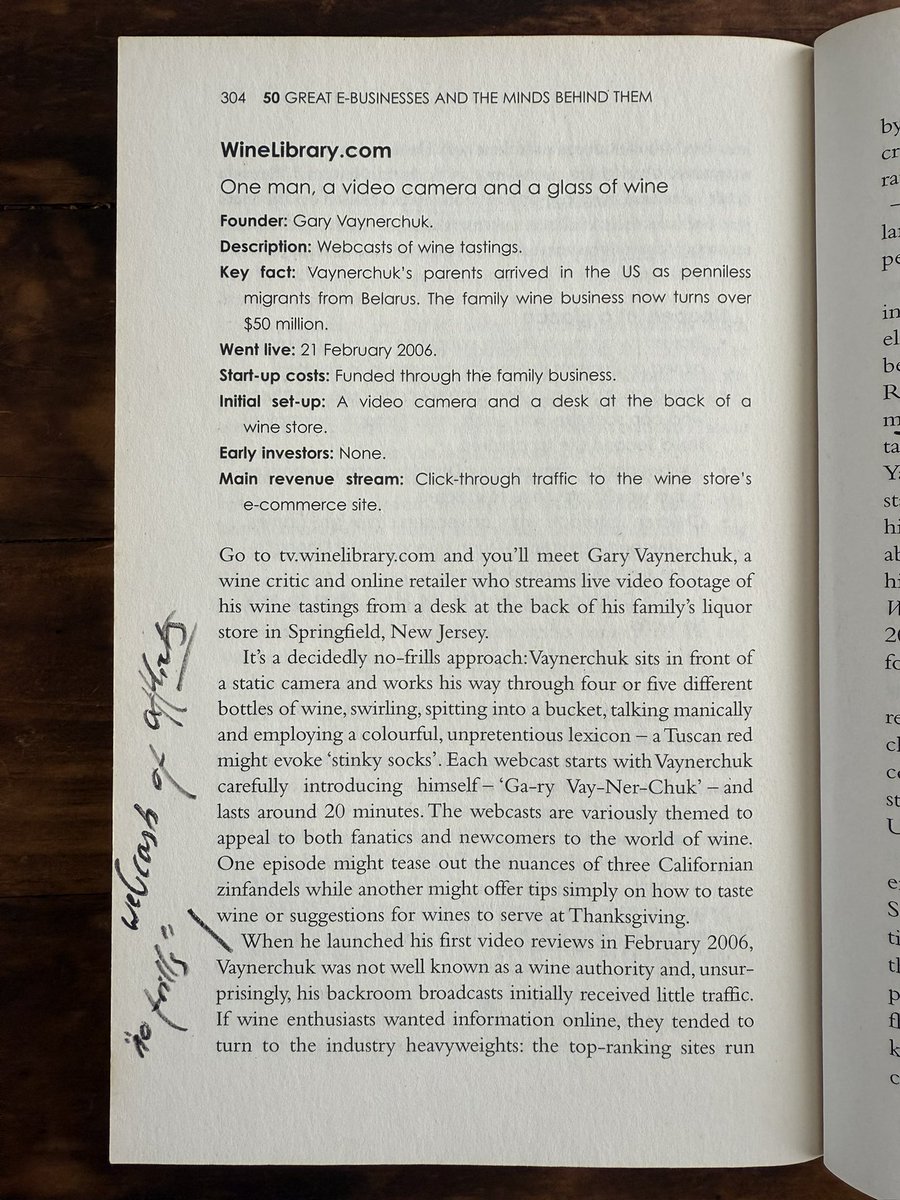
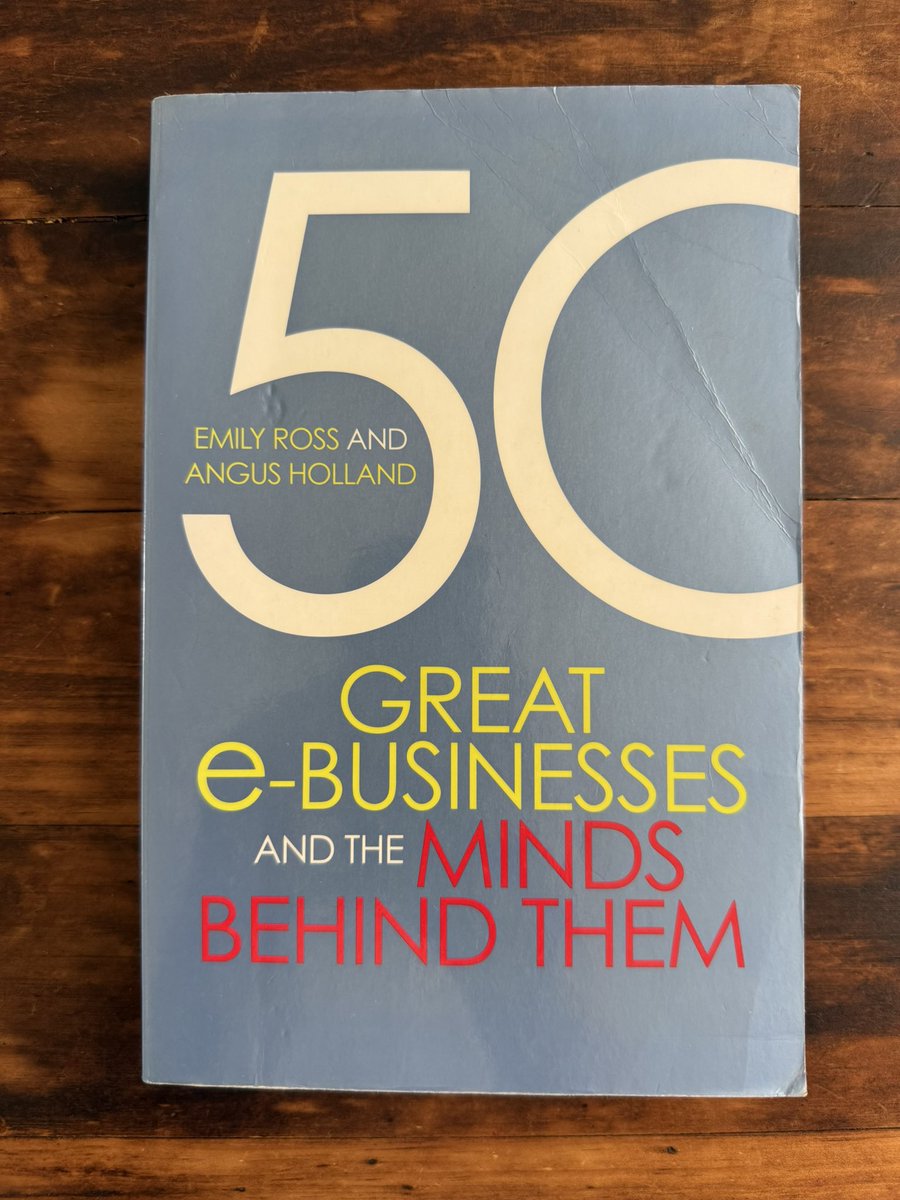
@garyvee ‘One man, a video camera and a glass of wine.’ - 50 great e-businesses and the minds behind them. Published 2007.
Here’s to you my friend. Wishing you all the best on your 50th Birthday.