ÉDOUARD PHILIPPE / CLAIRE TABOURET, LES LIAISONS DANGEREUSES
🟣🟣 Lettre à madame Claire Tabouret
Pourquoi votre domaine de Rouville (château et dépendances) est-il mieux gardé que Brégançon (gendarmes, sécurité privée)❓
Pourquoi cacher que Serena Epstein est la marraine de votre fille aînée❓
Pourquoi cacher que votre époux américain Nathan Thelen a écrit une douzaine de lettres à Mikhail Popkov, surnommé la Bête d'Angarsk, détenues par les autorités de Russie❓
Pourquoi a-t-il baptisé son groupe de rock du nom que Popkov donnait à ses victimes traquées dans les bois, à savoir 'Moonrats' (rats de lune)❓
Pourquoi avoir représenté Popkov grimé en apôtre sur un vitrail de Notre-Dame de Paris ⛪❓
Quel rôle Édith Chabre, épouse d'Édouard Philippe, joua-t-elle dans l'acquisition du château de Rouville 🏰 via l'agence Ossa Properties de Los Angeles et sa gérante Serena Epstein que vous avez rencontrée en 2019 à Palm Springs❓
Serena Epstein et Édith Chabre sont-elles membres de la loge Memphis-Misraïm à laquelle vous appartenez ou de la Logia estrellas, dépendante des Rose-croix de Californie❓
Pourquoi avoir peint au plafond de votre loft de Los Feliz à Los Angeles le tarot rosicrucien de Pamela Colman Smith ex adepte d'Aleister Crowley❓
Quelle place occupe monsieur Édouard Philippe dans la hiérarchie Rose-croix actuelle, à quel niveau votre propre époux se situe-t-il❓
Comment le château de Rouville 🏰 (domaine sur 30 ha) a-t-il pu vous être cédé pour 1 million € ?
Y jouez-vous un rôle particulier de maîtresse de cérémonie qui expliquerait une telle remise❓
Qui est vraiment la très secrète madame Tabouret❓
✴️
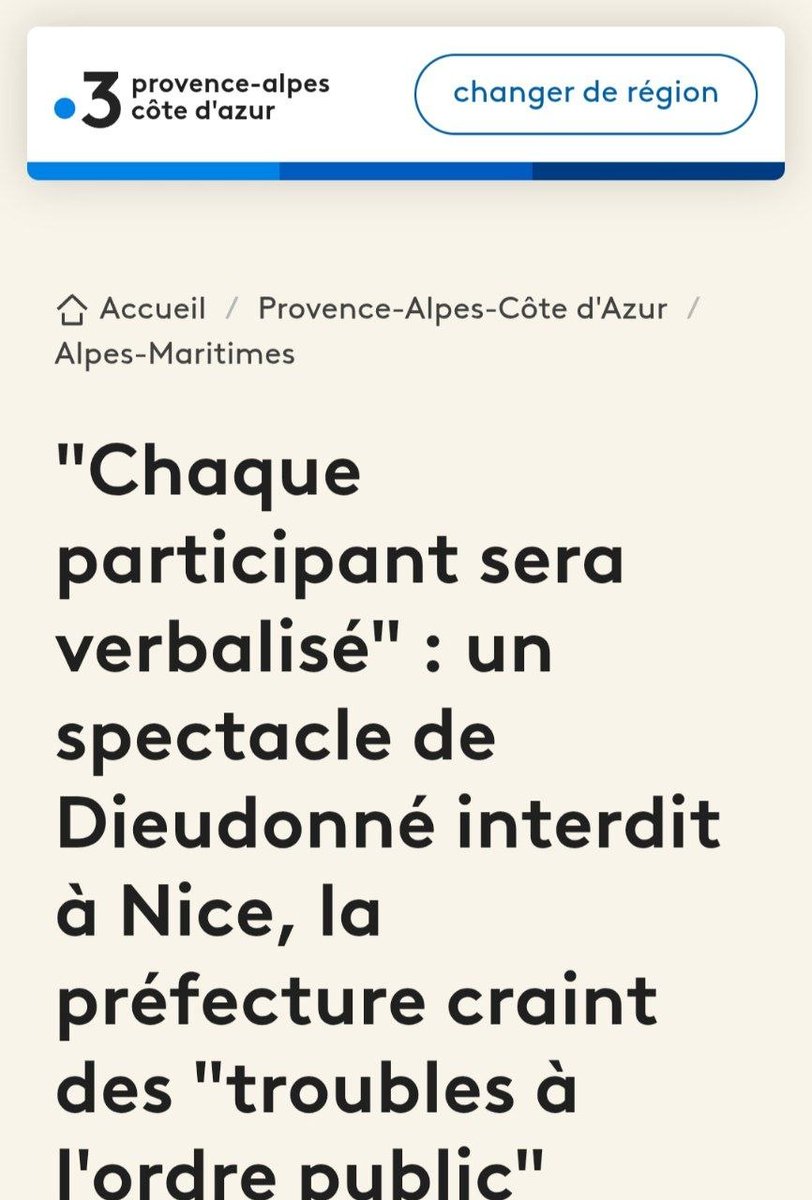
Putain, les mecs, on les a énervés… Le préfet est sûrement un proche d’Ariane ou d’Epstein. Il dit, sans état d’âme, que tous ceux qui sont réfractaires à Epstein et qui iront voir mon spectacle ou le meeting de Lalanne seront punis. Là, on est quand même dans du racket en bande organisée, une association de malfaiteurs financée avec nos impôts… Ils n’en ont plus rien à foutre des lois.
Pendant ce temps, Patrick Bruel Benguigui fait bronzette à Miami ou à Tel-Aviv, tandis que Jack Lang se la coule douce. Les Français de sous-classe, comme nous, sont mis au pas et invectivés par cette classe qui défend les pédophiles…
Pour rappel, la Franco-Israélienne Yaël Braun-Pivet, présidente de l’Assemblée nationale française, s’était opposée à une commission d’enquête sur l’affaire Epstein. L’enquête de police piétine : pas de nouvelles des 25 millions d’euros envoyés par la banque Rothschild à Epstein, pas de réponse concernant les ingérences dans le cas Dieudonné en 2013-2014.
Mais, en revanche, pour le petit peuple, nous, il n’y a pas assez de pompiers quand nos baraques brûlent, ni assez de protection pour nos gamins. Il y a une armada de policiers quand on veut aller voir un spectacle ou assister à un meeting présidentiel qui dénonce leurs crimes.
Les larmes d’Angelina Melnikova…🥲
Médaille d’Or à Zagreb, dominatrice, reine de la gymnastique européenne.
Et pourtant, pas de drapeau. Pas d’hymne.
Juste une jeune fille qui a tout donné, qui a gagné… et qui pleure.😪
Ces larmes ne sont pas seulement celles de la victoire. Ce sont celles d’une athlète à qui on a enlevé une partie de son âme.
Le sport mérite mieux que ça.
🇷🇺❤️💔
🚨🔴🔥‼️
ALSTOM : LES DEUX QUI ONT OSÉ CREUSER… SONT MORTS
Montebourg a parlé. Mais en parallèle, deux autres ont enquêté à fond.
🔴Olivier Marleix. Député LR. Président de la commission parlementaire sur Alstom. Il a tout épluché : pression US, role de Macron à Bercy, « pacte de corruption » possible, signalement au parquet. Il a dénoncé la trahison industrielle.
🔴Eric Denécé. Spécialiste du renseignement. Directeur du CF2R. Il a alerté dès 2014 : turbines nucléaires, sous-marins, Charles-de-Gaulle… la France livrée aux Américains. Il a travaillé avec Pierucci. Il a écrit noir sur blanc : prédation, naïveté des élites, guerre économique.
Résultat ? Denécé : retrouvé mort en juin 2025 dans sa voiture, fusil à côté.
Thèse officielle : suicide. Marleix : retrouvé pendu chez lui le 7 juillet 2025. Enquête close : suicide.
Deux hommes qui ont mis le nez dans le plus gros scandale de souveraineté industrielle française des 20 dernières années. Deux hommes qui dérangeaient. Deux « suicides » à quelques semaines d’intervalle.
Le système a-t-il peur de la vérité sur Alstom ? Ou c’est juste une coïncidence de plus dans ce pays où les gêneurs disparaissent ?
Les élites vendent. Les médias se taisent. Et ceux qui enquêtent… se suicident.
💪On n’oublie pas. On ne lâche rien.
RT. Like. Commente. Qui d’autre voit le schéma ?
🇫🇷 La France mérite des réponses. Pas des enterrements.
#Oliviermarleix #Ericdenece #Alstom
C’est un étrange mélange de tristesse et de fierté que de voir l’@AtelierMissor_, cette petite bande de jeunes sculpteurs classiques niçois engagés au service du Beau et de notre héritage civilisationnel, s’exiler aux États-Unis pour pouvoir poursuivre et déployer son œuvre.
Nous n’avons malheureusement pas su, en France, leur faire une place, leur donner les moyens et l’attention que leur art méritait. Je n’ai pas oublié la chasse que la gauche et l’État ont organisée contre leur statue de Jeanne d’Arc, à Nice, et contre laquelle nous nous étions mobilisés.
Ici, nous n’avons désormais d’yeux et d’argent que pour ce qui abîme, détruit ou remplace la beauté, l’héritage, la grandeur et le style : le verre déraciné, le « design » simplificateur, la fonction utilitaire érigée en esthétique, le modernisme si ringard. Des nouveaux vitraux criards de Notre-Dame à l’entrée transformée en silo à grains de l’Assemblée nationale, c’est le même renoncement à la beauté, à l’harmonie et à la transmission. On assassine Viollet-le-Duc, on défigure l’architecture néoclassique, pour satisfaire l’ego des princes médiocres de notre temps : après avoir laissé le pays s’abîmer, ils veulent à tout prix imprimer leur marque dans la pierre, comme pour arracher à l’Histoire la trace que leur bilan ne leur laissera jamais.
Et comment ne pas voir, dans la construction de cette monumentale statue de Prométhée au pied de Starbase, là où est en train de se jouer l’avenir de la conquête spatiale, le symbole de la puissance qui nous échappe ?
Pourquoi n’est-ce pas à Kourou ou aux Mureaux que se dresse cette œuvre titanesque représentant celui qui osa voler le feu aux dieux de l’Olympe pour le donner aux hommes ?
L’image est saisissante : le génie européen, nourri de notre culture classique et de nos mythes antiques, trouve désormais outre-Atlantique l’ambition, les moyens et la liberté de bâtir grand.
Ce Prométhée qui nous échappe devrait nous servir d’avertissement. Après nos industries, nos technologies et nos capitaux, laisserons-nous aussi partir nos artistes, nos talents et notre puissance créatrice ?
Une civilisation qui renonce à créer, à transmettre, à conquérir et à célébrer le Beau finit par laisser à d’autres le soin de construire l’avenir à sa place.
Pour l’art comme pour le reste, il est tard, mais il n’est jamais trop tard.
Faisons de l’art. Faisons du beau. Faisons grand. Et faisons-le à nouveau chez nous.
Je crois que je suis arrivé au point de rupture.
Depuis 10 ans, j’écoute chaque matin le journal de @franceinter. Mais ça devient impossible : la propagande d’extrême gauche s’intensifie, à la fois dans le choix des sujets et dans leur traitement.
Ce matin, au menu :
- La crise migratoire à Ceuta. L’angle : l’extrême droite veut empêcher les gentils migrants qui ont faim d’entrer en Europe.
- La mise à l’arrêt de centrales nucléaires du fait du réchauffement des cours d’eau : ils interrogent un mec du Réseau Action Climat (asso d’extrême gauche anti-nucléaire, sans le préciser bien sûr), dont la conclusion est qu’il faut arrêter de financer le nucléaire et que la Clim c’est pas bien.
- La condamnation d’Airbnb a une amende pour non collecte de la taxe de séjour.
- Les assos environnementales qui demandent au Conseil Constitutionnel de censurer la loi d’urgence agricole.
Que des sujets DE GAUCHE, traités avec un angle DE GAUCHE, avec des invités DE GAUCHE.
@CHAlloncle
Les proches de la personne n'ont pas un droit à être informés qu’une procédure d’euthanasie est en cours (art. 6, II, al. 4 et art. 7).
Les proches n'ont pas le droit de contester en justice la décision du médecin (art. 12).
Le médecin ou l’infirmier doit veiller à ce que l’entourage de la personne objet de l’euthanasie n’exerce aucune pression pour lui faire « renoncer à l’administration de la substance létale » (art. 9, I).
La personne n’est informée « des modalités d’action de la substance létale » qu’après avoir confirmé sa demande de mourir (art. 6, V).
Les médecins objecteurs de conscience qui refusent l'euthanasie sont obligés de désigner un autre médecin qui accepte de pratiquer l’euthanasie à leur place (art. 14).
Les établissements privés, en particulier religieux, même si tous leur personnel est objecteur, sont obligés d’accueillir des équipes mobiles d’euthanasie et d'accepter l'euthanasie de leurs résidents et patients, sous peine de poursuites et de sanctions administratives et financières (art. 14).
Les pharmaciens sont privés de clause de conscience et obligés de préparer le poison, sous peine de sanctions disciplinaires (art. 8 et 14).
Les amendements visant à séparer les procédures d’euthanasie de celles de prélèvements d’organes ont tous été rejetés (par exemple l’amendement n°547).
Le « contrôle » est réalisé après la mort sur la base des informations transmises par le seul médecin (art. 11 et 15).
Le « contrôle » est réalisé par une commission composée de quatre membres d’associations et professionnels en sciences humaines et sociales, ainsi que de deux médecins et de seulement deux juges (art. 15 IV).
Tout le coût de la procédure, y compris les honoraires et les rémunérations, est pris en charge par la Sécurité Sociale (art. 18).
The world wants me to die.
My incurable disease diagnosis became global news. It was omnipresent on social media and 1,900 articles were written in a matter of days.
Many were saddened.
However, joy dominated the commentary.
People pointed to schadenfreude, the pleasure of another's failure. Yes, there’s that. There is a special place in people’s hearts that loves to see others fail, especially when that person’s presence threatens their own psychological stability in some way or helps them feel better about themselves.
But, if you look over the social media commentary about me, you’ll see that pattern:
“he deserved it.”
I deserved it because I challenged death. The crowd was running a deeply rooted psychological script that represents the oldest, most deeply embedded stories of human culture.
This was the first story ever written down, 4,000 years ago. Gilgamesh sought eternal life after losing someone he loved, only to have the plant of youth stolen by a serpent as he bathed. Leaving him to accept his mortality.
Asclepius became so skilled at rejuvenation that he raised the dead. As punishment, Zeus struck him down with a thunderbolt to enforce life and death authority.
This is the story of Jesus. Pontius Pilate offered a choice between a thief and the immortalist, and the crowd demanded the execution.
People need this story conclusion to keep themselves sane. The challenger must lose and the loss must appear deserved. It’s a shield of self preservation.
For if death is inevitable, their existence and that of their loved ones is justified and unavoidable. If death is not inevitable, nothing about their reality is safe.
I occupy the same philosophical and archetypal position as Gilgamesh, Asclepius and Jesus.
This statement will draw outrage and accusations of blasphemy, hubris and narcissism. Nevertheless, it’s the pattern that has repeated itself for thousands of years.
Death has been the omnipresent concern of the human race. It encapsulates our greatest fears, joy and curiosities. The discourse around it changes over time; however, the fundamentals remain unchanged.
What’s different about this moment, that is unlike any other moment, is that physical death may no longer be inevitable.
What if I didn’t deserve it?
And what if I am your ally, and not a threat?
Quelques soient les maladies psychologiques, la genetique et le karma
Dieudonnet parle la langue de l univers
Ecoutent et entendent ceux qui peuvent
Sur cette planete de detraqués
Honte aux ames
Honte a l immense echec du systeme d incarnation qui essaye de faire porter le chapeau a l etre humain avatar considéré comme un insecte dont la conscience est un detail...
@Flick1_ Yes but what you’ve done is illustrate that that it’s a heatwave is unrelated to global warming and conveniently missed out that the base temperature is higher and so the effects are more so it’s hotter than it would’ve been.
You stopped looking because it backed your theory
Interessant verhaal over de omegablokkade.
Een meteoroloog legt uit waarom het deze week zo warm is (en nee, het komt niet door klimaat- verandering
De omegablokkade — dat is de werkelijke meteorologische verklaring achter de extreme temperaturen die momenteel over een groot deel van het Europese continent worden gemeten. Terwijl grootmedia als de NOS de hitte vrijwel reflexmatig koppelen aan klimaatverandering en broeikasgassen, wijzen kritische wetenschappers op een veel nuchterder en beter onderbouwde verklaring: een hardnekkig weerpatroon in de hogere atmosfeer dat Europa al vaker in zijn greep heeft gehouden.
Wat is een omegablokkade precies?
Een omegablokkade is een specifiek patroon in de straalstroom — de krachtige windstroom op grote hoogte die het weer in onze breedtegraden grotendeels stuurt. De naam komt van de gelijkenis met de Griekse hoofdletter omega (Ω): een grote hogedrukrug in het midden, geflankeerd door twee lagedrukgebieden aan weerszijden. Dit patroon zorgt ervoor dat luchtmassa’s nauwelijks kunnen doorstromen en het weerpatroon wekenlang kan vaststaan.
In het geval van de huidige hittegolf wordt hete Saharalucht door het anticyclonale (met de klok mee draaiende) luchtstroompatroon noordwaarts getransporteerd richting West-Europa. Terwijl die luchtmassa stijgt en daalt onder de hogedrukrug, wordt ze adiabatisch samengedrukt — een puur fysisch proces dat de temperatuur verder doet oplopen. Geen CO2 aan te pas.
Meteoroloog Chris Martz trekt aan de bel.
De Amerikaanse meteoroloog Chris Martz deelde zijn analyse van het huidige weerpatroon uitgebreid via sociale media. Zijn conclusie is helder: deze omegablokkade heeft niets te maken met klimaatverandering of uitstoot van broeikasgassen. Het is een bekende, goed gedocumenteerde weerdynamiek die altijd al heeft plaatsgevonden en ook in een hypothetisch pre-industrieel klimaat tot recordhitte zou hebben geleid.
Martz wijst bovendien op een opvallende wetenschappelijke paradox. Er bestaan namelijk diverse studies die suggereren dat opwarming van de Arctis juist zou leiden tot minder frequente blokkerende weerpatronen zoals de omegablokkade, omdat het temperatuurverschil tussen de evenaar en de poolgebieden kleiner wordt. Dat staat haaks op de bewering dat klimaatverandering dit soort hittegolven veroorzaakt of versterkt. Martz erkent dat er debat bestaat over dit onderwerp, maar de eenvoudige klimaatboodschap die media uitdragen, is sowieso te kort door de bocht.
Europa vaker getroffen, maar waarom eigenlijk?
Dan is er nog een toename van zonnestraling die het aardoppervlak bereikt, doordat er minder bewolking is van lage en middelmatige wolkenlagen. Die afname van bewolking hangt deels samen met de strenge Europese luchtvervuilingsregels, die hebben geleid tot minder atmosferische aerosolen. Minder deeltjes in de lucht betekent minder wolkenvorming, meer direct zonlicht en dus hogere oppervlaktetemperaturen.
Met andere woorden: de eigen Europese milieuregulering draagt bij aan de toegenomen hitte. Dat is een ongemakkelijke conclusie die je in de reguliere media zelden zult tegenkomen.
Media kiezen sensatie boven wetenschappelijke nuance
Denktank Clintel, vertegenwoordigd door wetenschapsjournalist Marcel Crok, onderschrijft de analyse van Martz. De conclusie is simpel: wie de oorzaak van de Europese hitte wil begrijpen, kan beter een meteoroloog raadplegen dan een krantenredactie die op zoek is naar een clickbait-verhaal.
Het is inmiddels een vast patroon: zodra het ergens warm is, wordt de link met klimaatverandering gelegd, vrijwel zonder nuance, zelden met meteorologische onderbouwing en al helemaal niet met verwijzing naar mogelijke alternatieve verklaringen. Dat is geen journalistiek — dat is activisme vermomd als wetenschap.
🚨 La famille de Louis a autorisé la diffusion des images du lynchage afin de contester la version de certains médias parlant d’une simple « rixe ». Malgré la douleur, ses proches refusent l’anonymat et veulent que la vérité soit connue. (@Jules_Laurans)