The recovery of Scottish Wildcat has received a further boost after it was confirmed that released females have given birth to kittens in the Cairngorms National Park for the third year running: https://t.co/lsPFuqIVDy
The largest of Causeway coast & Glens borough council's #Dontmow roadside verges. Managed by an end of summer cut & baled off.100's of Common spotted orchids,clovers,Cat's ear&many other native wildflowers.Such a precious area & an example of what's possible with good management.
Al Carns just dealt the latest blow to the Starmer regime.
But did you know that his election campaign was funded by a pro-Israeli lobbyist with close links to the gambling industry?
I’ve been investigating Carns’ financial disclosures. Here’s what I discovered:🧵
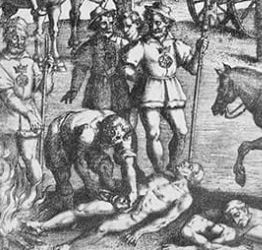
OTD 1597 Belfast castle was taken by the Irish. A tower house with earth ramparts, the position was betrayed to Shane MacBrian O'Neill. Shane was merciless as 'all the Englishmen of the ward were hanged, their throats cut and their bowels cut out of their bellies' #nineyearswar
More detail on trial of two Scottish gamekeepers charged with alleged shooting of Red Kites in Cairngorms National Park.
NB: Comments turned off as legal proceedings are live ⚖️
https://t.co/Srpan6oDoN
Two dads. Two cancers. One hope.
I never thought I'd be writing this.
First, my dad.
Colon cancer. We caught it late.
Five weeks ago, I put together a protocol – I called it "The 4 Horsemen of Tumor Shrinkage."
72mg Ivermectin
444mg Fenbendazole
4,000mg Vitamin C
32oz Hibiscus Tea
Plus fasting, sun exposure, low-inflammatory food.
Yesterday, his new CT scan came back.
Tumor shrinkage.
The nurse cried. My mom cried. I just stood there, staring at the screen.
But here's the second part. My father-in-law.
Just a few months ago, he was fine. Mowing the lawn. Laughing at his own jokes.
Then came the aches. The exhaustion.
Bloodwork: PSA 141. Months earlier it was 3.4.
Stage 4 prostate cancer. Gleason 9. Widespread bone metastases.
We didn't waste time. Along with hormone blockers and chemo, we added:
Ivermectin 24 mg/day
Fenbendazole 222 mg/day
Three months later? PSA dropped from 141 to 0.25.
That's a 99.8% drop.
His oncologist was bewildered. He just kept saying, "I don't understand."
And me?
I've been taking Ivermectin and Fenbendazole myself – 24mg + 444mg – just to see what happens.
My sleep fixed itself. I wake up without an alarm.
I don't crave sugar anymore. I don't overeat.
I feel… calm.
Two dads. Two different cancers. One medicine.
I'm not a doctor. I'm just a son and a son-in-law who refused to give up.
Healing is always possible. Even when it looks crazy.
💚
Two small island economies blew up in 2008. Iceland and Ireland. Their names differ by one letter, and their handling of the crisis differed by everything that matters.
Iceland's three big banks, Kaupthing, Landsbanki, and Glitnir, had grown assets to roughly ten times the country's GDP by 2008. Pure credit-fueled madness. When the music stopped, the Icelandic government did the unthinkable: it let them fail. Bondholders ate the losses. The state refused to socialize private bank debt onto 320,000 citizens who never signed up for it. Capital controls went up, the króna collapsed, and the politicians actually prosecuted bankers. Twenty-six of them went to prison. Sigurður Einarsson and Hreiðar Már Sigurðsson, the men who ran Kaupthing, served real sentences.
Ireland took the opposite road. In September 2008, the Irish government issued a blanket guarantee covering the liabilities of its major banks, including Anglo Irish Bank, a property-lending casino that should have been allowed to die in peace. The taxpayer absorbed the bill. By the time the rescue ended, Ireland had poured around 64 billion euros into its banks, roughly 40 percent of GDP. The state took on private gambling debts, then went to the Troika in 2010 hat in hand for an 85 billion euro bailout, and accepted years of austerity to pay for losses it had no business owning.
Both economies recovered. Both eventually grew again. The difference is who paid and who learned. Iceland made creditors and reckless bankers bear the consequences of their own decisions, which is the entire point of capitalism: profit and loss, not profit and bailout. Ireland protected the people who made the bad bets and handed the invoice to schoolteachers and shopkeepers.
You will hear economists call Ireland's GDP rebound a triumph (much of that "growth" is multinational accounting fiction, Leprechaun economics, but that's another lesson). What they skip is the moral architecture. When you guarantee bank liabilities, you abolish the discipline that makes markets work. You tell every banker in the country that downside is optional.
Iceland jailed its bankers. Ireland reimbursed theirs.
Since privatisation not one major reservoir has been built by the English water companies
While more than 35 have been sold
In the 35 years before privatisation almost 100 reservoirs were built
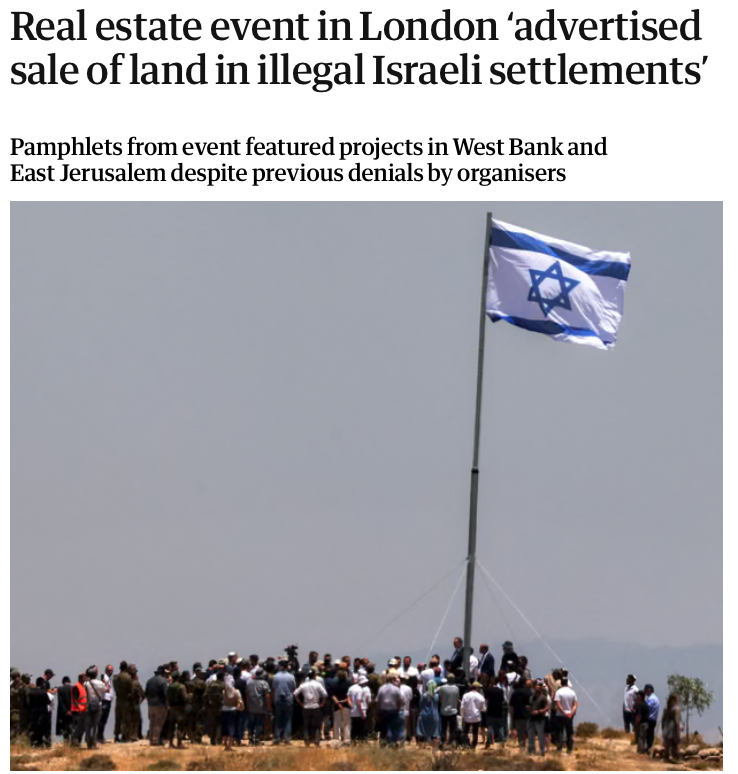
There's a reason the organisers of a London event selling homes in illegal Jewish settlements, built on stolen Palestinian land, defied UK law. Because:
1. They had concealed the criminal event in a synagogue, expecting to be able to discredit critics as liars and antisemites.
2. They knew the Starmer government would do nothing to punish them if the reality came to light.
They nearly managed to pull off the first trick.
They're being proved 100% right in their second assumption.
the front of every newspaper today is about the russian ship firing in the channel.
the news of israel directly interfering in our elections broke last week and hasn’t once been a front page story.
Abraham Lincoln and the Rothschilds: The Real Cause of the Civil War
Charles E. Coughlin (1940)
One of the most controversial and difficult-to-find Civil War conspiracy pieces ever published, this short work originated as two articles printed in Social Justice in February 1940. In just a few dozen pages, Coughlin presented a dramatic alternative narrative of the Civil War, arguing that the conflict was not primarily about slavery but was driven by international financial interests seeking profit, debt, and control.
President Abraham Lincoln challenged powerful banking interests when his administration issued hundreds of millions of dollars in government-backed “greenbacks” during the war rather than relying entirely on private lenders. Coughlin claimed this threatened the profits and influence of major European financiers, particularly the Rothschild family, and he cited an alleged 1863 letter warning that government-issued money could undermine the existing financial order. The pamphlet presents Lincoln’s monetary policies as the true source of conflict between the administration and international banking interests.
The book goes further, connecting these financial disputes to Lincoln’s assassination. It argues that powerful forces had a motive to remove a president who demonstrated that a government could finance itself without becoming dependent on private banking interests. Later reprints expanded the narrative with discussions of John Wilkes Booth, Lincoln’s ancestry, and other controversial subjects.
What makes it especially provocative is its focus on details that have fueled speculation for generations: the missing pages from Booth’s diary, the decision to try the accused conspirators before a military tribunal rather than a civilian court, the remarkable security failures that allowed Booth access to Lincoln, the disputed evidence against some defendants, and lingering questions about whether every participant in the conspiracy was ever identified. Coughlin presents these events as pieces of a larger hidden story involving finance, politics, and power.
He also highlights the little-known arrival of Russian naval fleets in New York and San Francisco during the Civil War, portraying Alexander II of Russia as an ally of the Union who allegedly helped deter foreign intervention at a critical moment in the conflict.
Whether viewed as a forgotten piece of political literature, a controversial monetary critique, or a classic example of twentieth century conspiracy writing, the pamphlet remains one of the most direct attempts to connect Lincoln, the Civil War, international banking, and the assassination into a single overarching narrative.
Nearly a century after its publication, it continues to circulate among collectors of rare and controversial historical works, ensuring that the debate surrounding its claims has never entirely disappeared.
Study in Kenya shows removing elephants causes coextinction of dung beetles: 23% fewer species and 67% fewer beetles after 15 years. Elephants really are a keystone species. Their dung supports a whole world of specialised beetles that keep the soil healthy, recycle nutrients and help seeds spread. Take the elephants away, and that whole system starts to unravel. We've seen it time and again -- everything is connected. https://t.co/44PsohWIgW
Deeply saddened by today’s announcement that Dundee University’s Botanical Gardens will close. For generations, this beautiful space has been a place of learning, tranquillity, and connection with nature. A real loss for Dundee, its students, researchers, and artists.
2pm in High Street coming from @U105radio. A young black muslim woman was in front of me. A racist thug ran up and yelled in her face. She paused rubbed her face and as I stopped she smiled saying "its ok" Through the smile she was fighting back tears. It's so far from Ok. #vile