Excited to share the launch of Behavioral Health Product Management, a monthly newsletter designed to help teams build engaging, clinically effective, and commercially successful digital health interventions.
https://t.co/vmxiveFm7T
@toddkashdan Any theories about what was driving the US trend? Specifically the decrease from 1990 though 2005 and then the increase though 2016? Without seeing an even larger trend hard to tell if it’s just natural variation or a systemic shift.
Excited to share our paper on driving meaningful engagement in digital mental health!
If this is of interest to you, please reach out! I'm always looking to share ideas on this very important topic.
https://t.co/Ifp0tUjUJQ
@ttorres@trixiemaru Interesting to see that the interview slots were only 15 minutes long. Much more doable for a busy person than 30 minutes or an hour.
@a_gargul And, of course, there are multiple user types for any given digital health product. One of our main user types are healthcare providers, and we definitely want providers to be long-term prescribers of our therapeutics, offering it to their new patients as they are diagnosed.
Excited to share the launch of Behavioral Health Product Management, a monthly newsletter designed to help teams build engaging, clinically effective, and commercially successful digital health interventions.
https://t.co/vmxiveFm7T
@a_gargul Thanks, Andrey! Yes, though there is a case for long-term 'maintenance' type use, whereby people can continue to have access to the therapeutic for relapse prevention and as a safety net should symptoms resume in the future.
@harrybr@johncutlefish It's definitely a great question and something we think critically about! I also wrote about this from another lens (aha moments) here: https://t.co/vmxiveFm7T
I recently shared a deep dive into the *theory* of flywheels.
Yet, the real value came from putting that theory into *action*.
Doing so had rippling effects across our business: from vision & strategy to org structure & metrics.
Learn more here 👇
https://t.co/hbJeWCxwZn
@harrybr@johncutlefish The more people that use the product the more people that are helped. There's a limit to helpful usage and our aim is certainly not to optimize usage for it's own sake. Rather, we optimize for usage that that leads to good clinical outcomes and the greatest # of patients helped.
Thank you to Ben Lewis, Jon Sockell, @elsieoglay, Jake de Medeiros, Amanda McCawley, @eugenehp and @TomJWhiteIV for valuable input on drafts.
Thank you also to @johncutlefish and @Amplitude_HQ whose writing on north star metrics and flywheels helped shape this piece!
Mental health care access continues to be a societal level challenge. Not just for those in the US, but across the entire world.
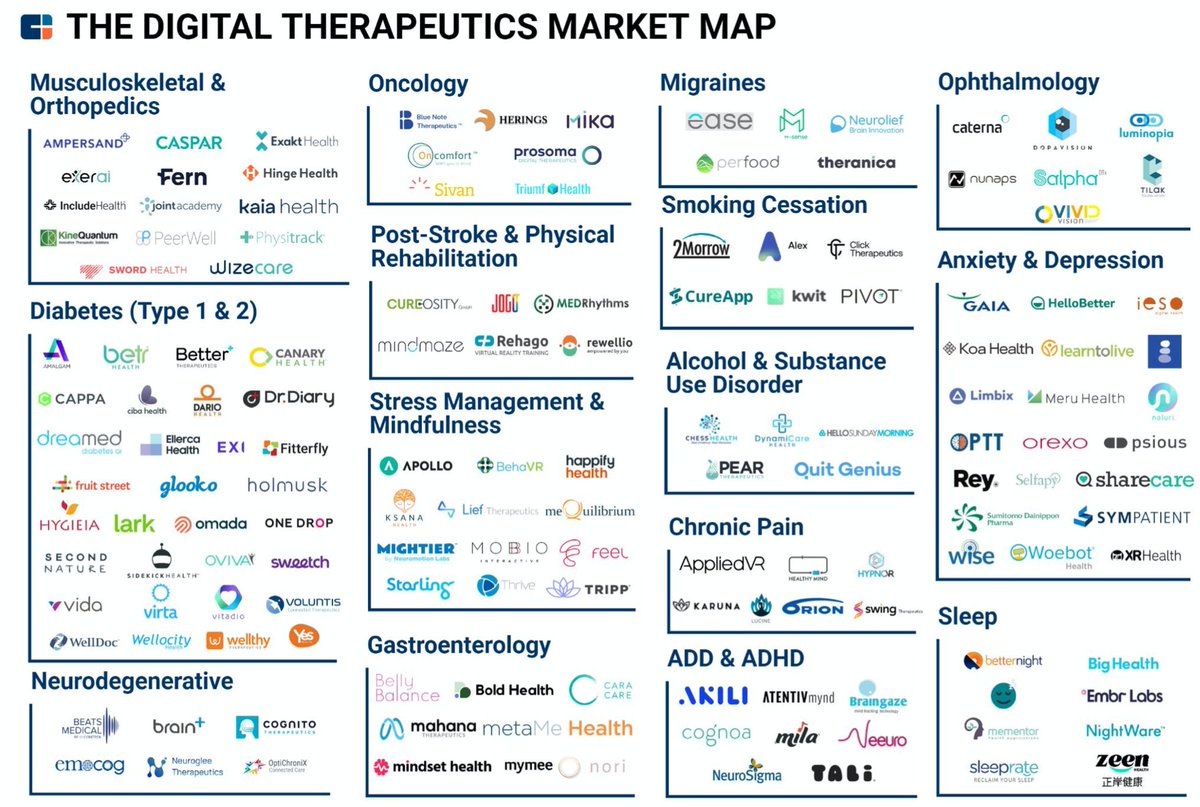
Digital therapeutics represent a powerful avenue to address that gap.
.@gabe_strauss, our Director of Product was a panelist at @MDM_Events Silicon Valley conference where he shared his perspective on the rise of #digitaltherapeutics. Listen to an excerpt from the presentation.
We're hiring an experienced product manager to lead the development of a new digital therapeutic!
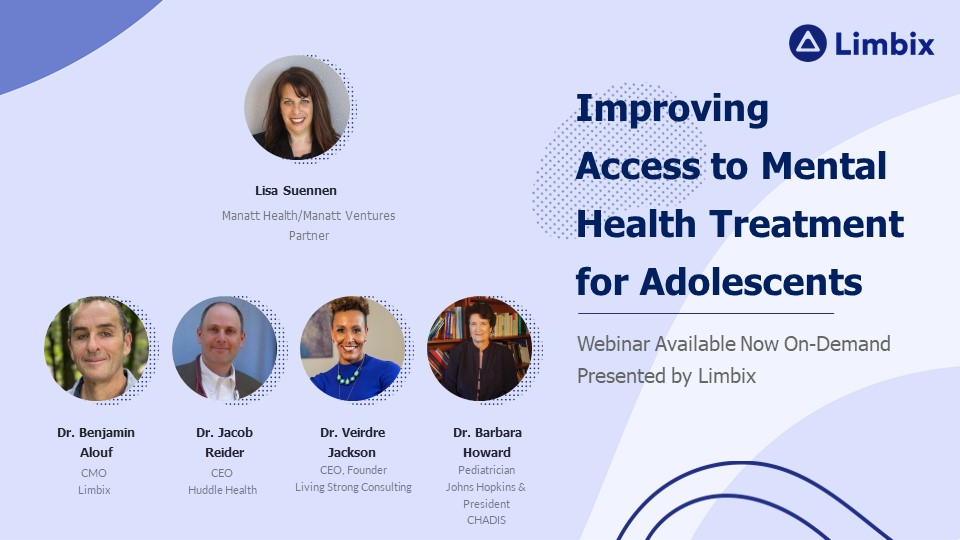
This is an exciting opportunity to have a massive impact on adolescent mental health.
We’re also looking for someone who has strong customer insight skills. The successful candidate will have a demonstrated track record of synthesizing both qualitative and quantitative data to develop a deep understanding of the customer and thereby shape the product roadmap.
Flywheels are a well-known concept in startups and businesses 🚀
But how do they apply to mental health tech?
Learn about four flywheels that occur in mental health tech, and how they can be used to maximize growth and clinical outcomes 👇
https://t.co/qJicPPQ9RB