Our latest paper on the retrospective revision of syntactic interpretations in music is now available in open access in Cognitive Science! [https://t.co/96vduy3fXk](https://t.co/96vduy3fXk)
@SteffenHerff@cogsci_soc@DCML_EPFL
Our study (@SteffenHerff@DCML_EPFL) on the incremental parsing of musical rhythm, inspired by the psycholinguistic model of @LanguageMIT, is just out in @cogsci_soc! https://t.co/s4HjpIakQv
Great to welcome back @gacecchet from @EPFL_en for visit with @SteffenHerff after a brilliant #musicscience symposium @cogsci_soc https://t.co/lscfMnD8Nr. They'll be working on new musical structure projects e.g. musical garden paths, https://t.co/b2oWPF5Ouf Stay tuned for more!
Many years in the making, I’m very excited to share our (@gacecchet,@pettter_e,@ecanoc) preprint “Solitary Silence and Social Sounds: Music influences mental imagery, inducing thoughts of social interactions” #musicscience#mentalimagery
https://t.co/UXQ6ZtXPir 1/7
Results show a marked decrease in the use of diatonic materials in favour of other types of pitch structures, particularly octatonic ones. We also looked at indices of fragmentation and global coherence, more on this in the paper!
Here's our latest corpus study, exploring the development of Debussy's musical style over his entire piano works! Congrats to Sabrina Laneve and Ludovica Schaerf, who started this project as students in our Digital Musicology class! @DCML_EPFL@johentsch
https://t.co/S8qEN7EkQb
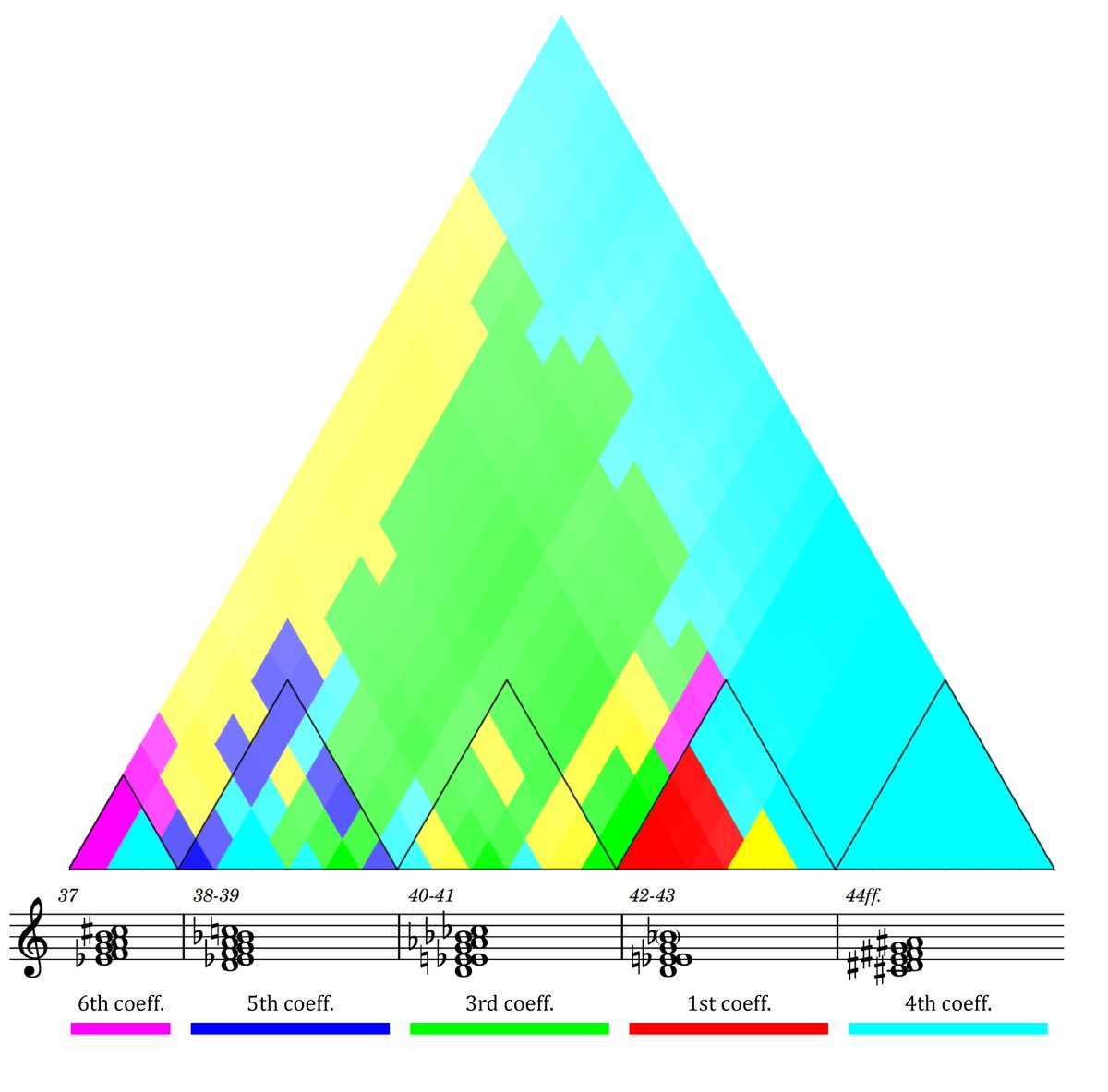
We approached Debussy's harmonic idiom with hierarchical analyses based on Discrete Fourier Transform, building up on the "wavescapes" by @c_viaccoz@fabianmoss@danielharasim (here's a passage from Ondine!)
Happy to share our new preprint 'Hierarchical syntax models of music predict theta power during music listening' with @LeonardoBo92@gacecchet@PVuust M.Kringelbach, M.Rohrmeier. 1/9 https://t.co/BLxeN7nCNl
And this was just the cherry on the cake, having spent here a couple of inspiring and dense months as a visiting fellow. Thanks to @SteffenHerff for making this possible, and to @andy_tonality, Roger Dean, @perikeller and so many others for the precious discussions!
Super excited to share a preprint! At @Caltech, we build the first closed-loop brain-machine (#BMI) interface that is able to decode internal speech 💭. Check it out here: https://t.co/8bNDtGA6w2
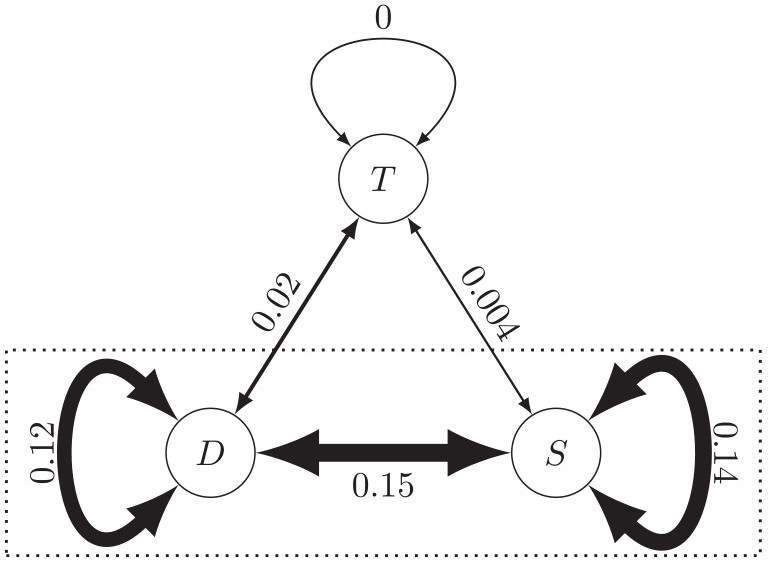
We find that octatonic relatedness predicts harmonic functionality more parsimoniously than other types of tonal relations, as well as a clear distinction between expectancy-inducing ("dominants" and "subdominants") and expectancy-resolving harmonies ("tonics").
Functional, or non functional, that is the question! Our latest take on perceptual manifestations of harmonic functions in extended-tonal music has just appeared in Musicae Scientiae: https://t.co/IDUmFMc4wZ
From classical music to jazz, chord substitutions can contribute to the creative use of the harmonic palette while still expressing harmonic functions, depending their tonal relationship with the neighbouring chords and with the chord they replace.
The first morning session already revealed a huge spectrum of thoughts and ideas when it comes to #RepresentingHarmony. Our goal for the upcoming days will be to work out where we agree and where we might not want to. @DCML_EPFL#musicscience#musictheory
In the study, supervised by @johentsch and myself, we used Discrete Fourier Transform and wavescapes on a novel digital corpus of piano music to investigate Debussy's departure from common-practice tonality. More to come soon!
A great experience @IMAmaths@RCMLondon for our student Ludovica Schaerf, whose presentation on the diachronic evolution of Debussy's style even earned a best-poster prize. Congratulations!
Our latest paper on the retrospective revision of syntactic interpretations in music is now available in open access in Cognitive Science! [https://t.co/96vduy3fXk](https://t.co/96vduy3fXk)
@SteffenHerff@cogsci_soc@DCML_EPFL
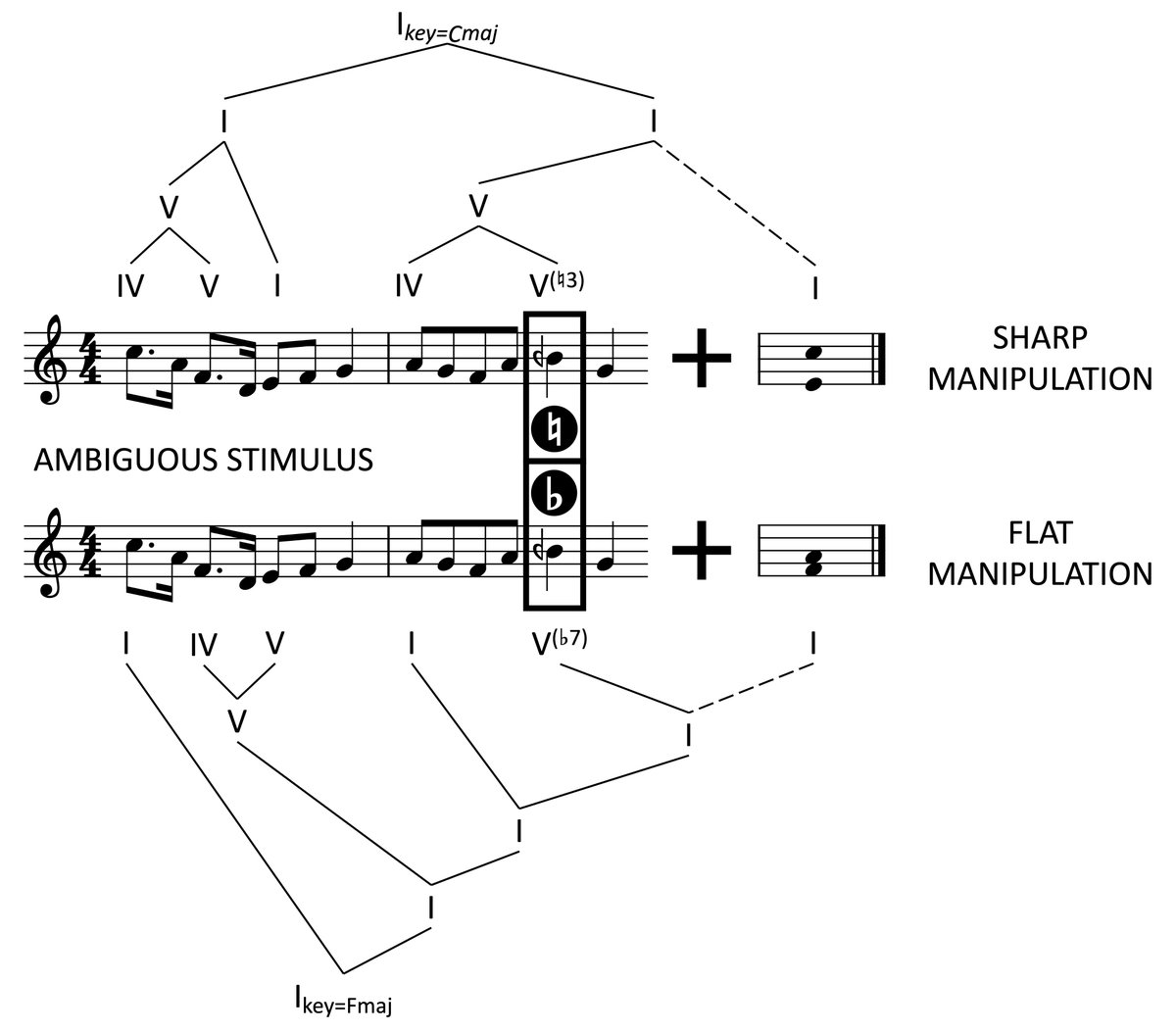
We developed a novel paradigm with tonally ambiguous melodies, and showed evidence that the listener's interpretation of the melody, as reflected in their memory of the tuning of a mistuned note, is revised retrospectively once encountering conflicting information.
Garden-paths are a well known phenomenon in language, and many accounts from music theory and analysis predict the same to occur in music whenever an ambiguous passage is reinterpreted as new events make the older interpretation less plausible.