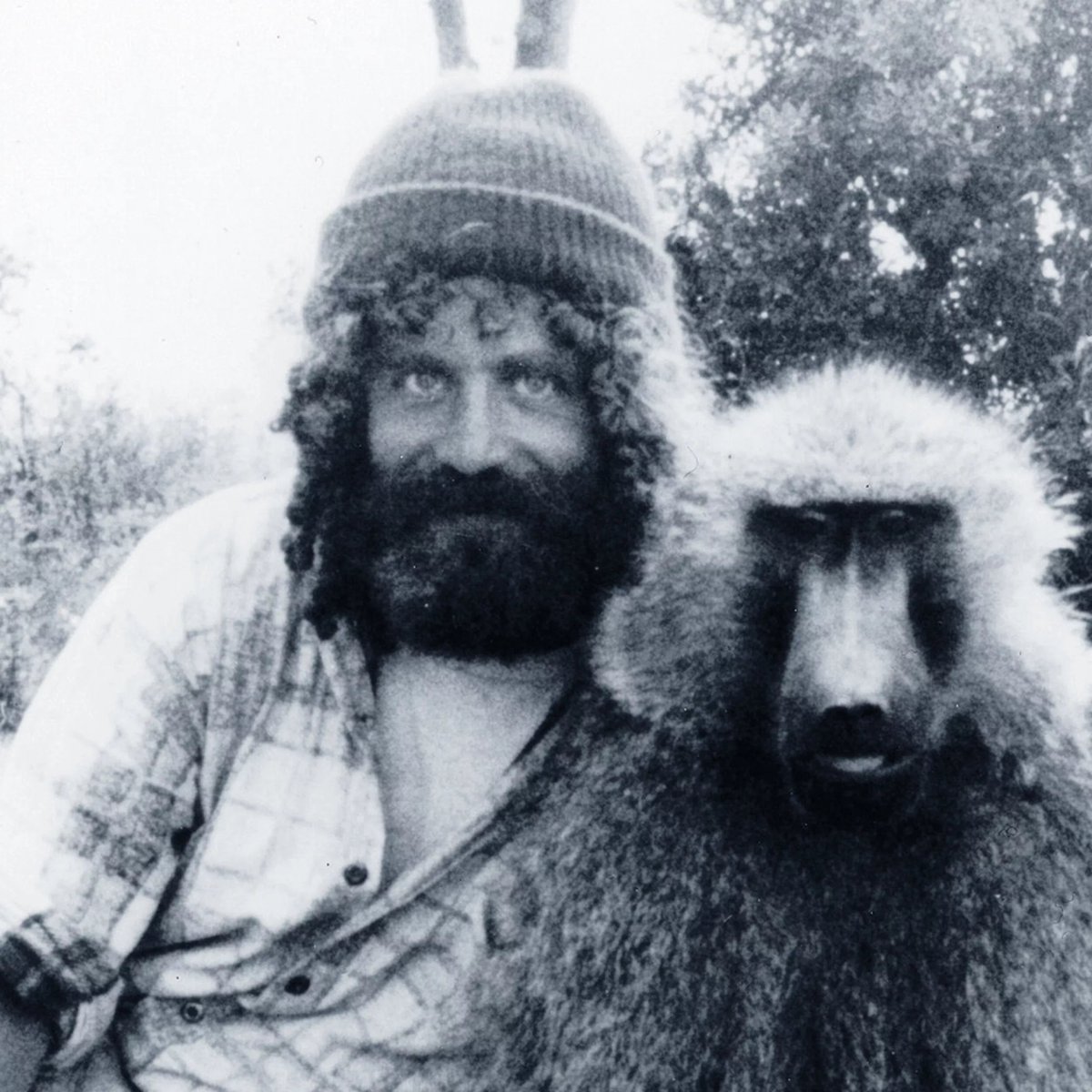
If you see a spider climbing and standing on raised legs with its abdomen pointed upwards, then releasing silk threads into the air, it's because it's on the brink of ballooning.
Using ballooning, spiders can reach altitudes of up to 2.5 miles (4 kilometers) and travel hundreds of miles. They are often the first pioneers to colonize new volcanic islands and have even been found landing on ships in the middle of the ocean.
While scientists historically believed that wind alone lifted the spiders, modern research proves they also harness the Earth’s global atmospheric electrical circuit. The silk threads pick up negative static charges, which are repelled by the negative charge of the ground, lifting the spider into the air even on completely windless days.
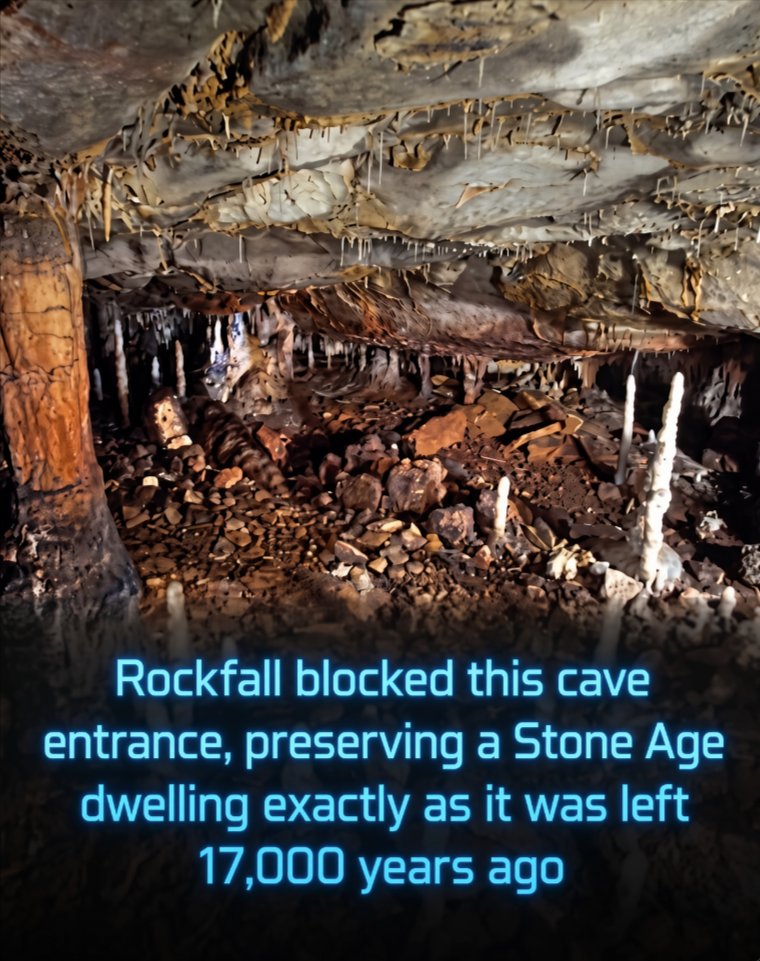
A massive rockfall sealed a Stone Age dwelling 17,000 years ago. It is a pristine time capsule of prehistoric daily life.
In the Cantabria region of northern Spain, archaeologists have stepped into a literal prehistoric time capsule. Deep inside the La Garma cave network, a rockfall approximately 17,000 years ago sealed off a 54-square-foot living space, protecting it from the passage of millennia.
This accidental preservation has presented researchers with one of the most pristine Paleolithic dwellings ever discovered. The oval-shaped home, dated to roughly 16,800 years ago, features a central hearth surrounded by the remains of a shelter once constructed from sticks and animal hides, anchored to the cave floor by stalagmites and stone blocks.
The site is remarkably undisturbed, offering an incredibly rare, authentic glimpse into the daily routines of late Ice Age hunter-gatherers. Excavators have already cataloged 4,614 artifacts lying exactly where their prehistoric owners left them. The diverse assemblage includes everyday flint tools, bone needles, animal bones from butchering, artistic ornaments, and even a rare proto-harpoon.
By preserving these items in situ, the ancient rockfall has provided scientists with unparalleled insights into how early humans organized their domestic spaces, managed resources, and navigated survival in an unforgiving world.
Scientists have created one of the most detailed 3D reconstructions of a human cell (eukaryotic cell) ever produced.
This groundbreaking model, often termed a "Cellular Landscape Cross-Section Through a Eukaryotic Cell," combines data from X-ray tomography, nuclear magnetic resonance (NMR), and cryo-electron microscopy to map molecular structures in extreme detail.
The cross-section of an XVIII century British warship.
A cross-section diagram of an 18th-century British warship offers a fascinating glimpse into life aboard one of the Royal Navy’s powerful vessels during the Age of Sail. These ships, often known as ships of the line, were floating fortresses designed for naval warfare and global maritime dominance.
Inside these warships, space was carefully organized across multiple decks. The lower decks stored cannons, ammunition, and essential supplies such as food, water, and gunpowder. The middle decks housed rows of heavy naval guns used in battle, while the upper decks contained crew quarters, command areas, and navigation stations. Despite their strength and firepower, living conditions were extremely crowded, with hundreds of sailors sharing limited space during long ocean voyages.
Cross-section illustrations help historians and enthusiasts understand ship construction, naval strategy, and daily life aboard these iconic vessels that played a major role in shaping global naval history.
Archaeologists find 2000 year-old 'Gemstones' in drain beneath a Roman Bathhouse, Carlisle, England 🏴🇬🇧
Down a drain beneath the murky waters of an ancient Roman bathhouse in Carlisle, England, near Hadrian’s Wall, archaeologists have discovered a trove of gemstones lost by bathers 2000 years ago. More than 30 gems, including amethyst, jasper and carnelian have been found so far during excavations at the site. Wealthy bathers likely dropped them back in opulent bathhouse’s heyday in 2nd-3rd Century CE.
“It’s incredible,” says archaeologist Frank Giecco, who led the excavation, to Observer’s Dalya Alberge. “It’s caught everyone’s imagination. They were just falling out of people’s rings who were using the baths. They were set with a vegetable glue and, in the hot and sweaty bathhouse, they fell out of the ring settings.”
The pieces feature deities dedicated to war, sun, commerce, luck and fertility. The largest were around 0.6 inches and smallest were just under 0.2 inches. Their small size would have made the carvings particularly difficult, requiring the expertise of an advanced craftsman.
“You don’t find such gems on low-status Roman sites,” Giecco tells Observer. “So they’re not something that would have been worn by the poor.” Still, Carlisle site isn’t entirely unique: In the past, similar gemstones have been found in the drains of other bathhouses during archaeological excavations.
The small, semiprecious engraved gems are known as intaglios, which were first produced some 5000 years ago in Mesopotamia. Owners would press their intaglios into clay or wax to create a seal, which they used to authenticate documents (similar to a modern-day signature). “Their material, size and color would reflect the wealth and taste of the patron,” writes G. Max Bernheimer, Christie’s international head of antiquities, on auction house’s website. At one point, he adds, it was in fashion for Romans to wear intaglios featuring the likenesses of their favorite philosophers.
“The intaglios can be seen on many levels,” Giecco tells Artnet’s Min Chen, “from pieces of art to connections to the individuals who owned them.”
In addition to the gemstones, the team at the Carlisle bathhouse found over 40 women’s hairpins and 35 glass beads in drain. Hundreds of other artifacts, including pottery, weapons and coins have also been uncovered at the site. Eventually, discoveries will most likely go on view at Tullie House Museum and Art Gallery.
“Carlisle was very much at the center of the Roman frontier,” Giecco tells BBC News, “and we are very excited to go back … for more amazing finds, as it is the site that just keeps giving.”
#archaeohistories
A Golden Ram and a Stone Lion, found in a tomb at the archaeological site of Gonur Depe (2400-1600 BC) in Turkmenistan 🇹🇲. The finger in the background shows how small these figures are, demonstrating the extraordinary skill of the craftsmen.
Long before Merv raised its first tower, Bronze Age villages were assembling along the Murgab River in what is called Margiana Oasis. The greatest of these ancient settlements, currently being excavated around Gonur Depe, has stunned archaeological world for its vast area and complex layout.
Gonur Depe (Grey Hill) along ancient delta of Murghab River, not far from the Afghan border, seems to have been settled during three main periods: 2300-1900 BC; 1900-1700 BC, a reconstruction after what may have been a large fire; and 1700-1500 BCE, after which it was apparently abandoned. Settlement was on the right bank of the ancient river, like ancient Indus settlements. There were also water reservoirs, smaller settlements in the area, graveyards with remains "confirming high social status of the buried", ritual animal burials, workshops for smelting bronze, possible palaces and much more.
"Gonur's culture shows many similarities with those of the Near and Middle East and Indus . . .. The method of burning the minerals [used in beads and mosaics] in order to facilitate their handling is known at monuments in the Indus Valley civilisation, starting from the Neolithic (Vidale 1989). Harappan seals were produced mainly from steatite after it had been fired (Masson 1977:149)" (p. 48). There is little doubt that there were direct connections with ancient Indus cities; the author who has long worked at the site writes "Victor Sarianidi underlined the fact that the trade routes of the so-called Silk Road began to develop long before the silk trade. They started to be used in the Bronze Age, if not earlier. It was through the contact and interaction of various cultural traditions, and the peaceful coexistence of different economic-cultural types in Central Asia in general, and Turkmenistan in particular, that people had the opportunity to enrich one another with the latest knowledge and technology, and moreover to create a brilliant centre of world culture (Sarianidi 2012b:157)" (p. 53).
The discoveries were first made in 1972 by Russian-Greek archaeologist Viktor Sarianidi, who continually uncovered new findings. Sarianidi considered Gonur to be one of the great civilisations of the ancient world and while this claim may be disputed, it is a fascinating site. What is certain, is that Gonur is one of the oldest fire-worshipping civilisations, parallel to the Bactrian cultures in neighbouring Afghanistan. The first agricultural settlements appeared in the area around 7000 BC, developing a strong agriculture. It is believed the city was slowly abandoned during Bronze Age as Murgab River changed course, depriving the city of water. The current excavations have been dated back to 3000 BC.
Sarianidi believed that Gonur was the birthplace of first monotheistic religion, Zoroastrianism, being at some point the home of the religion’s founder, Zoroaster. The adjacent sites have revealed four fire temples, as well as evidence of a cult based around a drug potion prepared from poppy, hemp and ephedra plants. This potent brew is almost certainly the haoma (soma elixir) used by the magi whom Zoroaster began preaching against in Zoroastrian texts.
The Hermitage - St. Petersburg
#archaeohistories
Brazil is sitting on some of the largest fresh water reserves on Earth.
And almost nobody prices it in.
The Guarani Aquifer holds close to 40,000 cubic kilometers of water under southern Brazil.
That is enough to give the whole world drinking water for around 200 years at today's use.
It is one of the largest aquifer systems ever found on the planet.
About two-thirds of it sits under Brazilian soil.
Then scientists looked under the Amazon and found something even greater.
They call it the Great Amazon Aquifer System.
Early estimates put it near 162,000 cubic kilometers, roughly four times the Guarani.
Even the conservative numbers are enormous.
The Urucuia Aquifer feeds the farms of western Bahia and the MATOPIBA region.
It also keeps the São Francisco River flowing through the dry season.
That same aquifer lost about 31 cubic kilometers of water in just two decades.
Groundwater is the reason farmers there can grow crops on the same land year round.
Global markets still price Brazil on its politics.
They forget what is sitting under the ground.
Reminder that experiencing awe quite literally improves your health.
Awe has been shown to:
• Reduce stress
• Trigger the release of oxytocin
• Lower levels of inflammatory cytokines
Being made to feel small (experiencing “self-diminishment”) even quells our negative self-talk, by deactivating the part of the cortex involved with how we perceive ourselves.
Through awe, we become less attuned to ourselves and more attuned to the world around us. Dr. Dacher Keltner of UC Berkeley:
“We are at this cultural moment of narcissism and self-shame and criticism and entitlement; awe gets us out of that.”
Neuroscientists define awe as the emotional response to something vast that defies (and changes) our existing frame of reference of something. Awe is a complex emotion, usually “elicited by perceptually vast stimuli.”
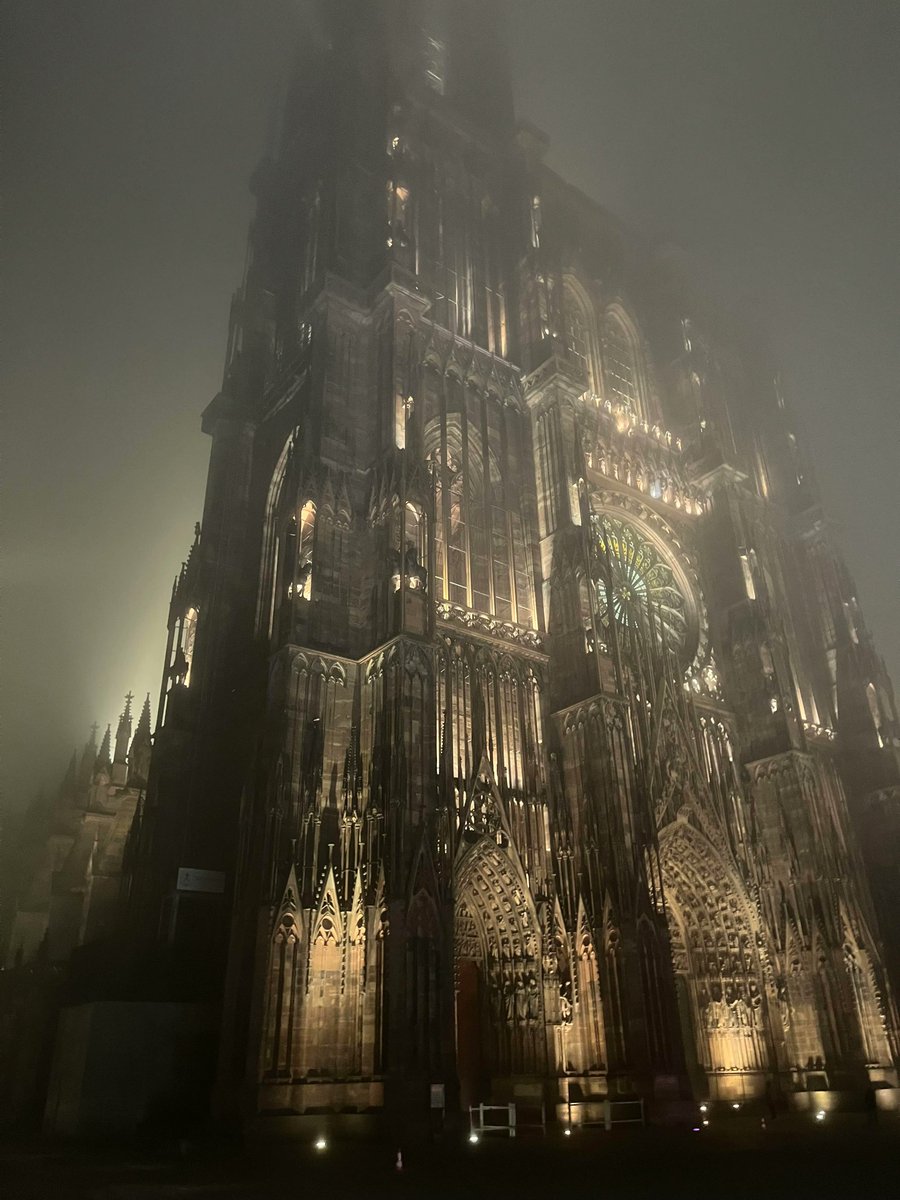
What's one way to experience it? Travel to your nearest cathedral and gaze upward.
Gothic architecture was built for this very purpose, by maximizing height and light. Important breakthroughs by medieval engineers (e.g., the flying buttress and pointed arch) made much taller and thinner walls possible — allowing for truly vast windows.
Those builders believed that light itself was divine, and that when it poured in through the great windows it elevated one's consciousness to the heavens.
English poet Samuel Taylor Coleridge put it like this:
“The principle of the Gothic architecture is infinity made imaginable.”
One of the most shockingly underrated masterpieces of the Renaissance is Anthonis Mor’s portrait of Sir Thomas Gresham (c. 1560), now in the Rijksmuseum in Amsterdam.
When people see it today, especially in high-resolution pics, they often mistake it for a 19th-century photograph or even a hyper-realistic AI generation.
The skin texture, the eyes, the subtle sheen on the black fabric, make it feel almost disturbingly modern.
Yet this painting, created over 460 years ago, barely registers in the mainstream conversation about great art.
It deserves far more recognition.
You are looking at one of the most detailed 3D reconstructions of a humancell (eukaryotic cell) ever made.
Every molecule. Every structure. Mapped in extreme precision.
This isn't just a pretty picture. It's a microscopic universe finally brought into focus.
🚨In 1990s, Stanford researcher Dr. Robert Sapolsky discovered something that should have broken the internet by now.
He was studying dopamine pathways in primates and found that the brain doesn't just adapt to repeated stimulation. It actively fights back.
When you flood dopamine receptors consistently, the brain deploys what neuroscientists call "opponent processes." For every artificial high you create, your nervous system generates an equal and opposite neurochemical low. Not eventually. Immediately. The system is designed to maintain balance, so it starts producing compounds that directly counteract dopamine while you're still experiencing the dopamine hit.
This means every notification, every scroll, every digital reward doesn't just give you a high followed by a return to baseline. It gives you a high followed by a crash below baseline. You end up in neurochemical debt.
Tech companies never publicized this research. They probably never read it. They were too busy discovering that variable ratio reinforcement schedules could keep users engaged for hours. They built addictive systems by accident, then refined them into addiction machines once they realized what they'd stumbled onto.
Your phone delivers an average of 80 dopamine hits per day. Your ancestors got maybe 5. Each hit triggers opponent processes that create a corresponding low. By the end of a typical day of normal phone usage, your baseline dopamine is running in negative territory. You feel flat, restless, vaguely unsatisfied, and hungry for stimulation because your brain chemistry is literally below zero.
You think you're bored. You're chemically depressed by artificial highs.
The opponent process theory explains why nothing feels interesting anymore. Your brain isn't broken. It's precisely calibrated to maintain neurochemical balance, and you keep throwing that balance off with artificial intensity. Every Instagram hit requires an equal Instagram crash. Every TikTok high gets paid for with a TikTok low. Every notification rush gets balanced with notification emptiness.
Your reward system is running a neurochemical deficit that grows larger every day.
Sapolsky's research revealed something even more disturbing: opponent processes don't just create temporary lows. They become permanent changes to your baseline dopamine production. Chronic overstimulation doesn't just make you tolerant to digital rewards. It makes you insensitive to natural rewards.
The sunset that would have captivated your great-grandfather becomes invisible to you not because sunsets got worse, but because your dopamine system needs intensity levels that sunsets can't provide. A good conversation becomes boring not because conversations got less interesting, but because your brain requires the rapid-fire stimulation of social media to register engagement.
You've accidentally trained your reward system to ignore everything that isn't artificially amplified.
This connects to research from Dr. Anna Lembke at Stanford, who found that people who undergo complete digital fasting for just 30 days show measurable increases in dopamine receptor density. Their brains literally regrow sensitivity to natural rewards. Food tastes better. Music sounds more complex. Social interactions become genuinely engaging again.
But there's a catch that nobody talks about: the first two weeks of dopamine detox feel like clinical depression. Your brain has been chemically dependent on artificial stimulation for years. Removing that stimulation creates actual withdrawal symptoms. Restlessness, anxiety, inability to focus, emotional flatness, and desperate cravings for digital input.
Most people interpret these symptoms as evidence that they need their phones. Actually, they're evidence that they've been neurochemically dependent on their phones without realizing it.
The withdrawal period isn't a bug. It's proof the reset is working.
What happens after week three is remarkable. Colors become more vivid. Conversations become genuinely absorbing. Simple pleasures like hot coffee or cool air become satisfying in ways you forgot were possible. Your brain rediscovers that reality contains enough complexity and beauty to hold your attention without artificial amplification.
You don't need more interesting content. You need more sensitive reward systems.
The solution isn't better apps or more engaging entertainment. The solution is restoring your brain's factory settings for what constitutes a worthwhile experience.
Sapolsky's opponent process research suggests this can happen faster than anyone expected. Every day you don't artificially spike your dopamine, your baseline moves a little higher. Every natural reward you pay attention to rebuilds receptor density. Every moment of boredom you endure without reaching for stimulation strengthens your capacity for sustained focus.
Ancient humans lived in a world that provided exactly the right amount of stimulation to keep their reward systems healthy. Enough challenge to stay engaged, enough calm to stay balanced, enough novelty to stay curious, enough routine to stay stable.
We built a world that provides 10 times too much stimulation and wonder why nothing feels rewarding anymore.
Your brain is not the problem. Your environment is the problem.
Change the environment, and the brain heals itself automatically.
Dozens of fishermen end up losing body parts to wolf fish.
This is because many people don't realize that even after being "dead" and without a body, it is still capable of this.
This is incredible.
This machine is capable of cleaning up 100 million kg of plastic ocean waste, and as of 2025, it has already collected about 500,000 kg of plastic.
It aims to remove 90% of ocean plastic by 2040.




![archeohistories's tweet photo. A Golden Ram and a Stone Lion, found in a tomb at the archaeological site of Gonur Depe (2400-1600 BC) in Turkmenistan 🇹🇲. The finger in the background shows how small these figures are, demonstrating the extraordinary skill of the craftsmen.
Long before Merv raised its first tower, Bronze Age villages were assembling along the Murgab River in what is called Margiana Oasis. The greatest of these ancient settlements, currently being excavated around Gonur Depe, has stunned archaeological world for its vast area and complex layout.
Gonur Depe (Grey Hill) along ancient delta of Murghab River, not far from the Afghan border, seems to have been settled during three main periods: 2300-1900 BC; 1900-1700 BC, a reconstruction after what may have been a large fire; and 1700-1500 BCE, after which it was apparently abandoned. Settlement was on the right bank of the ancient river, like ancient Indus settlements. There were also water reservoirs, smaller settlements in the area, graveyards with remains "confirming high social status of the buried", ritual animal burials, workshops for smelting bronze, possible palaces and much more.
"Gonur's culture shows many similarities with those of the Near and Middle East and Indus . . .. The method of burning the minerals [used in beads and mosaics] in order to facilitate their handling is known at monuments in the Indus Valley civilisation, starting from the Neolithic (Vidale 1989). Harappan seals were produced mainly from steatite after it had been fired (Masson 1977:149)" (p. 48). There is little doubt that there were direct connections with ancient Indus cities; the author who has long worked at the site writes "Victor Sarianidi underlined the fact that the trade routes of the so-called Silk Road began to develop long before the silk trade. They started to be used in the Bronze Age, if not earlier. It was through the contact and interaction of various cultural traditions, and the peaceful coexistence of different economic-cultural types in Central Asia in general, and Turkmenistan in particular, that people had the opportunity to enrich one another with the latest knowledge and technology, and moreover to create a brilliant centre of world culture (Sarianidi 2012b:157)" (p. 53).
The discoveries were first made in 1972 by Russian-Greek archaeologist Viktor Sarianidi, who continually uncovered new findings. Sarianidi considered Gonur to be one of the great civilisations of the ancient world and while this claim may be disputed, it is a fascinating site. What is certain, is that Gonur is one of the oldest fire-worshipping civilisations, parallel to the Bactrian cultures in neighbouring Afghanistan. The first agricultural settlements appeared in the area around 7000 BC, developing a strong agriculture. It is believed the city was slowly abandoned during Bronze Age as Murgab River changed course, depriving the city of water. The current excavations have been dated back to 3000 BC.
Sarianidi believed that Gonur was the birthplace of first monotheistic religion, Zoroastrianism, being at some point the home of the religion’s founder, Zoroaster. The adjacent sites have revealed four fire temples, as well as evidence of a cult based around a drug potion prepared from poppy, hemp and ephedra plants. This potent brew is almost certainly the haoma (soma elixir) used by the magi whom Zoroaster began preaching against in Zoroastrian texts.
The Hermitage - St. Petersburg
#archaeohistories](https://pbs.twimg.com/media/HLUbIacbwAA5Jg5.jpg)