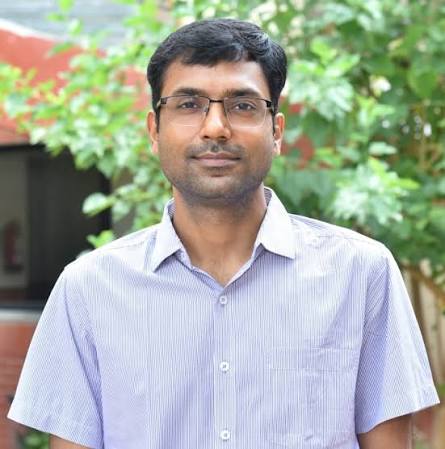
In 2000, he was All India Rank 1 in IIT-JEE. He took Computer Science at IIT Kanpur and finished the degree.
Then he left computing altogether and today he studies the brains of mosquitoes.
His name is Nitin Gupta. He graduated in 2004 with a BTech in computer science and an interest in biology that had been quietly growing through his undergraduate years.
He went to the University of California, San Diego for a PhD in bioinformatics and systems biology, finishing in 2009. Then he spent a few months in a cognitive neuroscience lab there, using magnetic stimulation to study how urges for food and money leak into the motor system before a person actually moves.
From 2010 to 2014 he was at the National Institutes of Health, in a laboratory studying sensory coding, learning electrophysiology. Recording the electrical conversation between neurons, one spike at a time.
In July 2014, he came back to IIT Kanpur as faculty in Biological Sciences and Bioengineering.
His lab asks a question that sounds simple and is not. How does a brain decide that something is worth moving towards, or running away from, without ever having learned it?
They use smell, and they use insects. Grasshoppers, flies and mosquitoes. A mosquito finds you largely by carbon dioxide, picked up by sensory neurons on its maxillary palps and carried into a region of its brain called the antennal lobe. Gupta's lab works on how those circuits weigh a human body against a repellent, and how that computation becomes a decision to approach or turn away.
His group also built TreadWill, a free, fully automated cognitive behavioural therapy programme for depression, designed for people in countries where therapists are scarce. In a randomised trial with 598 participants in India, users who completed at least half the modules showed significant reductions in depression and anxiety symptoms.
Of the twenty students who topped IIT-JEE between 2000 and 2019, twelve now work outside India.
He is not one of them.
"I always knew I had to return. Movies like Swades inspired me."
The man's software runs in over 10 million cars on the road right now. That alone deserves a tribute.
Here is the great man's story.
Ravi Pandit co-founded KPIT in Pune in 1990, two years before liberalisation, when nobody in India was building software for cars. He came from a family Chartered Accountancy practice, did his master's at MIT Sloan, and instead of staying in finance or moving abroad, he chose to build engineering software for an industry India didn't really have yet.
What he built ended up running inside vehicles made by BMW, Ford, Honda, GM, and most major global automakers. Indian companies usually get to do the back-office work for global firms. KPIT got to do the safety-critical work, the kind of code that has to be reliable enough to not kill people. He spent 35 years earning that level of trust, project by project, contract by contract.
He saw the EV and autonomous mobility shift years before it became obvious. KPIT pivoted hard into software-defined vehicles when most peers were still chasing pure IT services contracts.
The best part was that he kept Pune at the centre of it all. He didn't move the company to Bangalore or to the US. He co-founded the Pune International Centre, which became one of India's most respected policy institutions. He started Janwani and the Zero Garbage Project, which genuinely changed how Pune handled its waste. He supported the Gokhale Institute and the Aga Khan Rural Support Programme. He was the only private-sector member on the National Green Hydrogen Mission's Empowered Group, and recently launched HRIDAY to push hydrogen adoption in India.
He wasn't too social, didn't do podcasts, didn't tweet but he did do was co-write a book called "Leapfrogging to Pole-Vaulting" with R. A. Mashelkar, about how India could skip stages of development instead of just catching up.
I read that book a few years ago and a lot of how I think about Indian companies competing globally came from it.
A genuine builder is gone. The kind who picked unsexy industries, stayed put in his city, did civic work that lasted, and kept his name out of the headlines while doing some of the most consequential engineering work this country has produced.
Rest in peace, sir. Thank you for everything you built, and for showing what was possible from Pune, India. 🇮🇳
On this day, 1761, nearly 100K Marathas died on the battlefield of Panipat, giving it all for Dev, Desh and Dharma. Commanded by the valiant Sadashivrao Bhau, they shattered enemy formations, fighting ferociously with grit and valor against overwhelming odds.
Back from Australia . Felt good all these days not seeing political posters everywhere , pan masala ads in stadiums, not a single road dug up. But then our GDP is so good yaar, I felt like painting GDP on my forehead and running around everywhere 😃
#Pune is the 3rd largest IT exporter in the country, and among top-3 auto-industrial exporters.
There can't be a stronger case for a dedicated international airport than this! And yet - we have been waiting for over 20 years.
These export and commerce numbers for Pune would have been much higher - if we had direct air connectivity to key international destinations.
@mohol_murlidhar@Dev_Fadnavis@narendramodi
https://t.co/ml2NSnpOoZ
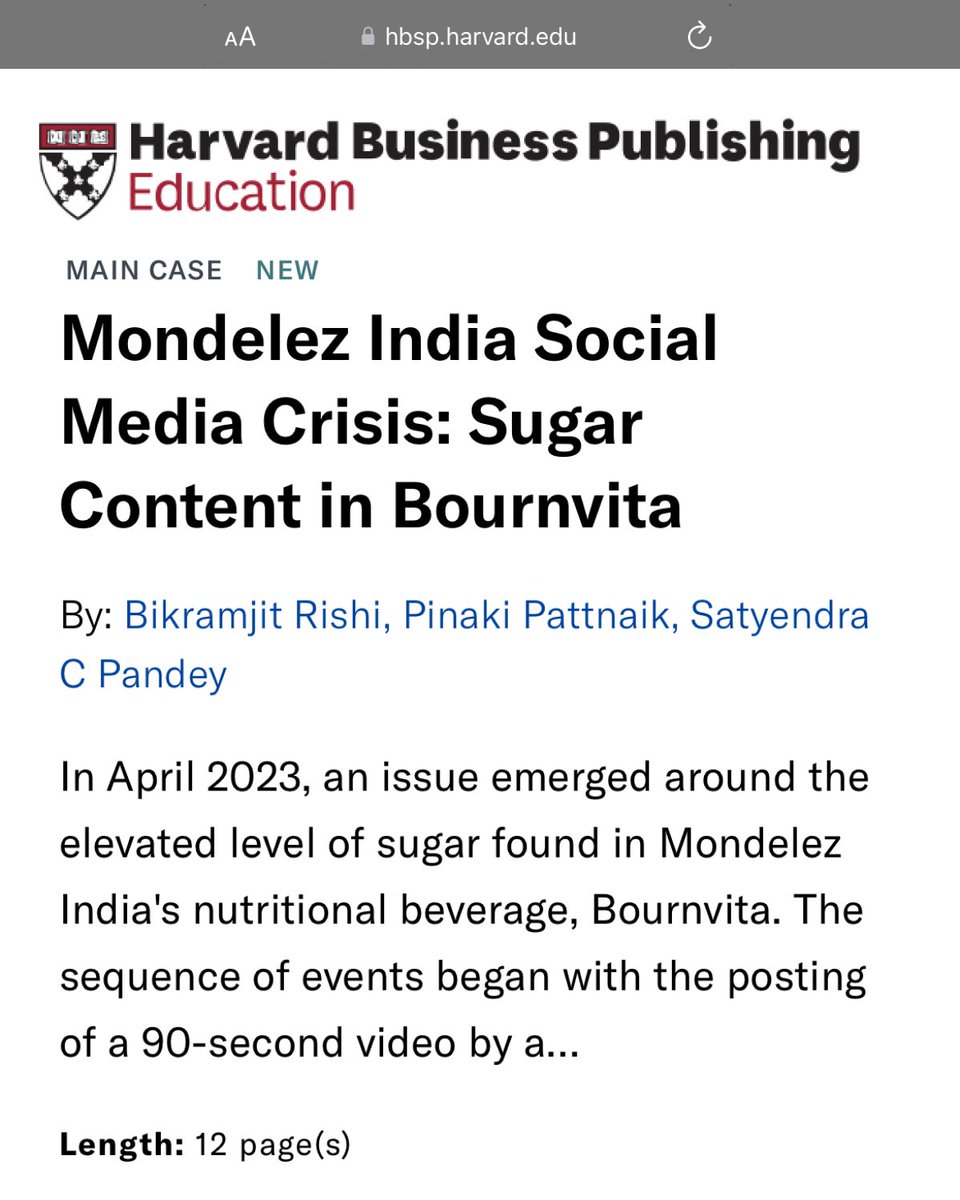
From getting rejected by Harvard 2 times to becoming a Harvard Case Study, it’s been a rewarding journey!
I took a major risk in April 2023, and I left the US after living there for 13 years, and I came to India to spread heath literacy. Within a week of me coming to India, I made a video exposing Bournvita and it became a national controversy.
I faced legal challenges from Bournvita and I did not make a single rupee for more than a year. But this eventually backfired on Bournvita and they were forced to reduce their sugar by 15%!
After 1.5 years, this incident has finally become a case study on Harvard Business Review. This case study can now be accessed in 168 countries.
In the last 1.5 years, I have been criticized and mocked by relatives and friends for leaving my job in the US. My family has also been extremely worried about my future.
This last 1.5 years have been stressful for me both emotionally and financially, but I am really grateful to everyone for all the love and support!
Satyamev Jayate (Truth always prevails)
Wow! CCTV footage of Nagpur bar visited by BJP Maharashtra chief Chandrashekhar Bawankule's son Sanket before Audi crash is ‘MISSING’ 👏🏽🍌🇮🇳 https://t.co/Y1iTyRs6Gs