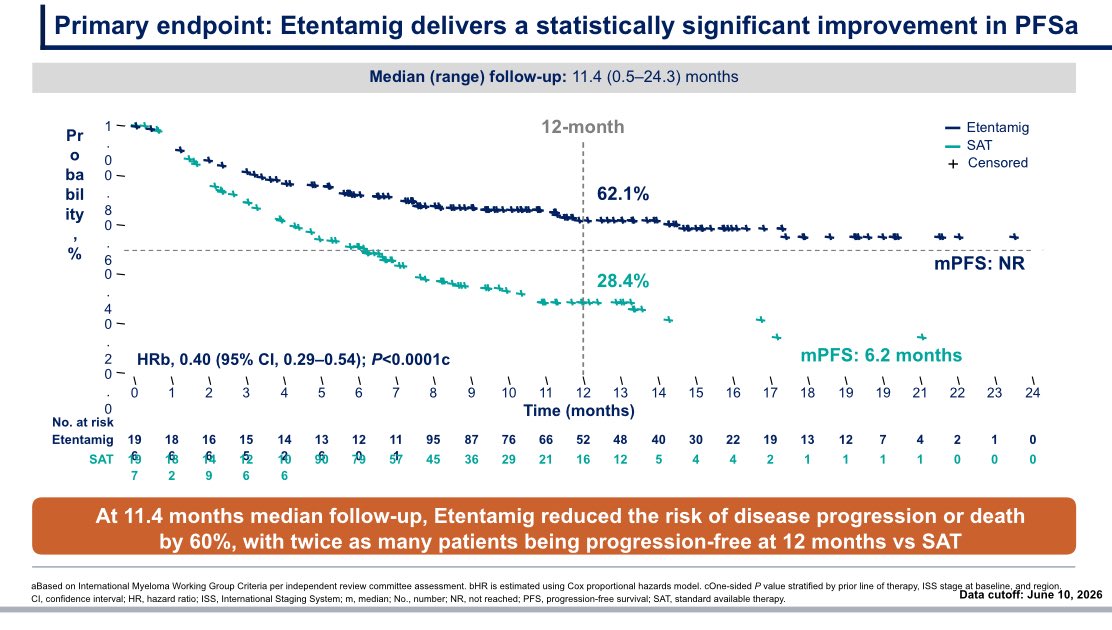
First RCT results of Etentamig (BCMA bispecifc antibody) presented at Plenary Session #IMS26@Myeloma_Society@PlasmaCellPete@myelomaMD
60 mg fixed dose every 4 weeks makes this the easiest bispecific to administer.
Impressive PFS benefit in relapsed refractory myeloma with at least 2 prior lines of therapy. See thread for more details.
🧠🩸 HOW TO STUDY HEMATOLOGY GUIDELINES FOR BOARD EXAMS
🎯 Memorize the clinical decisions, their thresholds and their exceptions. Use mnemonics to retrieve them quickly.
1️⃣ 📚 Choose your core references
🔹 Malignant hematology → NCCN / EHA–ESMO
🔹 AML, APL & CML → European LeukemiaNet
🔹 Myeloma → IMWG
🔹 Benign hematology → ASH / BSH
🔹 Thrombosis & hemostasis → ASH / ISTH
🔹 Transplant & cellular therapy → EBMT / ASTCT
📌 Start with your board’s syllabus. Record the guideline year/version on every summary; distinguish diagnostic criteria from treatment recommendations.
2️⃣ 🗂️ Turn every disease into “D–R–T–M”
🔬 D — DIAGNOSIS: criteria, confirmatory test, important mimics
📊 R — RISK: staging, prognostic score, molecular markers
💊 T — TREATMENT: when to observe, when to treat, first-line and relapse options
📈 M — MONITORING: response, MRD, toxicity and follow-up
For every recommendation ask:
👉 Who does it apply to?
👉 What changes the decision?
👉 What is the important exception?
3️⃣ 🦴 Example: MYELOMA → “SLiM–CRAB”
SLiM identifies myeloma-defining biomarkers:
🅂 Sixty → clonal marrow plasma cells ≥60%
🅻 Light chains → involved/uninvolved ratio ≥100, AND involved FLC ≥100 mg/L
🅼 MRI → >1 focal lesion, each ≥5 mm
🦀 CRAB:
C — Hypercalcemia
R — Renal impairment
A — Anemia
B — Lytic bone lesions
⚠️ CRAB abnormalities must be attributable to the plasma-cell disorder.
🎯 Board trap: FLC ratio ≥100 alone is insufficient. Apply the complete diagnostic framework. (https://t.co/212DugY3Ry)
4️⃣ 🩹 Example: HIT → “4 Ts”
🩸 Thrombocytopenia
⏰ Timing
🦵 Thrombosis
🔎 oTher causes
Each scores 0–2:
🟢 0–3 = low probability
🟠 4–5 = intermediate
🔴 6–8 = high
🧠 Memorize the action:
A reliably calculated low score generally means no HIT testing or empiric HIT treatment.
🎯 Board trap: missing information can invalidate a reassuring score—reassess when the clinical picture changes. (https://t.co/KRH3g0QJSE)
5️⃣ 🚨 Example: suspected TTP → “PLASMIC”
P — Platelets <30 × 10⁹/L
L — hemoLysis
A — Absence of active cancer
S — No Stem-cell/solid-organ transplant
M — MCV <90 fL
I — INR <1.5
C — Creatinine <2 mg/dL ≈177 µmol/L
🧮 One point each; 6–7 indicates high probability of severe ADAMTS13 deficiency.
⚠️ This predicts probability; it does not establish the diagnosis.
🚨 With high clinical suspicion, obtain ADAMTS13 before plasma therapy and begin urgent treatment without waiting for the result. (https://t.co/2PSyaWOxbr)
6️⃣ 🧩 Build “RULE + EXCEPTION” flashcards
❌ Weak card: “Explain myeloma.”
✅ Better card: “FLC ratio 120, involved FLC 60 mg/L: does this meet the SLiM light-chain criterion?”
➡️ No—the involved FLC must also reach ≥100 mg/L.
❌ Weak card: “List HIT investigations.”
✅ Better card: “Reliable 4Ts score 2: should I order PF4 testing?”
➡️ Generally no.
💡 One card = one decision.
7️⃣ 🔁 Use active recall with spaced reviews
📖 Read one algorithm.
🙈 Close it.
✍️ Reconstruct it from memory.
✅ Check mistakes immediately.
🗓️ A practical review schedule: days 1, 3, 7, 14 and 30.
Retrieval practice improves long-term retention; the exact review intervals can be adjusted to your performance. (https://t.co/KRH3g0QJSE)
8️⃣ 🎓 Keep an “exam traps” notebook
For each error, record:
🔍 The clue I missed
🚦 The decision it changes
⚠️ The exception I forgot
Practise related diagnoses together:
🩸 TTP / HUS / DIC
🦴 MGUS / smoldering / active myeloma
🩹 ITP / HIT / marrow failure
🗣️ Finish each topic with a 60-second explanation using D–R–T–M.
📚 Sources:
ASH guidelines • BSH guidelines • ELN • IMWG • ISTH TTP guidance • EBMT Handbook • Retrieval-practice research
#Hematology #BoardReview #MedicalEducation #StudyTips #HemeBoards #KFSHRC
A cure for myeloma, defined.
Long considered incurable, myeloma now has a consensus standard: five years off treatment with no detectable disease.
“We are no longer debating whether cure is possible,” said Dr. Nikhil Munshi at #IMS26. @NikhilMunshiMD
Read more → https://t.co/AkVHa1CjY3
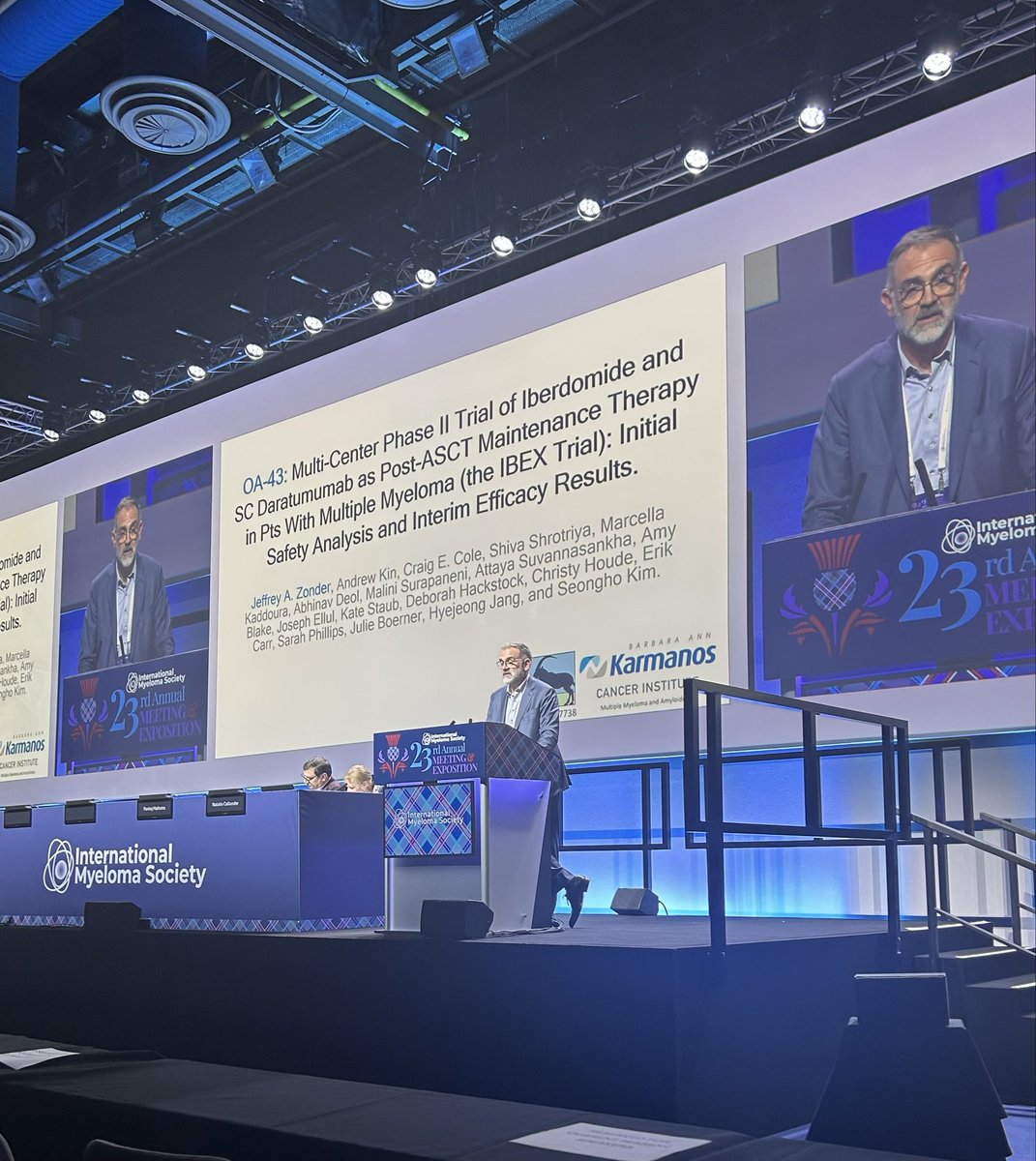
Sharing initial safety & interim efficacy results of the IBEX trial at #IMS26 on behalf of co-I’s from @karmanoscancer & @IndianaUniv. Iberdomide + SQ dara is well-tolerated as post-ASCT maint in #myeloma & improved depth of MRD in 8 of first 11 pts enrolled
Yi Lin, MD, PhD, describes the science behind a phase 1 study of anitocabtagene autoleucel, a CAR T cell that deploys a CAR with a novel synthetic antigen-binding domain, in patients with multiple myeloma.
Learn more about the science behind the study in the editorial “Anito-cel for Multiple Myeloma”: https://t.co/V9Vf7nLDZ6
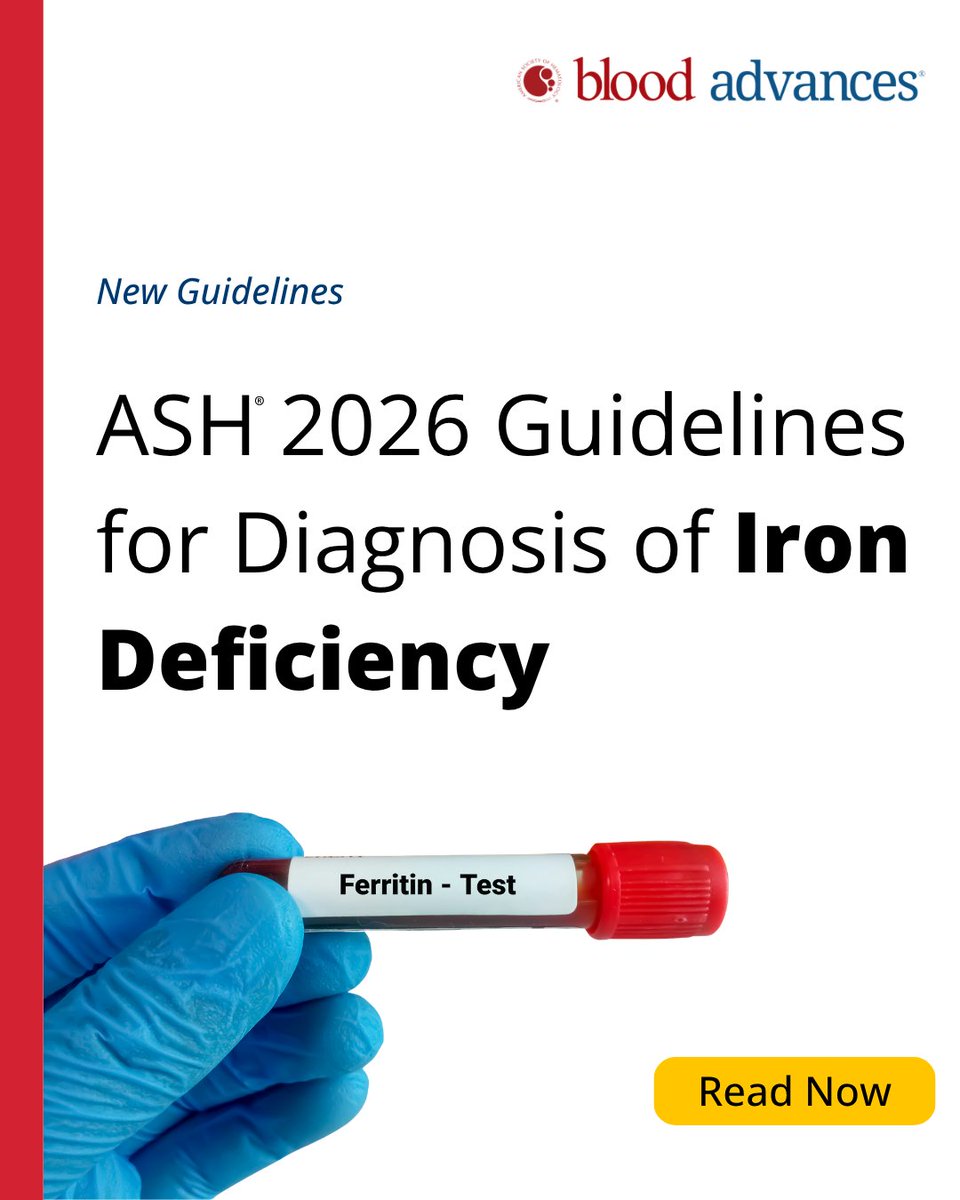
New clinical guidelines for iron deficiency from ASH aim to help identify cases that may otherwise go undiagnosed. Updated ferritin thresholds support earlier, more accurate diagnosis. Learn more: https://t.co/yUyjruMzzG @BloodPortfolio
Management of Bispecific Antibody Toxicities: A Focus on Multiple Myeloma | American Society of Clinical Oncology Educational Book https://t.co/eMqos4KNPD #mmsm
More is not necessarily better.
DA-EPOCH-R + venetoclax in double-hit lymphoma: a cautionary tale from Alliance A051701.
More intensity ≠ better outcomes
#Lymsm https://t.co/Y450CMnC5C
#Myeloma Paper of the Day: Anti-BCMA immunotherapies deplete plasmacytoid dendritic cells and impair antiviral immunity in myeloma leading to high burden of predominantly low‐grade respiratory viral infections, which significantly impair QOL: https://t.co/IiRGz4wGRj. #mmsm
Another success for Venetoclax in acute promyelocytic leukemia >>> Deep molecular remission and encouraging survival without transplantation: V-CAG for arsenic-resistant relapsed APL #leusm|British Journal of Haematology | Wiley Online Library https://t.co/4gRMQNmP8S
A new review summarizes the pathogenesis and treatment of myeloproliferative neoplasms, highlighting the role of driver mutations, inflammation, and emerging targeted therapies that may achieve durable disease modification.
Read the Review Article “Myeloproliferative Neoplasms” by Isabelle Plo, PhD, and William Vainchenker, MD, PhD: https://t.co/PZ3PeTPJm4