Compute will become worthless.
The GPU barons spending billions on compute farms today are akin to the carriage barons of the 1900s that spent building out infrastructure for horse carriages, lengthening the bottleneck, blind to the machine that’s coming to widen it.
Trade: the DuPont family started buying General Motors stock in 1914, when the auto industry was still young and one that was treated as a niche.
I.e., compute becoming valuable because AI feeds on it is not a moat, but a bounty, an incentive for engineers to solve its scarcity.
1. AI demand makes compute scarce.
2. Scarcity makes compute extremely profitable.
3. Profit attracts capital into photonics, neuromorphic chips, wafer-scale chips, better memory, better cooling, better networking, better algorithms.
4. Compute gets cheaper per unit.
As better ways to compute, better means to produce compute, or better ways to use compute arise, all the capex we burnt on traditional compute will go to waste, leaving dead assets in the books of several corporations.
In the 1800s, agriculture depended heavily on natural nitrogen sources like Peruvian guano and Chilean nitrates. These were scarce, and inconveniently located making them geopolitically strategic. Then, two german chemists, Haber and Bosch, developed a way to fix nitrogen from the air into ammonia, with lab success in 1909 and industrial scale by 1913. The previous scarcity, “where do we find enough nitrogen?” (Akin to “where do we find enough GPUs”), was attacked by an advancement: Industrial chemistry.
2008: The Housing Crisis
202x: The Compute Crisis
203x: The AI Crisis
202x: Venture capital running out, requiring financial engineering en masse, to achieve compute supply supremacy over their hyperscaling counterparts, with a commodity that keeps improving (and inevitably be oversupplied), turning previously acquired supply into dead assets on their balance sheets + a lot of debt.
203x: Permanent unemployment, requiring a restructuring of sociology and economics as we know it (using means like UCI).
@seer_0x I called the memecoin of last cycle (fartcoin) at $30k and ran it to literal billions — That was objectively the best trade of the cycle.
You’ve mistaken me for someone else.
Every cycle has its meme.
That’s relevant to the meta of the cycle.
This cycle’s meta is clearly tokenisation.
Combine it with absurdity via crudeness,
To make it newsworthy,
And give it a mission,
For people to rally behind.
Dogecoin was considered crude in 2021.
Fartcoin was considered crude 2024.
Each cycle cruder than the previous.
Otherwise, it isn’t absurd enough.
2026, connect the dots.
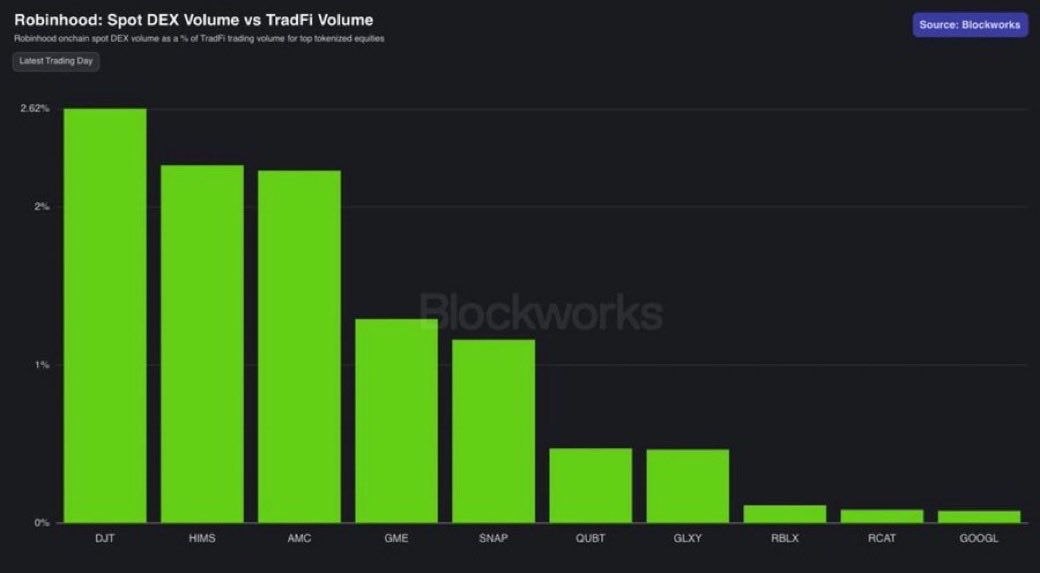
Many are calling ecosystem tops across the board. "Robinhood/Stonk is dead, the trade is over."
Some perspective: a single coin, PEPE, hit $1.7B in 21 days. Not its all time high, just its first leg.
Today, every token on @longdotxyz and @LaunchOnSF combined, platform token included, is worth less than half of that.
Two novel ecosystems, together, are still smaller than one memecoin's first three weeks.
Zoom out. The room to run is bigger than the daily candles suggest.
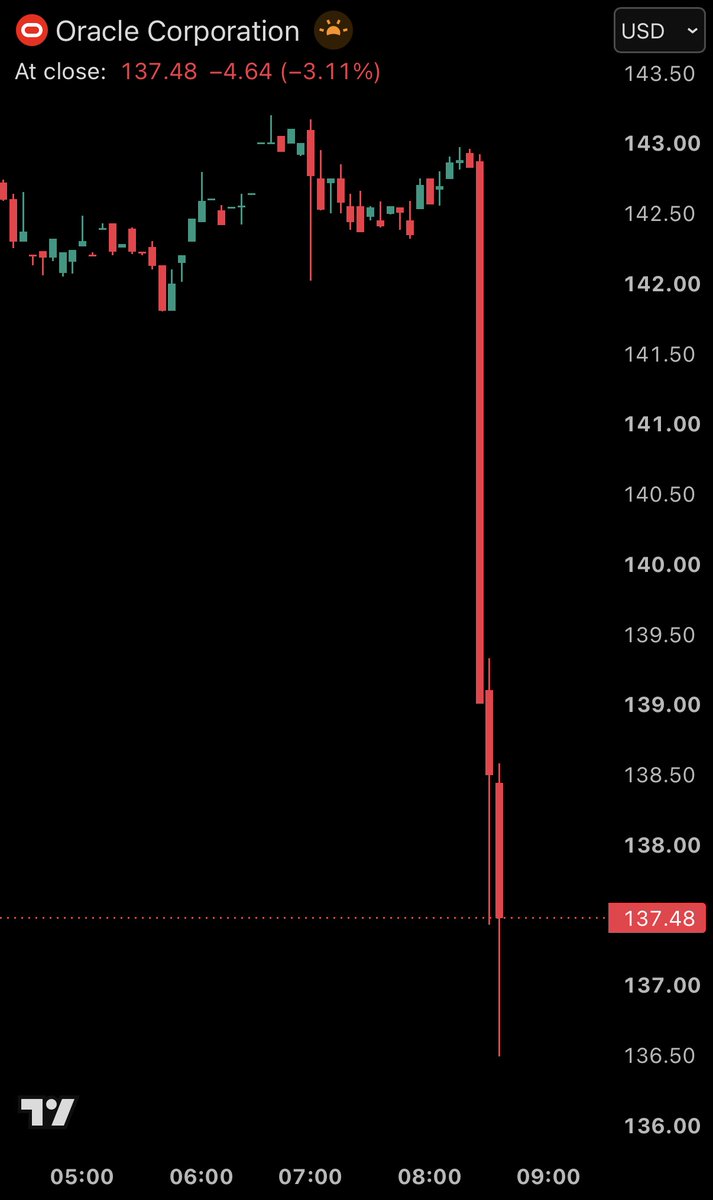
BREAKING: Oracle stock, $ORCL, falls -5% after declaring "force majeure" on a massive data center being built in New Mexico.
Oracle has reportedly made the move in order to shield itself from rapidly rising expenses on the project.