Hi, I am Gakyung Kim, from South Korea. : ) I am interested in humans as social beings. I aspire to study how people make sense of the social world and construct abstract thoughts.
Learn more: https://t.co/oD2oQX7HmQ
Anticipatory eye movements during repeated movie viewing reveal when and what is remembered. Gaze patterns correlate with explicit reports, offering a method to detect memory for events.
@LabNir@FlavioSchmidig@YaminEtAl@omerxsharon@CharanRanganath
https://t.co/S4YlcXwvfW
People learn from rewards differently when outcomes are shared with others. Learning slows when receiving smaller reward shares, and social stereotypes about partners further impair learning when cognitive demands are low.
@Huang_Ham
https://t.co/DUazJS2OSH
We are excited to share our latest work showing that mice display rescue-like prosocial behavior toward unresponsive partners. @ScienceMagazine
https://t.co/Jzwna46rFy
Overparenting is on the rise and hurts children’s motivation starting in early childhood. How can we help parents step back? Our new paper in Child Dev shows that pointing out learning opportunities reduces overparenting.
Led by amazing @Reut_Shachnai
https://t.co/IHH1eC29of
Persistence is crucial for kids’ development, but parents often take over & solve problems for them. What can help parents step back?
New paper w/ @Mika_Asaba, Lynn Hu, @julia_a_leonard shows pointing out learning opportunities reduces over-parenting! https://t.co/6r0kSE1hn5 1/5
This is finally out, after so many years in the making! 🥹🥹
We have a new paper out in PNAS today! "Aligning the smiles of dating dyads causally increases attraction" ❤️ @PNASNews
A thread...
🧵🧵
New preprint with @JessaStegall, Emily Hembacher, @mcxfrank, and @hyogweon: Young children infer the informativeness of others' praise.
https://t.co/mi5PrHwi11
Adults give children a lot of praise, but do children always trust it?
BREAKING NEWS
The 2024 #NobelPrize in Literature is awarded to the South Korean author Han Kang “for her intense poetic prose that confronts historical traumas and exposes the fragility of human life.”
[Please retweet!] My paper, 'Cognitive Representations of Social Relationships and their Developmental Origins" has been accepted at Behavioral and Brain Sciences! I'm thrilled to be able to engage with people's commentary! Please consider writing one! https://t.co/Hk3p5FPPdq
1/ Excited to share a new preprint with @anjie_cao (co-first), @rebecca_saxe and @mcxfrank: "A stimulus-computable rational model of habituation in infants and adults" https://t.co/03IK1OGt08
"Can mixed feelings have distinct neural signatures?" For a long time, affective science said 'no,' slowing down research about ambivalence in awe. With recent findings saying 'yes' and our unique VR-EEG-deep learning technologies, we explored this issue: https://t.co/Mj5fFD00co
#Neurosplash2024 I presented my work on how we form social preferences from probabilistic interactions with multiple social partners. Great to connect with scientists in social cognitive neuroscience and developmental psychology! 🥰 Me so passionate about my poster 😂
For folks who aren't able to attend in-person, we are excited to be able to stream all talks this year on our youtube channel:
https://t.co/UwIHP3wmzE
Papers can be found here:
https://t.co/nr5sGg8UEU
Please share!
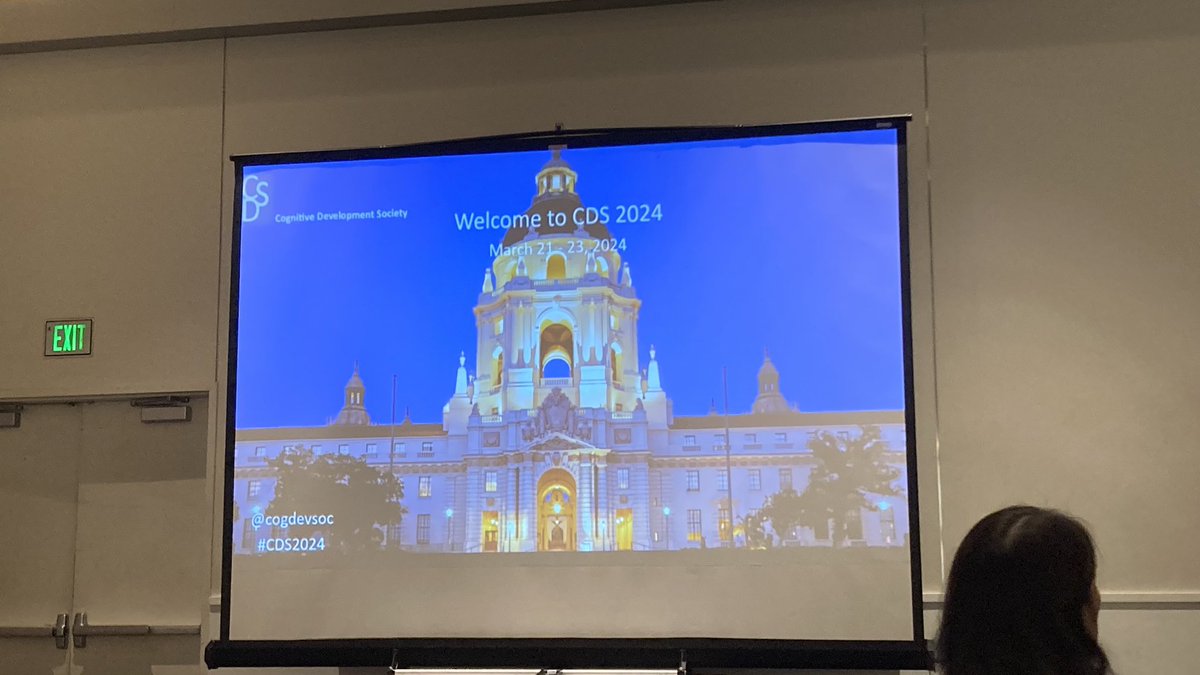
First time at CDS, first time in America! Thrilled to connect with incredible cognitive scientists I've long admired. Grateful for the insightful conversations and new friendships. Thank you to all who made this experience unforgettable! #CDS2024@sang_ah_lee@YuJin_Rah