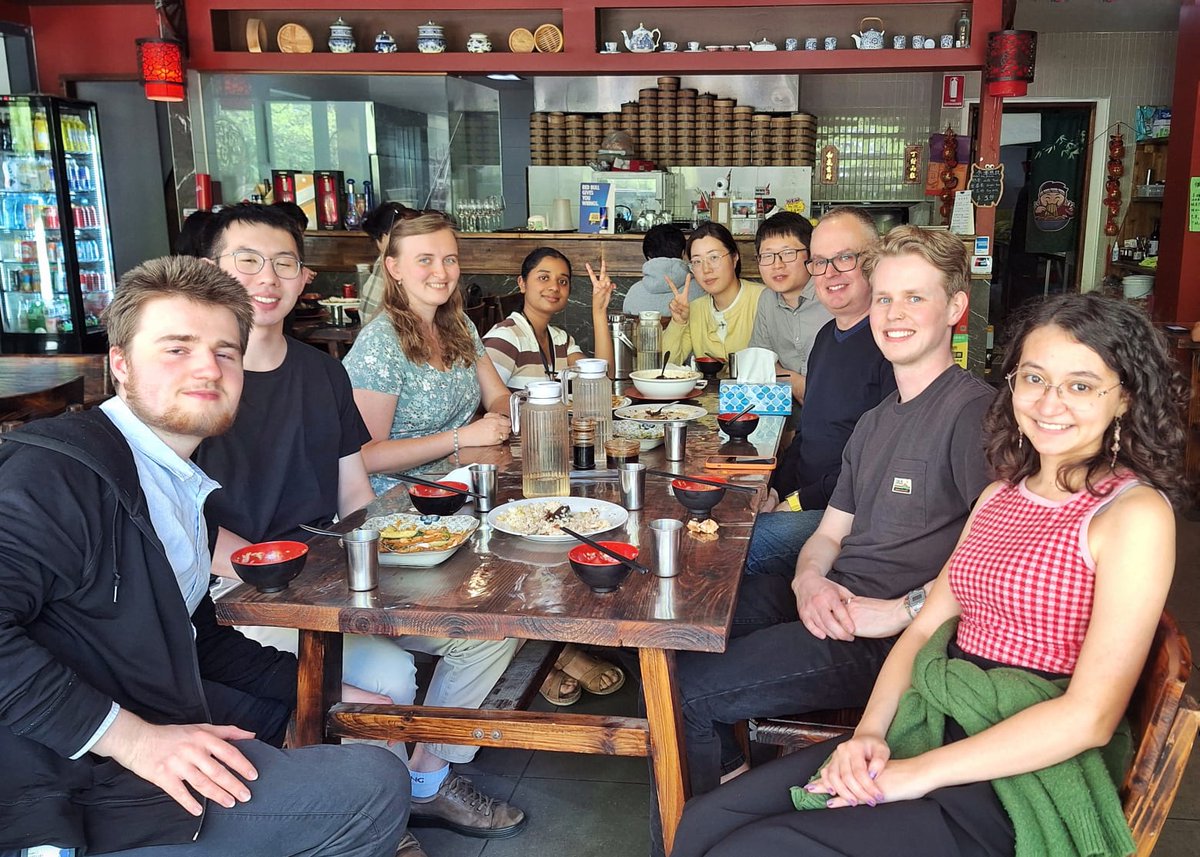
Congratulations to the latest Gale Group graduate Dr @WilliamRyder_ !! The sun came out in force for a great day of celebration 🎉🎉
Billy did some superb work during his time in the group, with more of it coming to a journal near you very soon!
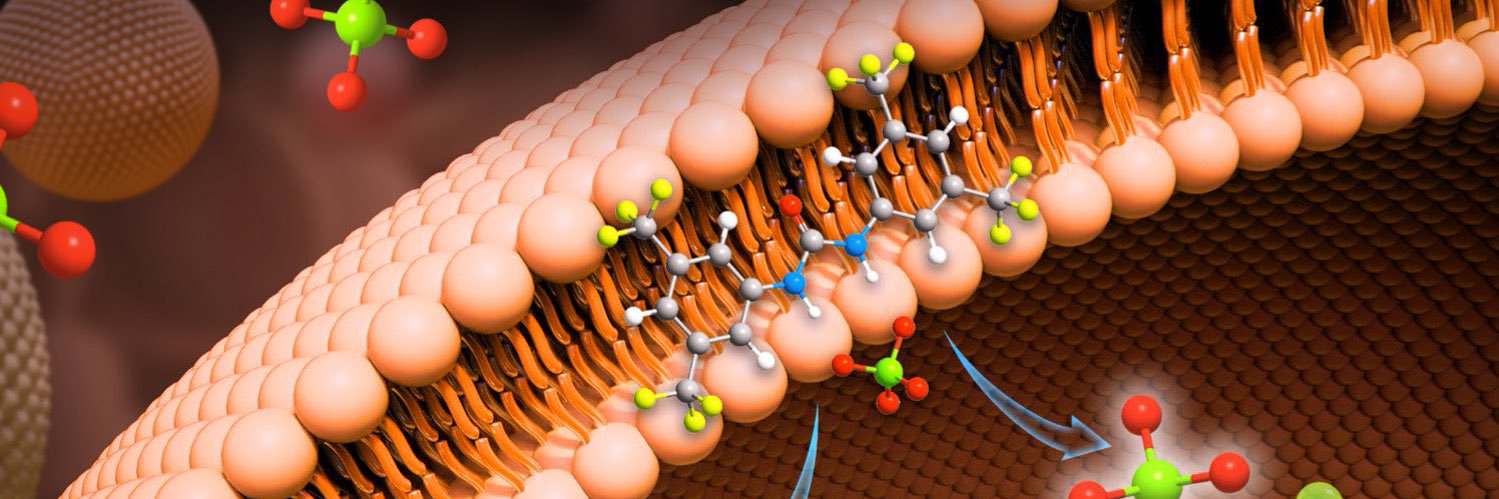
Using a water-insoluble anion receptor to remove toxic anions from water - check out our latest work in @J_A_C_S @gale_group https://t.co/6ZJCjIpQNO
Check out @JenniferHiscoc2 excellent preview of @philgale/@gale_group ’s back to back Chem papers developing the next generation of synthetic anion carriers. It also includes a fantastic summary of the organelle selective transporters I developed during my PhD!
Our latest work is out in @Chem_CP ! 🚀 Congrats @AlexGilchrist7 and team, the work showcases a highly fluorinated tetralactam that showed record activities in chloride and fluoride transport. Check it out for free here: https://t.co/3ZIlTe1e5Z
Final stretch! Our 2024 honours students Max and Sherly have just wrapped up their final presentations and are now diving into the last 4 weeks of thesis writing. Good luck and well done on a very productive honours year!
Our latest work is out in @Chem_CP! By altering the subcellular distribution of anion transporters, we could enhance cancer cell apoptosis, cytotoxicity, and selectivity. Congrats to @WilliamRyder_ and all involved🎉
@lizjnew@UTS_Science@SydneyChemistry
Hot off the press! 🗞️ We are proud to present studies lead by @PatrickWangPhD on platinum-based metal complexes as transmembrane chloride transporters. These complexes show strong antiproliferative activity in cisplatin-resistant cells! Read more: https://t.co/NsdJjqQfmm
Be sure to read research by @philgale & co @gale_group@UTSEngage on N,N′-dimethylsquaramide as a central scaffold for anionophore design in our latest issue
Find their full report here👇
https://t.co/gEYXQN9V0f
Our latest publication in collaboration with the Rawling group at @UTS_Science! 🧪 It explores how inserting diphenyl ureas into fatty acid protonophores can modulate their mitochondrial uncoupling properties and reduce cancel cell viability. Read now:
https://t.co/aCQZ1uojYn
🚀 Our latest research in @OrgBiomolChem! 🌟
N,N'_dimethylation of an arylsquaramide causes a conformational shift in the rings, forming a convergent cavity for anion binding. Studies revealed the compounds could act as H⁺/Cl⁻ cotransporters.
Read more: https://t.co/wDdDxA2BMH
The last 3 and half years were an absolute blast! Huge thank you to my brilliant supervisor @philgale and of course the fantastic chemists in the @gale_group. Very excited for what’s next🍾
Our work on a new 5-membered cyclic scaffold for anion transport is featured on the front cover of @OrgChemFront. It was also a lot of fun putting those blender skills I learnt during lockdown to good use. Congratulations to all those involved!🍾 @SydneyChemistry@UTS_Science
UTS Science's deputy dean and superstar supramolecular chemist Philip Gale has been named Australia's leading researcher in the field of inorganic chemistry in The Australian's 2024 Research magazine! https://t.co/oSBS0XYxqJ
@australian@philgale
2 Ph.D. Positions are available in my group. Interested young minds are encouraged to apply to IISER Pune Chemistry Ph.D. program.
https://t.co/lhYtFr6mNX
🚨 Out now in OBC! 🚨 Not only do @Fares234Mo's coumarin bis-urea anionophores give off a lovely blue glow, they also function as potent HCl cotransporters! The team then used the fluorescent properties of the molecules to show they localise in lysosomes: https://t.co/2Ji0qzFLC6