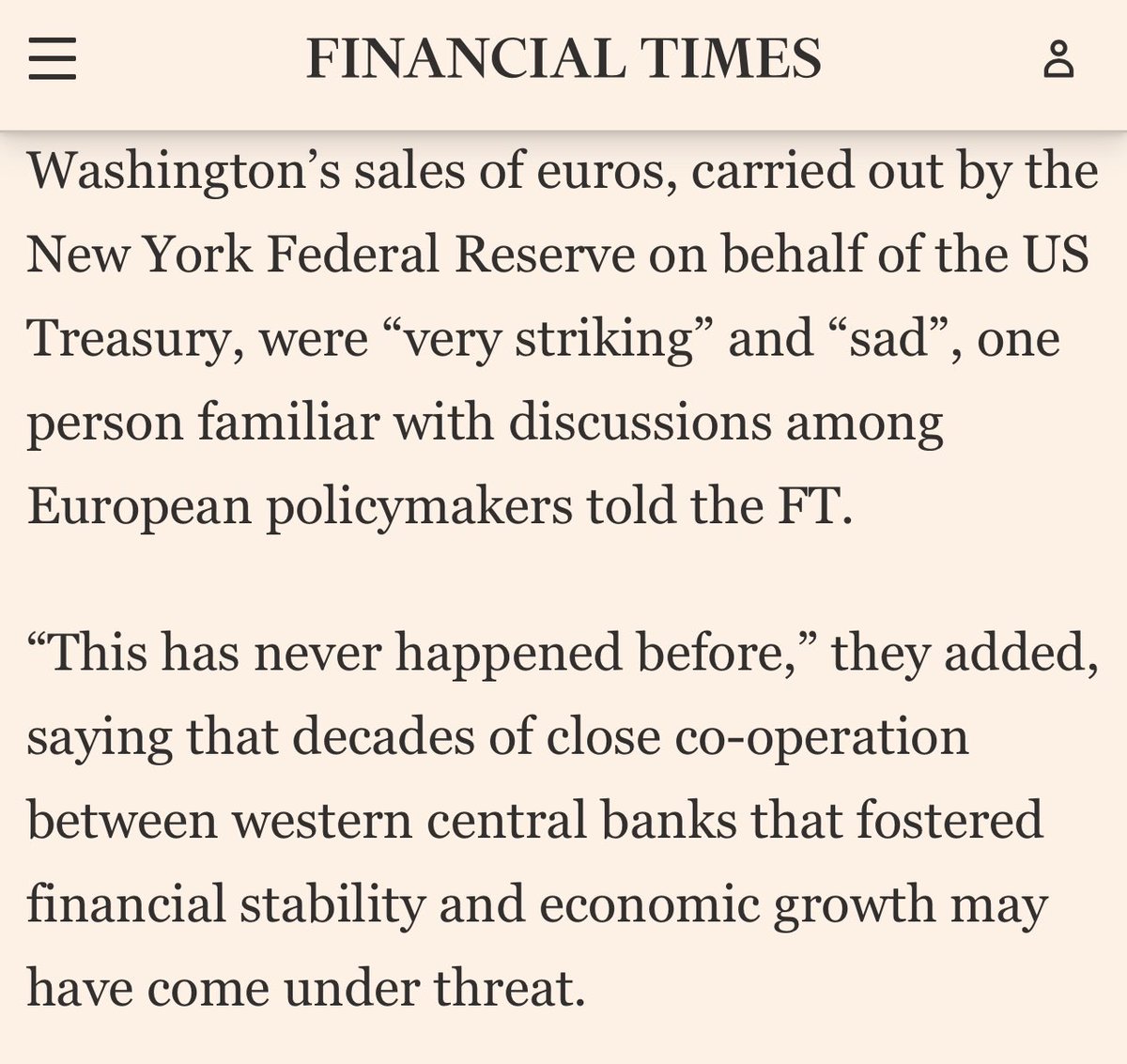
The United States sold euros to buy yen without telling the ECB until after the trade was done. Senior ECB officials called it “an unprecedented breach of longstanding conventions.” One said: “This has never happened before.”
Selling dollars to defend the yen would have contradicted Bessent’s strong-dollar policy. Selling euros avoided that problem. But selling a European asset to defend an Asian currency to protect an American bond market, without consulting the institution whose asset was sold, is not a currency intervention. It is the reserve architecture consuming the alliance architecture.
The reason Washington intervened at all is the part nobody wants to say plainly. Japan is the largest foreign holder of US Treasuries. The yen was at its weakest since 1986. If the yen falls far enough, Japanese institutions sell their most liquid foreign asset to raise cash. That asset is Treasuries. The selling pushes American yields higher at the exact moment the thirty-year just touched 5.28 percent. Washington did not intervene to help Japan. Washington intervened to prevent the Treasury market from absorbing a forced seller at a nineteen-year high in yields.
The convention that was broken to execute this trade is the same kind of convention the reserve confiscation broke in 2022. That one taught central banks their dollar reserves were not safe from seizure. This one taught the ECB that dollar-system cooperation is not safe from unilateral action by its architect. Both lessons point the same direction: build the alternatives faster.
The fix is eating the architecture it was built to preserve.
@jbulltard1 But Google still has big edge of mixing AI and search, leading the clearest potential of searching monetization, as long as they have one of the best base models and computation.
@bobbybadger_@TicTocTick if Jensen never takes this bait, your concern is in vain. No matter what he is labelled, he is a great role model of either Chinese, Hongkongers, Taiwanese, Malaysian, or Singaporean.
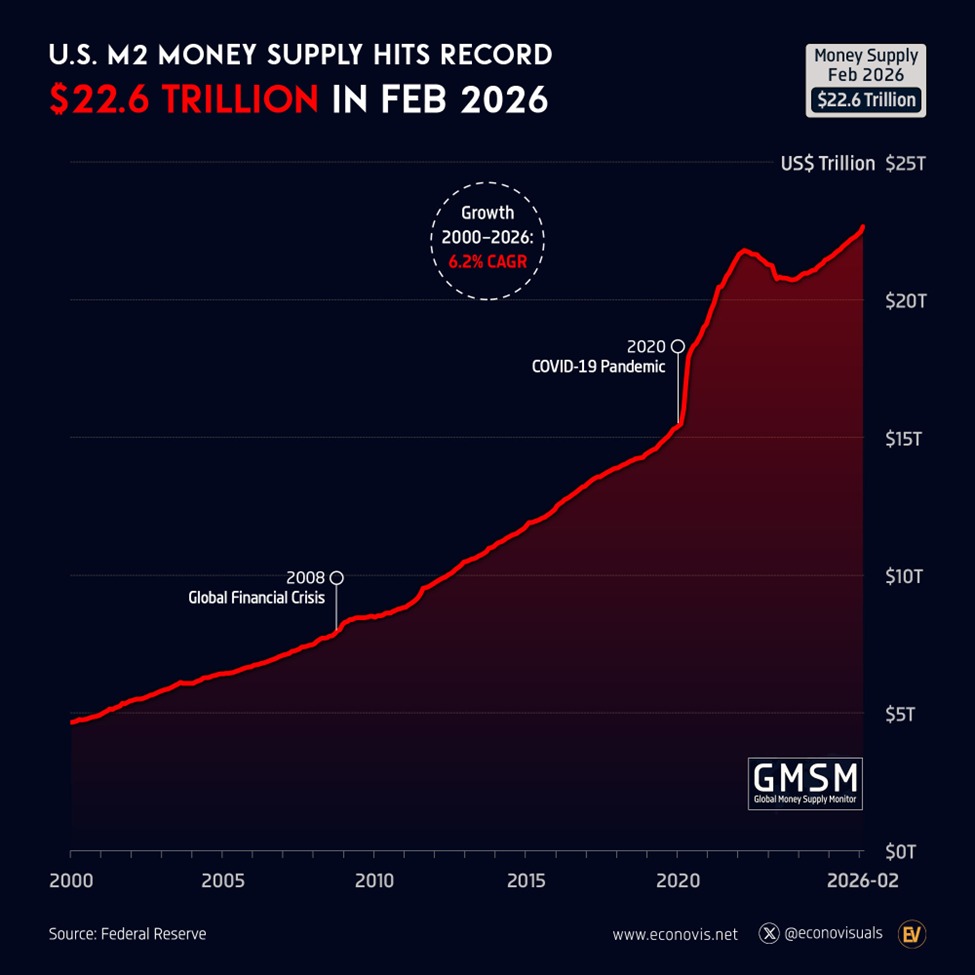
BREAKING: US M2 money supply jumped +4.8% YoY in February, to a record $22.6 trillion, marking the 24th consecutive monthly increase.
Money supply is now ~$700 billion above the March 2022 peak.
Since the 2020 pandemic, M2 has surged +$7.1 trillion, or roughly +$1.2 trillion per year.
Since 2000, money in circulation has grown at an average annual rate of +6.2%.
The US Dollar is losing purchasing power at a historic pace.