🔴 For the 50th anniversary of the first Mars lander, I brought my Viking artifacts to NASA Ames to share with the Vikings that made it happen.
They audibly gasped when my Viking Lander Biological Instrument (VLBI) was unveiled. Ames managed the VLBI experiments, the first attempt to detect life on another world. The VLBI was the most expensive scientific instrument ever made at the time, a compact package with three custom Martian life-detection experiments + the smallest gas chromatograph mass spectrometer. I happen to have the only complete unit on Earth (the other two made history on Mars).
On July 20, 1976, Viking was the first spacecraft to successfully land and operate on the Martian surface. The mission was a major milestone for NASA, with the Viking 1 lander operating on the Red Planet for over six years. Shortly after touchdown, it made history again by transmitting the first photographs ever taken from the surface of another planet.
And back at the office (last photo), I had the great honor to let Andy Weir, author of The Martian, hold a Mars rock & Viking engine for the first time. Details and interview video: https://t.co/TkFv2Iv1at
Artifacts in first photo, L to R:
1) Production engine from the Viking spacecraft program. Deets: https://t.co/W3gDDz3eXy
2) Viking Lander engine. I just acquired this one. A very unusual design, it has 18 nozzles from one combustion chamber. This was designed to spread out the thrust to avoid “sandblasting” the landing site since the sample collection arm had to operate at the landing site (no rover here).
3) VLBI... with a revival of excitement for its discoveries of late:
𝐓𝐡𝐞 𝐕𝐢𝐤𝐢𝐧𝐠𝐬 — 𝗗𝗶𝗱 𝘄𝗲 𝗱𝗲𝘁𝗲𝗰𝘁 𝗮 𝘀𝗶𝗴𝗻𝗮𝘁𝘂𝗿𝗲 𝗼𝗳 𝗮𝗻𝗰𝗶𝗲𝗻𝘁 𝗹𝗶𝗳𝗲 𝗼𝗻 𝗠𝗮𝗿𝘀 𝗶𝗻 𝟭𝟵𝟳𝟲?
TLDR; New Mars surface data found organic salts + perchlorates => something digested carbon in '76.
With the flotilla of spacecraft investigating Mars, new data keeps coming in, and it might cause us to reevaluate the data from humanity’s first attempt to look for life on another world. It also motivated me to take a closer look at the Viking artifacts I have in the museum at work, including the VLBI, orbiter engine, antenna boom that sent the data back to Earth, and the mission control panels that controlled key parts of the mission. Details in each photo caption.
Back to the big question. After five failed attempts by the Soviet Union, the first successful landers on Mars, Viking 1 and 2, conducted four separate experiments to look for signatures of life in the Martian soil. The GCMS was the most trusted instrument, a technological marvel shrunk from a room-sized instrument at MIT to the size of a hat box that would detect the carbon of carbon-based life forms. The scientists at JPL waited eagerly for its results. And they were heartbreaking. It found no carbon compounds, even less than on the moon!
With no carbon, the GCMS undermined the results of the VLBI experiment that had a positive result: the Labeled Release (LR) experiment showed something metabolizing a radioactive carbon-14 laced nutrient soup fed to the Martian soil, releasing that carbon-14 as CO2. Perhaps you recall the deflating results, popularized in the 70s, of Mars as a lifeless planet.
But some of the VLBI engineers believed that the signature of life had been found… if the GCMS reading was erroneous, and they even had a theory as to why - perchlorate in the soil, heated to high temperatures in the GCMS, could destroy all carbon signatures in the test configuration. Many years later, it was discovered that perchlorate is abundant in the Martian soil, leading some scientists to reverse the conclusions reached in 1976 (including the “Mars Czar” at the time, Scott Hubbard, who spoke with me about this with great excitement).
“The new study of the Viking program’s finding was initiated after the August 2008 discovery of perchlorates in Martian soil by the Phoenix lander. Perchlorates are salts whose powerful oxygen-busting capacity tends to combust organics. The Viking team had no reason at the time to think Martian soil was perchlorate-rich, so the tiny trace chemicals they found in the Viking experiment were dismissed as contaminants from Earth. The new study asserts that they were combusted organic compounds, fingerprints of carbon leftover from contact with perchlorates in the soil. Viking’s failure to find organic compounds was the main argument against sending further missions to Mars to seek them” — https://t.co/HfyeDhE6hR
"The designer of the VLBI-LR experiment, Gilbert Levin, believes the positive LR results are diagnostic for life on Mars. According to Levin and Patricia Ann Straat, investigators of the LR experiment, no explanation involving inorganic chemistry as of 2016 is able to give satisfactory explanations of the complete data from the LR experiment" — https://t.co/QvGJAQyiCe
And then, in 2018, the Curiosity rover found myriad organic molecules at the surface (counter to the Viking CGMS finding), and long-term atmospheric sampling found “low levels of methane within Gale Crater repeatedly peak in warm, summer months and drop in the winter every year.”
And now, in 2021, NASA made an exciting new discovery: “A team of NASA researchers suspect that they’ve made a huge discovery about Mars: organic salts on the surface. If that’s true, then it would lend much more credibility to the hypothesis that Mars once supported life.”
Perhaps it is time to revisit the original data to see if different conclusions might be drawn with different priors. The initial negative prognosis might become enticingly suggestive and motivating for more experiments to come.
• Quote Sources:
https://t.co/BDSaqgIZFV
https://t.co/kDfGjeFAsX
https://t.co/nJfU0NsZDl
• NASA 50th event page/agenda: https://t.co/WcP0hJSnS8
• Incredible 3D digital models of the Viking lander made over many years by Tom Dahl: https://t.co/aNrRAF1YyC
P.S. I did a video overview of the VLBI and GCMS: https://t.co/3jxiKTqMfE and I even checked it out with a Geiger counter (the thoriated magnesium was the only mildly radioactive part, in the GCMS).
A hummingbird in Antarctica?
This striking image, taken by the NISAR satellite, is actually a mountaintop surrounded by flowing, fractured ice. Radar reveals features at and beneath the surface that ordinary images can miss. More: https://t.co/LKEhWQG57f
Harvard University just voted to limit the number of A grades given in undergraduate classes to about 20% of the class. I’m not in favor of this. It deeply runs counter to how I believe education should be. We should hold a high bar, but also work mightily to support the success of 100% of learners, rather than a fraction.
Harvard’s administration took this step — over the objections of a large fraction of the student body — to counter grade inflation. Grade inflation is real: Many universities have been awarding A and B grades to ever larger fractions of students, and this has caused grade point averages (GPAs) to become less useful as signals of student skill. At the same time, we want students to succeed. The heart of the question is the role of educational institutions. Should our goal be:
- To help students succeed?
- To judge students?
Both of these have value. But my focus when working in education is almost entirely helping students succeed.
To me, it is clear that many people want to learn, to be empowered, to build skills that let them do new things! This is what we focus on at DeepLearningAI. This philosophy is also why my online courses (going back to my early online Stanford courses on Coursera) permitted an unlimited number of retries for graded assignments.
I believe in letting — and even encouraging — someone to redo something until they succeed. This is as opposed to standing in judgement of the fact they didn’t get it right the first time. Further, I want homework assignments to be designed primarily to help people practice and learn, rather than to judge their skill level. This is why I prefer to create “Practice Problems” and “Practice Labs” — questions that, when you think through them, help you to gain practice and reinforce what you know. As opposed to “Assessment Problems” designed primarily to judge skill.
But won’t Harvard’s move make GPAs more meaningful and help prospective employers identify strong candidates? Having hired a large number of people from Harvard and other institutions, I can say confidently that GPA is not an important signal. We have screening and interviewing processes that give far more accurate ways to figure out if someone is truly skilled. I do not need a wider spread in applicant GPA scores to figure out who's really good!
To be clear, there is also value in assessment. Even though standardized testing is much hated, high-quality tests like the SAT, ACT, GRE, TOEFL, etc. provide objective measures of ability in a domain. I find that most people want to learn and succeed. There are also people who want rigorous assessment (for example, to apply for school admissions), but this is a lesser need, and is not my focus when building educational products.
Harvard is often described as an “elite” educational institution. There are two ways to be elite: One option involves limiting enrollments, and then even among admitted students, cap the number of people that do well at 20%. I would rather pursue a different path: Set a high bar and teach elite, cutting-edge skills, but strive relentlessly to help everyone succeed. This way, eliteness is defined not by excluding people but by helping as many people as possible to be excellent.
[Original text: The Batch newsletter]
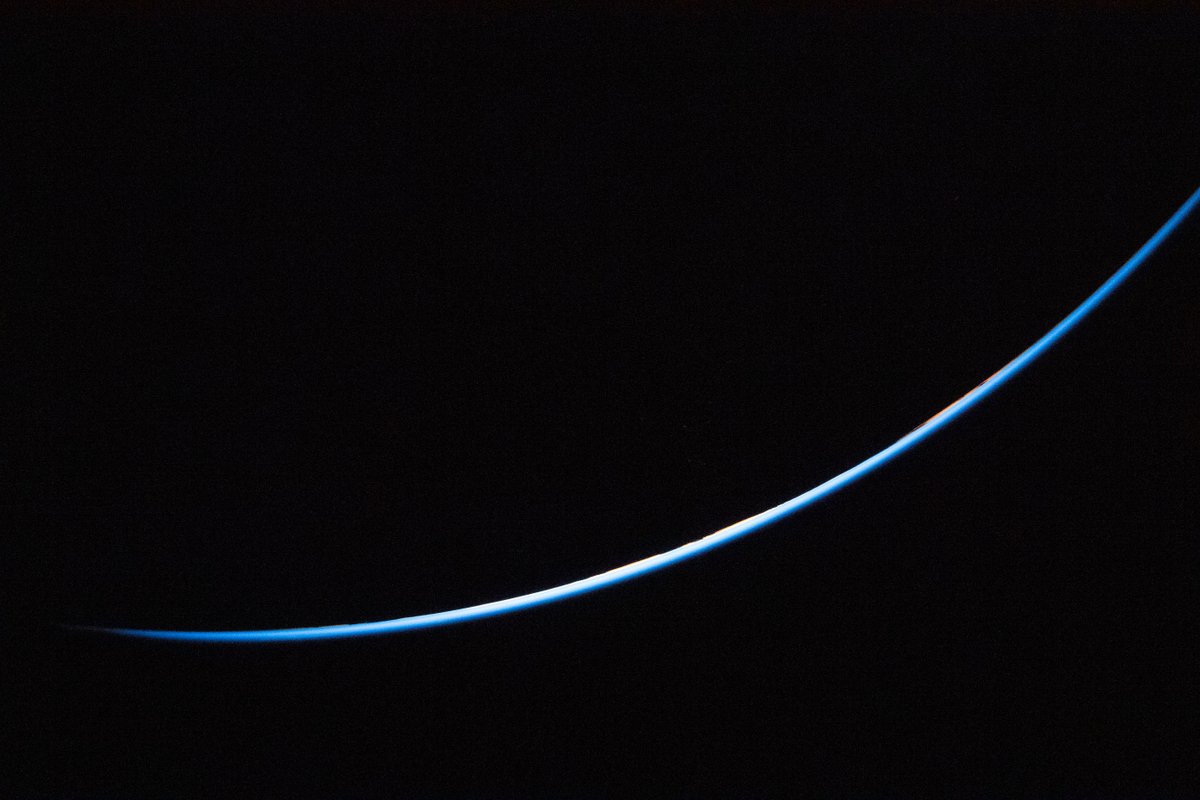
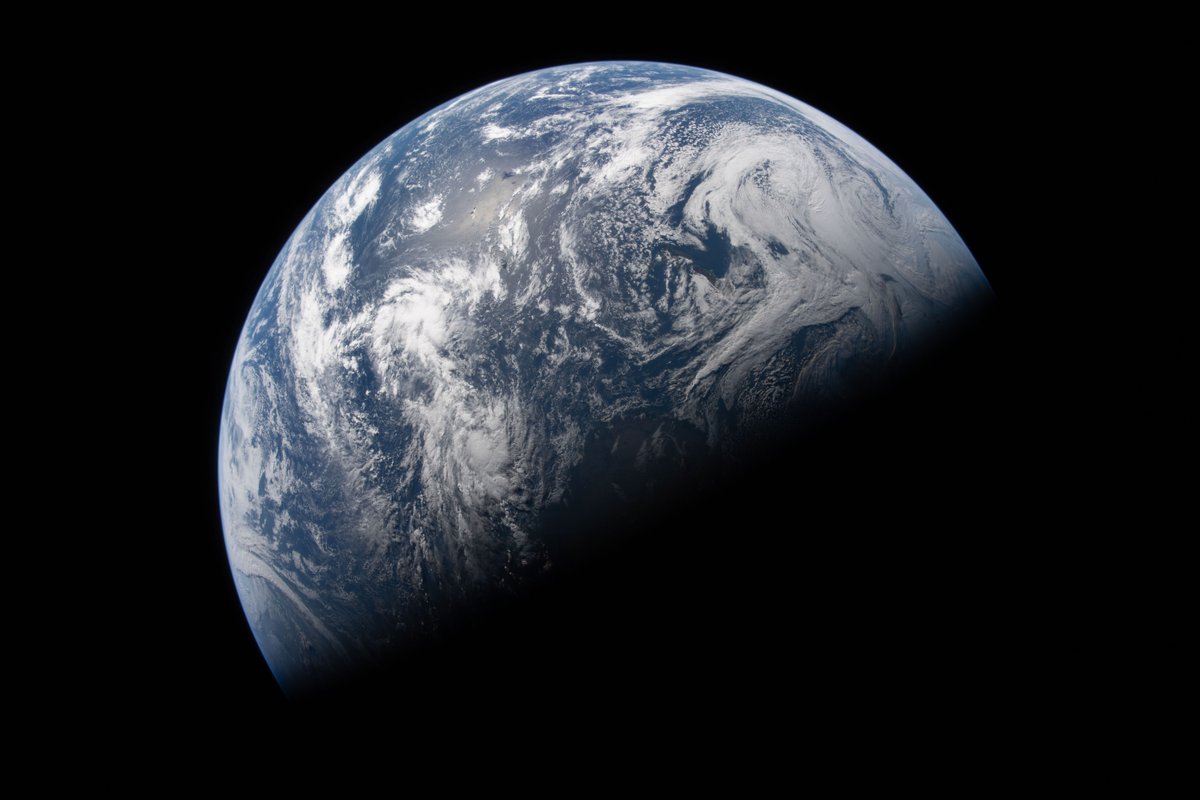
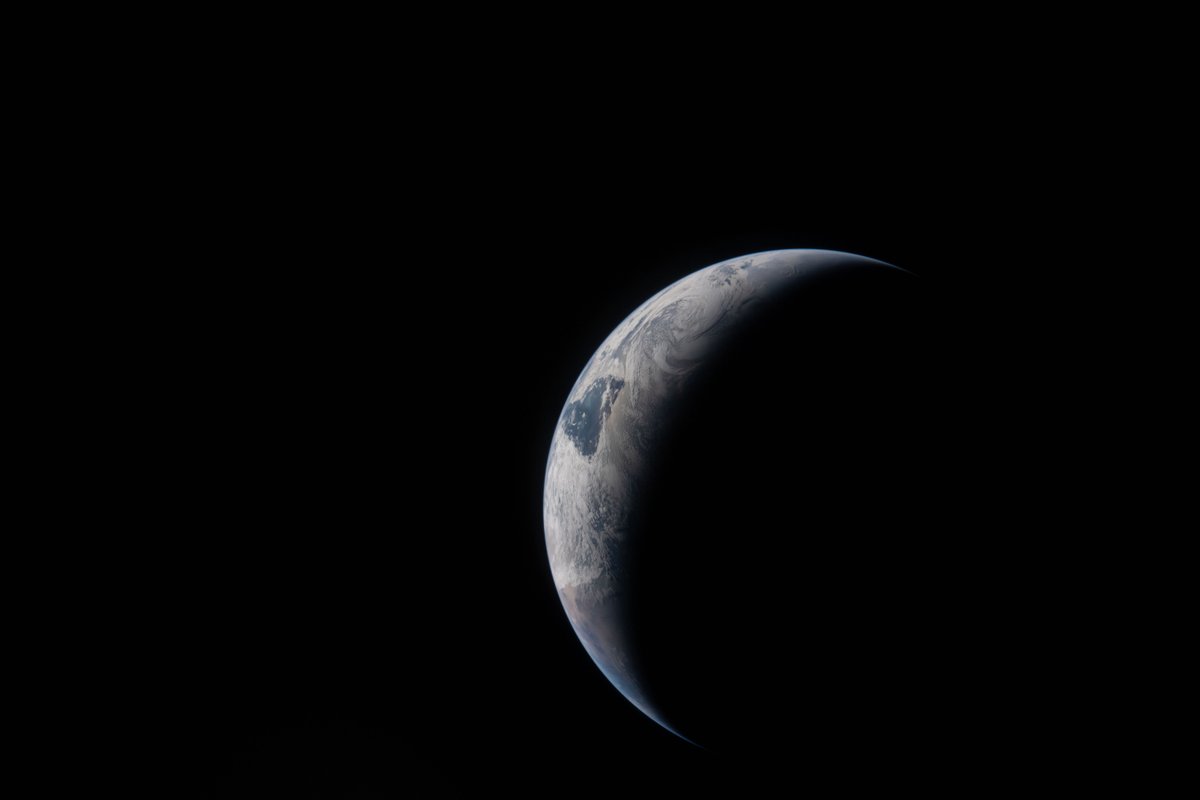
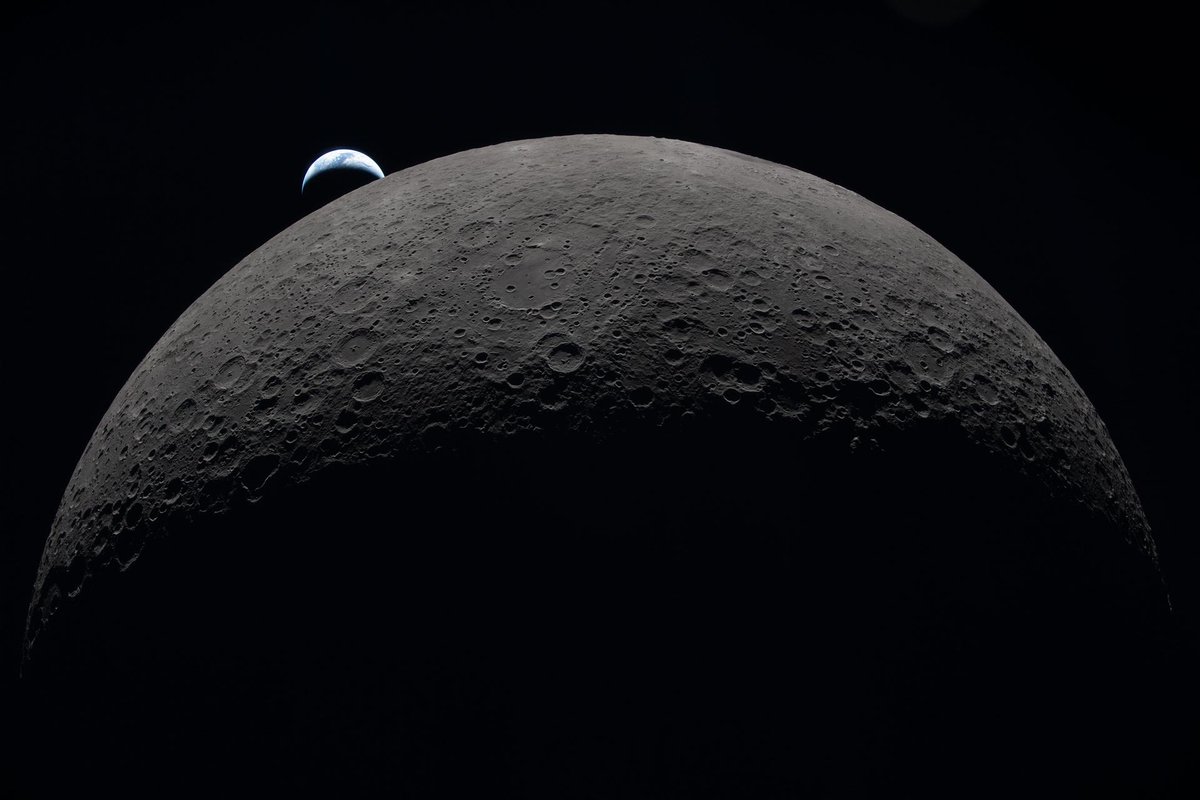
Start your week with some new photos from Artemis II!
Though our journey around the Moon has ended, we're still retrieving plenty of new images. Keep an eye on our Artemis II multimedia gallery for image highlights from the mission: https://t.co/XInWMJwMYY
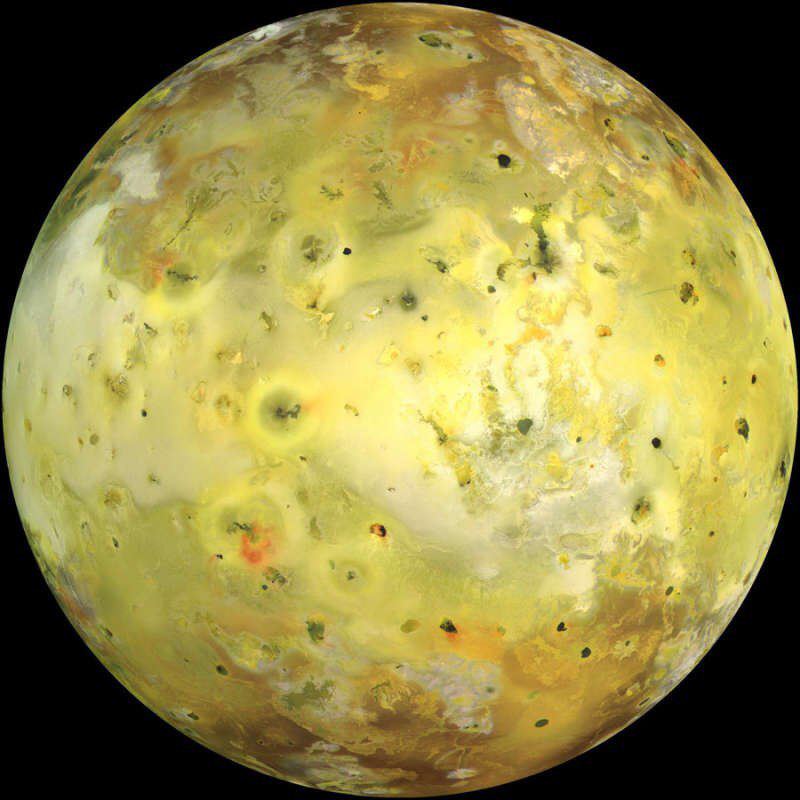
This image of Jupiter's most unusual moon, Io, was taken by the Galileo spacecraft. The image shows the moon as a bright yellow, but it is presented in natural colors, as the human eye would see it.
Io's coloration is determined by the presence of sulfur and molten silicate rocks. The moon's unusual surface is constantly being renewed by a system of active volcanoes. Jupiter's powerful tidal forces deform Io and dampen its oscillations caused by the gravitational pull of the other Galilean moons. These processes cause Io's interior to become extremely hot, and molten rock then erupts to the surface.
The moon's volcanoes are so active that they literally turn Io inside out, and their temperatures are so high that they begin to glow.
What time zone do we use on the Moon?
As Artemis builds a long-term presence on the Moon, seamless communication between astronauts, rovers, and Mission Control is critical. Coordinated Lunar Time (LTC) will keep future missions in sync: https://t.co/yqSgzinVDh
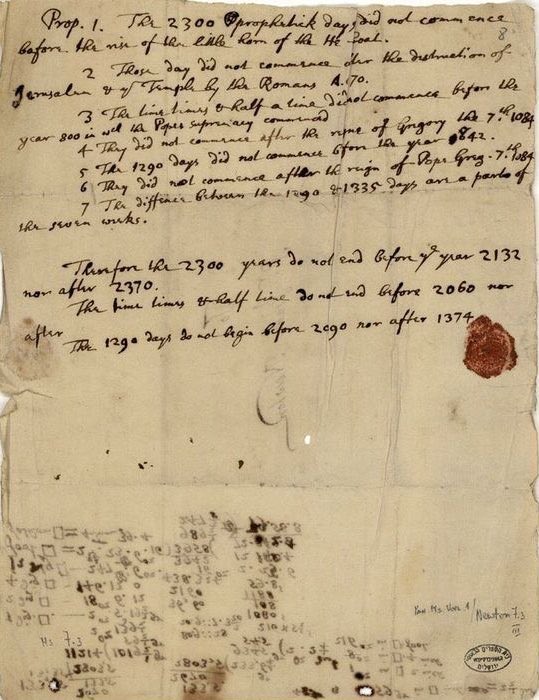
A sample of Newton's handwriting where he predicts that the year 2060 will be the start of something profound. Not exactly the End of the World, but rather the dawn of a new era.
Prophetic math from the master of motion! (National Library of Israel)