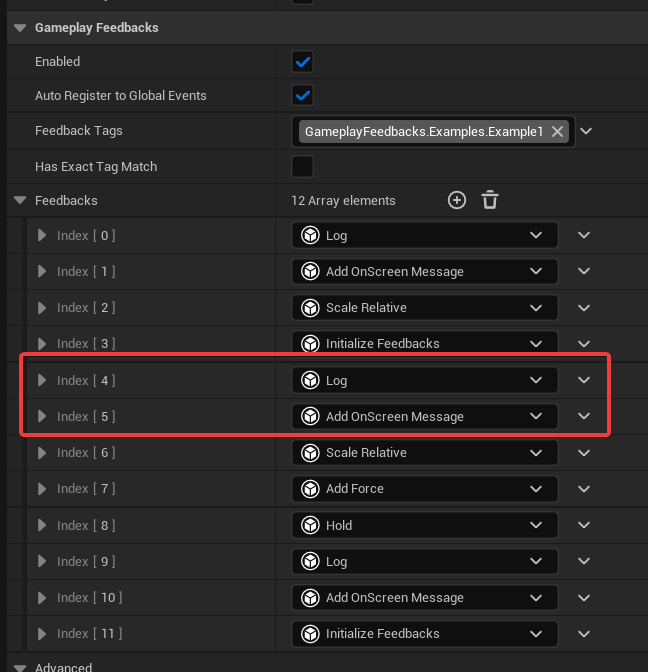
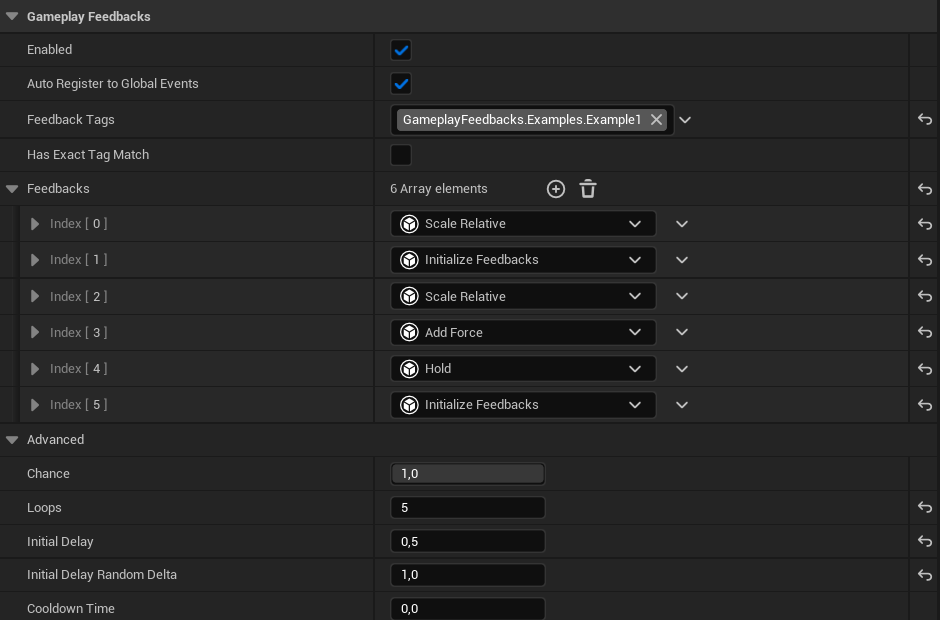
Announcing: Gameplay Feedbacks!
This #UnrealEngine#plugin aims to improve player experience by offering extensible and customizable feedback mechanisms that can be seamlessly integrated into your projects.
#gameplay#ue5#gamedev#feedbacks
In my experience as a creator, I learned that whathever you do you must genuinely be passionate and enjoy the process, no matter the final goal. Chasing just that final goal is a road to perdition most of the times.
While cleaning up some folders, I stumbled upon this old project made in #Fortnite: an adventure set in our academic Campus.
I remember having so much fun programming the code logic in #Verse.
#gamedev#gameplay#uefn
Chapter 6 of my "Artificial Intelligence in Unreal Engine 5" book delves deep into the engine AI debugging tools and how to get the best out of them.
#unrealegine#ai#gameai#book#gameplay#gamedev#ue5
It seems today is #followfriday !
I'm Marco from Italy working on a plugin called #GameplayFeedbacks.
Happy to see what you are working on!
Show your projects here (and like and share this post!)
#gamedev#indiedev
Thousands of pickups don’t need thousands of Actors.
By building a coin pickup system with plain data arrays rather than one Actor per coin, we can add thousands of pickups to the world in microseconds, not milliseconds. The code remains simple to understand and maintain.
We store each coin’s location, credit reward, and mesh instance ID in three synchronized arrays. A single Instanced Static Mesh Component represents the coins in the world. This layout, known as a Structure of Arrays, is one way to apply Data-Oriented Design to your gameplay systems.
It lets us process thousands of pickups with less memory overhead and is more cache friendly than using Actors and Components, which is important for performance.
During the lessons in the new UE5 C++ Course we go into detail on how and when to apply this in your own projects.
Data-oriented Design is nothing new and Unreal Engine has a similar data-oriented system called Mass. But I often see developers learn this approach very late in the process as Unreal Engine is so heavily biased to OOP (object oriented programming). OOP is convenient, but not always the right approach. In the C++ course we explain and apply both.
I have been discussing on Discord about photosensitivity in games. Although disabling feedbacks in #GameplayFeedbacks is straightforward, adding support photosensitive users seemed an amazing idea, and so I have started implementing it.
#ue5#unrealengine#gamedev#devtools
Chapter 5 of my "Artificial Intelligence in #UnrealEngine 5" book explains the difference between static and dynamic navmesh generation. This example shows what happens when you have moving obstacles.
#gamedev#ue5#indiedev#ai#navmesh
Chapter 10 of my "Artificial Intelligence in Unreal Engine 5" book explains how to take advantage of the built-in Perception System in order to create a security camera. #unrealengine#ue5#ai#gameplay#perception
https://t.co/KT9kfcXVsE