Geolocation of my maternal grandmother’s (anneannem) birthplace: Ayvalık, Balıkesir 🇹🇷 — location within old town is roughly approximate...
...in my memory, Ayvalık / Cunda is the most picturesque and beautiful place in the world !
Biliyor muydunuz? 🤔🇹🇷
ATAK-2 projesi iptal edilmedi veya rafa kaldırılmadı.
Türk Silahlı Kuvvetlerinin 2030’a kadar ortaya çıkan acil genel maksat helikopteri ihtiyacı nedeniyle öncelik 10 ton sınıfındaki T925 helikopterine verildi.
Bu nedenle ATAK-2’nin geliştirme çalışmalarına 2028 sonrasında yeniden hız verilmesi planlanıyor.
TUSAŞ Genel Müdürü Mehmet Demiroğlu’na göre ATAK-2, ilk tasarımın ardından tamamen yeniden ele alındı.
Amaç; daha büyük, daha güçlü ve sahadaki gerçek ihtiyaçlara göre şekillendirilmiş bir ağır taarruz helikopteri geliştirmek.
ATAK-2’nin mevcut ATAK’tan daha fazla mühimmat taşıması ve daha uzun menzilde görev yapması hedeflenirken, pal, transmisyon ve aviyonik gibi sistemlerde ortak çözümler kullanılarak üretim süreci de sadeleştiriliyor.
Yani ATAK-2’de değişen proje değil, ihtiyaçlara göre belirlenen stratejik öncelik oldu.
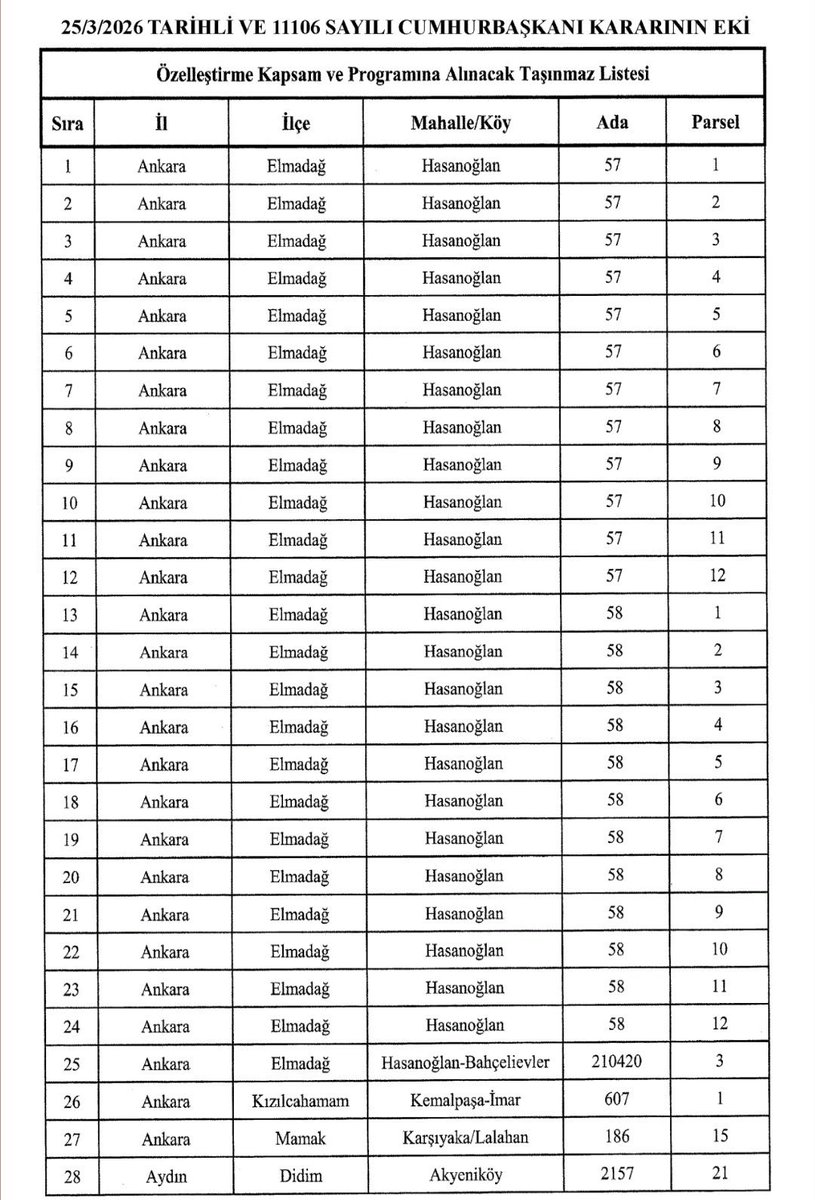
Türkiye just moved 54 state-owned properties into privatization via the Presidential Decree.
On the surface, it looks like a standard economic decision. But the key detail is where the money is going:
👉 The proceeds will be used for defense investments and military infrastructure.
That changes the picture completely.
This isn’t random. It’s a way of turning unused or underused assets into cash flow for long-term defense projects things like facilities, logistics, and strategic infrastructure.
If you look at the locations, they’re not scattered by accident either.
Ankara, Istanbul, Izmir, Kocaeli, Hatay… these are all relevant for industrial capacity and operational depth.
So what’s happening here is simple.
Instead of increasing the defense budget directly, Türkiye is funding expansion through asset restructuring.
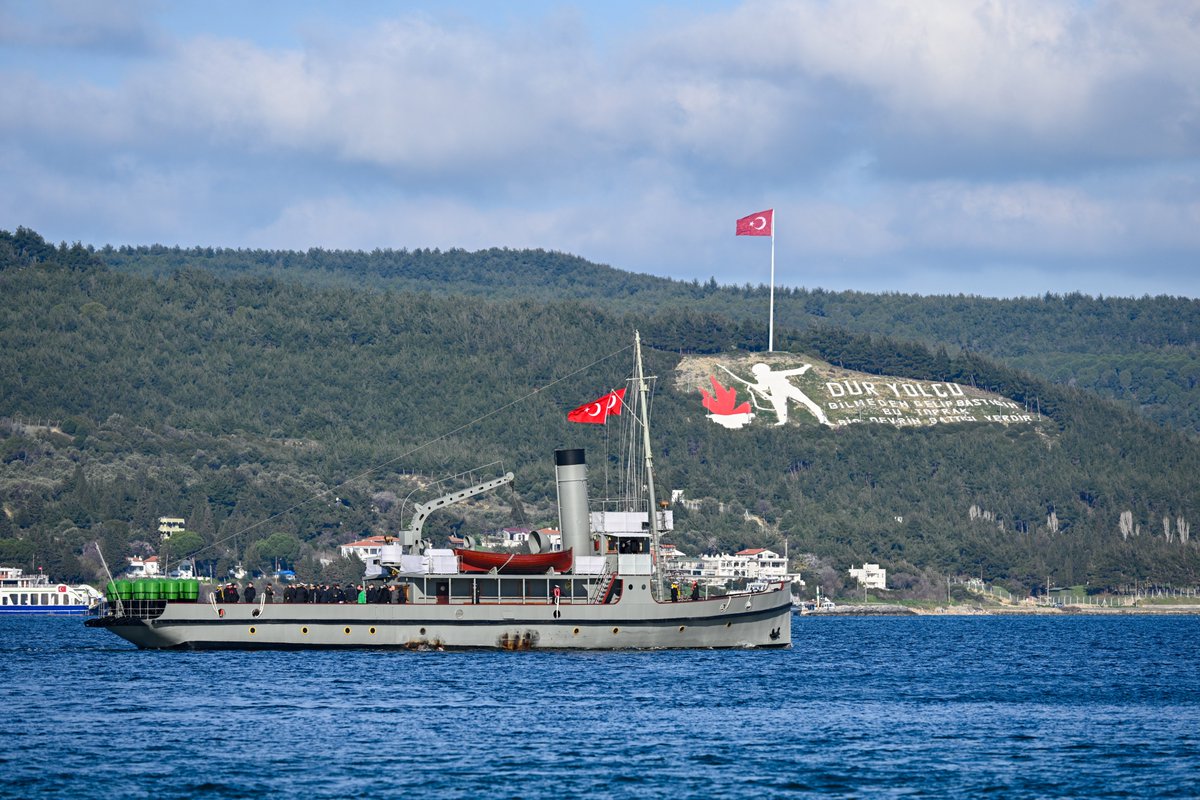
MSB paylaştı: Çanakkale’nin kaderini değiştiren kritik bir hamle
Shared by the MoND: A critical move that changed the fate of Çanakkale
8 Mart 1915’te Nusret mayın gemisinin Erenköy Koyu’na gizlice döşediği mayınlar, İtilaf donanmasının ilerleyişini durdurarak Çanakkale Boğazı’nın geçilemeyeceğini tüm dünyaya gösterdi.Bu stratejik hamle, savaşın seyrini değiştiren en kritik adımlardan biri olarak tarihe geçti.
📍 111 yıl sonra, Nusret’in o unutulmaz manevrası aynı bölgede düzenlenen deniz faaliyetinde yeniden canlandırıldı. Döşenen mayınların savaşın kaderine etkisi bir kez daha gözler önüne serildi.
🇹🇷 Başta Gazi Mustafa Kemal Atatürk olmak üzere Çanakkale destanımızın tüm kahramanlarını, şehit ve gazilerimizi rahmet, minnet ve saygıyla anıyoruz.
...
On March 8, 1915, the mine-laying ship Nusret secretly deployed mines in Erenköy Bay, halting the advance of the Allied fleet and demonstrating to the world that the Dardanelles could not be breached. This strategic move became one of the most decisive actions that shaped the course of the battle.
📍 111 years later, Nusret’s unforgettable maneuver was reenacted during a naval exercise in the same area, once again highlighting the impact of the mines on the outcome of the war.
🇹🇷 We commemorate with respect and gratitude all the heroes of the Çanakkale epic, including Gazi Mustafa Kemal Atatürk, as well as all martyrs and veterans.
#MSB #Çanakkale111Yaşında #Nusret #Strateji #Savunma
There are moments in war that pierce through the abstractions of strategy and power. The sinking of the Iranian warship Dena in the vast expanse of the Indian Ocean is one such moment. A ship far from its home waters, sailors far from their families, suddenly consigned to the deep, dark silence of the sea. Whatever the legality of war, the image is haunting: young men swallowed by an ocean that knows nothing of geopolitics.
The Indian Ocean has always been, for me, a space of memory, trade, music, and human exchange — not a graveyard of sailors lost to distant rivalries. That an Iranian vessel returning from naval exercises could meet such a fate so far from its shores feels like something from another age, almost like a War of the Worlds moment where the machinery of war intrudes upon the human world with brutal indifference.
One cannot help but think of the families waiting for news that will never come, of the letters unwritten, of lives ended beneath cold waters thousands of miles from home. Strategy may justify such acts. Law may permit them. But the ocean keeps its own counsel. It reminds us that every war, however rationalised, leaves behind human sorrow in its wake.
The question lingers uneasily: for what purpose were these lives lost in the depths of a faraway sea?
#IndianOcean #WarAndHumanity #RememberTheSailors
Perhaps what unsettles me most is the sense of disbelief. For many of us, the United States was a country we admired deeply—its institutions, its culture, its ideals. To see such callousness now, such indifference to the human cost of war, is profoundly troubling. Power exercised without reflection risks becoming something colder, something stripped of the moral restraint that once gave it legitimacy.
“ I believe oil and gas prices will continue rising… “
Your faithful Texan friend, would like to know where you are basing this…🙃
OK me, enough entertainment for today…
To my investor friends
I believe oil and gas prices will continue rising, with higher fuel and freight costs putting pressure on inflation and economic growth.
“Will the situation improve in the coming weeks?”
No. Industries across the region are largely shut down, and virtually all foreign workers operating in Gulf countries have already been evacuated. The trend points to escalating bombings, and once Iran's economically critical activities are fully disrupted, I expect them to proceed with mining the Strait of Hormuz, which means weeks with zero maritime traffic.
“How long will the war last?”
A very long time. The Russians have already expended about 200,000 tons of missiles, bombs, and drones in Ukraine over four years without ending the war.
The US-Israel coalition is dropping an average of 1,000 tons per day on Iran, and ramping that up won't win the war, based on the Russian experience in Ukraine, plus lessons from Afghanistan and Vietnam.
It feels like the US and Israel are fighting a different, extremely expensive tactical war with limited results, while the Iranians hold the Strait in their hands.
I foresee continuous political and economic wear on the U.S. government, which has created a situation where it can't simply quit the war, not just due to the humiliation of defeat, but because Iran now has even stronger motives than ever to complete its nuclear bomb.
After five days of war, Iran still retains virtually all its capabilities, some degraded, but all operational.
The war will be long, with no short-term path to diplomacy.
“But Iran could run out of launchers and missiles”
Iran has been producing mobile launchers for 35-40 years and storing them. They've also been producing missiles capable of reaching Israel for over 20 years, stockpiled in underground bases.
In videos, I've seen no more than 30-40 launchers destroyed, so hundreds likely remain.
What the U.S. can do is keep dropping bombs, while the financial markets become a bigger enemy than Iran itself.
That's how I see it.
Most Turks have stopped trying to make sense of make America is doing. Generally countries act inline with their interests which provide a degree of predictability and rationale. But it seems that the US has abandoned its interests and common sense. So Türkiye needs to do what any good friend does when their ally is romping around in a drunken stupor. Ensure they do minimal damage to themselves and the region, let them sleep it off and clean up the mess they’ve left in their aftermath.
In all seriousness if we actually killed Khamenei in his own garden at his home in Tehran, after days of flashing red warning signs of imminent attack, he probably figured that he'd be more useful as a martyr than as a leader going forward. Guy was/is 86 years old.
I am a diplomatic aide in the Sultanate of Oman's Ministry of Foreign Affairs.
My job is logistics. When two countries that cannot speak to each other need to speak to each other, I book the rooms. I prepare the briefing materials. I make sure the water glasses are the right distance apart. You would be surprised how much of diplomacy is water glasses. Too close and it feels informal. Too far and it feels like a tribunal. I have a chart.
We had a very good month.
Since January, Oman has been mediating indirect talks between the United States and Iran on Iran's nuclear program. The talks were held in Muscat and in Geneva. The Americans would sit in one room. The Iranians would sit in another room. I would walk between them. My Fitbit says I averaged fourteen thousand steps on negotiation days. The hallway between the two rooms at the Royal Opera House conference center is forty-seven meters. I walked it two hundred and twelve times in February. This is good for my cardiovascular health. It was less good for my knees. Both are in the service of peace.
By mid-February, we had something.
Iran agreed to zero stockpiling of enriched uranium. Not reduced stockpiling. Zero. They agreed to down-blend existing stockpiles to the lowest possible level. They agreed to convert them into irreversible fuel. They agreed to full IAEA verification with potential US inspector access. They agreed, in the Foreign Minister's phrase, to "never, ever" possess nuclear material for a bomb. I have worked in diplomacy for seven years. I have never seen a country agree to this many things this quickly. I made a spreadsheet of the concessions. It had fourteen rows. I color-coded it. Green for confirmed. Yellow for pending. By February 21 the spreadsheet was entirely green. I printed it. It is on my desk in Muscat. It is still green.
That phrase took eleven days. "Never, ever." The Iranians initially offered "not seek to." The Americans wanted "will not under any circumstances." We landed on "never, ever" at 2:14 AM on a Tuesday in Muscat. I typed the final version myself. I used Times New Roman because Geneva prefers it. The document was fourteen pages. I was proud of every comma.
Here is what they said, in the order they said it.
February 24: "We have a once-in-a-generation opportunity." — The Foreign Minister, private briefing to Gulf Cooperation Council ambassadors. I prepared the slide deck. Slide 14 was the implementation timeline. Slide 15 was the signing ceremony logistics. I had reserved the Palais des Nations in Geneva, Room XX. It seats four hundred. We discussed pen brands for the signing. The Iranians preferred Montblanc. The Americans had no preference. I ordered twelve Montblanc Meisterstucks at six hundred and thirty dollars each. They arrive on Tuesday.
February 27, 8:30 AM EST: "The deal is within our reach." — The Foreign Minister, CBS Face the Nation. He sat across from Margaret Brennan. He said broad political terms could be agreed "tomorrow" with ninety days for technical implementation in Vienna. He said, and I wrote this line for the briefing card he carried in his breast pocket: "If we just allow diplomacy the space it needs." He praised the American envoys by name. Steve Witkoff. Jared Kushner. He said both had been constructive.
I watched from the Four Seasons Georgetown. The minibar had cashews. I ate the cashews. They were nineteen dollars. The most expensive cashew I have ever eaten. But it was a good morning and we were within our reach.
February 27, 2:00 PM EST: Meeting with Vice President Vance, Washington. The Foreign Minister presented our progress. Zero stockpiling. Full verification. Irreversible conversion. "Never, ever." The Vice President used the word "encouraging." His aide took notes on an iPad. The aide did not make eye contact for the last nine minutes of the meeting. I noticed this. Noticing things is the only part of my job that is not water glasses.
February 27, 4:00 PM EST: "Not happy with the pace." — President Trump, to reporters.
Not happy with the pace.
We had achieved zero stockpiling. Full IAEA verification. Irreversible fuel conversion. Inspector access. And the phrase "never, ever," which took eleven days and cost me two hundred and twelve trips down a forty-seven-meter hallway.
Every American president since Carter has failed to get Iran to agree to this. Forty-five years.
Not happy with the pace.
February 27, 9:47 PM EST: The Foreign Minister's flight departs Dulles for Muscat. I am in the seat behind him. He is reviewing Slide 14 on his laptop. The implementation timeline. Vienna technical sessions. The signing ceremony. The pens.
I fall asleep over the Atlantic. I dream about water glasses.
February 28, 6:00 AM GST: I wake up to push notifications.
February 28: "The United States has begun major combat operations in Iran." — President Trump.
Operation Epic Fury. Coordinated airstrikes. The United States and Israel. Tehran. Isfahan. Qom. Karaj. Kermanshah. Nuclear facilities. IRGC bases. Sites near the Supreme Leader's office. Israel called their half Operation Roaring Lion. Someone in both governments spent time choosing these names. Epic Fury. Roaring Lion. I spent eleven days on "never, ever." They spent it on branding. The President said Iran had "rejected American calls to halt its nuclear weapons production."
Rejected.
Iran had agreed to zero stockpiling. Iran had agreed to full verification. Iran had agreed to "never, ever." Iran had agreed to everything in a fourteen-page document that I typed in Times New Roman.
The President said they rejected it.
I do not know which document the President was reading. I know which one I typed.
February 28, 18:45 UTC: Iran internet connectivity: four percent. — NetBlocks, confirmed by Cloudflare. Ninety-six percent of a country went dark. You cannot negotiate with a country at four percent connectivity. You cannot negotiate with a country that is being struck. You cannot negotiate. This is not a political opinion. This is a logistics assessment.
February 28: The governor of Minab reported forty girls killed at an elementary school.
I do not have logistics for that. There is no slide for that. The water glass chart does not cover that.
February 28: Lockheed Martin: up. Northrop Grumman: up. RTX: up. Dow futures: down six hundred and twenty-two points. Gold: five thousand two hundred and ninety-six dollars. An analyst at AInvest published a note titled "Iran Strikes: Tactical Plays." The note recommended positions in oil, defense stocks, and gold.
The most expensive cashew I have ever eaten was nineteen dollars. The most expensive pen I have ever ordered was six hundred and thirty dollars. The math suggests I have been working in the wrong industry. Defense stocks do not require water glasses. Defense stocks do not require eleven days. Defense stocks require one morning.
February 28: Israel closed its airspace and its schools. Iran launched retaliatory missiles toward US bases in the Gulf. The Supreme Leader promised a "crushing response." Israel's defense minister declared a permanent state of emergency. Everyone is using words I recognize in an order I do not. I recognize "permanent." I recognize "emergency." I do not recognize them next to each other. In diplomacy, nothing is permanent and everything is an emergency. In war it is the reverse.
February 28: The Foreign Minister has not made a public statement.
The briefing card is still in his breast pocket. It still says "within our reach."
I dream about terrorist Russian state getting bombed like Iran today.
Every major Russian military targed eliminated.
That would stop the Russian invasion to Europe.
Glory to Ukraine!
Some thoughts on the current situation with Iran:
1. Deployment prior to this week was, as I pointed out at the time, consistent with a show of force to underline a negotiating position rather than a serious operation. Although that has begun to change, US aerial forces in the Middle East remain inferior in strength to the Israeli Air Force that quickly ran out of steam in combat last year. Any air campaign would not be a step-change from that of the Twelve Days' War.
2. The departure of huge numbers of tankers to the Middle East, without concomitant massive fighter deployments, indicates that the USAF intends to base its strike aircraft out of the easy range of Iranian short-range missiles on the other side of the Middle East or even farther afield in Cyprus, Diego Garcia, etc. This will dramatically curtail sortie generation compared to aircraft flying out of Al Udied in Qatar and other bases on the Gulf - established for exactly this confrontation but now perfectly useless given the number of short-range missiles the Iranians have pointed at them.
3. USN forces in the region have a realistic total throw-weight of 300 to 400 badly out of date Tomahawk missiles, which is grossly inadequate for a sustained strike campaign against Iran. Recall that the USN fired almost eighty in a single strike against Syrian WMD targets a decade ago and most were shot down. The USN task force realistically has two or three missile salvos against defended point targets before its magazines run dry.
4. Iranian offensive and defensive capabilities are formidable and have been overtly bolstered by the Chinese in recent weeks. Any attacks on Iranian soil will need to be - as in the Twelve Days' War - conducted from a limited pool of standoff munitions. The Israelis, who are expected to join any strikes, certainly have not replenished their own stockpiles. This dramatically curtails the combat endurance of the coalition forces.
5. The Chinese and Russians are feeding intelligence to Iran. This likely allowed them to stymie a US bomber strike last month prior to latest force buildup. The Iranians can be expected to have an excellent picture of US and Israeli moves at the tactical level.
6. In the aftermath of the Twelve Days' War and the insurrection in Iran last month, Mossad's attack network is likely a spent force and cannot be expected to contribute meaningfully to the war effort.
7. Iran retains significant proxy capability across the region. Iranian proxies in Iraq and Yemen are practically untouched. Hezbollah in Lebanon sat out the Twelve Days' War but can be expected to join in a regional Götterdämmerung.
8. No significant US ground forces have deployed, and the Iranians killed or arrested all of their compradors two weeks ago. Ergo, there is no route to actual regime change in Iran. There's no Delcy Rodriguez and Vladimir Padrino interested in a coup d'etat by proxy and able to elaborately set conditions for it to happen.
9. US facilities in the Gulf and the VERY vulnerable US embassy in Iraq (and the somewhat less vulnerable US embassy in Beirut) remain un-evacuated at this time. Evacuation of those facilities is a short-notice indicator of war - as we saw last month when bombers were likely airborne before being called off.
10. The TACO trade is real. Trump talks a big game until the markets start to believe him, whereupon he reliably beats a hasty retreat and pivots to a new distraction from the Epstein Files. The moral hazard here is that Trump has done this so many times that by this point global markets don't actually take him seriously and so they're reacting late and weak to what are objectively very concerning developments. With that said oil prices are - finally - starting to rise.
US deployments to the Middle East thus far are to give Trump a credible military option if he decides to use force against Iran - prior deployments were non-credible and the Iranians would have taken them as such - but talk that war is necessarily imminent or that this force is actually adequate to the absolutely colossal task at hand (Iran is a country of 90 million and a geographic fortress) is irresponsible. As ever, use strict informational hygiene and consider source bias and attempts to box in US decision-making through planted reporting from controlled outlets and journalists. Netanyahu desperately wants a war (fought by the US on his behalf, of course) but Trump probably wants a deal - and it's noteworthy that Iranian reports suggest one may be developing.
This is not historical analysis, it's narrative laundering.
You erase Turkish/Muslim deaths, ignore population exchanges signed by Greece itself, inflate numbers without sources, and then brand an entire country "illegitimate" to feel morally superior.
If demographic change = genocide, then half of modern Europe collapses under its own history.
From the Balkans to Iberia, from Ireland to Eastern Europe, borders shifted, populations moved, wars ended empires, and treaties codified new realities. Calling only one case "illegitimate" isn’t morality, it's narrative selection.
For example: 12–14 million Germans were expelled from Eastern Europe after WWII.
They have no "right of return."
No marches. No slogans. No moral outrage.
Because when population transfer is done by victors, it's called "order." Not genocide.
Selective outrage is not justice.
It's ideology pretending to be memory.
Bayraktar KIZILELMA Hits Target with Air-to-Air Missile!
🎯 Türkiye’s indigenous unmanned fighter jet struck a target aircraft, marked by ASELSAN’s MURAD AESA radar, with complete accuracy using TUBITAK SAGE’s GÖKDOĞAN air-to-air missile during a test off the coast of Sinop.