Structure isn’t a cage. It’s a cache for your best decisions, so you can spend your energy living freely instead of renegotiating your life from zero every morning.
India's peak power demand hit 260 GW yesterday. New all-time record. During a heatwave with 47°C temperatures across North India.
The grid held. No blackouts. That sentence alone is an engineering achievement most people will not appreciate.
Five years ago India had chronic power deficits. Load shedding was normal. In 2023, peak demand hit 243 GW and several states struggled. In April 2026, the grid delivered 260 GW without a single major failure.
What changed: 26.5 GW of new capacity added in FY26 — largest annual addition in a decade. Solar alone contributed 18 GW. New HVDC transmission corridors connecting surplus regions to deficit ones. Battery storage deployments cushioning peak load.
But the margin is razor thin. India's grid is designed for about 270 GW. We just touched 260 GW. That is 96% utilisation during peak hours. One more heatwave spike or an unexpected plant outage and the buffer disappears.
This is why every power stock hit 52-week highs. The market sees what the headlines miss — India needs $150 billion in power infrastructure investment over five years just to keep up. Data centres, EVs, semiconductor fabs, industrial expansion — all need reliable 24/7 power. The grid is the bottleneck holding everything else together.
@PeterDiamandis India also added ~45GW of renewables this year. But the real unlock will be Round-The-Clock renewable power, a trillion-dollar opportunity.
With 85% oil/coal and 50% natural gas imported, the current war proves that our energy transition isn’t optional.
6 YEARS: FROM COVID TO IRAN
TIME FOR SOME PAINFUL TRUTHS 🚨
Six turbulent years from Covid to the Ladakh standoff to Ukraine war to Trump’s tariff offensive to the current Iran war have exposed a hard truth. India remains dangerously dependent on the world for things a serious power should control at home.
Energy first, since that’s on everyone’s mind right now. India imports about 85% of its crude oil and roughly 50% of its natural gas. We depend heavily on overseas supply chains for critical minerals like lithium, cobalt and nickel that will power the next generation of batteries and energy systems. Any disruption anywhere from the Strait of Hormuz to sanctions on major producers immediately ripples through LPG prices, electricity costs and inflation. The current LPG anxiety during the Iran war is just the latest reminder of how exposed we are.
Defence is worse. Despite decades of rhetoric about indigenisation, India still imports roughly 45 to 50% of its major weapons systems, making it one of the world’s largest arms importers, if not the largest. During the Ladakh standoff with China (which is still on) the country had to rush through emergency purchases of munitions, drones, artillery shells and winter gear because either we don’t make those items or domestic capacity could not surge quickly enough. A country facing two nuclear adversaries should never have to scramble for weapons in the middle of a military standoff.
Pharmaceuticals reveal another uncomfortable truth. India is known as the pharmacy of the world, yet around 70% of our active pharmaceutical ingredients come from outside, including China. During Covid this vulnerability became obvious as India scrambled for oxygen, PPE kits, ventilators and key medical inputs.
Technology dependence is the most alarming of all. More than 90% of advanced semiconductors are imported, most high end AI chips and servers are foreign made, and critical digital hardware depends almost entirely on global supply chains. In an era where AI will define both economic power and military capability, this is a profound strategic vulnerability.
Add fertiliser precursors, rare earths, electronics components, solar modules and specialised machine tools and the list becomes even longer. Each time the world experiences a shock (Ukraine, Iran, Azerbaijan, Covid) whether it is a pandemic, sanctions on Russia, a war in West Asia or rising great power tensions India is forced into code red emergency management mode.
The uncomfortable reality is that true strategic autonomy requires historically painful decisions. Building domestic capacity in energy, weapons, pharmaceuticals, semiconductors and AI will demand huge investment, long term industrial policy, and years of political risk. It may mean accepting higher costs and slower returns in the short term in order to build resilience for the long term.
But India’s election to election political cycle rewards short term thinking. No government wants to take decisions that may, beyond a point, take a decade to pay off. The decisions these crises compel from a country like India will mean a total dismantlement of our politics as we know it today. It will mean a generation of turning the country on its head.
Yet the alternative is worse. As things stand India remains structurally vulnerable. A country that has to scramble every time the world shakes cannot claim true strategic autonomy.
From COVID to Iran, the last six years have made that painfully clear.
‘The Thinking Game’ documentary has just passed 200M views on YouTube in just 4 weeks! 🤯Perfect holiday viewing if you’re interested in a behind-the-scenes look at how an AGI lab works, or what goes into making a Nobel Prize winning project like AlphaFold happen.🧬🚀
Two million hectares of Indian farmland could generate nearly $200 million in carbon-credit value each year, capturing 10–15% of the global market. So why are most of the regen agri carbon projects still stuck at pilot scale?
https://t.co/sIqRTwb83b
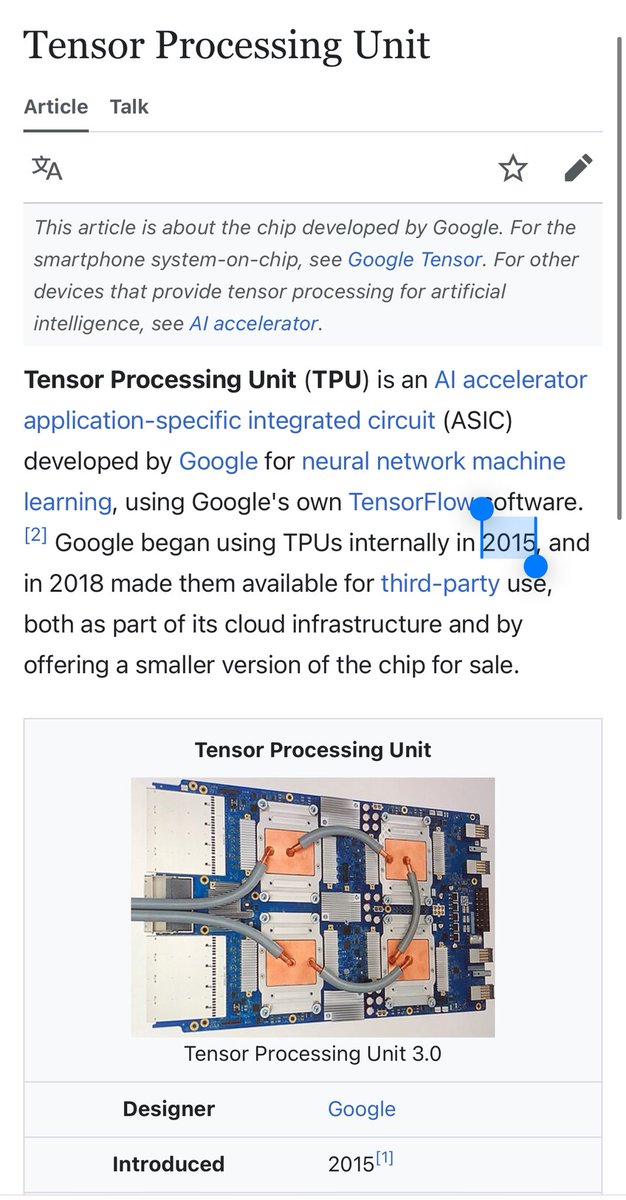
google simply does not get enough credit for the TPU
the amount of conviction & foresight it took to fund and build hardware specifically for for AI… in 2015…
ten years later, literally everyone else is dependent on nvidia. except big G
really a brilliant strategic move
It's time to mine.
Critical minerals underpin hundreds of billions of dollars in downstream industrial output.
For the U.S., this creates systemic vulnerabilities across entire sectors.
Without secure access to these foundational inputs, the U.S. cannot fully execute its industrial strategy or safeguard its national interests.
More from American Dynamism's @espricewright and @rmcentush: https://t.co/VhiwifXnKF
How do you compare with China?
Raiyaan asks, Sunil answers—with bold confidence in Matel's tech.
Watch this 🔥 clip from our latest podcast!
#EVs#ClimateTech#IndiaVsChina#TransitionTalks
70% of Indian industrial emissions are in scope 3 category, needs accurately measuring models well as expertise to reduce those emissions. Fitsol fits in perfectly.