I am deeply honored to receive the Croucher Tak Wah Mak Innovation Award. My heartfelt thanks to the Croucher Foundation for the important recognition and generous support!
👏🏻👏🏻Congratulations to Professor Gary Choi Pui-tung, Assistant Professor in the Department of Mathematics at CUHK, who has been honoured with the Croucher Tak Wah Mak Innovation #Award 2025 by the Croucher Foundation in recognition of his outstanding contributions to scientific research. The award provides HK$5 million over five years to support Professor Choi’s pioneering research, fostering innovation in Hong Kong’s scientific community.
With the support of the #CroucherFoundation, Professor Choi hopes that his research would arouse public interest in mathematics and attract more young people in Hong Kong to conduct interdisciplinary mathematical research.
Details: https://t.co/slyfYVivY8
@CUHKScience
#cuhk #thechineseuniversityofhongkong #CUHKResearch #CUHKScholars #CUHKMathematics
Our article on the computational design of art-inspired metamaterials has been published in @NatComputSci. We discussed the recent advances and future directions in computational approaches that help to build complex metamaterial structures based on #origami and #kirigami.
Many computational approaches have been developed to facilitate the systematic design of art-inspired metamaterials. @garyptchoi discusses the recent advances and future directions in this field. https://t.co/cSN7113cvp
➡️https://t.co/O24y2aLeLI
🧵(5/11)
Our work on additive #kirigami is out in @NatComputSci! We developed an efficient framework for kirigami design using simple linear algebra techniques and two fabrication strategies to realize our designs physically. See https://t.co/DcNaCE5WA8
@kaitpb@Mahadevan_Lab
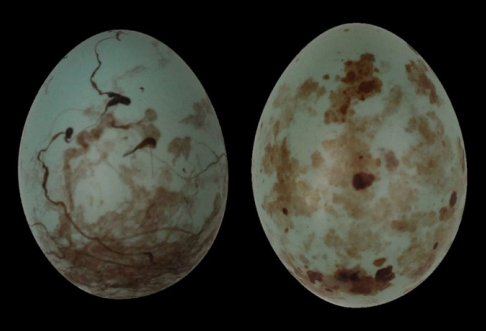
Delighted to see our study on quantifying and explaining imperfect mimicry in a brood parasite-host system out in @RSocPublishing#BiologyLetters https://t.co/hNIoxhPa6y. Parasitic cuckoo finch eggs (R) lack the scribbles of host (tawny-flanked prinia) eggs (L). 1/3
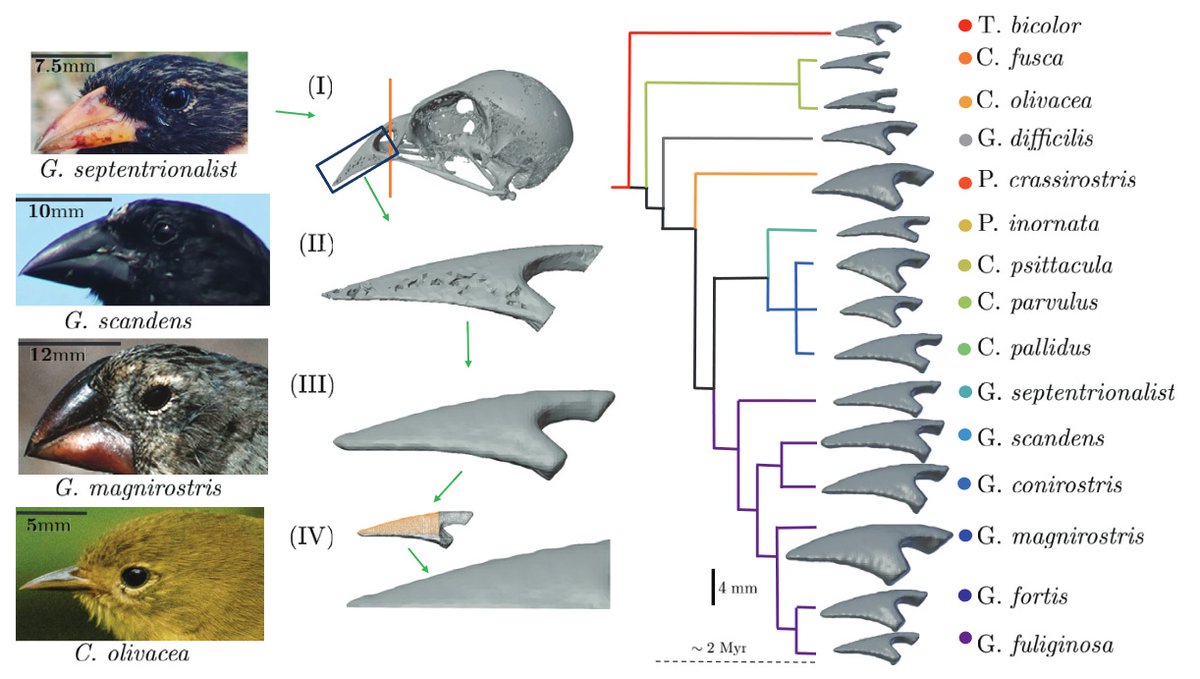
How did Darwin’s finches evolve their distinct beak shapes? New research from @Mahadevan_Lab combines evolutionary biology and applied math to develop a unified understanding of the growth, form and function of Darwin’s finch beaks
https://t.co/z5TNi8CACB
Darwin’s finches are a classic example of adaptive radiation with highly diversified beak shapes. How do geometry and dynamics connect form, function and evolution of the finch beaks?
See our new paper in @PNASNews: https://t.co/P4kg7Nr8Wg
#Galápagos#morphology#birds#evodevo
How are pavement patterns related to #kirigami?
It is known that there are exactly 17 types of periodic tilings (the wallpaper groups). In our work in #ProcA@RSocPublishing, we show that all of them can be used for creating deployable structures. See: https://t.co/ReNhXhbvUI
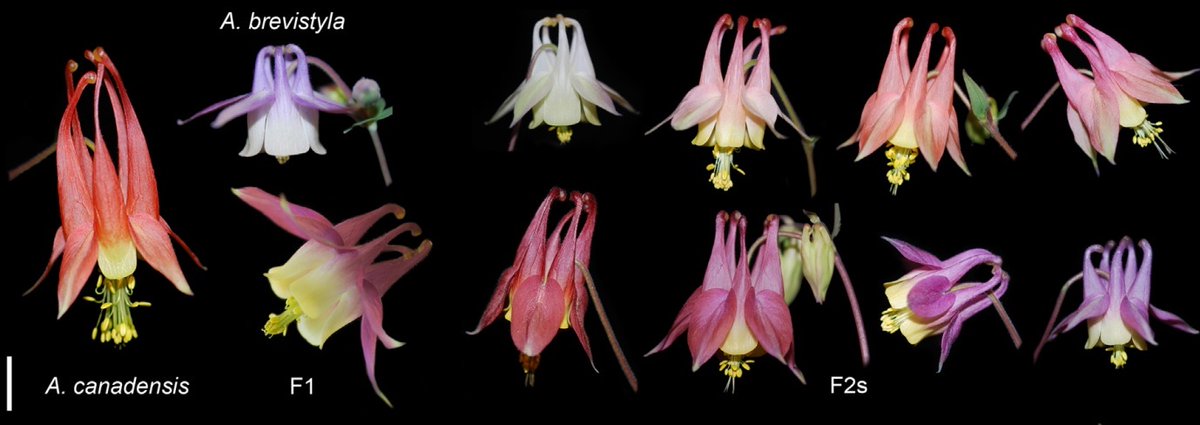
How to identify the genes that control the size, shape, color, and nectar chemistry of flowers?
Check out our joint work with @science_irl and colleagues at @HarvardOEB and @ucsantabarbara in @journal_evo: https://t.co/42mEGBAkwL
How to estimate asteroid and comet shapes for space exploration missions using computational geometry?
See our collaborative work with @NASAJPL in IEEE Robotics and Automation Letters: https://t.co/AMCD3L6lIa