I beg to differ: often it's an MD's patient who tries the diet and experiences symptom remission. (Your "feels better" doesn't do this experience justice, which I suspect you know.)
Although then, yes, the MD is likely to try the diet him/herself, and then cautiously suggest to other patients before becoming what you dismissively call a "nutrition guru."
This is a natural learning experience. Isn't that how you would want thoughtful physicians to approach this kind of anomalous evidence?
So 2 more questions:
1. What's your issue with it?
2. And what are the alternatives?
Here are 2 ways to think of ketogenic and carnivore diets:
1. Potent therapies for a range of chronic diseases—from obesity and diabetes to schizophrenia and bi-polar depressive disorder. As @Hubermanlab says in his new book Protocols, the benefits can be “remarkable.”
2. Fascinating challenges to the conventional scientific thinking on the diet-disease relationship.
Huberman and the authors of a recent Science paper on "essential" sugars in human evolution will accept the first, but actively resist even considering the second.
The obvious question: where’s their curiosity?
Are they so trapped in conventional thinking that they can’t even entertain the notion that there might be something new to learn here?
Sugars in Evolution and Huberman’s Protocols https://t.co/LS8p2d05jG
From @doctortro's clinical practice, use of a therapeutic ketogenic diet resulted in a dramatic improvement in CVD risk:
Using the AHA’s own PREVENT equations, estimated 10-year risk fell:
29% for ASCVD
28% for total cardiovascular disease
42% for heart failure
Median weight loss was 12.2%
Systolic blood pressure fell 10.7 mm
HgHbA1c fell 0.48 percentage points
Triglycerides fell 34 mg/dL.
Do you eat low carb and worry about your heart? The ADA recognizes lower-carb eating for people with diabetes or prediabetes. New federal guidelines say it may help some people with chronic disease. Yet the AHA puts keto in its lowest tier for diet-guideline alignment. We used its PREVENT calculator: in our paired cohort, calculated 10-year ASCVD risk fell 29% after one year. Watch what we found. Read the article: https://t.co/QRDqXQoWws
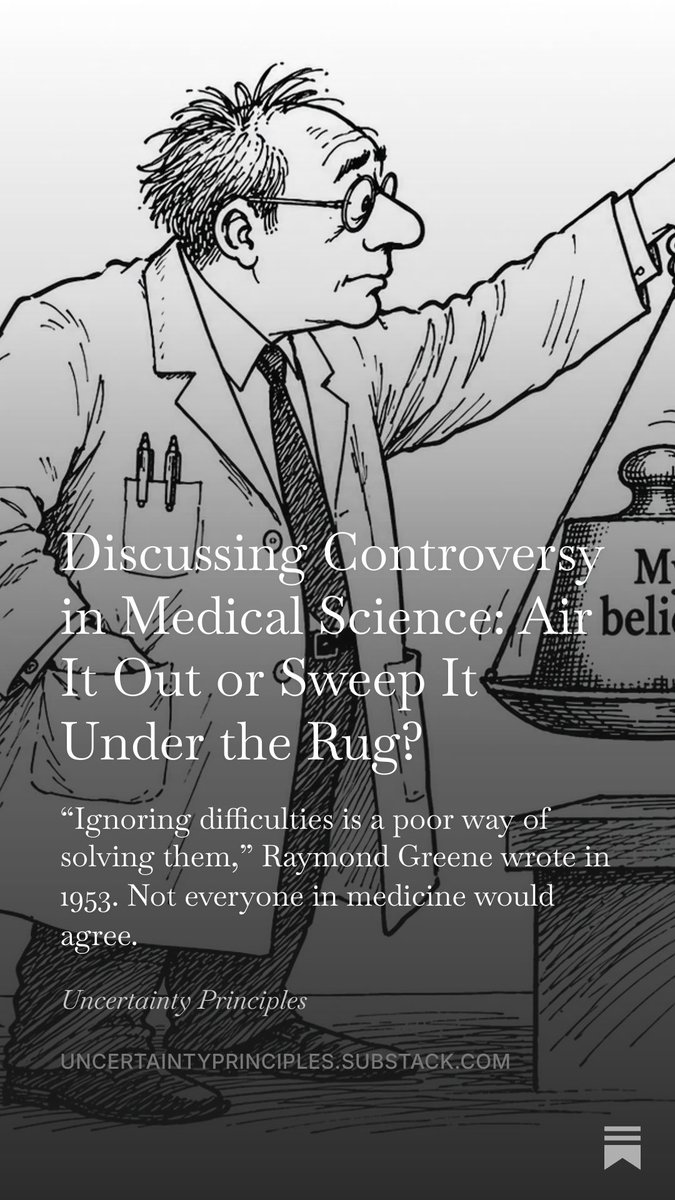
Once upon a time, not all that long ago, medical authorities thought that the best way to resolve scientific controversies was to air them out, discuss the evidence on both sides, what was known and what was not, and so establish what research was needed to settle the issue.
Well, those days may be gone. Now researchers, influential authorities (and, of course, our friends the health reporters) have decided that given the opportunity to review a vitally important subject, their job is to advocate for what they believe, ignore the counterarguments and inconvenient evidence and hope for the best.
In my latest Substack, I discuss three very recent examples of this advocacy phenomenon, and compare it to how scientists used to discuss controversial science, back when they were more interested in getting the right answer than establishing their authority.

Discussing Controversy in Medical Science: Air It Out or Sweep It Under the Rug? https://t.co/vPRp74W7ly
@woundedhealer I think of the quote from Twain's contemporary, Artemus Ward: “The researches of so many eminent scientific men have thrown so much darkness upon the subject that if they continue their researches we shall soon know nothing.”
Here’s a question from my latest Substack post. It's about obesity and obesity medicine and it should be rhetorical. Regrettably, it's not:
Q. If you were going to study a disorder of excess fat accumulation (i.e., too much fat in fat cells) and the action of the drugs that so spectacularly treat it, wouldn’t you be at least vaguely interested in the physiological mechanisms that determine how much fat those fat cells will store?
1. Yes?
2. No?
Common sense (and the history of obesity science) might suggest the answer has to be yes, but the expert authors of a recent Endocrine Society Scientific Statement on “Obesity science, research gaps, and opportunities in the new era of obesity medicines,” would claim otherwise.
They put the brain at the center of obesity science and GLP-1 action, then omit (ignore?) a century of science suggesting that since it's the fat cells that get fatter in obesity, the direct neuroendocrine regulation of fat storage in those cells must be relevant.
These expert authors include @kevinhallPhD and @danielJdrucker and a half dozen others, and we can assume they know more about obesity than anyone.
They’re the experts.
But if so, why do they ignore the fat cell itself when discussing why we accumulate excess fat in fat cells, and why GLP-1 drugs do such a remarkable job of reversing that process?
What are they missing with their conviction that obesity is an "appetitive behavior" disorder?
The Black Hole at the Galactic Core of Obesity and GLP-1 Drug Science https://t.co/MvNUYsgiYE
@DrJackKruse Reminds me in far too many ways of my years writing about the scientific fiasco that was cold fusion.
Please tell me you're joking and I'm too easily triggered to get the obvious.
The Endocrine Society has a new "scientific statement" on the gaps (or rather black holes) in obesity science.
@garytaubes shines cosmic light on the matter.
If you don't subscribe to his Substack, this essay alone is worth the price.
I get you don't want to pay. But I'm writing these articles so folks like you might actually learn something.
If you email me via my website, I'll comp you a free subscription.
Now, as @BradChilmeran says, the point is that adipose tissue is innervated by the CNS, which stimulates lipolysis. That's been known for, well, a century.
The energy balance focus (yours?) assumes that if the drugs work in the CNS, they must influence appetitive behavior and EE.
If obesity researchers actually read the literature on adipose tissue metabolism and storage, though, they would have a very viable alternative hypothesis.
GLP-1 -> CNS -> lipolysis -> -ΔE
rather than
GLP-1 -> CNS -> -Ein, +Eout -> -ΔE
Thank you, Leo. Nicely put.
I am working on a Substack post now (going slowly) on the CNS involvement in stimulating lipolysis, reviewed here: https://t.co/L8KOgjPsAb
This is my guess about what GLP-1 drugs target in the brain, but obesity researchers, as @sguyenet does, assume that if the CNS is involved in an obesity-related activity, it must be regulating appetitive behaviors.
@Mangan150 Gasoline rationing ended in May 1950.
So that's almost 3 years before the sweets rationing ended and more than 3 years before sugar rationing ended.
https://t.co/H8yjqdX4m2.
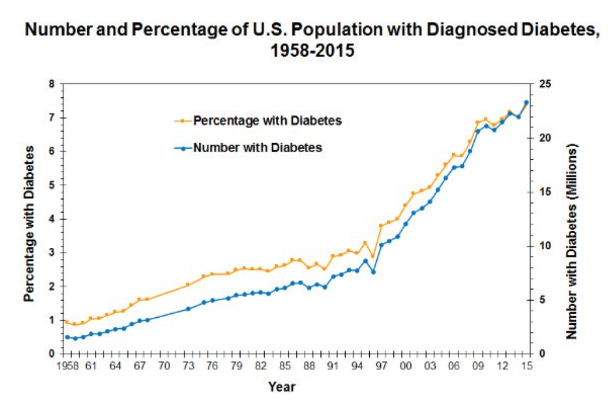
In the past two years, 14 studies have exploited the same remarkable natural experiment: the end of sugar rationing in Britain in 1953.
All have come to essentially the same conclusion: greater exposure to sugar early in life is associated with more chronic disease decades later—diabetes, heart disease, cancer, depression, dementia, and more.
These studies aren’t appearing in obscure journals. They’re being published in Science, the BMJ, PNAS, the American Journal of Clinical Nutrition, Nature Communications, and elsewhere.
Meanwhile, @tamarhaspel of the @washingtonpost confidently tells us in a recent column: “The real problem with sugar is simply that we like it.”
So why the confidence? And what do we do with this remarkable body of new evidence?
Ultimately, the question is one we’ve been arguing about for decades: Should we treat sugar as a chronic toxin—or as a benign indulgence that becomes harmful only because it provides excess calories?
Is Sugar Toxic? Can It Cause Cancer? CHD? Frailty? Dementia?
Read the post on Uncertainty Principles
https://t.co/AtduqMgpPK
@zerothworld Yes, everyone agrees lots of sugar is bad.
But does that mean we should eat it in moderation (whatever that means)?
And is the answer the same whether you're lean and healthy or you're not?
@OldmateW@JonCrowellOrg The carbs in grains and starches are glucose. What we used to call table sugar is sucrose, half glucose, half fructose. They're metabolized differently and in different organs.
Hi David, the point is that a calorie deficit--i.e., negative energy balance--IS weight loss.
If body mass goes up, energy balance is positive. If body mass goes down, energy balance is negative.
Asking whether a calorie deficit is required for overall weight loss is like asking whether a money deficit (earning less than you spend) is required for overall money loss.
The operative question here is whether fat storage and metabolism (fatty acid oxidation) is regulated by how much we eat or the endocrine response to what we eat.
As for GLP-1s, read the paper. The question there is how do the drugs cause the calorie deficit (i.e., the negative energy balance, which is the weight loss). Do they do it by inhibiting appetite in the brain? Or do they do it, perhaps in the brain, by upregulating fatty acid mobilization and oxidation in the periphery, which would in turn feeds back to inhibit appetite.
These are both viable hypotheses.
Do GLP-1 drugs work by inhibiting appetite or by prioritizing fat oxidation over storage--changing metabolic fuel partitioning, in the lingo?
Most researchers (and X influencers) will insist it's the former, but they'll do so because they don't think deeply about the alternative.
Maybe the new paper by Friedman & Lund will help. 🤞
Did you see evidence that @ZKforTre read the paper?
I don't see it.
I also haven't seen evidence that he's read the review article (referenced in the paper) on the fuel partitioning hypothesis, which includes evidence from every major animal model of disease. https://t.co/XeG957p0Wv
If he had, he would be criticizing what's said in the papers, or presenting counter-arguments/evidence.
As for "measurable effects on food consumption in less than an hour" that doesn't rule out the peripheral CNS-driven effects. Why he (she? they? it?) thinks that would is again evidence that he hasn't read the papers.
Ahhh, you’re missing the point. You don’t know that the glp1 receptors are “appetite regulating” because you don’t know that the CNS also influences peripheral metabolism, which was first demonstrated—let me think here—170 years ago.
By reading the paper, I also meant do your homework.