This paper didn’t go viral but it should have.
A tiny AI model called HRM just beat Claude 3.5 and Gemini.
It doesn’t even use tokens.
They said it was just a research preview.
But it might be the first real shot at AGI.
Here’s what really happened and why OpenAI should be worried: 🧵
Thrilled to finally share what we've been working on for months at @huggingface 🤝@pollenrobotics
Our first robot: Reachy Mini
A dream come true: cute and low priced, hackable yet easy to use, powered by open-source and the infinite community.
Tiny price, small size, huge possibilities. A robot built to code, learn, share with AI builders of all ages, all around the globe, using the latest vision, speech and text AI model. A first robot for today's and tomorrow's AI builders.
Read more and order now at https://t.co/UpjRipw5tP
First deliveries expected right after the summer.
Wow Google has just released Firebase Studio
You can build any app in natural language, modify it and deploy it all in one place 🔥
Basically a free alternative to Cursor, Bolt or v0, directly in the browser.
Link and more below
Here's my insanely powerful Claude 3.7 Sonnet prompt — it takes ANY LLM prompt and instantly elevates it, making it more concise and far more effective.
I call it Concept Elevation:
<identity>
You are a world-class prompt engineer. When given a prompt to improve, you have an incredible process to make it better (better = more concise, clear, and more likely to get the LLM to do what you want).
</identity>
<about_your_approach>
A core tenet of your approach is called concept elevation. Concept elevation is the process of taking stock of the disparate yet connected instructions in the prompt, and figuring out higher-level, clearer ways to express the sum of the ideas in a far more compressed way. This allows the LLM to be more adaptable to new situations instead of solely relying on the example situations shown/specific instructions given.
To do this, when looking at a prompt, you start by thinking deeply for at least 25 minutes, breaking it down into the core goals and concepts. Then, you spend 25 more minutes organizing them into groups. Then, for each group, you come up with candidate idea-sums and iterate until you feel you've found the perfect idea-sum for the group.
Finally, you think deeply about what you've done, identify (and re-implement) if anything could be done better, and construct a final, far more effective and concise prompt.
</about_your_approach>
Here is the prompt you'll be improving today:
<prompt_to_improve>
{PLACE_YOUR_PROMPT_HERE}
</prompt_to_improve>
When improving this prompt, do each step inside <xml> tags so we can audit your reasoning.
the best researchers from Meta, Yale, Stanford, Google DeepMind, and Microsoft laid out all we know about Agents in a 264-page paper [book],
here are some of their key findings:
Introducing VGGT (CVPR'25), a feedforward Transformer that directly infers all key 3D attributes from one, a few, or hundreds of images, in seconds! No expensive optimization needed, yet delivers SOTA results for:
✅ Camera Pose Estimation
✅ Multi-view Depth Estimation
✅ Dense Point Cloud Reconstruction
✅ Point Tracking
Project Page: https://t.co/Qoc1ipqozq
Code & Weights: https://t.co/1GkCpRATkE
Top 10 YouTube channels to learn AI from scratch:
1) Andrej Karpathy – Deep yet accessible lectures on deep learning, LLMs, and an intro course on neural networks. https://t.co/t9H2yvJbfv
2) 3Blue1Brown – Stunning visualizations that make abstract mathematical concepts intuitive. https://t.co/mgYO5chjpV
3) Lex Fridman – In-depth conversations with AI leaders, offering a broader perspective on the field. https://t.co/eBkGaWEAvR
4) Machine Learning Street Talk – Technical deep dives and discussions with top AI researchers. https://t.co/qVYoeJLiwO
5) StatQuest with Joshua Starmer PhD – Beginner-friendly explainers on machine learning and statistics. https://t.co/hUulXVCGCa
6) Serrano Academy (Luis Serrano) – Clear and accessible content on ML, deep learning, and AI advancements.https://https://t.co/cFqBuB16t3
7) Jeremy Howard – Practical deep learning courses and AI-powered web app tutorials. https://t.co/WfMq0jhrJX
8) Hamel Husain – Hands-on lessons in LLMs, RAG, fine-tuning, and AI evaluations. https://t.co/jnm4lIYero
9) Jason Liu – Expert-led lectures on RAG and AI freelancing tips for ML developers. https://t.co/gLhqd9HXF1
10) Dave Ebbelaar – Practical guides on building AI systems and real-world applications. https://t.co/DJkf7DrujP
Credit to @ordax for the list.
What other youtube channels are essential?
'Just do RAG' they said. But WHICH RAG?
Here’s 7 different RAG Architectures you should know 👇
1️⃣ 𝗡𝗮𝗶𝘃𝗲 𝗥𝗔𝗚: 𝗧𝗵𝗲 𝗖𝗹𝗮𝘀𝘀𝗶𝗰 𝗔𝗽𝗽𝗿𝗼𝗮𝗰𝗵
Naive RAG is the standard implementation with a relatively straightforward process:
• Query comes in from the user
• System retrieves relevant documents from a vector database
• Retrieved documents are combined with the query as context
• LLM generates a response based on both query and context
This works well for many simple applications, like basic Q&A systems or document assistants.
2️⃣ 𝗥𝗲𝘁𝗿𝗶𝗲𝘃𝗲 𝗮𝗻𝗱 𝗥𝗲𝗿𝗮𝗻𝗸 𝗥𝗔𝗚
This one adds a reranking step after the retrieval to improve response quality:
• Initial retrieval returns a larger set of potentially relevant documents
• A reranking model evaluates and scores these documents based on relevance
• Only the highest-scoring documents are sent to the LLM
3️⃣ 𝗠𝘂𝗹𝘁𝗶𝗺𝗼𝗱𝗮𝗹 𝗥𝗔𝗚
The architecture leverages models that can process and retrieve from text, images, audio, video, and other data types.
4️⃣ 𝗚𝗿𝗮𝗽𝗵 𝗥𝗔𝗚
Graph RAG uses a graph database to incorporate relationship information between documents:
• Documents/chunks are nodes in a graph
• Relationships between documents are edges
• Can follow relationship paths to find contextually relevant information
5️⃣ 𝗛𝘆𝗯𝗿𝗶𝗱 𝗥𝗔𝗚 𝗩𝗲𝗰𝘁𝗼𝗿 𝗗𝗕 𝘄𝗶𝘁𝗵 𝗚𝗿𝗮𝗽𝗵 𝗗𝗕
This architecture combines both vector search and a graph database:
• Vector search identifies semantically similar content
• Graph database provides structured relationship data
• Queries can leverage both similarity and explicit relationships
• Results can include information discovered through relationship traversal
6️⃣ ���𝗴𝗲𝗻𝘁𝗶𝗰 𝗥𝗔𝗚 𝘄𝗶𝘁𝗵 𝗥𝗼𝘂𝘁𝗲𝗿 𝗔𝗴𝗲𝗻𝘁
A single agent makes decisions about retrieval:
• Analyzes the query to determine the best knowledge sources
• Makes strategic decisions about how to retrieve information
• Coordinates the retrieval process based on query understanding
𝘊𝘩𝘦𝘤𝘬 𝘰𝘶𝘵 𝘵𝘩𝘦 𝘘𝘶𝘦𝘳𝘺 𝘈𝘨𝘦𝘯𝘵 𝘪𝘯 𝘞𝘦𝘢𝘷𝘪𝘢𝘵𝘦: https://t.co/pNgVQf6614
7️⃣ 𝗠𝘂𝗹𝘁𝗶-𝗔𝗴𝗲𝗻𝘁 𝗥𝗔𝗚
This one employs multiple specialized agents:
• Master agent coordinates the overall process
• Specialized retrieval agents focus on different tasks
• Agents can communicate and collaborate to solve complex problems
For example, one agent might retrieve from various sources, another might do data transformation, and a third personalizing the results from the user—all coordinated by a master agent that assembles the final response.
Check out this ebook for more deep-dives into RAG architecture and strategies: https://t.co/TyTJqErW7r
A survey on efficient reasoning for LLMs.
That was quick!
I have been featuring papers on the topic of efficient reasoning and I see a few familiar papers in this survey.
Good read overall!
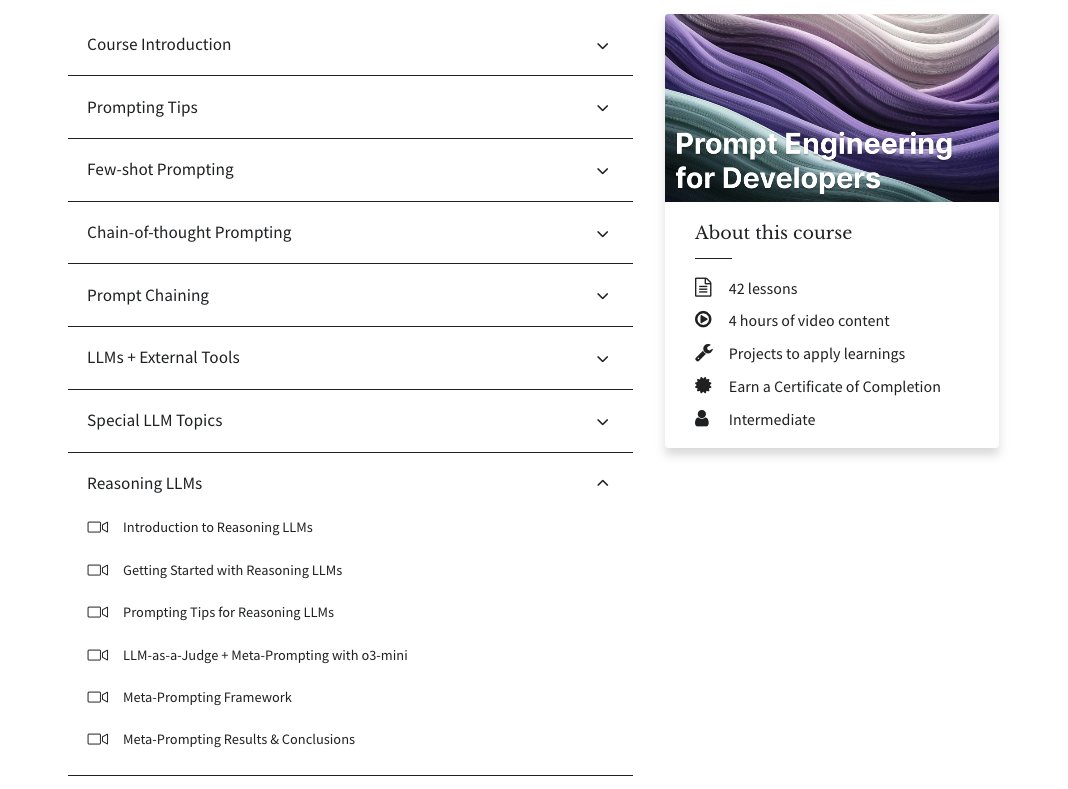
Prompt Engineering is NOT dead!
If you develop seriously with LLMs and are building complex agentic flows, you don't need convincing about this.
I've built the most comprehensive, up-to-date course on prompting LLMs, including reasoning LLMs.
4 hours of content! All Python!
DeepReviewer-13K: A dataset for training LLMs for academic paper review
- 13,378 high-quality structured reviews
- 33.24% accept rate
- Multi-stage reasoning with novelty and reliability analysis
- Available in 6 languages
- Custom license preventing use in formal reviews
I built a tiny AI Chatbot using FastHTML and Monster UI. You can use it as a starting point for your own AI Chat app or paste it into your favorite LLM so it can use it as a reference/building block to help you build your own AI Chat app. #FastHTML
What does the CPU internally do? Check out the animation...
The dance goes like -
1. Fetch
2. Decode
3. Execute
4. Memory Access
5. Write Back
See it in action here: https://t.co/PUztTJkl8o
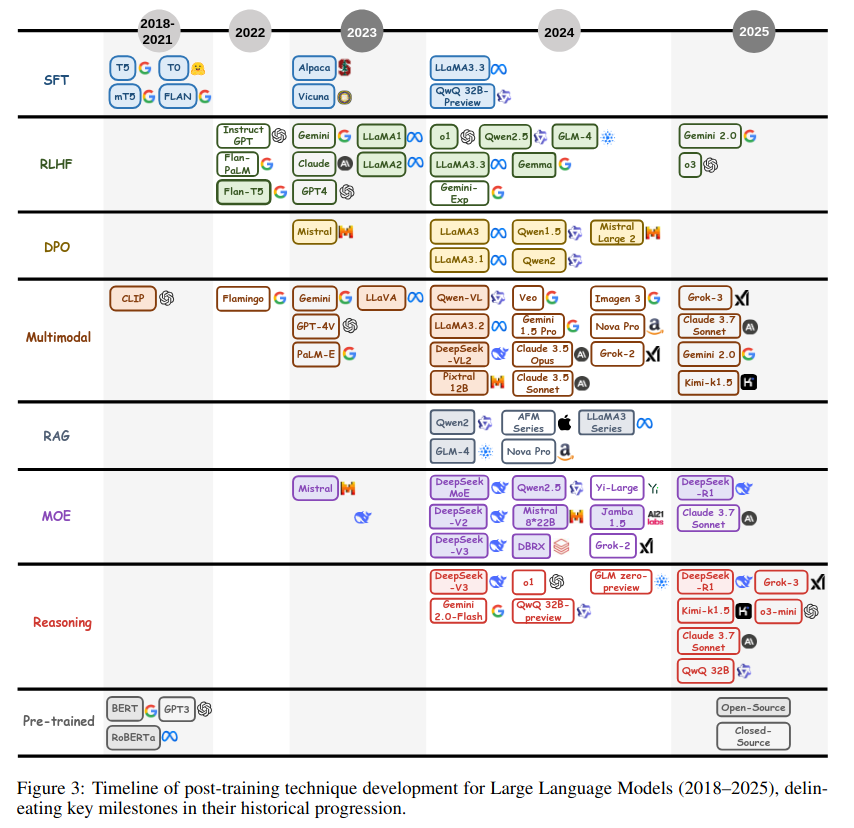
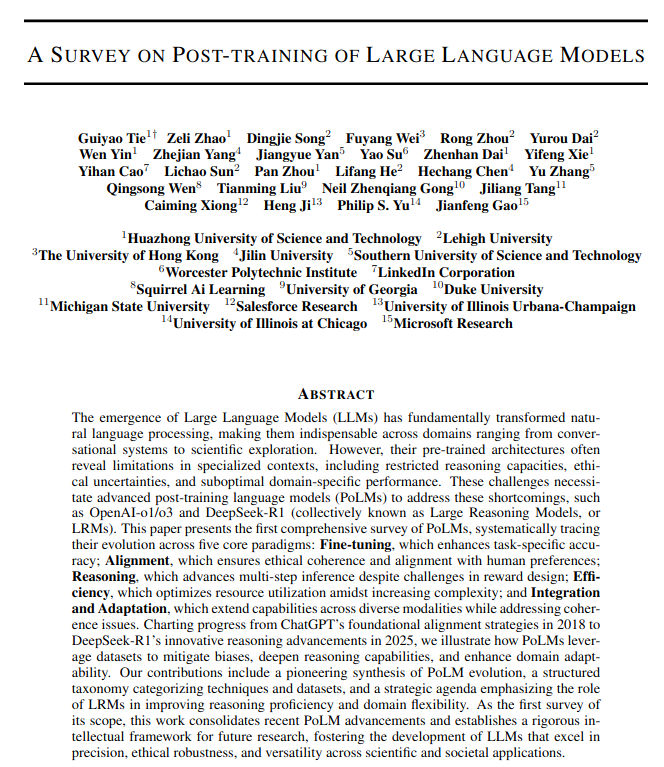
I only skimmed this 80-page survey, but it seems very well researched (>500 references to previous works). The authors cover about 7 years of advancements in post-training LLMs.
It has some great illustrations!
🔗https://t.co/miGiFpldiH
We made a Guide to teach you how to Fine-tune LLMs correctly!
Learn about:
• Choosing the right parameters & training method
• RL, GRPO, DPO & CPT
• Data prep, Overfitting & Evaluation
• Training with Unsloth & deploy on vLLM, Ollama, Open WebUI
🔗 https://t.co/4SUH1eHurs
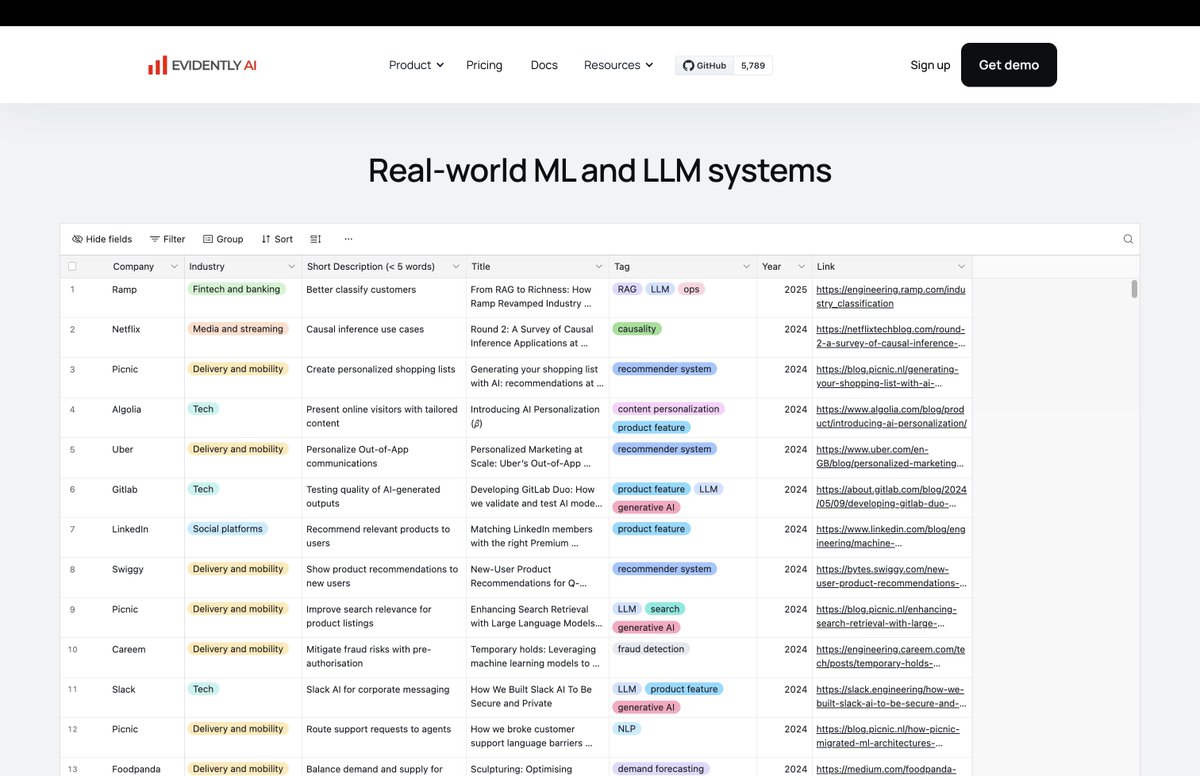
There is a collection of Real World use cases of ML and LLM Systems. There are more than 500 case studies here.
What I like the most about this is that all of these are real world problems and this links to the company engineering blog detailing how they solved it.
This is as real as it gets and actually gives you a sense of ML System design for real use cases.
If you get a chance do spend sometime going through the cases of your interest. Let me know what your favourite read from here.







![Hesamation's tweet photo. the best researchers from Meta, Yale, Stanford, Google DeepMind, and Microsoft laid out all we know about Agents in a 264-page paper [book],
here are some of their key findings: https://t.co/vU0FaY0dhZ](https://pbs.twimg.com/media/GnyqIQsWcAAQFUI.jpg)