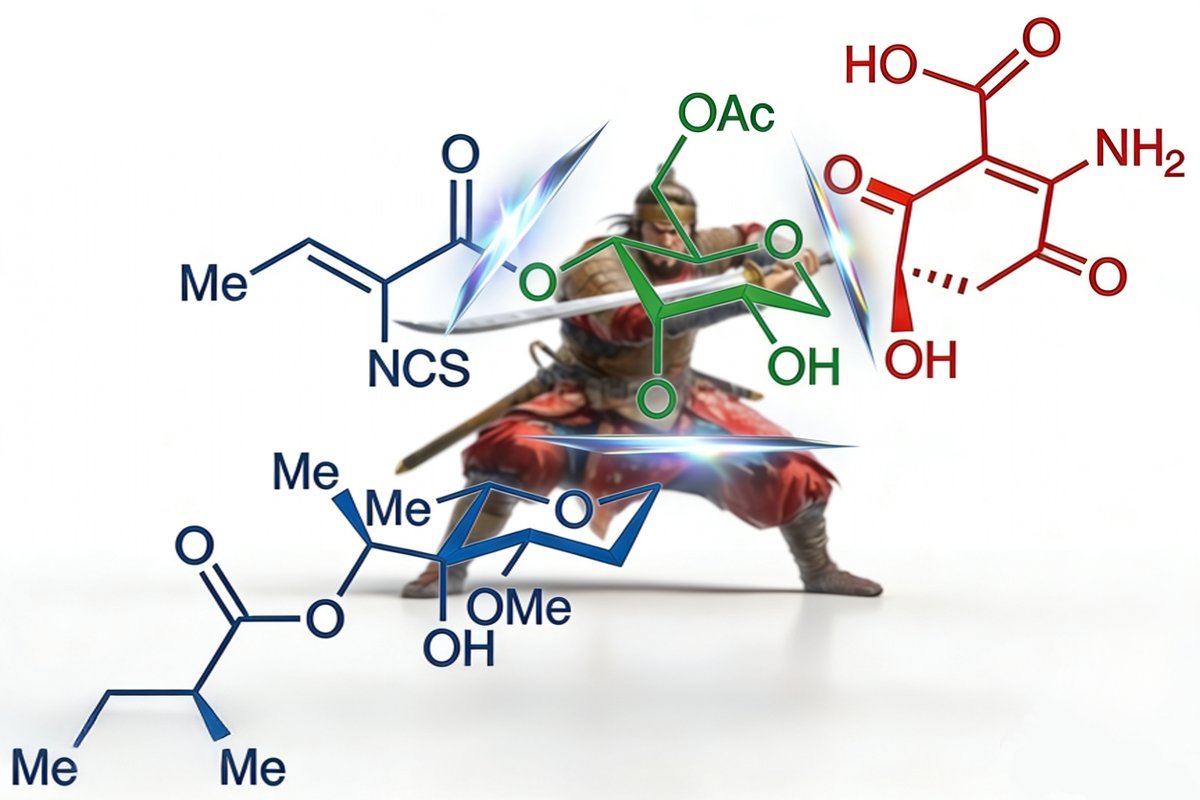
Innovation starts at the molecular level.
With 20 FDA approvals already this year, including the first marketed PROTAC therapy, 2026 is showcasing the power of modern medicinal chemistry.
See May's approvals through #ChemDraw. ⬇️
📢📢 ATOMISTIC SIMULATION SEMINAR 📢📢
We invite you to our Upcoming Seminar By Dr. Germaine Neza Hozana,
Venue: Conference Room of EAIFR and Online.
Title: A Computational Study of Optical Properties of Non-aromatic Proteins: A Case of Alpa-3C
https://t.co/M1nCdDs3Jx
In a world first, a research team has shown it is possible to engineer a quantum mechanical process inside proteins, opening the door to a new class of quantum-enabled biological technologies.
https://t.co/jRBiSTGC1Q
Generative AI and RAG for Beginners: A Practical Step-by-Step Guide to Building LLM and RAG Applications with LangChain and Python
https://t.co/fC9b8jACgW
My favorite 2025 #PfizerChemistry publications #12daysOfPapers 1/n: From my La Jolla colleagues this is a cool use of Rh-catalyzed C-H activation followed by retro Diels-Alder to provide useful med chem heterocycles @JOC_OL
https://t.co/P9v6olQMS9
PDB-101 hosts a gallery of the watercolor paintings of David S. Goodsell.
These images integrate information from structural biology, microscopy and biophysics to simulate detailed views of the molecular structure of living cells
https://t.co/DhWbwfHiac
📢 Webinar on Molecular Simulations #Kigali#Rwanda
Kindly Register to join our upcoming webinar on 20th November, 2025 at 4pm #Kigali Time
🗒️Details: https://t.co/35MWJzXBlJ
®️Registration: https://t.co/Idd4uWxAqh
🚨Special Issue Alert🚨
π-Conjugated Molecules & Materials in #OrgLett
Honoring August Kekulé and Eric Clar, this Special Issue showcases everything from CPL and optoelectronics, to nonbenzenoid aromatic compounds and nanohoops.
https://t.co/pC8hWtSqyT
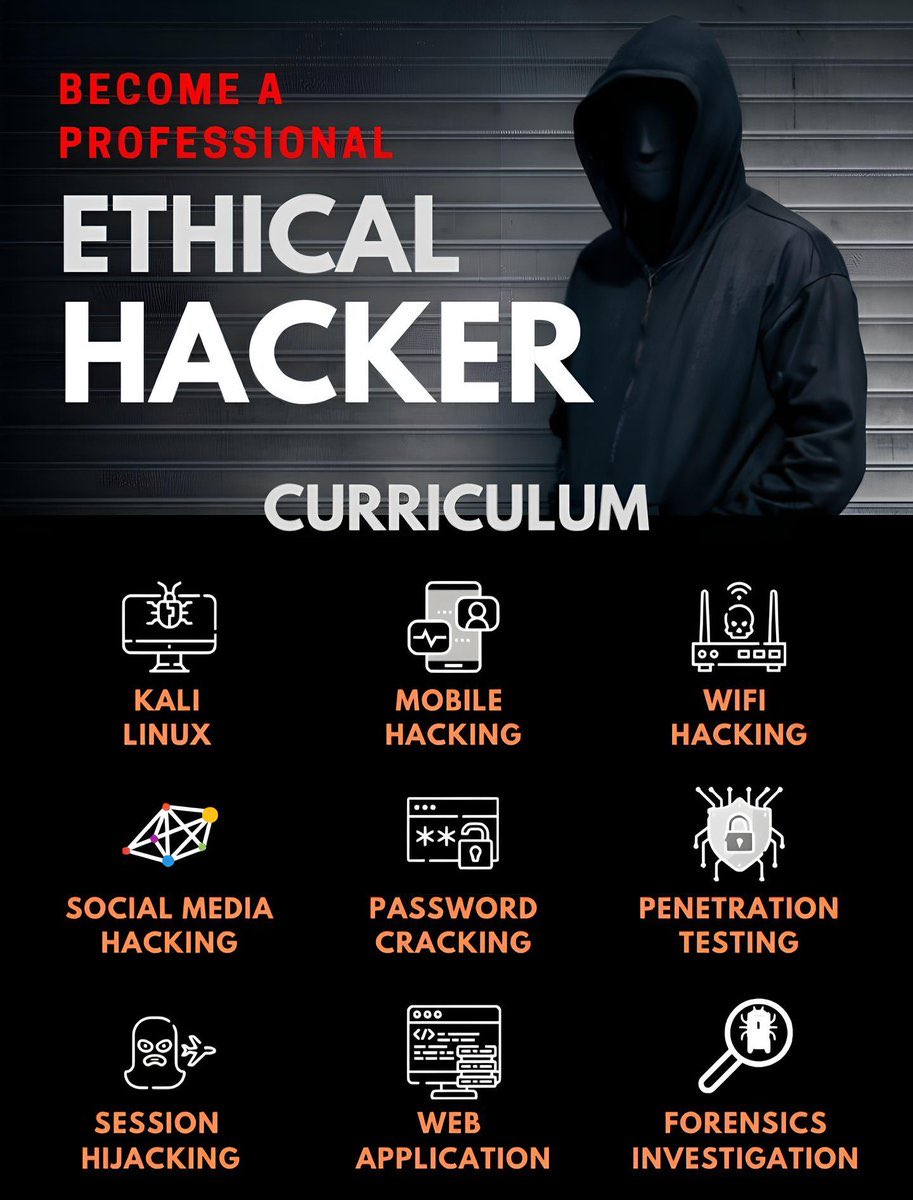
In this modern world the most
demanded skill is cyber security.
I made a full guide of Cyber Security.
To get it Just:
Like ❤️
Repost 🔁
Comment "CYBER" ✉️
Follow me
Bohr's model of electron is one of my favorite anecdotes about history of nobel prizes, as it was about making ingenious connections to existing discoveries and applying them in a different context.
Einstein won a nobel prize for explaining the photoelectric effect in 1905 by proposing that light consists of discrete particles called photons, a concept that applied "quantization" to light.
Around that time, the model of atom was being strongly debated and discussed. As protons and electrons are charged particles, the classical model of atom would eventually lead electrons to collapse into the nucleus.
Niels Bohr won his "nobel prize" in physics by applying the same idea of "quantization" to atomic structure in 1913, proposing that electrons can only exist in specific orbits with discrete energy levels.
This is one of the reasons I think LLMs (regardless of AGI or not) are promising for accelerating scientific discoveries: they already know a lot about different scientific fields! That said, we still need to incentivize them to make these ingenious connections and also learn from having a contact with reality -- "Geniuses in a datacenter" can only do so much for exploring the unknown!
Register Now for Webinar: Exploring the Workhorses of Biotechnology
On November 6, learn how to use RCSB PDB tools to analyze plastic-degrading enzymes
https://t.co/ATTJy2VZ04