Florida fans have correctly bemoaned the UAA’s financial commitment to winning since Urban Meyer and Billy Donovan left Gainesville. The last 6 months show it’s a new era, evidenced by UF’s unprecedented retention in both football and basketball. It’s Great to be a Florida Gator!
UF Sports took the SEC All Sports Trophy over the weekend after the strong showing at the SEC Outdoor T&F Championships. This trophy focuses on SEC performance and not National performance like the Directors Cup
@WWUTTcom This was me. I am preaching through Colossians 2:10-15. Spent a great deal of time on the circumcision made without hands. No better Mother’s Day topic than circumcision.
@GatorRyan I will add it’s nice not to be embarrassed by your coach. I know we need to see results but it’s been a while since I could see our HC interviewed and not cringe.
Politics are important, but listen to me: Politics cannot fix what politics did not break.
And Mankind was broken long before any political system.
Only a return to Jesus Christ who can reach inside the chests of men and give them new and living hearts of love, worship, and humility can save any person, any family, and any society.
Christ is the only way out of the chaos.
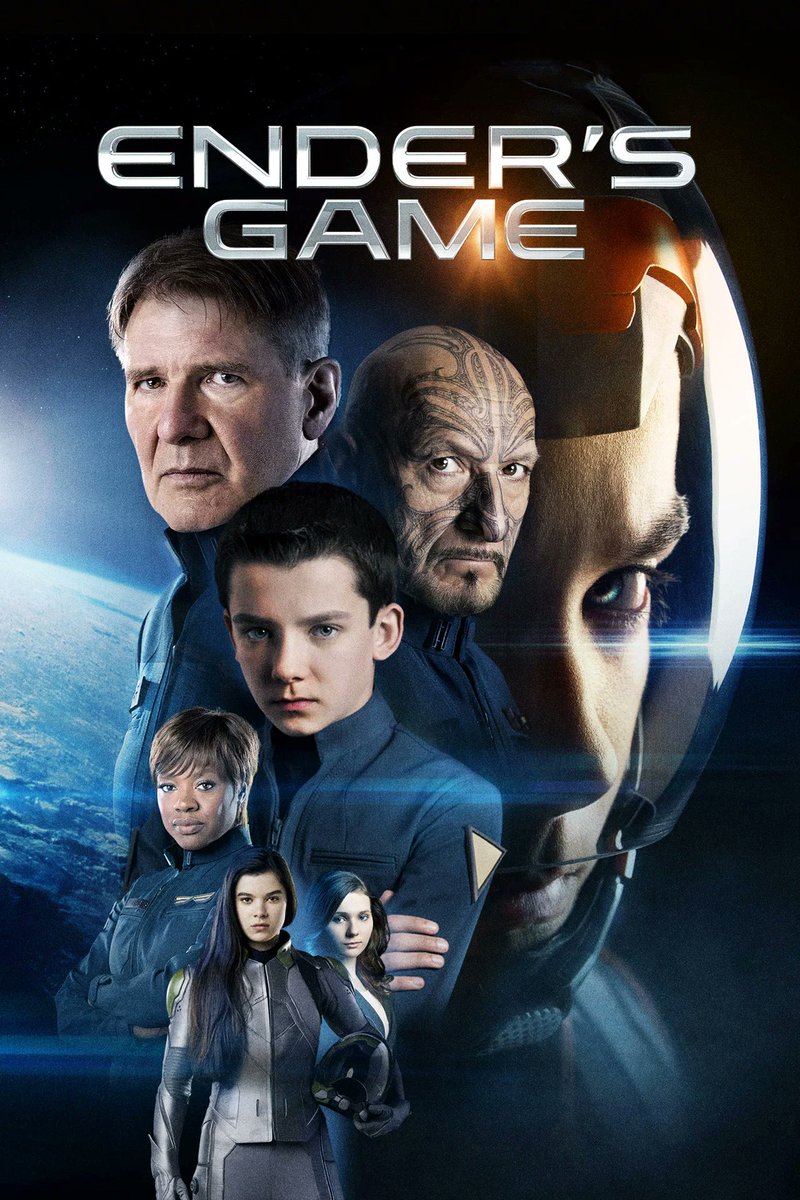
Ender's Game author Orson Scott Card on the problems with how religion is portrayed in current fantasy and science fiction:
"In our culture, intellectuals have become so uniformly a-religious or anti-religious that our fiction, with few exceptions, depicts religious people in only two ways: the followers are ignorant and stupid and easily fooled, and the leaders are exploitative and cynical, manipulating others' faith for their private benefit.
I know some people who fit those descriptions. But they are in a tiny minority. Most religious people I know are smart, well-educated, independent-minded, stubborn, honest, and generous -- at least as much so as the average intellectual, and usually more.
The hostility toward religion among American intellectuals arises, I think, from a clear awareness that it was against a publicly religious culture that their own culture rebelled. Now that rebellion is completely successful in terms of capturing control of all the public instruments of transmission of culture -- the universities, the media, and the literature and art -- but it has become such a shibboleth of intellectual life to snipe at religion that, like the aging "revolutionaries" of the old Soviet Union, they mindlessly continue to "rebel" in order to defend their tight grip on the establishment. Indeed, those intellectuals are the establishment. And what was once a daring and rebellious stance is now just another example of lockstep conformists mindlessly echoing ideas that they haven't examined.
That's when contemporary fiction mentions religion at all. Most of the time, in and out of speculative fiction, religion simply doesn't exist. Characters don't believe in God or even think about believing in God. Nobody talks about religion. Nobody belongs to any kind of church. Religion simply doesn't exist. ...
This is, I think, a serious lapse, a dishonesty in our contemporary literature. It is most seriously dishonest because in fact, even the supposedly a-religious intellectuals behave exactly as religious people always have. That is, the behavioral and cultural patterns that we have always associated with religions are indistinguishable, except by vocabulary, from the behavioral and cultural patterns of the a-religious intellectuals. They band together with fellow believers, feel sorry for or hostile toward unbelievers, immediately punish heretics -- intellectuals who, having once been accepted in the 'faith,' dare to question its premises -- anoint their priests and theologians (psychologists and therapists being their ministers, scientists and, more usually, science popularizers being their doctors of atheology), and insist on their absolute right to put forth their religious ideas with public funding and the authority of the state behind them, while doing their utmost to silence or marginalize the beliefs of others.
Most fiction has become, in short, an instrument of propaganda for the established religion of our time, which differs from other religions only in the particular content of the faith and the vocabulary used to describe it. Naturally, the true believers are sure that the real difference is that their beliefs are objectively true. But then, true believers have always believed that. This is not what distinguishes them from other established religions, but rather what makes them fundamentally identical to them.
The honest depicter of human life will include the religious aspect of that life. This is not to say that stories need to be about religion, any more than stories about our contemporary culture need to be about cars. But the cars need to be present, at least by implication, and if a character doesn't know how to drive, we'd need to know why."
Is this why Hollywood stopped adapting his books into films?
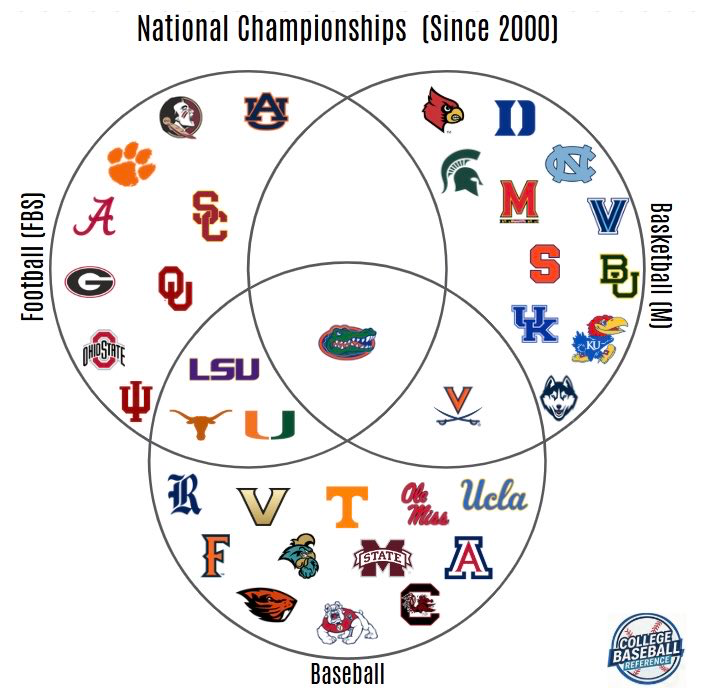
This graphic has been going around a lot ... you can actually extend it even further — all the way to 1963 — and Florida would still be the only school in the middle with a National Championship in all three.
5 reasons Christ had to die:
1. Sin demands a penalty
(Rom. 6:23)
2. We could not save ourselves
(Isa. 64:6)
3. The law required a perfect sacrifice
(Heb. 10:4)
4. God is both just and the justifier
(Rom. 3:26)
5. Love required it.
(John 3:16; Rom. 8:32)