Gavekal is one of the leading independent providers of global investment research. It also advises a select range of funds and offers software solutions.
Indonesia’s equity market has suffered a sharp sell-off after MSCI warned that persistent concerns over ownership transparency, market manipulation and weak regulatory enforcement could see the country stripped of its emerging market status. In this video interview, emerging markets analyst Rohan Daswani discusses whether Jakarta’s latest reforms can restore investor confidence, the risks of further capital outflows and currency weakness, and what Indonesia’s troubles mean for other emerging markets.
However, if the rise in inflation broadens and becomes more persistent due to the AI investment boom and a tighter US labor market, long-term inflation expectations could drift higher, and likely more so than in 2021-22: https://t.co/uhVGMDTFpv
US inflation accelerated in September, with the headline consumer price index rising 3.7% year-on-year, up from 3.4% in August. This was hardly surprising given elevated energy prices, which were bound to feed through to consumer prices.
The question for investors and policymakers is whether price pressures will spread through the economy, pushing up long-term inflation expectations, as some Federal Reserve officials fear. If rising inflation is largely driven by energy supply disruptions and markets remain confident in the Fed’s commitment to its inflation target, long-term inflation expectations will likely remain well anchored.
US manufacturing capacity and production are both improving, but the country remains far from being able to meet more of its domestic demand. In this video interview, US economist Tan Kai Xian explains why labor shortages, compounded by tight immigration policies, are a bigger obstacle to expanding US manufacturing than a lack of physical capacity. With Washington pressing other countries to curb excess production, the risk is that trade restrictions drive US inflation even higher, rather than deliver the intended revival in domestic manufacturing.
Already the inflation outlook is worsening amid fears that a weak monsoon will push up food prices. That could compel the Reserve Bank of India—which earlier this month hiked rates for the first time in three years—to respond more aggressively. That, in turn, may snuff out the nascent recovery in private-sector investment.
So far, India has cushioned the impact of the energy shock by forcing state-owned refiners to bear losses from selling fuel at below-market prices. This strategy will prove unsustainable if oil prices do not fall within the next few months, forcing a choice between higher retail fuel prices and greater fiscal support.
With less than four weeks to go before the US midterm elections, the Democratic Party is odds-on to win the House of Representatives and may take control of the Senate too. In this video interview, Gavekal chief US economist Will Denyer looks at what the expected electoral swing to the Democrats is likely to mean for the possibility of impeachment hearings, fiscal policy, tariffs, financial regulation and legislation on artificial intelligence.
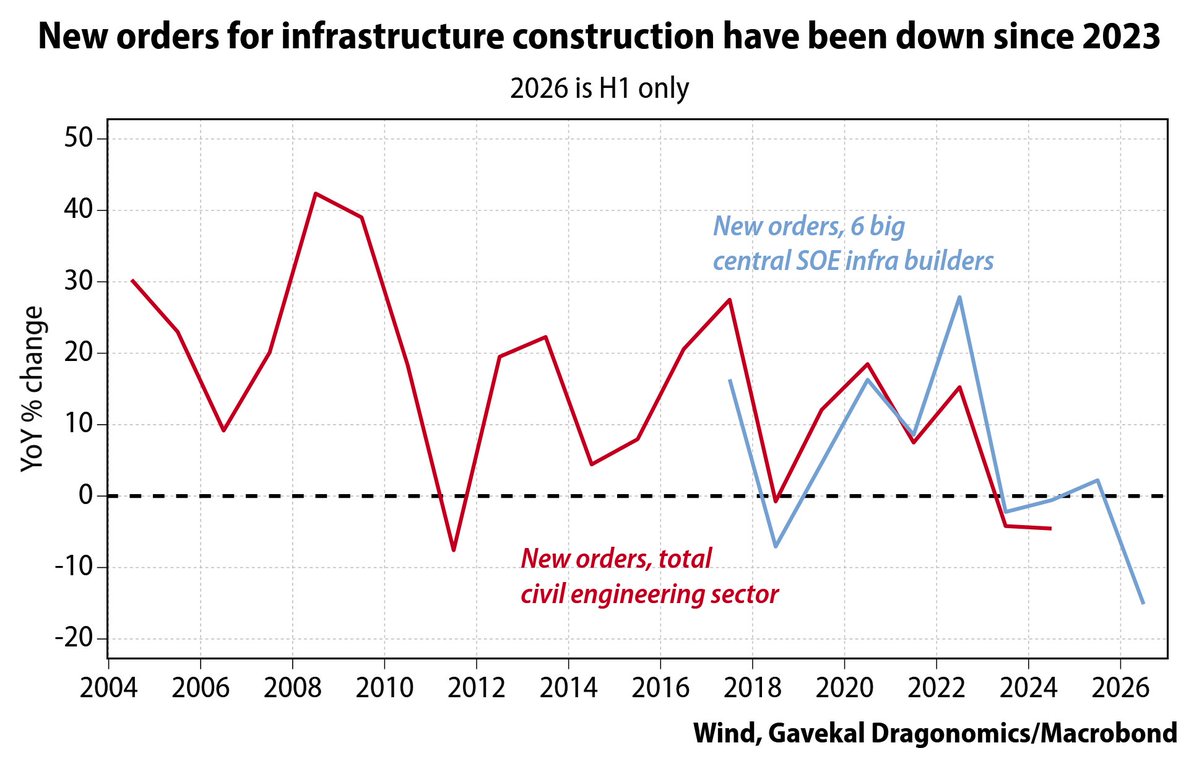
Such factors are unlikely to change soon, and infrastructure spending could even become a persistent drag on growth. For more analysis of China’s infrastructure investment, see: https://t.co/9N3FMBFjtG
China’s infrastructure investment fell -5.4% YoY in the year through August, a decline that has been reflected in the order books of major state-owned infrastructure builders. The drop is driven by several factors, not least underwhelming returns on infrastructure projects and heightened central-government scrutiny of investment.
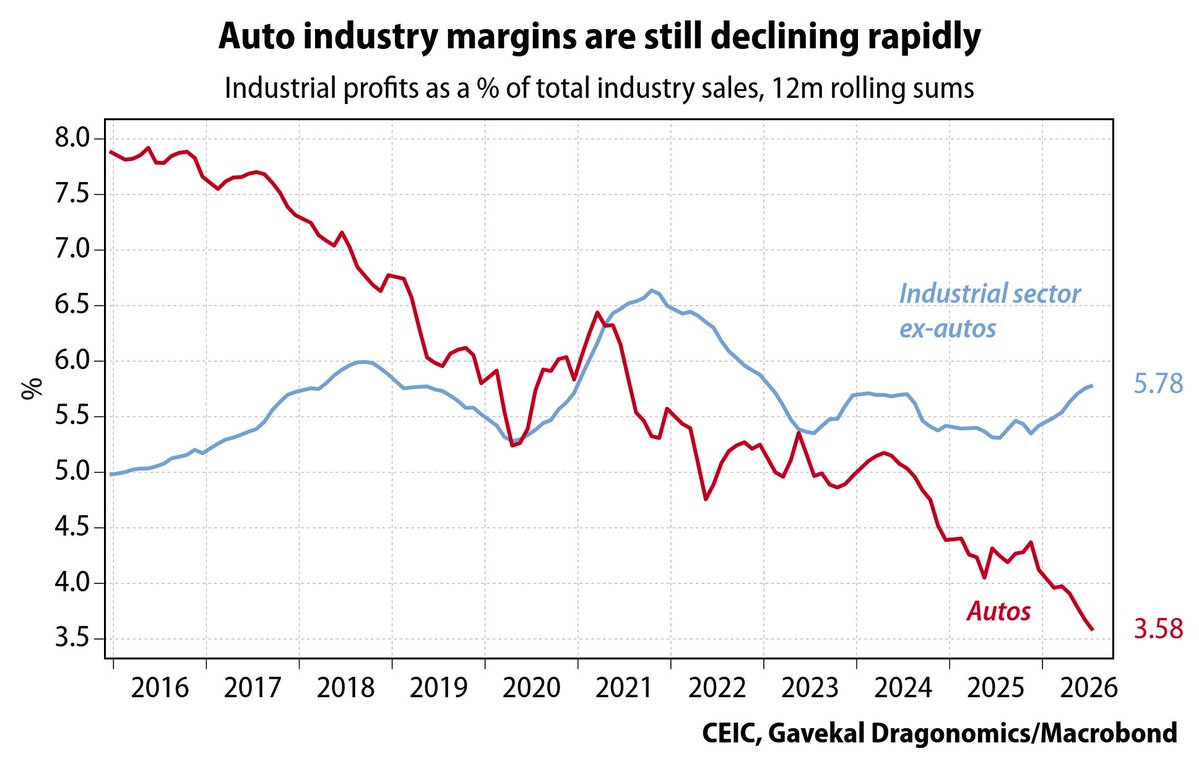
After years of fierce competition, the price war between Chinese electric vehicle makers seems finally to be ending, as prices increased from 2025 to 2026. This aligns with the aims of the government’s anti-involution campaign, but the main reason for the change is rising costs, which have continued to push down auto makers' profit margins. The rise in prices will weigh on domestic EV sales, which have already declined this year: https://t.co/VtOv4DZRWt
After the average US pump price for diesel topped US$6.50 per gallon, politicians are increasingly calling for restrictions on US fuel exports in a bid to bring down prices for businesses and consumers ahead of November’s midterm elections. But while export controls might provide some temporary relief, any reduction in US prices will be short-lived, and will come at the cost of intense pain among US trading partners. In this video interview, Tom Holland dissects the causes of the current fuel price spike, and discusses the outlook for energy prices from here.
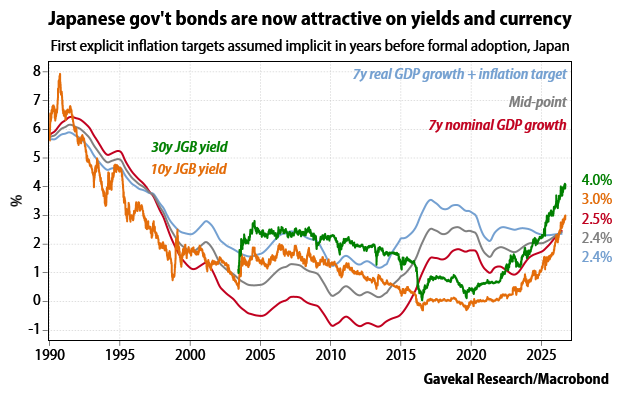
Based on Maurice Allais’ “golden rule” which compares long-term bond yields to nominal GDP growth (defined here as a 7-year moving average), Japan now offers not only an undervalued currency but also compelling bond valuations. This may explain why global asset allocators like NBIM are planning to increase exposure to JGBs.
The yen is the cheapest major currency in the world today. But this has been true for years, during which the yen has continued to weaken. What has changed in recent months is that Japanese bond yields now look attractive.
PETER LEWIS’ MONEY TALK - Tuesday 15 September, by @MoneyTalkR3
On Tuesday's Money Talk,
● AI safety concerns rocks markets
● Fed chair Kevin Warsh under pressure to raise rates
● Oil jumps to above $105 a barrel
1/3
https://t.co/D5iF8VcIIu