Big issues in this @asemota thread. I think the foundation of Nigerian (and African) fatalism is an extremely pessimistic view of human nature that lies beneath all the sunny banter and optimistic exterior.
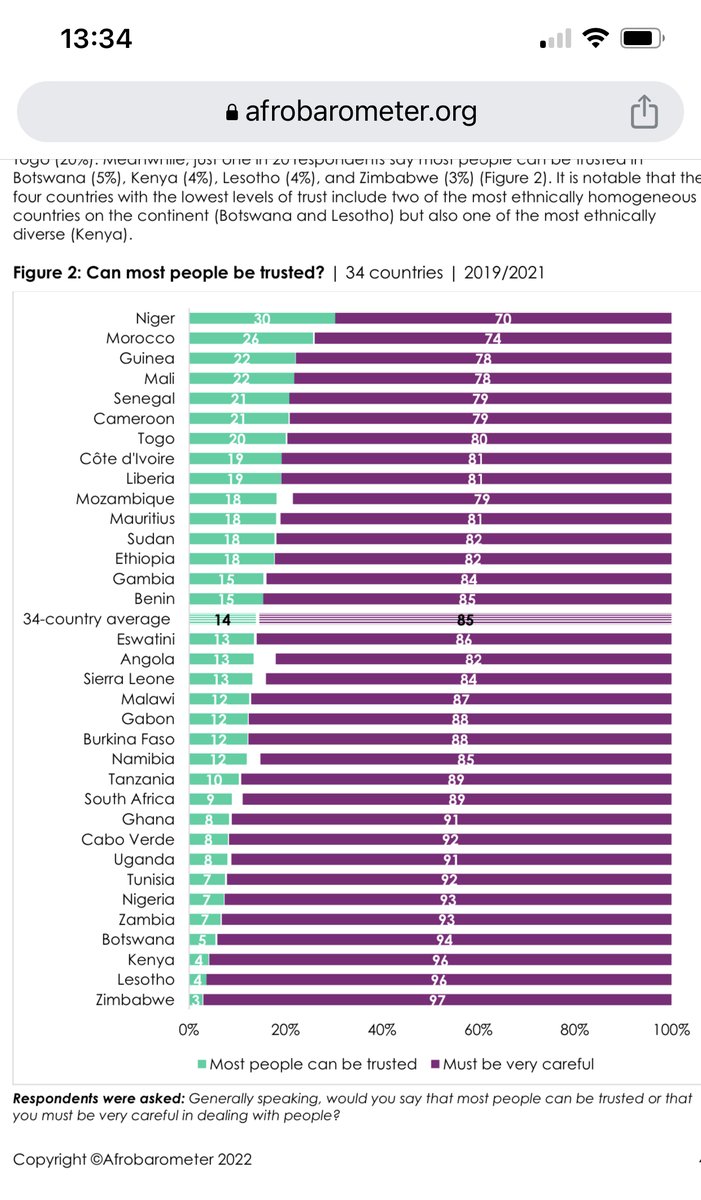
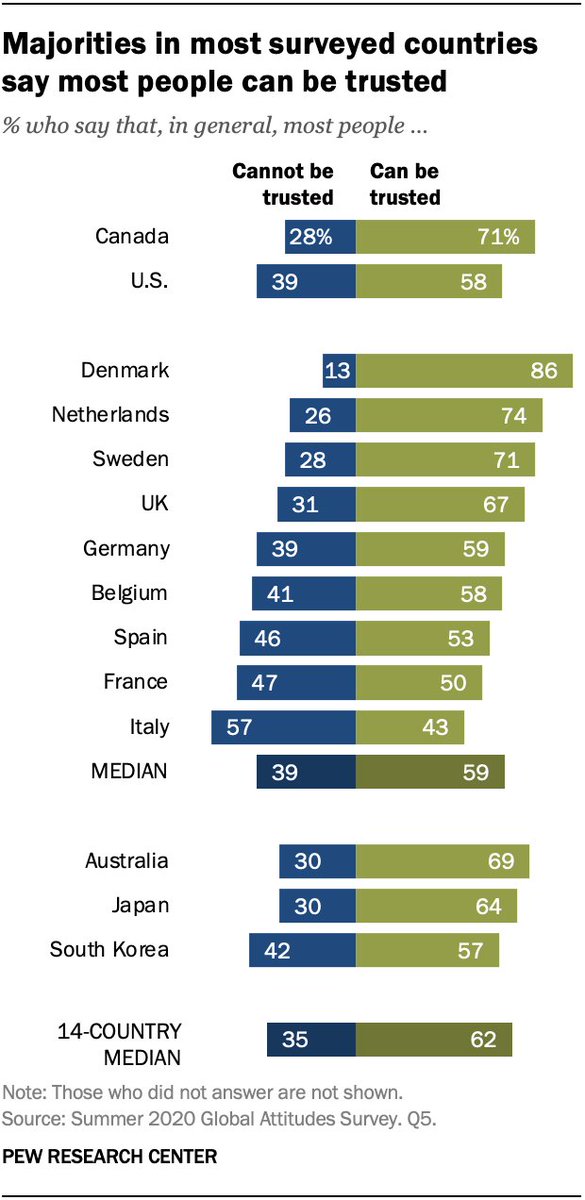
Just 7% of Nigerians believe "most people can be trusted" compared to 67% of Britons. African average is a low 14%. See other nations in graph👇
Africans mistrust others by default, just to varying degrees.
Many Nigerians will think, "I get Dangote jare, Indians will steal too, but probably less than Nigerians."
Africans generally mistrust non-Africans slightly less than they mistrust their fellow Africans.
A colonial mentality? Reality of Africans' everyday interactions with each other? African rulers having disappointed so much? Some deeper psychological research would be needed here on the core source of such widespread African mistrust in others.
What I have no doubt about is that this mistrustful worldview is one of the biggest and most underresearched obstacles to African progress.
Breeds a high tolerance for corruption (since *everyone* steals), hinders people from cooperating with each other and makes regular Africans too easy to polarize into camps elites can come forward and claim to "represent."
It is also one of the reasons for African hyper-religiosity. If you don't believe you can trust your fellow human beings, then God is the only one you can put your faith in.
The indeterminate optimism @asemota mentions usually stems from a general belief God will one day intervene to right things in Nigeria and all will be fine. And if not he doesn't intervene in Nigeria, then at least in their personal lives. That belief is what keeps people optimistic their story will have a happy ending.
If you took away religion in Africa, that optimism would quickly transform into fury. One of the reasons African elites work hand-in-hand with religious leaders; they strengthen each other's influence (and ultimately the status quo).
I say all this as a Christian by the way, not an enemy of religion. But that doesn't mean I don't see how religon is often twisted to suit human agendas in Nigeria.
All said and done, the trust issue is a major civilizational challenge for Africa. You need a minimum level of trust to build a well-functioning society.
So, more research on how to build trust needed!
@DrJoeAbah Solution: grow faster than devaluation. QED 🤷🏾♂️. if you’re a venture builder anywhere in Africa and don’t understand that you are in the wrong game.
@iaboyeji And yes even the unbanked are affected by bank charges… through the remittance they make/receive thru mob money networks and thru added transaction costs they face directly/indirectly
@iaboyeji Considering most poor Nigerians, including those that earn a salary, earn an informal income, so not in PIT net, effect would be limited. Rather VAT reform would be more impactful, or measures to reduce various tx costs eg bank charges who disproportionally affect the poorest
@africatechie 2/2… raison pour laquelle ils ne me manquent pas c’est que très souvent qd tu rencontres des Cam la 1e question qu’ils posent c’est ‘tu es d’où?’. Déjà avec mon nom c’est assez clair d’où je suis, mais surtout… why is that relevant/pourquoi ça compte??? Un vrai fléau national.
@africatechie Le tribalisme est encré dans la psyché des Camerounais. Ces questions resterons posées même dans le cadre non officiel. Je ne passe pas énormément de mon temps dans les cercles camerounais depuis presque 20 ans que je suis à l’étranger, et… 1/2
@africatechie Red rice 🤣🤣🤣 i just stay quiet when they do their rice wars. My wife is Nigerian and I want to have dinner tonight so let me remain quiet.
Why is Africa the way it is?
What are its main regions?
Its most defining features?
What's key about each country?
Most of it is rooted in 2 factors.
Here's how to understand Africa and each one of its countries:
@iaboyeji What if one can demonstrate and profitably (emphasis) serve a TAM of such millions of people that actually spend say $1500/yr (or about $5/day)? There are a number of such markets, no?