PhD Holder, Real estate investment analyst and researcher. University Lecturer. Public affairs analyst and social critic. Advocate of digital technologies.
MY FRIEND IS STILL PAYING FOR GMAIL STORAGE.
I told him to do this before.
He went from 14.9/15 GB to 6 GB in a single afternoon.
Hope this helps you ↓
A couple moved into our compound 4 years ago, and from day one, it was always one fight after another.
I knew that marriage wouldn't last.
After a year, the fights reduced.
Last month, the husband surprised her on her 40th birthday party with a brand-new car and ₦2 million cash.
During her appreciation speech, she knelt before her mother-in-law and said, “She is the reason I’m still in this marriage.”
She said her mother-in-law once told her: "I'm not supporting my son. But if you want your home to stand, 70% of the patience must come from you. Let him talk, keep quiet, then express yourself later."
Everywhere went silent....❤️
Please take time to read this
The IMF just said the naira is still undervalued by 25.6%. Let me break this down with actual mathematics so nobody can tell you this is opinion.
The IMF says based on Nigeria’s economic fundamentals, the naira should be trading at N1,131 to the dollar. The official rate today is N1,356 to the dollar. The difference is N225 per dollar. That is not a small gap, it is a 19.9% overcharge on every single dollar transaction happening in Nigeria right now.
Let me show you what that costs real people.
A Nigerian parent paying university fees abroad of $10,000 per year is paying N13,560,000 at today’s rate. At the rate the IMF says the naira should be, that same $10,000 costs N11,310,000. That parent is losing N2,250,000 every year purely because the naira is still undervalued. That is capital that should be staying in a Nigerian household.
A business importing raw materials worth $50,000 per shipment is paying N67,800,000 at today’s rate. At the correct fundamental rate it should cost N56,550,000. The business is absorbing an extra N11,250,000 per shipment that it did not earn and cannot recover except by raising prices on you, the Nigerian consumer. That cost does not disappear. It transfers.
Now look at the bigger picture.
Nigeria’s total merchandise imports in 2024 were approximately $27 billion. At the current undervalued rate versus where the naira should be, that N225 gap per dollar means Nigerian importers collectively overpaid by roughly N6.075 trillion in a single year. That excess cost did not go to Nigerian workers or Nigerian businesses. It evaporated into exchange rate distortion while the CBN defended the rate with reserves instead of fixing the fundamentals.
Now this is the part that should make you angry.
The REER appreciated 32% in 2025. That sounds like progress. But the NEER, the actual exchange rate you see on your screen, depreciated by 5.2% in the same period. How do both happen at the same time? Because domestic inflation was running so hot that even a weakening naira looked stronger against equally weakening trading partner currencies. Nigeria did not get stronger. Everything got more expensive together and the statistics smoothed it over.
Tinubu floated the naira in 2023. Nigerians absorbed the devaluation shock. Petrol prices rose. Cost of living rose. Businesses collapsed. The promise was that the market would correct and the naira would find its true value. Three years later the IMF is saying the naira is still 25.6 percent below fair value. Nigerians paid the full price of the adjustment and received less than three quarters of the correction.
You were charged for a full surgery. The doctor only completed 74.4 percent of the operation. And he is asking for more time.
@global_bily@MasterBolaji The painful part is that car dealers sold accident cars same price as the non-accidented ones. These guys buy cheap and make humongous profit ripping off people. That's clearly evil.
If you have time on your hands and you are not locked in on AI or some skill of the future, then you are doing yourself a great disservice.
Time is an essential factor that many people do not have. People are locked in on their jobs, trying to make a living. If you are in a position where you do not have to work for hours to make a living and you have spare time at your disposal, you have to lock in on AI now.
And yes, even busy people need to make out time. Swap 30 minutes of scrolling for 30 minutes of learning. That is it. No matter how packed your schedule is, find the time. Your future self will thank you.
Here are 5 free courses on AI you need to lock in on now:
1. Google's Generative AI Learning Path: A structured, beginner-friendly path covering the fundamentals of generative AI, large language models, and responsible AI. It is completely free.
https://t.co/qcMnE0HfU3…
2. Elements of AI: A globally recognized course designed for non-technical people that breaks down how AI works and why it matters in the real world.
https://t.co/GbYXO1XOZT
3. AI For Everyone (Coursera): One of the most watched AI courses in the world. It strips away the complexity and teaches you how to think about AI as a business and life tool.
https://t.co/A1ZnaixwhD…
4. Anthropic's Claude AI Course: Learn directly from the makers of Claude. This free course covers how to effectively use and understand AI models, making it one of the most credible and practical resources available today.
https://t.co/7a6jr7kdv9
Here are 5 jobs that are future proof:
1. AI Prompt Engineer: Companies are paying top dollar for people who know how to communicate with AI tools effectively to generate business outcomes. This role is only growing.
2. Cybersecurity Analyst: As AI advances, so do digital threats. The demand for people who can protect systems, data, and infrastructure will never slow down.
3. Data Analyst: Every business runs on data. The ability to read, interpret, and turn data into decisions makes you indispensable in any industry.
4. Content Creator & Digital Marketer: Brands need human voices, storytelling, and creativity to connect with audiences. With AI as your assistant, one person can now produce the output of an entire team — no degree required.
5. AI Trainer & Evaluator: AI models need humans to teach, test, and fine-tune them. This behind-the-scenes role is quietly becoming one of the most in-demand positions in the tech world — and you can start with zero academic background.
The window is open right now. The question is, are you walking towards it?
I have not seen an unemployed doctor or nurse.
Salary aside, I have not seen one.
I have not seen an unemployed real tech bro ooh—with certifications from Cisco or Oracle etc.
Even vocational jobs, i have not seen an idle Keke mechanic but i have seen idle radio repair folks
I know many unemployed bankers, economists, and mass communication graduates, just examples, but you see where i am going.
An education is an investment; look at the ROI.
Everyone says ‘just pay for a Dats Analysis course’… but what if you don’t have the money?
When I became interested in data analysis, I genuinely couldn’t afford paid classes or tutorials, I decided to learn on my own and here’s exactly what I did;
Retweet for someone 🧵🥹
Congratulations, you are seeing this tweet. Here is a life-changing opportunity to transition into tech this year.
We will be starting our coding 👨🏽💻 journey today.
Course: HTML, CSS & JAVASCRIPT.
I'll explain like you are 3 years old. Please repost for others, and let's begin!
Fuel Subsidy 101
1. The FGN prior sets the local retail price of PMS. Assume it is N100 a litre.
2. NNPC prior was the sole importer of PMS (it can issue licenses, but NNPC is the global manager). Assume PMS lands in Nigerian ports at N150.
3. NNPC sells locally at the government price of N100, implying an under-recovery of N50. The Federation (Federal, State and Local) refunds NNPC this N50. This is the subsidy you hear about.
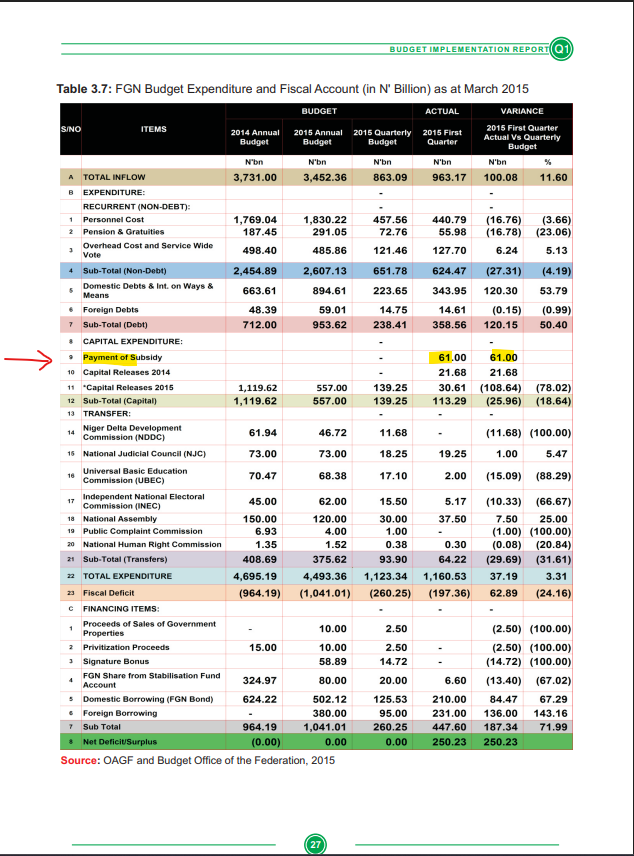
4. NNPC pays the subsidy by debiting what it should have remitted to FAAC. Look at the attached FGN Budget Office document; you see the PMS subsidy is a debit to FAAC by NNPC even before 13% derivation debit. Remember when Godwin Emefiele, prior CBN Governors said In November 2022, that the official foreign exchange receipts from crude oil sales into Nigeria's official reserves had dropped from over $3 billion monthly in 2014 to an "absolute zero dollar today"? that was NNPC debiting FAAC, that the subsidy in play.
5. Yet, even with this direct debit, the Federation still owed NNPC. The past CEO of NNPC, Abba Kyari, said in May 2023 that NNPC was owed N2.8 trillion naira ($6.1 billion) in outstanding subsidy payments by the government.
6. If PMS subsidy is removed, then NNPC remits in full to FAAC, no debits, meaning FAAC receipts go up.
7. We can further prove this by looking at remittances. In March 2023, total FAAC statutory receipts to be shared was N635bn with Brent crude prices at $78 average price. However, with the inauguration of President Tinubu and complete removal of PMS subsidy, the total statutory allocation to be shared by FAAC increased to N1.11t with brent crude averaging $75. Please note I am using only statutory so we ignore effects of Naira devaluation, which is another income event to FAAC.
8. In summary, removal of PMS subsidy releases trapped funds from NNPC back to FAAC. If there was borrowing done to fund the subsidy, that was done by the NNPC and the costs of that borrowing were also debited to FAAC.
9. Removal of PMS subsidy is a revenue event, meaning more cash flowed to FAAC.
Let me explain in plain English why every Nigerian industry and Government must start funding university researches.
Imagine your company wants innovation.
You hire 4 researchers.
You pay ₦1 million per month each.
That’s ₦4 million monthly
₦48 million yearly
For 4 brains.
Now pause.
With just ₦20–30 million as a research grant, you could engage:
• 20 PhDs
• 50 MSc students
• Multiple professors
• Labs + peer review
• Global validation
Inside a university.
More brains.
More ideas.
Less cost.
Better results.
This is why industries fund universities abroad.
Tesla doesn’t do all research alone.
Apple doesn’t.
Shell doesn’t.
Pfizer doesn’t.
They pay universities to think.
Universities produce:
• Patents
• Prototypes
• Breakthroughs
• Spin-off companies
Industries take the IP.
They scale it.
They make billions.
Everyone wins.
So why do foreign governments fund university research?
Because research = economic weapon.
The US funds universities →
Patents →
Companies →
Exports →
Global dominance.
China funds universities →
Factories →
Technology transfer →
World market control.
Germany funds universities →
Engineering breakthroughs →
Industrial supremacy.
Now compare Nigeria.
Our universities are idle.
Lecturers are broke.
Labs are empty.
Students are underused which pushed the to join cults.
Yet industries are crying:
“innovation no dey”
“foreign tech is expensive”
“we can’t compete globally”
How will you compete when you don’t invest in thinking?
We turned universities into glorified secondary schools.
No serious grants.
No serious research.
No serious industry collaboration.
This must change.
If Nigerian industries redirect even 10% of HR & R&D budgets to university research:
• Universities get busy
• Students become inventors
• Lecturers become innovators
• Industries get cheaper innovation
• Nigeria gets patents
• Nigeria gets relevance
This is not charity.
It’s smart capitalism.
No serious country develops without industry-driven university research.
Until Nigerian industries wake up,
we will keep importing ideas
and exporting our talents and future.
JAGABAN’S CODED “LEGBE-LEGBE MOVES TOWARDS TRUE FEDERALISM EXPOSED!!🇳🇬
You may not like him. You may not trust him. But I honestly think President Bola Tinubu is quietly moving us towards true federalism without shouting about it.
Before you accuse me of collecting corn, check out the facts below. Facts trump political gbasgbos all the time: 🧵👇
@OfficialPDPNig@OfficialAPCNg@ADCcoalition@officialABAT@PeterObi@akintollgate@LexieBeautiful_@segalink@DeleMomodu
I understand that this is your personal decision. I just wanted to share a few thoughts that come to mind. Many people have chosen to migrate abroad and often end up returning home with less than what they initially had, once they see the realities there. I don’t know your age, but with $25,000 in savings, you could rent a very good place in Nigeria for the next 35 years, and no one can guarantee waking up alive tomorrow. You might also consider building in certain parts of Nigeria, though that may not be advisable at the moment.
You have an income of $1,800 tax-free each month, which many people in large parts of Europe do not have. This allows you to save about $10,000 annually. While enjoying your best years in Nigeria, you could also afford to travel twice a year, which contributes to a good quality of life.
If you’re contemplating moving to Rwanda, it’s a great place, but keep in mind that it won’t change the fact that you will become a foreigner. You’ll need to hustle for residency, and your favorite foods may become more expensive to access. It’s worth trying to see if it works for you since you are still relatively close to home.
Moving to the global north might seem appealing, but it could easily deplete your $25,000, and your present income might not be enough to cover bills and living expenses. Loneliness, harsh weather, and the struggle to secure residency and feel settled are common challenges. If luck isn’t on your side, you might end up in menial jobs, paying bills and barely saving anything. You could go from being financially comfortable to living paycheck to paycheck, which can impact your mental health.
Additionally, life abroad often involves various costs—finding an apartment, social activities, job hunting, and dealing with discrimination at times. It could take another seven years to rebuild your savings of $25,000, if you ever do, because money earned abroad tends to be spent quickly and stays within their system. You may also need to take loans to get a car, something you will easily buy out of pocket in Nigeria.
My advice would be to consider moving to a decent area within Nigeria and to prioritize leisure travel, perhaps twice a year, to enjoy life while staying rooted at home.
Chinedu graduated top of his class.
First-class in Electrical Engineering.
NYSC in Abuja.
He thought his life was finally about to start.
Until he started applying for jobs.
50 applications.
No response.
Then he saw an opening at a major oil company.
He was qualified. He applied.
He didn’t even get shortlisted.
But his classmate—who partied through school—got the job.
His uncle is a senator.
Frustrated, Chinedu started tutoring kids. ₦5k per student.
One day, on his way home, a classmate zoomed past in a Benz.
“Bro, this crypto thing changed my life,” the guy said.
“No one cares about degree again. School na scam.”
That was the first time Chinedu heard it.
But it wasn’t just Chinedu.
It was Halima—the pharmacy graduate selling perfumes.
It was Emeka—the Mass Comm grad driving Bolt.
It was Aisha—the best in her department, now ghostwriting for influencers.
It spread like wildfire.
A generation of Nigerians watched their degrees collect dust, while politicians’ children schooled abroad, came home, and got top jobs—no interview.
That’s when “school na scam” stopped being a joke.
It became a coping mechanism.
But here’s the truth:
School isn’t the scam.
A system that crushes talent and rewards connections is.
Education is still the key—but Nigeria lost the lock.
So when they scream “school na scam,”
don’t argue.
Listen.
Because behind every “school na scam” is a broken dream—and a country that didn’t keep its promises.