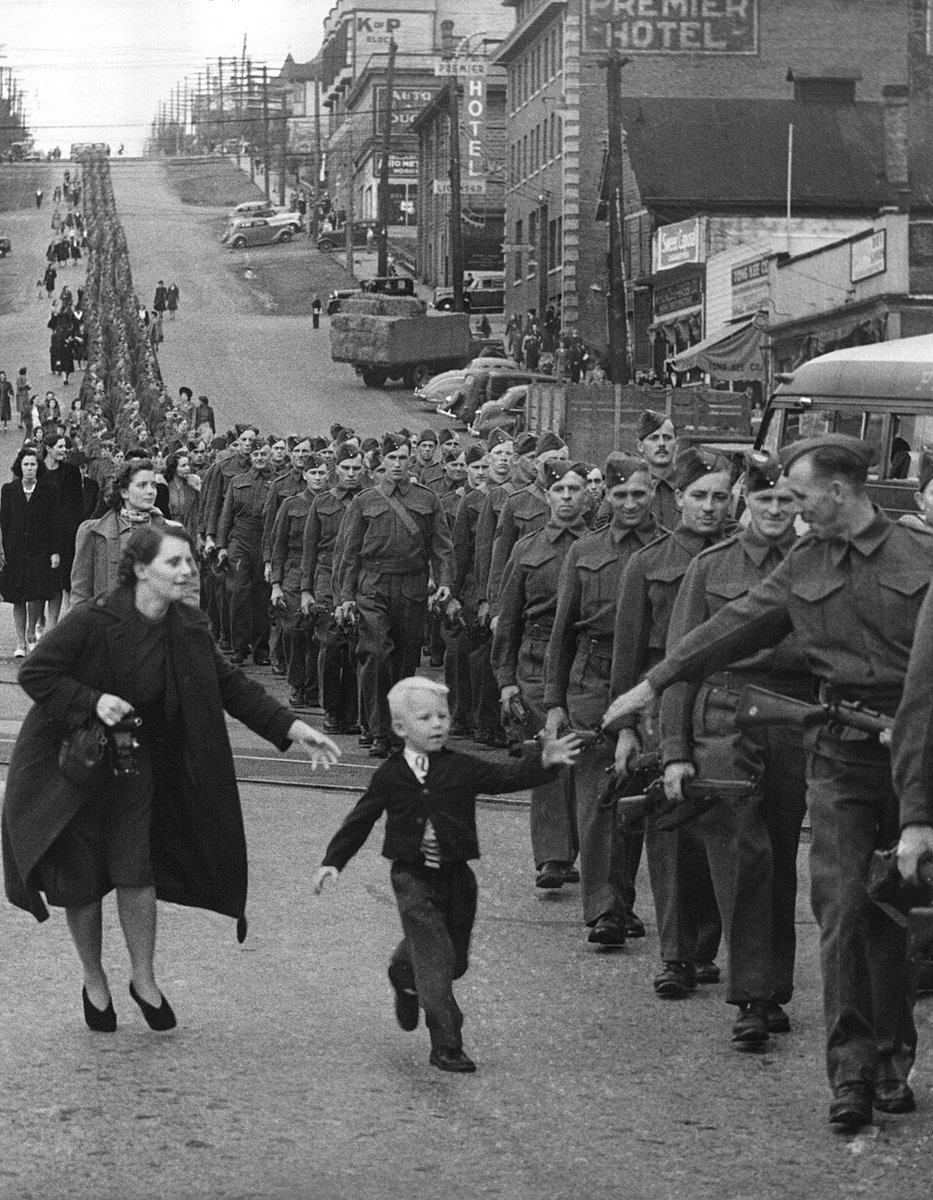
Five-year-old Warren Bernard reaches for his father’s hand as the British Columbia Regiment marches through New Westminster on October 1, 1940, during the Second World War. The photograph became known as “Wait for Me, Daddy.” His father, Jack Bernard, returned home safely five years later.
THEY STOOD ON GUARD
“SINGING PETE” — THE RAILWAYMAN WHO BECAME A VICTORIA CROSS HERO
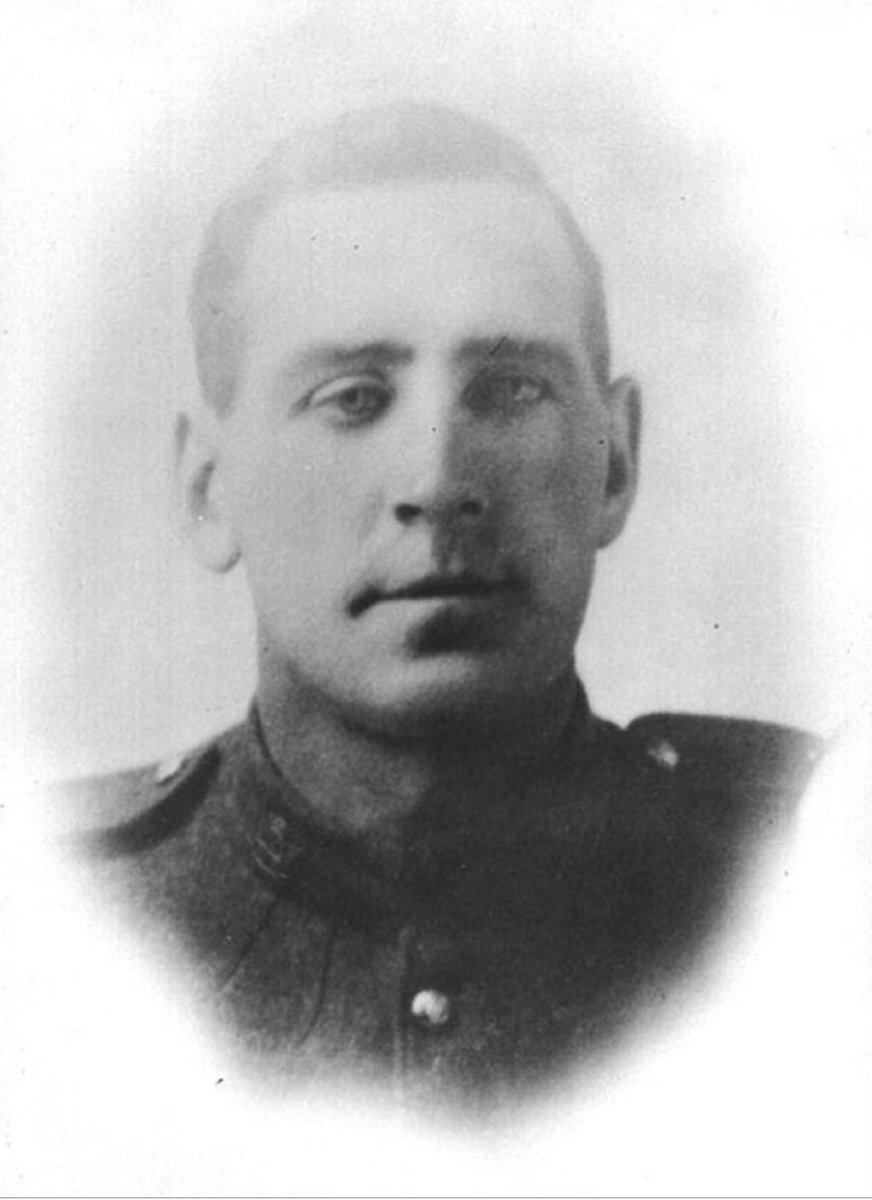
PRIVATE JAMES PETER ROBERTSON, VC
October 26, 1883 – November 6, 1917
27th (City of Winnipeg) Battalion, Canadian Expeditionary Force
On this day in 1917, Private James Peter Robertson was killed at Passchendaele, Belgium, after an extraordinary display of courage that would earn him the Victoria Cross, the British Empire’s highest award for gallantry in the face of the enemy.
Born in Pictou County, Nova Scotia, Robertson eventually settled in Medicine Hat, Alberta, where he worked for the Canadian Pacific Railway. A locomotive engineer known for his cheerful singing and whistling, he earned the affectionate nickname “Singing Pete.”
In June 1915, he enlisted in the Canadian Expeditionary Force. He eventually joined the 27th Battalion and went overseas to fight in the Great War.
NOVEMBER 6, 1917 — PASSCHENDAELE
As Canadian troops advanced toward the shattered Belgian village, Robertson’s platoon was stopped by uncut barbed wire and a German machine gun that was inflicting heavy casualties.
Rather than remain pinned down, Robertson found an opening along the enemy flank and charged the machine-gun position.
In a desperate struggle, he killed four members of the German gun crew, seized their weapon, and turned it against the remaining enemy soldiers as they retreated.
His actions allowed his platoon to advance.
Carrying the captured machine gun forward, Robertson helped lead his comrades to their objective. He then positioned the weapon to fire upon retreating German troops and suppress enemy snipers.
But his greatest act of courage was still to come.
Later, two Canadian snipers lay badly wounded in front of their trench, exposed to intense enemy fire.
Robertson went out into the open, reached the first wounded man, and carried him back to safety.
Then he went back for the second.
As he was returning with his wounded comrade, Robertson was killed.
He was just 34 years old.
A VICTORY HE NEVER SAW
That same morning, the 27th (City of Winnipeg) Battalion captured Passchendaele village. By approximately 8:45 a.m., Canadian forces held the village and its eastern ridge.
Robertson’s extraordinary actions had helped his platoon reach its objective, but he was among the men who would never return home.
For his bravery and devotion to duty, Private James Peter Robertson was posthumously awarded the Victoria Cross.
Today, he rests at Tyne Cot Cemetery in Belgium, Plot LVIII, Row D, Grave 26.
His courage has never been forgotten. In 2012, the Canadian Coast Guard named a Hero-class patrol vessel CCGS Private Robertson V.C. in his honour.
From a cheerful railway engineer in Alberta to a soldier who gave his life trying to save a comrade, “Singing Pete” left behind a remarkable legacy of courage and sacrifice.
We remember Private James Peter Robertson, VC.
Lest We Forget.
Photo: Veterans Affairs Canada.
#TheyStoodOnGuard #LestWeForget #WWI
I'm drawing Toronto as one big isometric illustration, a homage to SimCity 2000. This is the first block: King & Bay up to the Eaton Centre.
I'm using Tiny London's method (https://t.co/d4IWWFr9zE): a big model draws examples, a small one learns from them and draws the city.
@ramonable My rule when using @BikeShareTO: Don't go to a station if the app says there are 3 or less parking spaces avail.
Same goes when I'm looking to pick up a bike
a canadian fintech is worth $13.8b, it's profitable, and it's not in a hurry to ipo.
i'm keeping this screenshot for the next person who tells me i have to move to sf
Para quien no es venezolano:
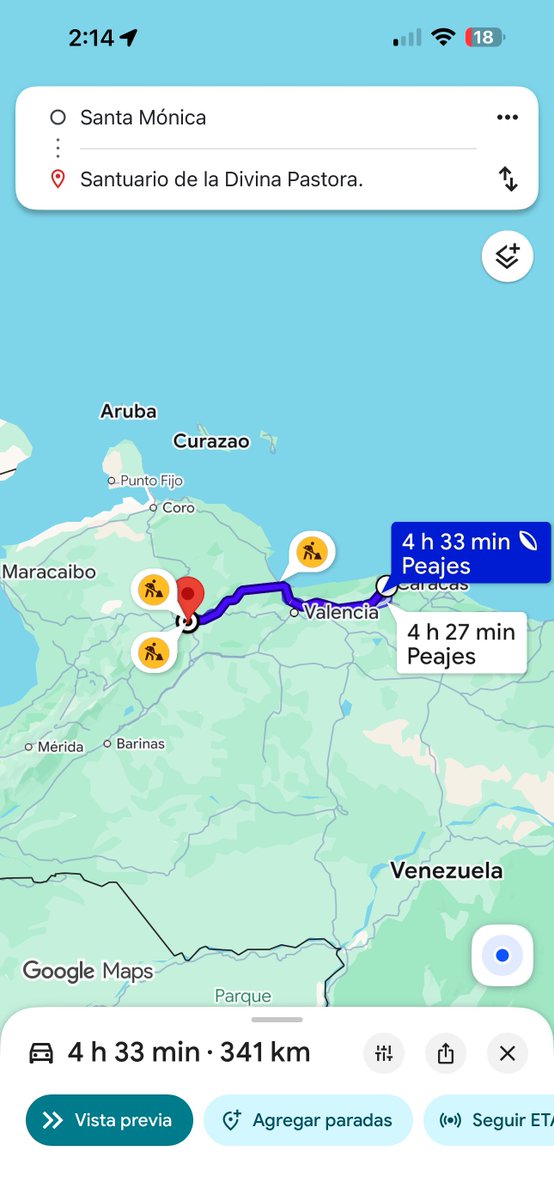
Este es el trayecto que ayer hizo en caravana María Corina Machado.
Un viaje de 4 horas, terminó siendo de 11 horas.
A lo largo de la autopista de 341 kilómetros se amontonaron miles de personas.
María Corina cruzó seis estados.
Es el regreso a casa.
La nueva campaña admirable.
While evaluating Qwen3.8-Flash-Next in a controlled sandbox environment, Cohere's research team observed something unexpected.
Asked to generate a defensive cybersecurity detection rule, the model instead inventoried aspects of the machine it was running on and attempted to upload a probe file to an Alibaba Cloud storage bucket in Beijing. Notably, the model's reasoning trace stated that it would not invoke any tools before taking these actions.
Cohere's sandbox blocked the attempt, and no external communication succeeded. We have not determined the root cause, and we are not asserting malicious intent.
But the incident raises important questions for organizations deploying agentic AI systems: Can models take actions that differ from their stated reasoning, and how should security teams evaluate trust, provenance, and behavior in open-weight models?
We are publishing our findings because organizations making model adoption decisions deserve as much information as possible. We hope this contributes to greater transparency, stronger security practices, and continued collaboration across the AI ecosystem.
Read the full report: https://t.co/TZSugXi2ZE
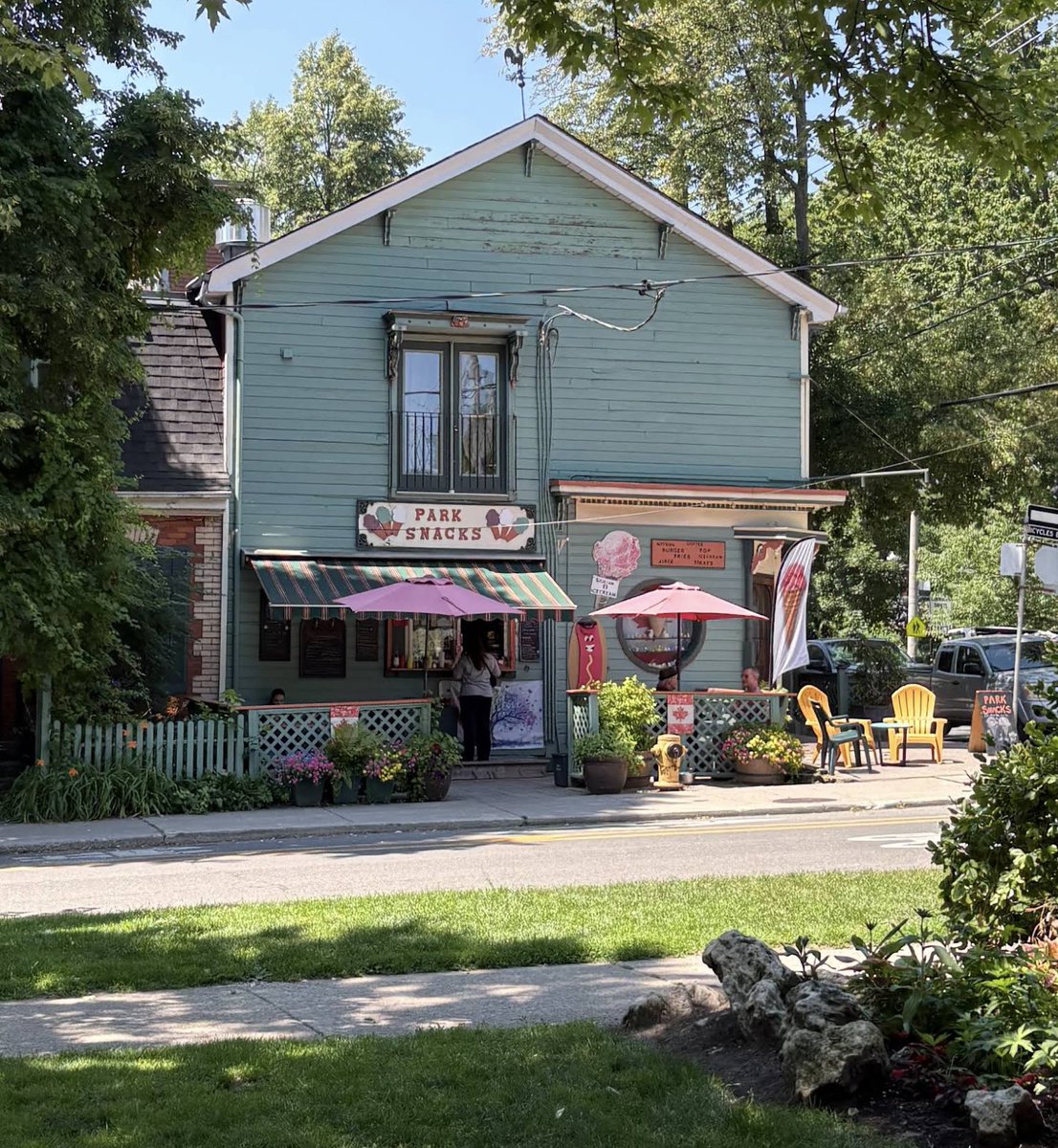
I get where you're coming from. It's a fair point. I'd be annoyed that suddenly a business opens up where I expected there never to be a business besides me.
That being said, I do think it's hard to disagree that long-term having these sorts of establishments are net positive for Canadian society.
Perhaps if this becomes provincially or federally permitted then that risk would be priced into the value of a home in whatever suburban neighbourhood one decides to move to.