SpaceX has just announced that they have entered into a $920 million per month agreement with Google to provide compute capacity, according to a new filing.
"On June 5, 2026, we entered into a Cloud Service Agreement with Google with respect to access to compute capacity. The customer has agreed to pay us $920 million per month from October 2026 through June 2029, with capacity ramping up through September at a reduced fee. The compute capacity provided includes approximately 110,000 NVIDIA GPUs, CPUs, memory, and other related components.
After December 31, 2026, the agreement may be terminated by either party upon 90 days' notice. The customer will retain ownership of, and intellectual property rights in, its content, Al models, and related data."
This is an extraordinary movie. The life story of many o of the actors is fascinating and heartbreaking. Conrad Veidt - the actor who played the evil Major Heinrich Strasser - donated most of his earnings as an actor to the allied war effort against Nazi Germany. Rick's Bar is filled with refugees, individuals who would lose family members in concentration camps, and at least one OSS officer.
Following up on the suggestion from Will Sawin, here is an illustration of the new configurations that disprove Erdos' unit distance conjecture (made with the help of ChatGPT 5.5 Thinking).
If you are in math and you are depressed, you shouldn't be. The number of projects that I have in mind have tripled or quadrupled now that I can have access to LLM's to assist me on things I had given up before.
@trengriffin My son and I did the Wyoming Cutt Slam a couple of summers ago and caught 3 out of 4 of the native cutts present in Wyoming. We fish northern New Mexico and southern Colorado far more often for Rio Grande Cutthroat. Want to eventually complete the Western Native trout challenge.
My laptop has become a “satellite device” since I started using Codex from my phone. And my Mac mini has become the “home.” It’s clunky, but the end state feels more like how we’re going to be working in the near future:
I’m currently running the Codex app on 2 devices:
1. my MacBook
2. my Mac mini
My laptop isn’t reliably connected to Wi-Fi enough, so I keep a Mac mini on my desk that is always connected.
When I kick off new threads from my phone, I start them on the Mac mini. When I’m working from my desk, I run them there too.
The cool part is that I’ve added my MacBook and Mac mini as connected devices to each other. That means I can start and resume threads from either device. So if I’m in a meeting but want to continue a thread on my laptop that was started on my Mac mini, I can do that.
I’ve also set up mutual SSH for Mac mini <> MacBook, so files are easy to access from either side. It’s not fully seamless yet, but the model works.
What this means:
- I have an always-on Codex that is accessible from my phone, with its own dev environment
- All threads are always accessible from any of the 3 devices
- I can run heartbeat threads that stay on 24/7
It’s a little makeshift today, but the shape of it feels very real to me: Codex is no longer tied to whichever computer happens to be open in front of me. It starts to feel like something I can stay connected to across whatever device I’m using.
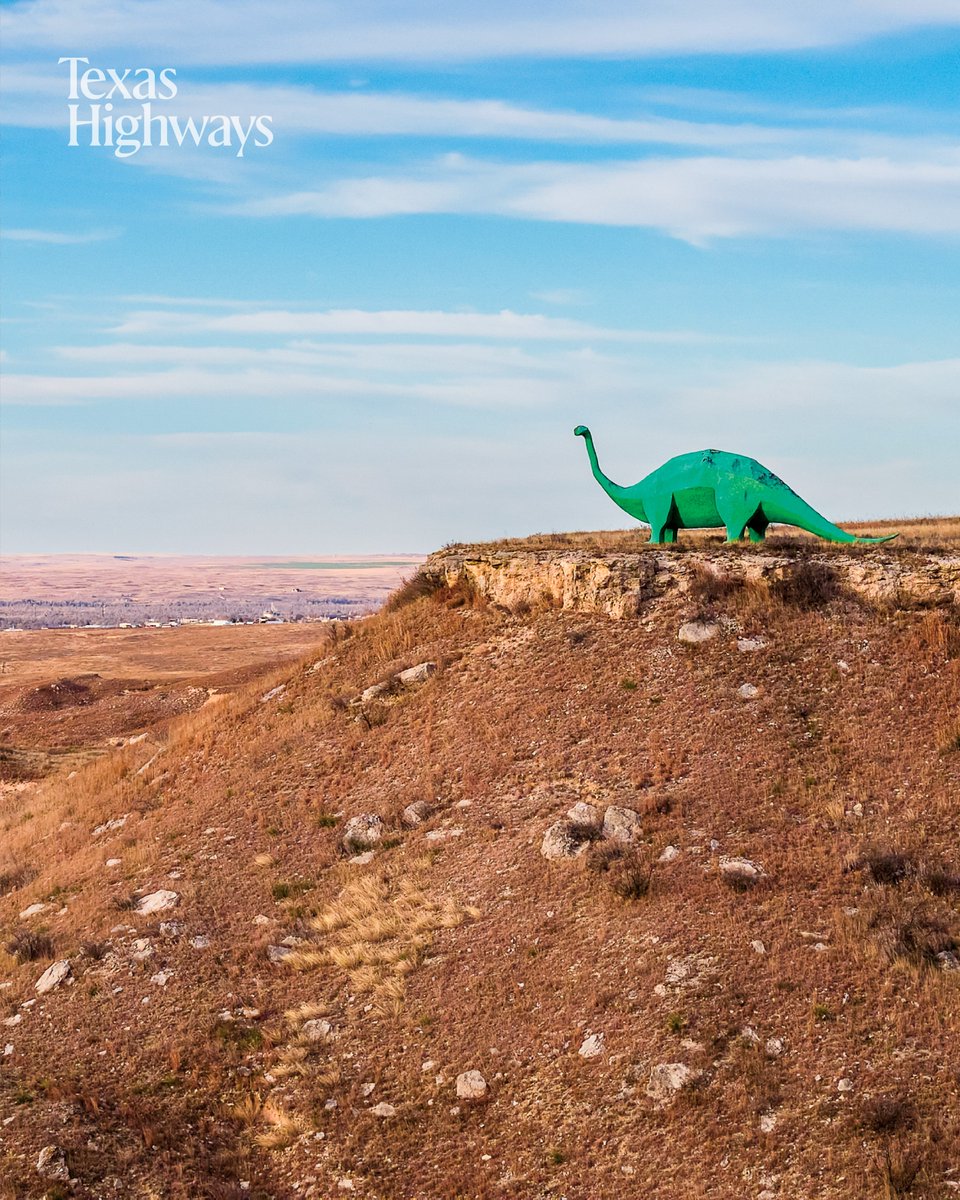
Senior Writer Joe Nick Patoski has traveled the “longest highway in Texas” in fits and spurts. But the last 150 miles of US 83 skirting the eastern Panhandle remained a mystery.
Patoski set out to travel those unfamiliar miles in our May issue: https://t.co/YN3fC7Z9dx
Every firm will need to reconceptualize work as they build agentic systems.
As AI and agents take on more of the execution, the opportunity is to expand human agency and redesign how work gets done.
An in-depth look from the team at what this shift means and key considerations for every business: https://t.co/zi6Ak8ZKeJ
"The single most important thing for anybody wanting to break into any industry is go to the headquarters or cluster of that industry. Move to wherever that thing is. And all the advice that you can do anything from anywhere and everything's remote is all BS. With AI, 91 percent of private technology market cap is in the Bay Area. Ninety-one percent of the entire global set of AI market cap is all in one 10 by 10 area."
— Elad Gil
Listen to my interview with @eladgil:
https://t.co/Z1cjLkdcX0
I loved the article, "AI Isn't Coming for Your Job. It's Coming for Your Mind" by Tom Slater at Baillie Gifford. h/t Ian McKinnon, chairman of the board of trustees @sfiscience. Points about mastery and cognitive diversity are particularly relevant. Worth discussing in professional and educational contexts. https://t.co/TciOixa3F3
An easy way to get a team engaged with AI is just to build the thing you are talking about in the meeting during the meeting using Codex or Claude Code.
At worst, it fails in ways that can be constructive. At best, you built the thing and the meeting topic shifts forward a month
The United States is home to the most talented AI researchers in the world.
Instead of harnessing American innovation, Senator Sanders is inviting foreign nationals to tell the United States how to regulate AI.
It would be like channeling Hugo Chavez to get advice on how to run our economy—oh wait, the Senator from Vermont did that 20 years ago, too.
The real threat to AI safety is letting any nation other than the United States set the global standard.