If you're a Cardano holder, please repost this immediately.
We've come to an absolute defining moment for ADA.
In the next 48 hours, the proposals that fund Cardano development are being decided.
While the #2 chain in crypto loses their builders or researchers, Cardano can keep theirs, at one of the most critical times of the altcoin cycle.
Cardano has come this far. It can not stop here.
DReps, think about the impact here.
Holders, make your voice heard.
An update on our engagement with @Mastercard.
While Cardano was not included in the initial cohort of 85 launch partners, @emurgo_io has been actively engaging with their APAC team to change that and ensure our ecosystem is represented.
Following a leadership transition at Mastercard APAC —where our primary contact moved to EY — we have successfully connected with his successors. They were excited to speak with us and I am pleased to share we are now in the Qualification Stage for the Global Crypto Partner Program.
With the continued support of the Cardano community, I am confident in a positive outcome.
This important:
Please like and share to show @Mastercard the strength of our ecosystem. Mastercard is a global firm.. we need to show them that our inclusion into their Partner Program will make a difference to them. Surely this is an initiative the entire Cardano ecosystem can support! #cardano86
Let's go!!!
#cardano #mastercard @Cardano_CF@Cardano@IOGroup@midnightfdn
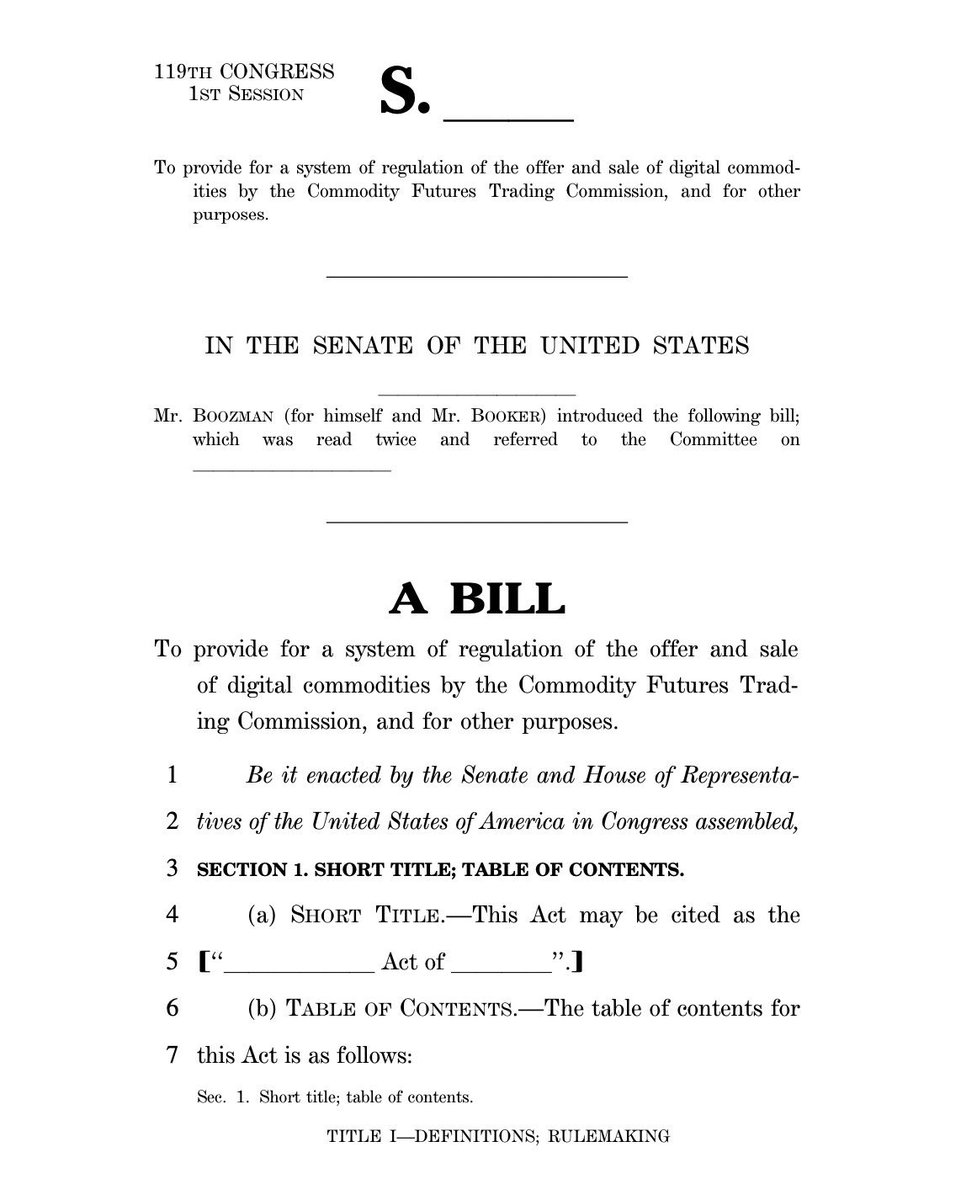
🇺🇸 BREAKING: U.S. LAWMAKERS UNVEIL SWEEPING CRYPTO MARKET STRUCTURE BILL…A MAJOR STEP TOWARD FEDERAL OVERSIGHT
What Stands Out Most
What jumps off the page is how comprehensive this bill is. It isn’t just crypto regulation, it’s a full integration blueprint for how digital assets get absorbed into the U.S. financial architecture. The CFTC would become the primary regulator for digital commodities, creating a single national standard and pulling spot markets onshore. That’s a big deal geopolitically. It reasserts U.S. control over an ecosystem that’s been scattering across offshore exchanges, tax havens, and gray zones.
Equally important is the explicit protection of self custody. The bill preserves an individual’s right to hold digital assets directly and transact peer to peer, as long as it’s legal and outside sanctions. That’s a quiet but profound nod to financial autonomy inside a system otherwise moving toward heavy supervision.
The Plumbing Connection
If you want to find the part that plugs straight into the plumbing of the U.S. monetary system, it’s the custody and segregation framework. Every digital commodity custodian has to operate under bank grade supervision, hold customer assets in qualified custodians, and invest idle cash only in U.S. Treasuries or high quality liquid assets. That design does three things:
1. It ties digital asset custody directly to the same collateral base that backs the dollar.
2. It creates steady structural demand for Treasuries, linking crypto liquidity to sovereign debt.
3. It ensures that if a major exchange fails, those assets are treated as “customer property” under the Bankruptcy Code, just like customer funds in the traditional system.
That’s the kind of wiring that transforms crypto from a parallel system into a regulated tributary of the dollar ecosystem. It’s monetary sovereignty through market structure.
The Geopolitical Undercurrent
This bill isn’t just domestic housekeeping, it’s a soft power move. By setting the standards for custody, surveillance, and disclosure, the U.S. can export its rulebook.
Bringing digital asset trading under American jurisdiction keeps price discovery, compliance data, and liquidity flows within the U.S. orbit. In a multipolar financial world, that’s an attempt to keep the digital layer of global finance denominated and cleared in dollars.
It also subtly reinforces sanctions power. Once custodians and exchanges operate through entities supervised by U.S. regulators, Washington’s reach extends across most major crypto transactions, even if they’re nominally decentralized.
Likely Winners in the New Regime
Decentralized base assets like Bitcoin or similar non security tokens benefit most, they finally get a clear regulatory lane under CFTC oversight. U.S. exchanges and custodians with the capital and compliance muscle to meet bank style requirements will consolidate market share, while smaller offshore venues fade.
Stablecoin payment networks especially those backed by Treasuries and issued by regulated institutions stand to become the default settlement layer for on chain finance. And wallet and key management infrastructure gains credibility from the explicit right to self custody, opening room for consumer facing apps built on compliant rails.
Why It Matters
This bill is the bridge between the crypto Wild West and the modern dollar state. It keeps innovation alive at the edges but locks the core into U.S. jurisdiction and Treasury collateral. It’s about sovereignty through design making sure that, in a world of borderless digital value, the pipes still run through Washington’s plumbing.
If it passes anywhere near this form, it will redefine how digital money, markets, and monetary power fit together for the next generation.
Their trying to kill the CLARITY Act. Know this bill must pass for Digital Assets to become the backbone of the financial industry. IF it doesn't go through we must VOTE them out. Simple. #DFTU
Everyone in this space should give Charles a listen.. 👇🏼