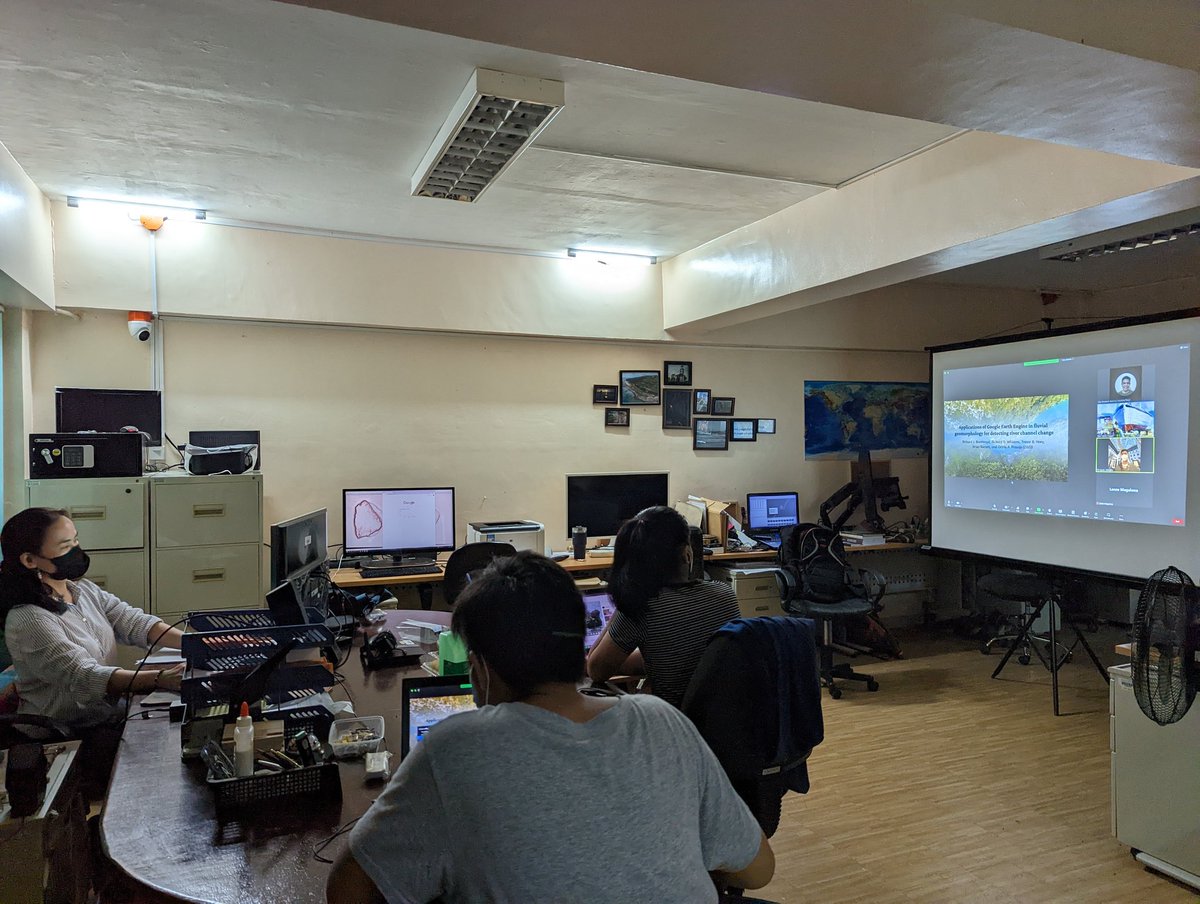
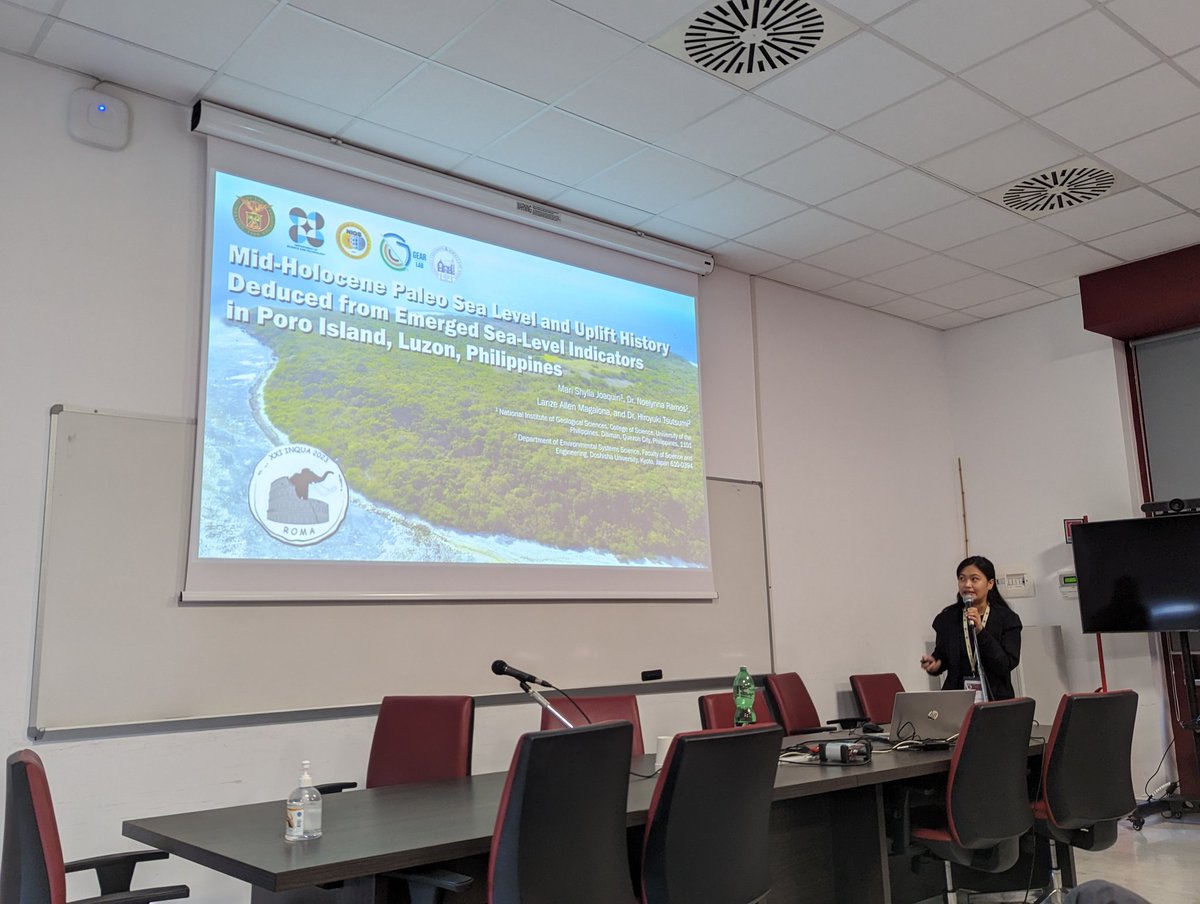
Research laboratory at the National Institute of Geological Sciences, University of the Philippines Diliman focused on geomorphology and active tectonics
Dr. Noelynna Ramos presented (oral) their research on the tectonic geomorphology and characteristics of the West llocos Fault System (Philippine Fault Zone) in the eastern Solsona Basin.
ATM: Ms. Motol (geology graduate student) presents a case study on the impacts of dredging on coastal erosion.
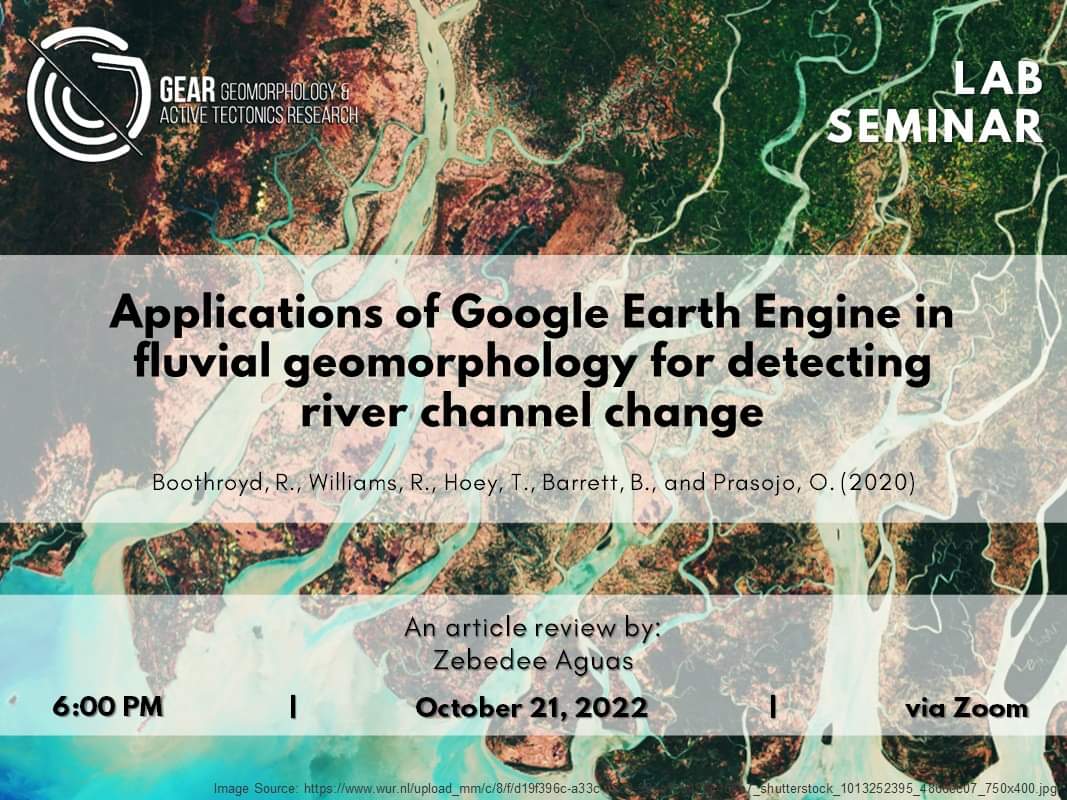
Below are the Zoom details for the meeting: htps://up-edu.zoom.us/j/93637427045 Meeting ID: 936 3742 7045 Passcode: duanyuan22
Happening now: Mr. Aguas, a geology undergraduate student, will be presenting an article review in the applications of Google Earth Engine for fluvial geomorphological studies here at NIGS 003 and via Zoom.
.@UNESCO IGCP Project 725 'Forecasting Coastal Change' is a go! This 5-year project bridges geological investigations and numerical models to better forecast coastal response and reduce risk. More about it here: https://t.co/bumiJW62X5
(cont.) Geological Society of the Philippines, Quezon City, pp. 95–103.
[2] Stevenson, J., Siringan, F.P., Finn, J., Madulid, D., Heijnis, H. (2010). Paoay Lake, northern Luzon, the Philippines: a record of Holocene environmental change. Global Change Biology 16 (2010), 1672–1688
We're now down to the final day of #IntGeomorphWeek2021. 🤩
A popular tourist destination in Ilocos Region, Paoay Sand Dunes is one of the few examples of aeolian landforms in the country. The sand dune complex was initially a sand bar spit.
Sources:
[1] Siringan, F.P., Pataray, A.L. (1997). Morphology, spatial variations and architecture of sand dunes along the western coast of Ilocos Norte: implications on the mechanism of formation. In: GEOCON ‘96 Proceedings. (Eds: Casareo F, Casareo MNR), (cont.)