I never knew the sweet yellow corn is recommended for human consumption. The white maize is for animals.
Makes sense why the whites brought it to Africa.
It's not a must you use hardcore kwa foundation ukijenga. Nimeona nyumba nyingi sana zikijengwa bila hii mawe and they are still very stable. If you want to cut down on the construction cost, you can decide not to use the hardcore stones. Si lazima.
Iran and the Real Meaning of Power: Why the nuclear bomb is not the lesson.
=======
There is renewed debate about whether Iran has crossed into a new nuclear reality, or at least moved closer to one. Whether that rumour is true or not, the fact that the world must discuss it seriously tells us something important about power. Iran has challenged many assumptions of modern empire, not because it is invincible, but because it has built systems that do not collapse easily under pressure.
Robert Greene’s The 48 Laws of Power has one famous lesson: strike the shepherd and the sheep will scatter. But Iran complicates that logic. The theory of decapitation assumes that a society is held together by one man, one office, one palace, or one command structure. In Iran’s case, pressure on leadership has not produced the simple scattering that powerful states often expect. The system has shown that some nations are not organised like crowds. They are organised like institutions.
That is the real lesson. A weak country is one where power sits in a chair. A stronger country is one where power sits in laboratories, factories, security systems, universities, supply chains, energy networks, industrial memory, military doctrine, and national institutions. When one person falls, another trained person stands up. When one facility is damaged, another protected process continues. When one generation is sanctioned, another generation learns to improvise.
Nuclear weapons, whether possessed, pursued, suspected, or debated, are among the most extreme symbols of strategic capability. They show that a country has moved beyond ordinary administration into complex coordination of science, industry, finance, security, secrecy, engineering, energy, logistics, and political will. The bomb itself is not the real power. The real power is the ecosystem that can imagine it, finance it, design it, manufacture it, secure it, maintain it, and politically control it.
This is part of the thesis I advance in my new book, The Five Levels of Economic Power. The lesson is not that Africa should chase nuclear weapons. That would be foolish, dangerous, and strategically misplaced. The real lesson is that no nation becomes powerful through speeches, donor workshops, mineral exports, imported contractors, or ceremonial industrial parks opened with ribbons, speeches, and branded tents. A nation becomes powerful when it builds the scientific, industrial, financial, military, and institutional capacity to defend its choices and shape its own destiny.
Iran may be sanctioned, isolated, attacked, mocked, and constantly threatened. Yet it has forced the most powerful nations on earth to calculate, hesitate, negotiate, strike, deny, and worry. That is not accidental. That is what happens when a country invests in strategic depth instead of living permanently at the mercy of external permission.
The deeper African question is therefore uncomfortable but necessary: what systems are we building that can survive pressure? If our universities are weak, our industries foreign-controlled, our engineers underfunded, our minerals exported raw, our standards imported, our machines bought but not mastered, and our institutions personalised around individuals, then we are not building power. We are only decorating dependence.
The bomb is only the visible tip of the pyramid. Beneath it lies metallurgy, chemistry, physics, software, machine tools, logistics, energy, finance, security doctrine, procurement discipline, and political continuity. That is the part Africa must understand. Real sovereignty is not announced. It is engineered.
The most powerful nations are not powerful because they possess dangerous weapons. They possess dangerous weapons because they first built formidable levels of competence. Africa must not copy the weapon. Africa must build the competence.
This is the real meaning of power. Not danger for its own sake, but disciplined capability. Not noise, but systems. Not panic under pressure, but institutions that can think, produce, repair, adapt, finance, and endure.
As with fat tails Llms are frequency machines that fail to extrapolate outside the sample set. What they know is the VISIBLE.
Almost as bad as economists, almost worse than psychologists.
Thank you, Kenya 🇰🇪
Successfully handed over to the owner.
This is like completing house number 2 in Kenya, and we are pre-fabricating more. It's really inspiring to see that Uganda and Kenya are now leading in biobased building.
There is still no house as beautiful as this anywhere in the country.
The Ancient Greeks studied literature to become wiser.
The Romans studied literature to become more civilized.
My Columbia Shakespeare class studied literature to determine whether Shakespeare was gay.
The Ebola issue has exposed President Ruto in the clearest way possible. It has revealed a leader who appears dangerously detached from the fears, safety, and dignity of the Kenyan people.
When citizens raise genuine concerns about a deadly disease and the government responds with secrecy, arrogance, and silence, the message is painful: our lives do not seem to matter to those in power.
If Kenyans suffer, they move on. If Kenyans die, they issue statements. If Kenyans demand answers, they are dismissed. That is why this matter is bigger than Ebola. It is about a government that has lost the moral authority to be trusted with the lives of its own citizens.
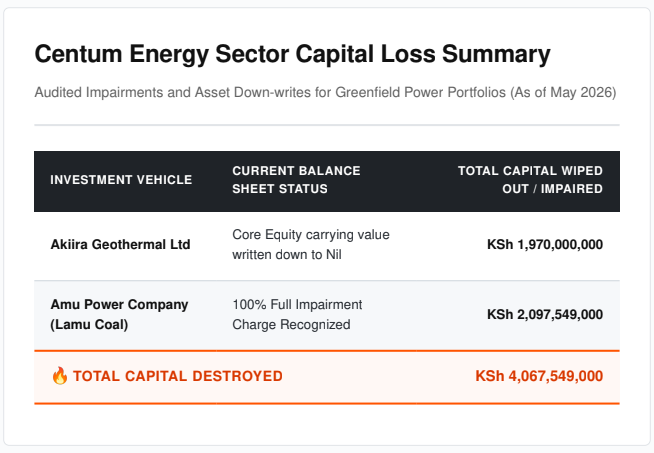
Every time I remember that Centum management took Kes. 4billion and threw it into Energy, a field they knew nothing about, and lost it, and did a book write down; I shed a tear for Centum shareholders. (Centum dividend is 210m annually, 4b would pay dividend for 19 Years) 🥲🥲🥲
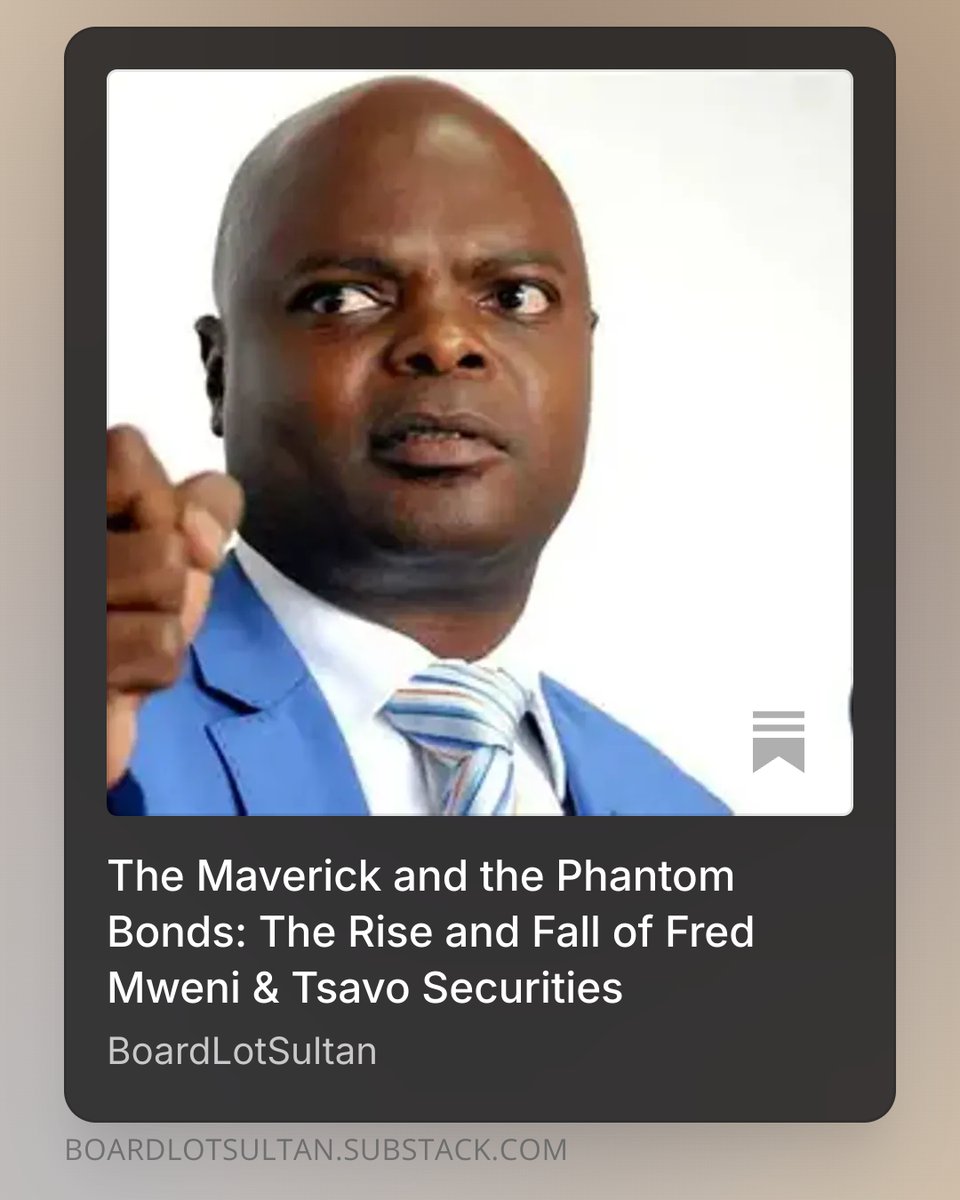
If you want to understand how dangerous the Nairobi bond market can be, look at Fred Mweni. The former king of fixed income was brought down after a massive KSh 2.6 B phantom bond cloning scam exposed deep vulnerabilities in the Central Bank's registry.1/n
https://t.co/VJBTqq8kOO