@suntao8023 Thanks—useful control. My case was a 377-character unpunctuated Chinese run in audio.cpp/Magpie, fixed in #1045. Here are the Oct 22 before/after WAVs, exact text and commands:
https://t.co/ZGgwHQXZsw
Different engine; no mid-UTF-8 split observed.
I've been contributing to audio.cpp, improving long-form multilingual TTS across Ming 3.0, MOSS-TTS-Nano, Kokoro, FireRedTTS3, MagpieTTS and more.
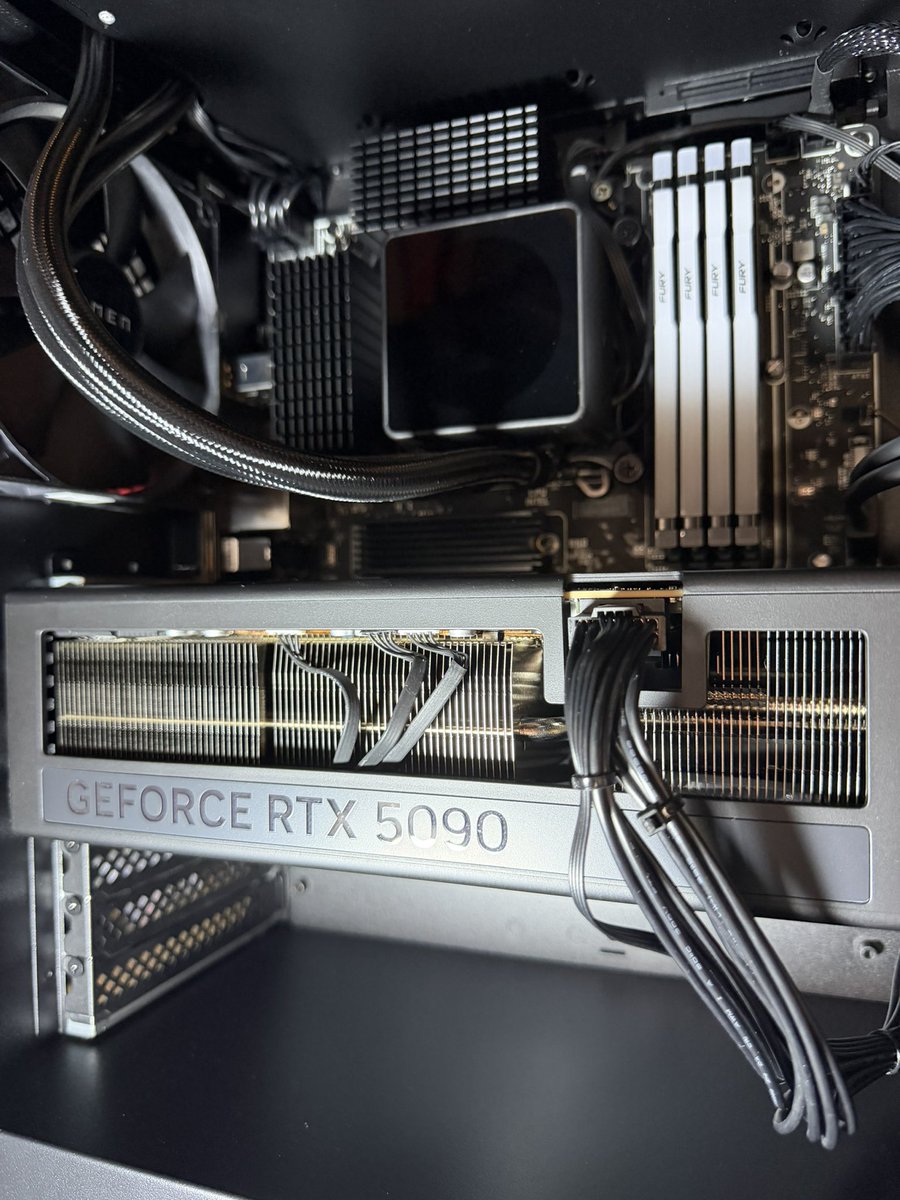
Fixing CJK text truncation and chunking issues, backed by RTX 5090 benchmarks.
PRs:
https://t.co/7qtaY5E8gj
Apache-2.0, with a JSON CLI and fetch examples for Python and Node.
My project; the code and proofs were written with Claude Code (Claude Opus 5.5) and reviewed only by AI so far, no human review yet. Counterexamples are very welcome.
As of ea3c061: https://t.co/hHnCiNZY4F
URL host allowlists keep getting it wrong, in AI agents' web tools and elsewhere: startsWith checks (CVE-2026-24052, CVE-2026-46341), a suffix with no dot (CVE-2026-33393, Discourse), userinfo (CVE-2025-47241).
URLFence: the same check, with Lean 4 proofs 🧵
DNS: urlfence addr checks resolved IPs against IANA's special-purpose registries, incl. mapped, NAT64, 6to4 and Teredo forms. The fetch example checks each redirect and connects only to a checked IP.
Not covered: unpinned clients, IPv6/IDNA URLs, your own hosts on public IPs.
@CleanFix_Dev@netadror@Open_MOSS@LexnLin Thanks for checking out ComfyUI-DBS and sharing your test results! Really appreciate you taking the time to try both models and being clear about what was tested.
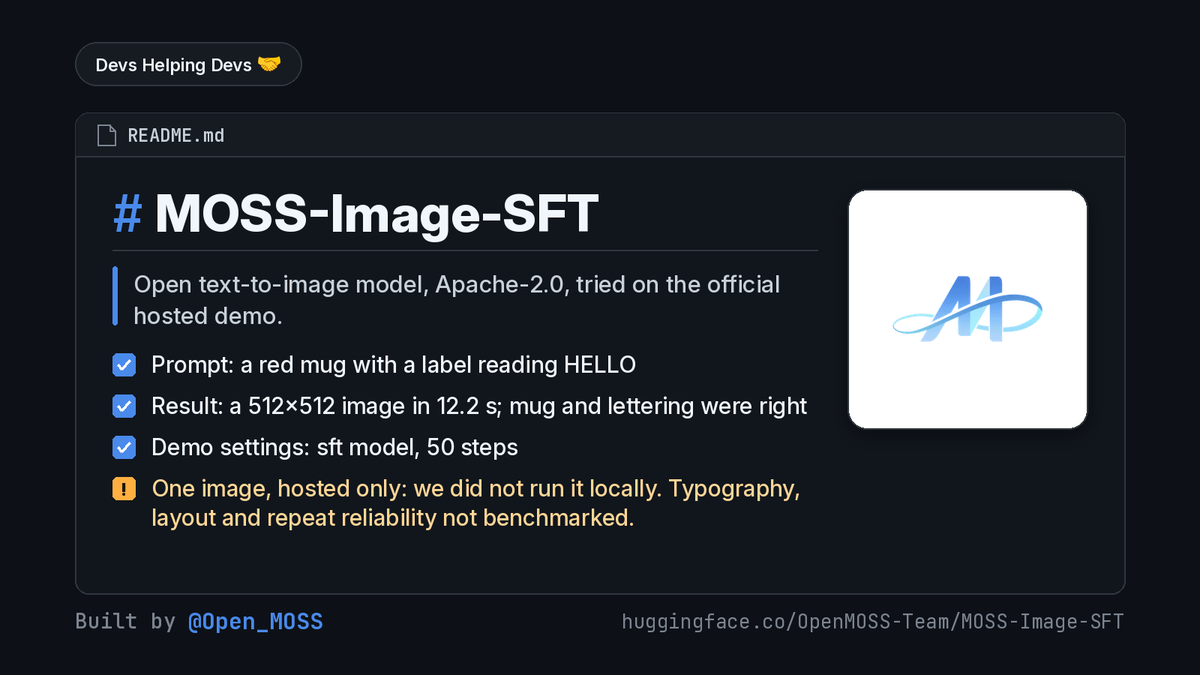
@netadror@geneLab_999 MOSS-Image-SFT by @Open_MOSS: open text-to-image model, Apache-2.0.
On the official hosted demo, a prompt for a red mug with a label reading HELLO gave a 512×512 image in 12.2 s. Mug and lettering were right.
Catch: one image, hosted only. We did not run it locally.
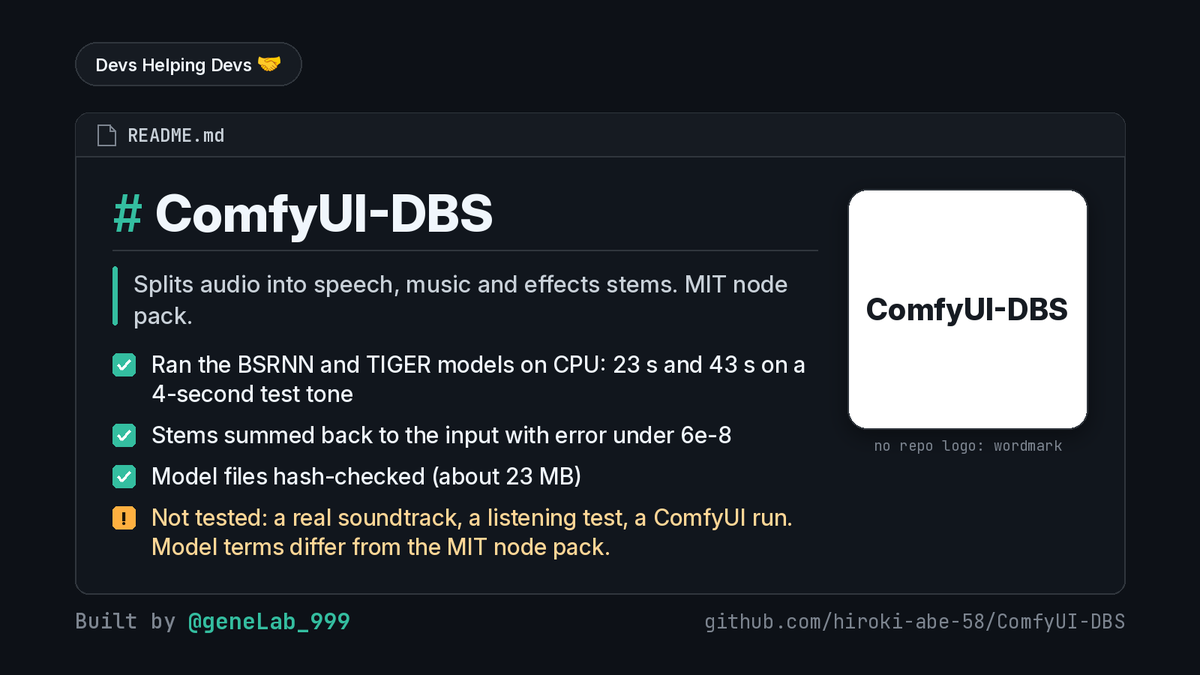
@netadror ComfyUI-DBS by @geneLab_999: splits audio into speech, music and effects stems. MIT.
We ran its BSRNN and TIGER models on CPU on a 4-second test tone. Stems summed back with error under 6×10⁻⁸. 23 s and 43 s.
Catch: no real soundtrack, no listening test, no ComfyUI run.
@suntao8023 Yes please, that’d be really helpful—thanks! Could you share a couple of complete examples and, if possible, the TTS model/tool you used and where the output gets cut off? I’d like to try reproducing the issue in audio.cpp.
@suntao8023 Thanks! That’s exactly the kind of use case I’m hoping to improve. If you have any Chinese or mixed-language examples that get cut off, I’d love to see them—they’d be helpful for regression testing.